
In this article
“If something happens, the government will take care of it.” It is a widespread idea, and partly true: in Quebec, municipalities, civil protection and emergency services are organized and competent. But in a major disaster, responders cannot be everywhere at once. They focus first on people in immediate danger. That is why the authorities themselves ask every household to be able to manage on its own for at least 72 hours.
In short
In short. The authorities are there, but not instantly and not for everyone at once. In the first days, basic responsibility falls on citizens: water, food, light, medication, information and a family plan. Self-reliance does not mean distrusting the state: it lets responders focus on those who need them most.
Who does what in emergency management
| Level | Main role |
|---|---|
| Citizens | First responsible for their own and their family’s safety: prepare, stay informed, follow instructions |
| Municipality | First responsible for response on its territory: alerts, evacuations, shelters, emergency plan |
| Government of Quebec | Supports municipalities when an event exceeds their means; coordinates ministries |
| Federal government | Support when the province requests it; national alerts |
This division of roles is the basis of emergency management in Quebec: each level steps in when the previous one is overwhelmed.
Why 72 hours?
In a widespread event (ice storm, windstorm, flood, large blackout), teams must assess the situation, restore essential infrastructure and rescue people in danger first. It can take several days before help reaches every household. Meanwhile, roads may be closed, stores empty or shut, communications disrupted.
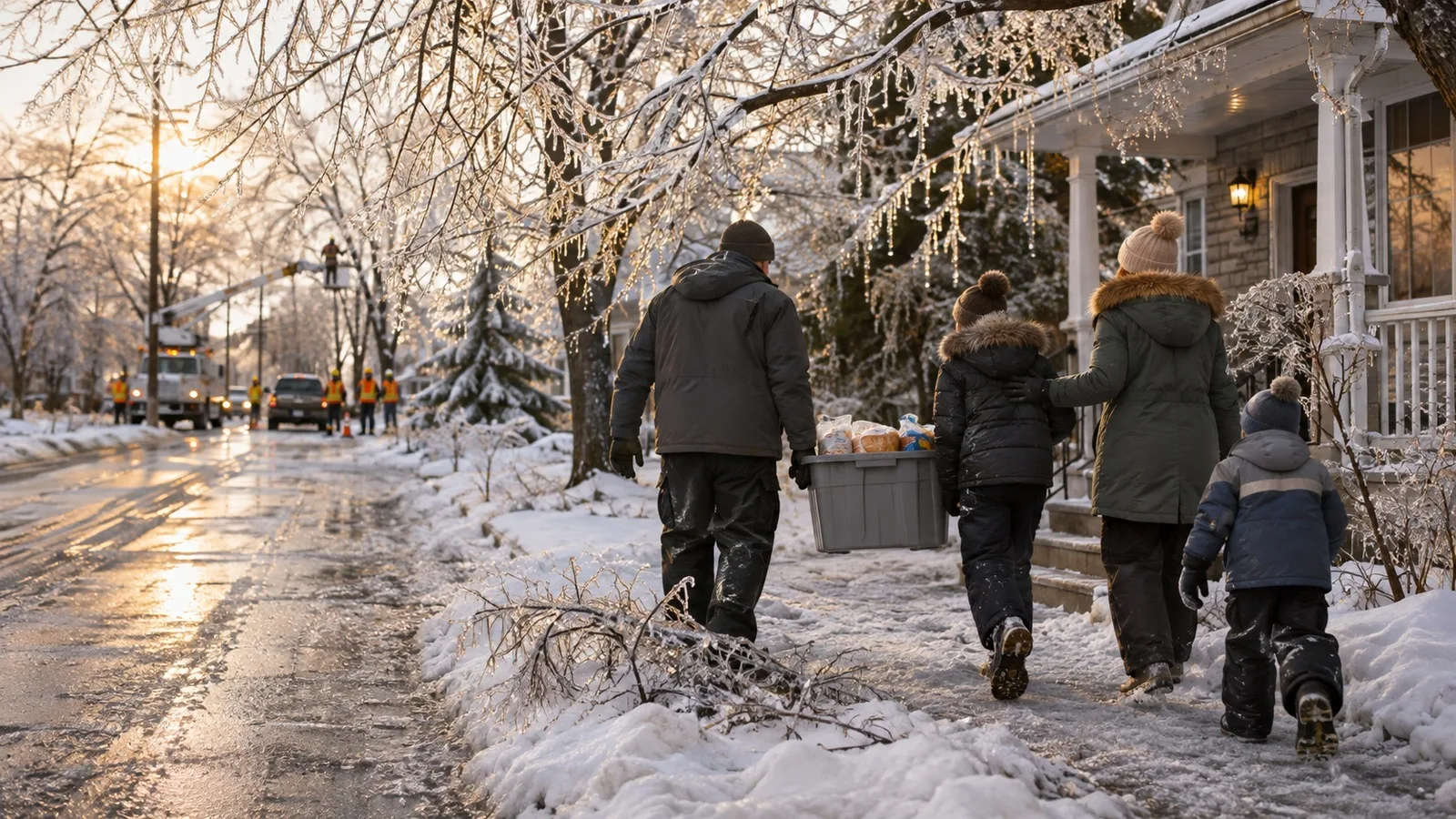
The 1998 ice storm in Quebec is a well-known example: some regions were without power for weeks, and it was often neighbours, families and local organizations that made the difference in the first days.
What you can do
- A 72-hour emergency kit: water, food, flashlight, radio, batteries, medication, first aid kit, copies of documents. See the 72-hour go-bag.
- A family plan: contacts, meeting points, special needs. See the family communication plan.
- Know your municipality’s risks and resources: emergency plan, shelters, alert system.
- Think of neighbours, especially older or isolated people.
Neither dependence nor distrust
Preparing is not a sign of distrust toward institutions. Quite the opposite: a self-reliant household frees resources for serious cases, and an informed citizen follows instructions better. The right approach combines basic self-reliance with trust in official guidance.
Key points
- CitizensFirst responsible: 72 hours of self-reliance.
- MunicipalityFirst responder on the ground.
- Quebec and CanadaSupport when events exceed local means.
Frequently asked questions
Aren’t emergency shelters enough?
They are essential in an evacuation, but opening them takes time and their capacity is limited. They provide the basics, not necessarily your medication or special needs.
Will I get financial aid after a disaster?
Programs exist depending on the type of event, but they do not replace suitable insurance. Check your coverage.
Sources
- Government of Quebec, civil protection: roles of citizens and municipalities; preparing an emergency kit.
- Public Safety Canada, Get Prepared (72 hours).
Go further: the 4 phases of emergency management and Plan, protect, participate.