
In this article
With a baby or toddler, an outage, a storm or an evacuation quickly gets complicated: you need to feed, change, keep warm and comfort a child who depends entirely on adults, often without hot water or electricity. General household supplies do not cover these needs. A small dedicated kit, reviewed as the child grows, makes all the difference.
In short
In short. Plan at least 72 hours of milk (ready-to-feed commercial formula if your baby is bottle-fed), diapers, wipes, spare clothes and age-appropriate medication, plus a baby carrier and a blanket. Breastfeeding remains a safe source in an emergency. Review the kit at every change of size or feeding.
Feeding a baby without electricity
- Breastfeeding: it keeps working during an outage. Stress can slow it temporarily; continuing to nurse helps.
- Ready-to-feed commercial formula: the simplest in an emergency, since it needs no water or warming. Follow the label for storage after opening.
- Powdered formula: requires safe water and following Health Canada’s preparation guidance; keep bottled water reserved for it.
- Bottles and nipples: have enough so you do not need to wash them, or a way to clean and sterilize them.
- Baby food in jars or pouches as appropriate for age, and a spoon.
The 72-hour baby kit
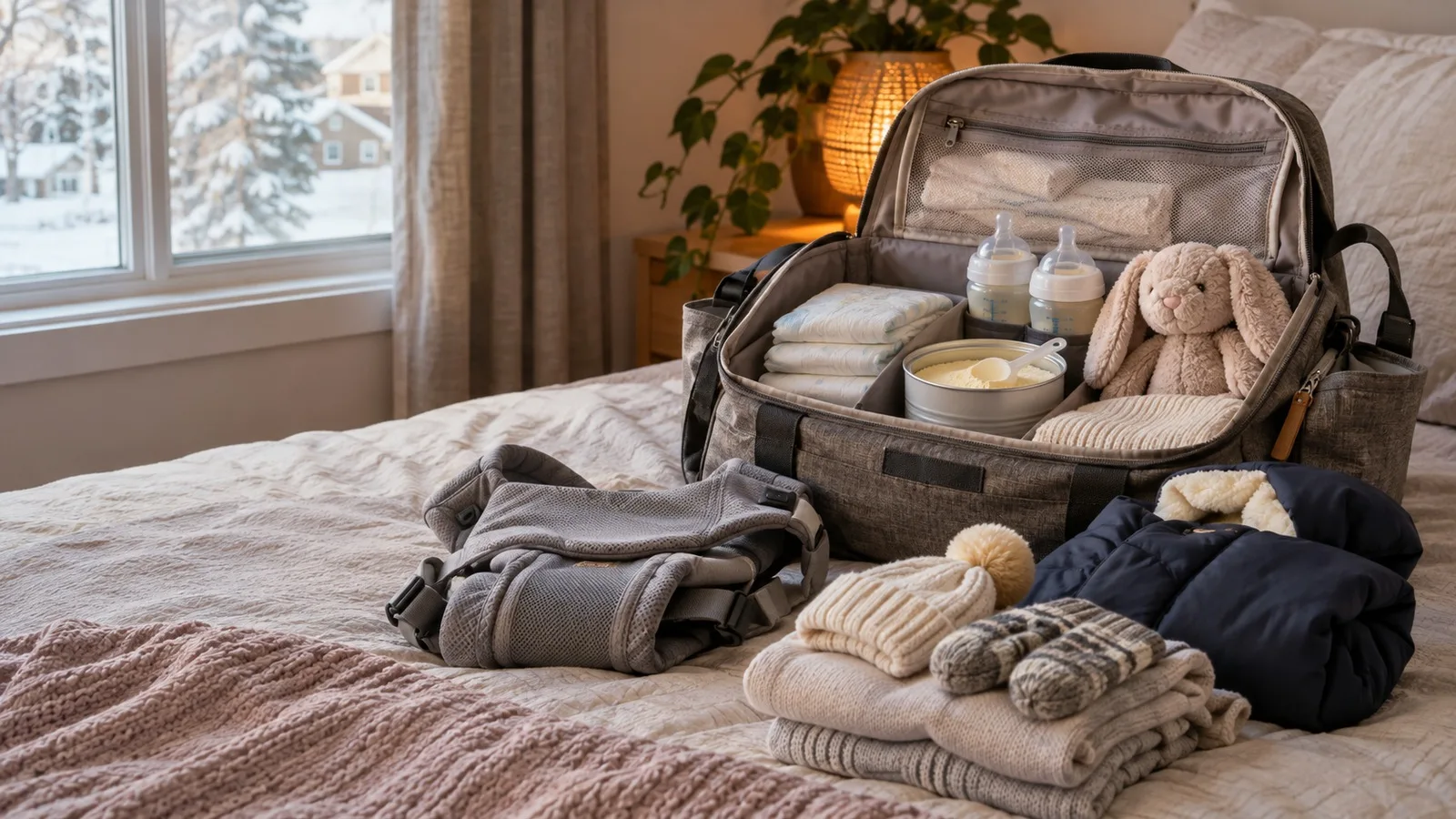
| Category | Contents |
|---|---|
| Feeding | Milk, bottles, food, spoon, bibs |
| Hygiene | Diapers (at least 8 to 10 a day depending on age), wipes, diaper cream, diaper bags, hand sanitizer |
| Clothing | Several outfits, sleepers, socks, hat, warm suit depending on season |
| Health | Thermometer, age-appropriate fever medication (per your pharmacist), copy of vaccination record |
| Comfort | Pacifier, blanket, small toy, book |
| Transport | Baby carrier or wrap, in addition to the stroller |
| Documents | Health card, doctor’s contact details, recent photo of the child |
Keeping baby warm, or cool
Babies lose heat faster than adults. During a winter outage, dress them in layers, cover their head, and keep them in the warmest room; skin-to-skin contact helps. Never use an outdoor heater indoors (carbon monoxide risk). For sleep, follow safe sleep guidance: on the back, in a clear space.
In hot weather, keep the baby in the shade, offer the breast or bottle more often and watch for signs of dehydration (fewer wet diapers, drowsiness).
During an evacuation
- A baby carrier frees your hands and goes where a stroller gets stuck.
- Keep the baby kit within reach, not in the trunk.
- Report your needs on arrival at the shelter: there may be a family area.
See also our article on the household evacuation bag built around children’s needs.
Key points
- FeedReady-to-feed milk or breastfeeding, plenty of bottles.
- ChangeDiapers, wipes, bags, sanitizer.
- ProtectWarmth, safe sleep, a baby carrier.
Frequently asked questions
Can I prepare formula with water under a boil-water advisory?
Follow public health guidance: generally, use bottled water or boiled and cooled water, or ready-to-feed formula.
How often should I review the kit?
Every three to six months for little ones: diaper size, clothing and feeding change quickly.
Disclaimer. General information. Follow your doctor’s, pharmacist’s and Health Canada’s advice on infant feeding and medication. For advice, call your provincial health line (8-1-1 in Quebec); in an emergency, 9-1-1.
Sources
- Health Canada, safe preparation of infant formula.
- Government of Quebec (Québec.ca), safe sleep and infant feeding.
- Canadian Red Cross, building a family emergency kit.
Go further: preparing children for emergencies and the 72-hour go-bag.