
In this article
Preparing a child for emergencies is first of all to organize the presence of adults, contacts and essential needs. The child should not learn to handle a disaster alone or feel responsible for the safety of his family.
Before: an adapted explanation
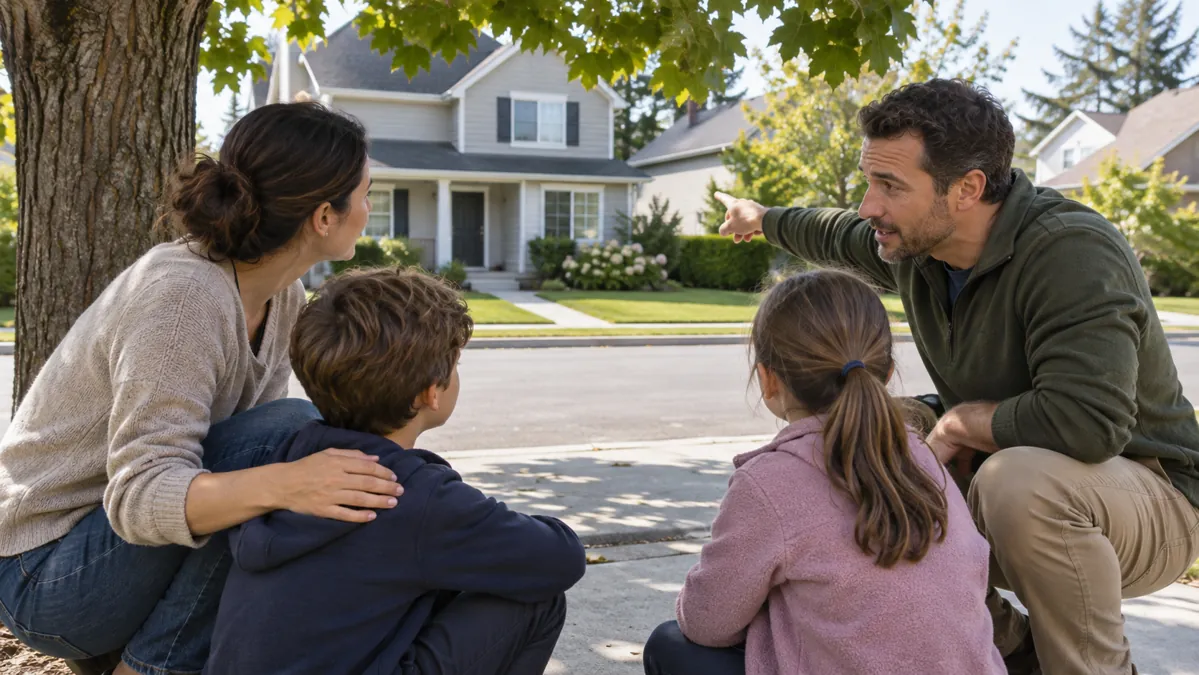
Start with what the child knows and asks for. Explain a simple instruction with concrete words: where to stay, what adult to listen to or how to ask for help. It can be said that some information is not yet known.
Don’t add violent details or extreme scenarios to get her attention. His understanding, preferences and needs matter more than a rigid age grid. An emotion or question is not a sign of poor preparation.
Organising contacts between adults
Update contact information and authorized persons at the school and daycare. Confirm the role of a replacement adult and how the facility will communicate a closure or reunification.
A family meeting point does not give the child permission to leave his group or cross a dangerous area. If the parent is unreachable, the care procedures remain applicable.
Preparing useful objects
Plan for food, hygiene, clothing, communication and care needs. An object of comfort can accompany the child if possible. The treatments must follow the plan agreed with the professionals.
You can offer to choose a small object or spot his lamp with an adult. Do not assign him supervision of the youngest, administration of drugs or a rescue mission for the sole reason that he participates in the plan.
Practice in a safe setting
Advertise the test, explain the purpose and adapt it to the child. It can be to join a meeting point with an adult or find a contact on a card. Stop and adapt if the test becomes too strenuous.
Don’t fake an abandonment, a real disappearance or a surprise attack. For the call for help, use a verbal exercise or a phone drawing; do not dial an actual number and do not give an old cell phone as a toy.
Make the next step understandable
Describe what you do and what comes next. A short instruction is often more usable than a long explanation during a trip. Stay with the child or ensure a confirmed relay.
Offer a reassuring contact if he wishes. Needs may differ: some children appreciate a hand held, others prefer space. No physical or visual contact should be imposed as a universal method.
After: finding landmarks without forcing the story
Rest, meals, care, play and familiar people can help reorganize the days. The child may want to talk or prefer an ordinary activity. Leave an availability without asking for a detailed testimony.
Do not force him to learn a positive lesson or become stronger through the event. The reactions do not depend solely on the calmness of the parent. An adult can also seek support and share tasks with other adults.
Ask for help and adjust the plan
If significant difficulties appear in sleep, meals, relationships, play or school, or if they get worse, ask for an opinion. There is no need to wait a fixed number of weeks. An immediate danger calls for help.
In Quebec, Info-Social 811 can refer a loved one. After a test or an event, remember a concrete improvement: corrected contact, accessible object, better understood instructions or confirmed relay. The goal remains the support of the child, without evaluation of its performance.