
In this article
- An ancient practice, still little known
- Getting started: basic equipment
- Which species to choose?
- Species comparison for small-scale farming
- Temperature and environmental management
- Practical challenges to anticipate
- Aquaponics: going further with an integrated ecosystem
- Place in preparedness and self-reliance
- Frequently asked questions
- Further reading
Aquaculture — raising fish, shrimp and other aquatic organisms — is one of the oldest forms of self-reliant food production. It deserves a serious place in the thinking of anyone looking to diversify their food sources, whether for everyday resilience or to prepare for prolonged disruptions.
This article covers the basics of small-scale aquaculture — the kind that can be set up in a backyard, an outdoor space or even a suitable indoor area. It does not cover industrial commercial aquaculture, which falls under an entirely different regulatory and operational framework.
An ancient practice, still little known
Aquaculture has existed for millennia. The oldest documented traces date back to around 2500 BCE in China, where people began keeping fish in artificial lakes formed by floods. Much later, Hawaiians built their own fishponds as a stable, sustainable food source.
Despite this long history, small-scale aquaculture remains little practised and little known in North America. Unlike gardening or raising poultry, it rarely comes up in conversations about food self-reliance. Yet it is a coherent avenue for anyone seeking to produce animal protein locally, with reasonable space and initial investment.
Getting started: basic equipment
Starting a home aquaculture system doesn’t necessarily require a complex installation. The basic supplies resemble those of an aquarium, but adapted to a larger scale and a food production goal.
People with outdoor space often use ponds where water can circulate naturally. Those with limited space — or who want more control over the environment — opt for above-ground tanks or basins. These also make it possible to separate incompatible species or to better manage water temperature.
Recommended starter supplies
- An outdoor pond or a large tank (with filtration capability)
- A reliable, accessible water source
- An aeration device or air pump
- A pH tester
- Food suited to the chosen species
- Fry or broodstock, depending on the species selected
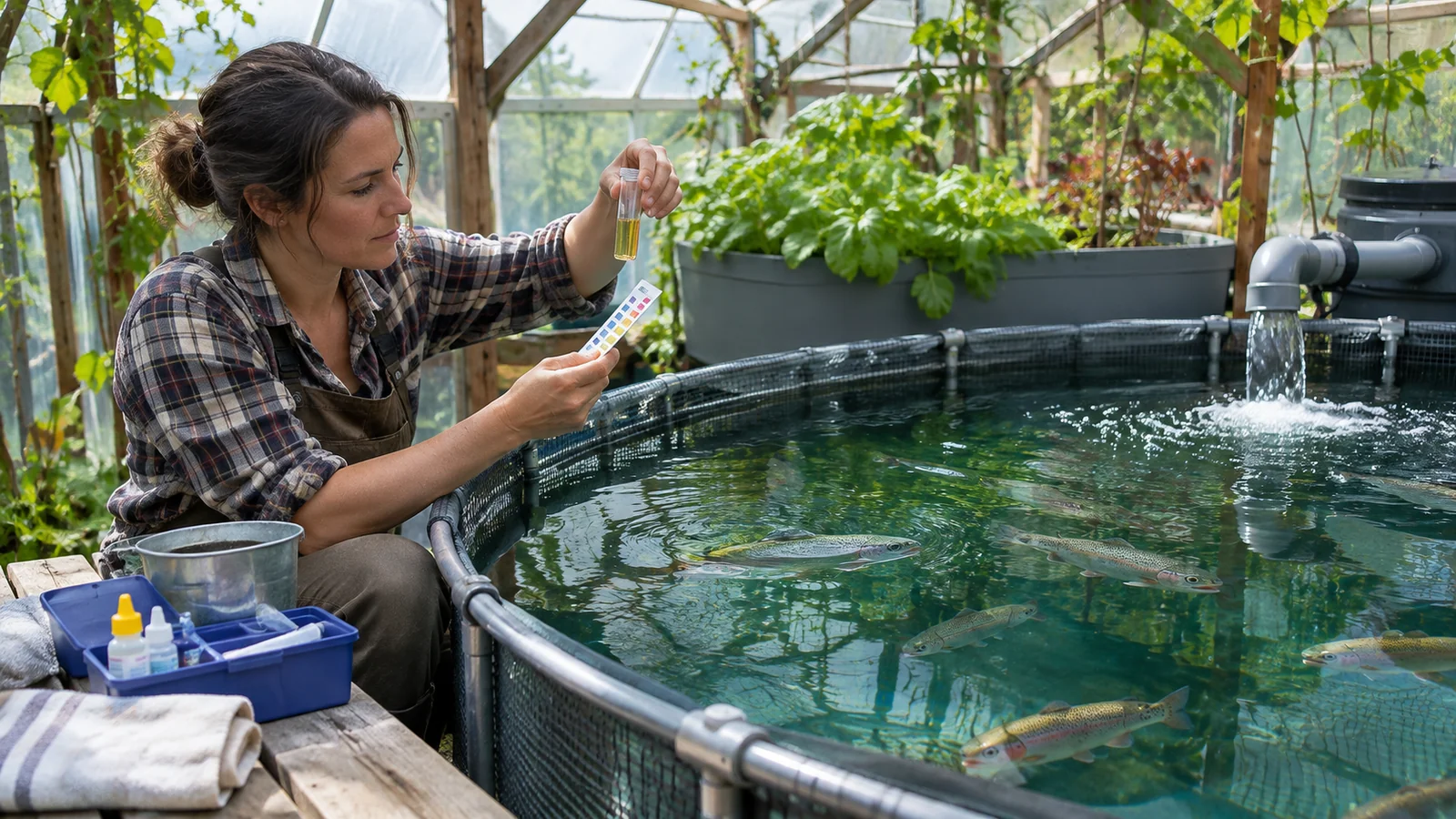
Filtration and aeration are the two most critical elements. A lack of dissolved oxygen in the water can kill a stock within hours. Testing pH regularly and monitoring water quality prevents most avoidable losses.
Which species to choose?
The choice of species shapes the whole project: space required, feed, temperature, growing time and yield. Here is an overview of the species most commonly chosen for small-scale farming in a temperate climate.
Freshwater shrimp
Suited to small spaces, freshwater shrimp offer a good yield per volume. They are prized in the kitchen and relatively simple to start. Be careful, though: they can become aggressive toward each other under stress, especially with overcrowding or poor water quality.
Catfish
A hardy species, catfish are valued for their steady growth and abundant flesh. They do need enough space, however, because they can reach a large size. They are a solid option for an outdoor pond.
Trout
Trout grow quickly — they can reach maturity in about six months — and produce tasty flesh. They prefer cool water, which makes them especially well suited to Quebec’s climate. Note: trout tend to jump out of open tanks; a cover is needed. Their popularity in the local food market can also limit commercial opportunities.
Tilapia
Tilapia is the most widespread species in small-scale aquaponic systems. It is adaptable, tolerates a relatively wide range of conditions and eats mainly plant-based food — which means part of its feed can be grown directly in the system. It does, however, require warm water, which means heating in a cold climate.
A note on choosing a species in Quebec: some species such as tilapia need heating systems in winter, which increases energy costs. Trout and some native species handle local climate variations better. Also check the provincial regulations that apply to raising certain species before sourcing fry.
Species comparison for small-scale farming
| Species | Water | Time to harvest | Space | Fit for Quebec |
|---|---|---|---|---|
| Trout | Cold, below 18 °C (64 °F) | About 6 months | Covered tank | Very good, naturally cool water |
| Catfish | 20 to 28 °C (68 to 82 °F) | Varies with target size | Pond or large tank | Good in summer, overwintering to plan |
| Tilapia | Above 20 to 22 °C (68 to 72 °F) at all times | 6 to 9 months | Indoor tank | Poor without heating |
| Freshwater shrimp | Temperate to warm | Shorter cycle | Small volume | Mostly indoors |
Temperature and environmental management
The environment is the biggest risk factor in an amateur aquaculture system. Fish and shrimp are cold-blooded: their metabolism, growth and survival depend directly on water temperature.
There are generally four broad categories based on temperature needs:
- Cold-water species (e.g. trout) — prefer temperatures below 18 °C (64 °F)
- Cool-water species — tolerate moderate variations
- Warm temperate species (e.g. catfish) — thrive between 20 and 28 °C (68 and 82 °F)
- Tropical species (e.g. tilapia) — require water kept above 20 to 22 °C (68 to 72 °F) at all times
Summer heat waves and early frosts are the two main climate threats to an outdoor operation in Quebec. Having a plan to move or protect the tanks in extreme conditions is one of the basic precautions to build in from the design stage.
- Check the regulationsMunicipality, permitted species, water discharge, before buying anything.
- Choose the speciesBased on the water temperature available year-round.
- Set up and cycleTank, filtration and aeration: let biological filtration establish itself over several weeks.
- Test the waterpH, ammonia and oxygen, every week during the active season.
- Introduce the fryLow stocking density at first, then adjust.
- Plan the harvestFreezing, smoking or canning for the surplus.
Practical challenges to anticipate
Small-scale aquaculture comes with several concrete challenges that general sources tend to underestimate.
Access to resources and expertise
Aquaculture remains a niche practice. Finding quality fry, suitable feed and competent professionals to answer questions can be difficult depending on the region. Online networks of amateur fish farmers can make up for part of this gap.
Water quality
Most diseases and deaths in amateur systems are linked to poor water quality: unbalanced pH, ammonia levels too high, insufficient oxygenation. Regular testing — ideally weekly during the active season — detects problems before they become critical.
Predators and fish stress
Herons, raccoons, cats and other visitors can disrupt open systems. Even without direct predation, intrusion attempts stress the fish, which affects their growth and immune system. Simple physical protection (nets, covers) considerably reduces these risks.
Aquaponics: going further with an integrated ecosystem
Aquaponics combines raising fish and growing plants in a closed-loop system. The waste produced by the fish fertilizes the water, which is then used to irrigate soilless (hydroponic) crops. The plants filter the water by absorbing nutrients, returning it purified to the fish.
In a well-balanced aquaponic system, water losses are minimal, chemical inputs are almost nil, and combined production (fish + vegetables) can be very high relative to the area used. It is one of the most resource-efficient forms of food production in a small space.
Aquaponics does, however, require finer management than simple fish farming: balancing animal biomass, water volume, bacterial load and plant needs involves a real learning curve. For those interested, starting with a simple aquaculture system before adding the plant component is generally recommended.
Place in preparedness and self-reliance
Aquaculture is not a universal solution, and it doesn’t replace a well-stocked pantry from the outset. Rather, it fits into an overall approach: diversifying protein sources, reducing dependence on outside supply chains and acquiring a lasting productive skill.
From a food resilience standpoint, producing your own fresh animal protein is a real advantage. The surplus can be processed — frozen, smoked, canned — to build longer-term reserves.
Aquaculture can also be an engaging family activity, especially for children who follow the fish’s growth cycle. This educational dimension, often overlooked, has value of its own in a self-reliance approach passed on to the next generation.
Before you start: check the municipal and provincial regulations that apply to your type of installation (outdoor pond, species raised, water discharge). These rules vary by municipality and region. Checking with the relevant local authorities before investing in equipment avoids unnecessary surprises.
Frequently asked questions
Can you practise aquaculture in an apartment or indoors?
To some extent, yes. Small tank systems make it possible to raise fish such as tilapia, or shrimp, indoors. The main constraints are aeration noise, humidity and odour management. Compact aquaponic systems were designed partly for these settings. Production remains limited compared with outdoor installations, however.
How long before the first harvest?
It depends on the species. Trout can reach harvest size in about six months in good conditions. Tilapia generally takes six to nine months. Freshwater shrimp have a shorter cycle depending on farming conditions. On top of these times comes the system start-up period (biological filtration, water stabilization), which often takes several weeks.
Is aquaculture regulated in Quebec?
Yes. In Quebec, commercial aquaculture is overseen by the Ministère de l’Agriculture, des Pêcheries et de l’Alimentation (MAPAQ). For strictly personal, very small-scale use, the requirements may differ, but restrictions may apply depending on the species raised, water discharge and municipal zoning. It is recommended to check with local authorities before starting an installation, even a non-commercial one.
What is the difference between aquaculture and aquaponics?
Aquaculture refers to raising aquatic organisms (fish, shrimp, shellfish). Aquaponics is a subsystem that combines aquaculture and hydroponic plant growing in a closed loop where the two components support each other. Every aquaponic installation is a form of aquaculture, but not all aquaculture is aquaponic.
Further reading
See assessing small-scale food production, 25 crops for a self-reliant garden and defining a self-reliance project.