
In this article
- In brief
- 1. Seed selection principles
- 2. Getting started
- 3. How much space to feed one person?
- 4. The 25 crops at a glance
- 5. Crop notes
- 6. Cover crops
- 7. Crop rotation and companion planting
- 8. Building your own seed bank
- 9. Storing the harvest for winter
- 10. Gardening with others
- 11. Key takeaways
- Frequently asked questions
- Further reading
- Sources
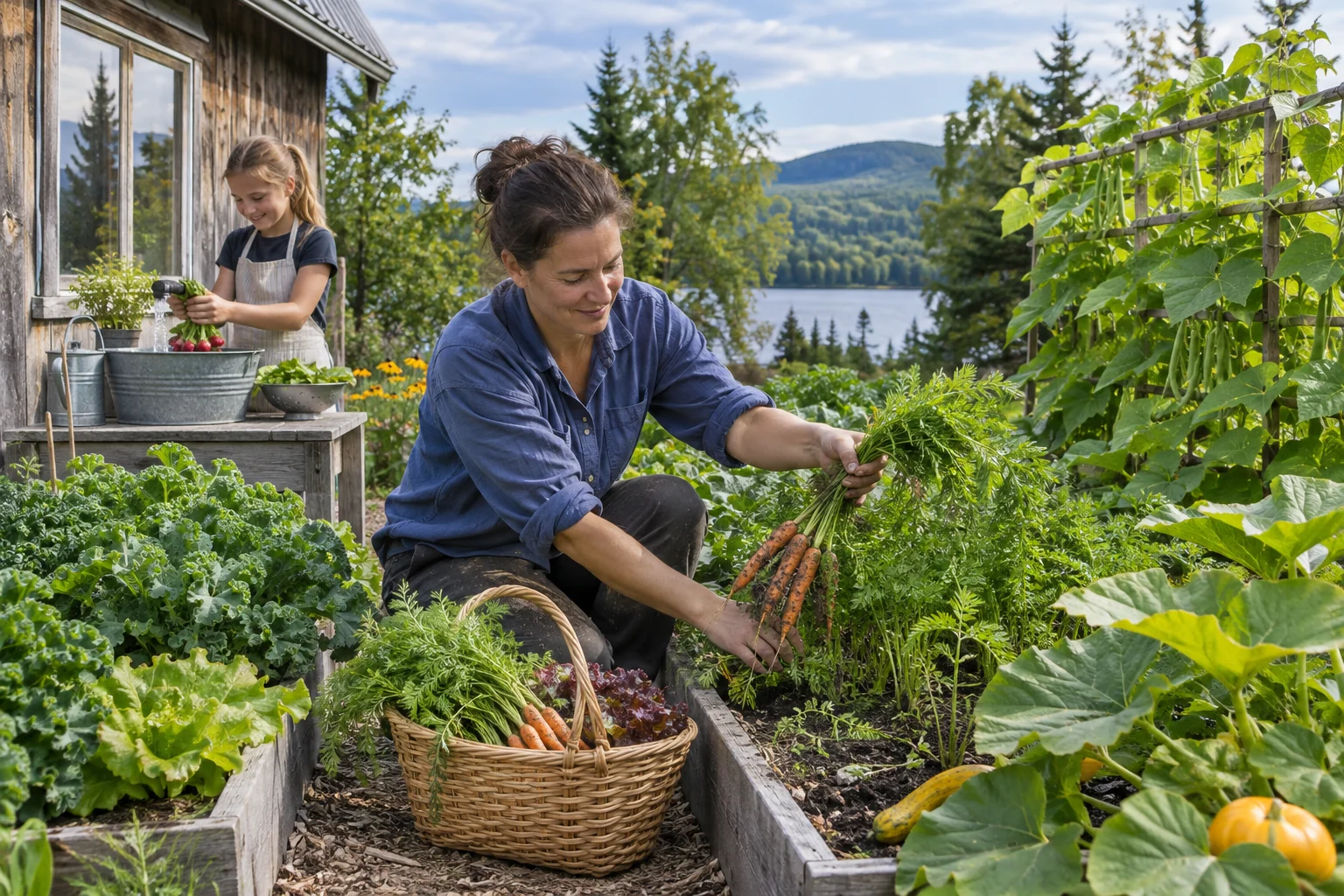
A vegetable garden that supplies a meaningful share of a household’s produce takes several seasons to build. Choosing what to grow is one of the first decisions, and it shapes yield, nutritional variety and how much of the harvest you can keep for winter.
The 25 crops in this guide were chosen on four criteria: yield per area, nutritional value, ease for a beginner or intermediate gardener, and suitability for a short northern season. Planting times are calibrated for Canadian hardiness zones 4 and 5, which include the Montreal, Quebec City, Eastern Townships and Ottawa-Gatineau regions. Adjust them to your area and your average last frost date, often between mid- and late May in southern Quebec and eastern Ontario.
The goal is not total self-sufficiency in year one, which is very demanding, but to build a useful skill, reduce part of your reliance on the grocery store and grow food that keeps.
In brief
In brief. Start small, with 5 to 8 easy crops such as beans, peas, lettuce, radishes, squash, garlic and tomatoes. For winter, focus on what keeps: potatoes, winter squash, carrots, onions, garlic and dry beans. Choose open-pollinated seeds if you want to save your own. In zones 4–5, most frost-tender crops go in after mid- to late May; garlic is planted in the fall. A garden complements a home food supply; it does not replace it.
1. Seed selection principles
Heirloom and open-pollinated seeds
Open-pollinated varieties, including heirloom varieties, produce seeds you can save and replant from season to season, giving plants similar to the parents as long as you avoid cross-pollination. F1 hybrids often give good yields and disease resistance, but their seeds do not reliably reproduce those traits. For a long-term garden where you want to save seed, open-pollinated varieties are the logical choice, though nothing stops you from growing both.
- Their seeds can be saved and reused every season.
- They gradually adapt to local conditions when you select the best plants.
- They are available from specialist seed companies, including many small Canadian growers, and through exchange networks such as Seeds of Diversity Canada.
A useful clarification: “hybrid” does not mean “GMO.” F1 hybrids come from a controlled cross between two lines, a classic breeding technique. In practice, genetically modified seeds are not sold to home gardeners in Canada.
Practical criteria
- Yield, in kilograms per square metre or fruits per plant.
- Nutritional density: calories, protein, vitamins, minerals.
- Ease of growing and tolerance of weather swings.
- Season length: choose early varieties with a days-to-maturity figure that fits your region.
- Keeping quality after harvest: cold storage, drying, canning, freezing or lacto-fermentation.
2. Getting started
The most important rule for a first garden is to start small and expand gradually. A well-tended 9 to 18 m² (100 to 200 sq ft) plot produces more than a large, neglected, weedy one. Every season teaches you something about your soil, local pests and the microclimates on your land.
- First season: 5 to 8 easy crops, marked with an asterisk (*) in the table.
- Later seasons: plan over a full year what you need to grow, preserve and store to cover part of your needs until the next harvest.
- If you keep animals: set aside space for grains and cover crops that double as forage.
Have your soil tested if possible, or at least check its pH with a simple kit: most vegetables prefer slightly acidic to neutral soil. Good compost added every year often does more for yield than any fertilizer.
3. How much space to feed one person?
Estimates vary widely with crops, methods and losses. To cover one person’s fresh and storage vegetables for a year, a commonly cited order of magnitude is roughly one hundred to two hundred square metres (about 1,000 to 2,000 sq ft) under well-managed intensive growing. That figure excludes grains, which need far more space for few calories. Covering all of one person’s calorie needs from a garden takes much more land, labour and experience.
In practice, a modest family garden mostly provides fresh vegetables in summer and part of the winter supply. It is an excellent complement to a household food supply, not a substitute.
4. The 25 crops at a glance
* = among the easiest for beginners. “Last frost” means the average date of the last spring frost in your area.
| Crop | Planting in zones 4–5 | Frost | Ease | Storage |
|---|---|---|---|---|
| Asparagus | Crowns in spring; perennial, harvest after 2–3 years | Very hardy | Intermediate | Fresh, frozen |
| Barley | Sow early spring | Hardy | Intermediate | Dry grain |
| *Beans | Sow after last frost, in warm soil | Tender | Easy | Frozen, canned, dried |
| *Broccoli | Transplants in spring; sow in June for fall | Tolerates light frost | Easy | Frozen |
| *Carrot | Sow late April to early July | Hardy | Easy | Cold room, sand |
| Cauliflower | Transplants in spring or July for fall | Tolerates light frost | Intermediate | Frozen, fermented |
| Corn | Sow after last frost, soil 10 °C (50 °F)+ | Tender | Intermediate | Frozen; flint/flour corn dried |
| *Cucumber | After last frost, warm soil | Tender | Easy | Pickles, fermentation |
| Eggplant | Transplants 1–2 weeks after last frost | Very tender | Intermediate | Short |
| Kale | Spring; survives hard frosts | Very hardy | Easy | Frozen, dried |
| *Lettuce | As soon as soil can be worked, then succession sowings | Hardy | Easy | Short |
| Melon | Transplants 2 weeks after last frost, early varieties | Very tender | Advanced | Short |
| Okra | Transplants after last frost, warm soil; marginal | Very tender | Advanced | Frozen |
| *Onion / *Garlic | Onions in spring; garlic planted in October | Very hardy | Easy | Months, kept dry |
| Peanut | After last frost; marginal, very early varieties | Very tender | Advanced | Dried |
| *Peas | Early spring, as soon as soil can be worked | Hardy | Easy | Frozen, dried |
| *Pepper | Transplants after last frost | Tender | Easy (sweet) | Frozen, dried |
| Potato | Around last frost date, soil 7–10 °C (45–50 °F) | Foliage tender | Intermediate | Cold room all winter |
| Pumpkin | After last frost | Tender | Intermediate | Several months |
| *Radish | Early spring and late summer | Very hardy | Easy | Short (winter radish longer) |
| Spinach | Early spring and late summer | Hardy | Intermediate | Frozen |
| *Squash | After last frost | Tender | Easy | Winter squash: several months |
| *Tomato | Transplants after last frost | Tender | Easy | Canned, dried, frozen |
| Turnip / rutabaga | Turnip in spring; rutabaga in June | Hardy | Easy | Cold room |
| Wheat | Winter wheat in September; spring wheat early spring | Winter wheat very hardy | Advanced | Dry grain |
Several crops, such as tomatoes, peppers, eggplant, broccoli and melons, are started indoors 6 to 10 weeks before transplanting, or bought as seedlings. Melon, okra and peanuts are marginal in zones 4–5: they need a long, warm season, very early varieties and often protection such as a low tunnel or black plastic mulch. Save them for when you have mastered the basics.
5. Crop notes
Asparagus
The only perennial on the list: it takes 2 to 3 years before a real harvest but returns every spring for 15 to 20 years without replanting. It is the ultimate long-term investment, provided you give it a permanent, well-drained, weed-free spot.
Barley
Versatile: porridge, flour, malt, animal feed and ground cover. Sow it early in spring. On a small plot, hand threshing and winnowing take time: try it once vegetables are under control.
Beans
Pole beans yield more but need support; bush beans are quicker. Sow every 2 to 3 weeks until late June for a summer-long harvest. Dry beans, such as navy or cranberry beans, keep all year and provide protein. Like all legumes, they fix nitrogen from the air through bacteria in their roots, which benefits the next crops.
Broccoli
After the main head is cut, plants produce side shoots for several weeks. It tolerates light frost, making it a good fall crop. Protect it from cabbage worms with insect netting.
Carrot
A cool-season crop sown from spring to early July. Carrots keep very well in a cold room, in damp sand, or in the ground under heavy mulch until hard frost. Loose, stone-free soil gives straight roots.
Corn
Expect one to two ears per plant. Plant in blocks of several rows rather than one long row, for good wind pollination. Flint and flour corns can be dried and ground, a useful storage crop. Isolate varieties or stagger plantings if you want to save seed, because corn cross-pollinates easily.
Cucumber
Frequent picking boosts production: do not let fruit turn yellow on the vine. Pickling varieties are best for canned or fermented pickles.
Kale
Highly nutritious and very cold-hardy, it often keeps producing into November, and its leaves sweeten after frost. It is one of the most productive crops per square metre in nutritional value.
Lettuce
One of the first harvests of the season. Picking leaf by leaf extends production, and sowing every two or three weeks gives a continuous supply. It bolts in hot weather, so choose heat-tolerant varieties for summer.
Onion and garlic
Garlic is planted in October for a July harvest the next year: one of the simplest, most reliable crops in a cold climate. Onions go in during spring, from sets or transplants. Well cured, onions and garlic keep for months somewhere cool and dry.
Peas
Among the first crops to sow in spring, they handle light frost well. Shelling, snow or snap peas all fix nitrogen. Dried peas keep for winter soups.
Potatoes
A plant often yields 5 to 10 tubers depending on variety and soil. Potatoes are among the most calorie-dense crops per square metre and keep all winter in a dark cold room at about 4 to 7 °C (40 to 45 °F). Plant certified seed potatoes rather than grocery-store potatoes to limit disease, and rotate the location every year.
Squash
Winter squash, such as butternut, Hubbard or spaghetti squash, keeps for months at cool room temperature without refrigeration after a few days of curing in the sun. Summer squash, such as zucchini, is picked young and often.
Tomatoes
Choose varieties suited to a short season. Tomatoes are easy to can, dry or freeze. For canning, add citric acid or lemon juice per a tested recipe, because tomato acidity varies.
Wheat
Winter wheat, sown in September, protects the soil over winter and is harvested the next summer. Do not overestimate the yield: a 3 m by 3 m (10 by 10 ft) plot usually produces a few kilograms of grain, enough for a few loaves. It is a technical crop to try after mastering basic vegetables.
6. Cover crops
Beyond food crops, green manures play a structural role in a lasting garden. You do not eat them, but they improve soil health, reduce winter erosion and feed the next crops.
- Hairy vetch: a legume that fixes nitrogen and produces lots of biomass. Cut, it becomes green mulch or forage.
- Clover: the same idea, with a good effect on soil structure. White Dutch clover suits paths, and its flowers attract pollinators.
- Fall rye: very hardy, it can be sown until late September and protects soil all winter.
In practice: after the last fall harvest, sow a cover crop on empty beds instead of leaving them bare. In spring, cut it and work it into the soil two to three weeks before planting. This simple rotation clearly reduces the need for bought inputs.
7. Crop rotation and companion planting
Do not grow the same vegetable family in the same spot two years in a row. A three- or four-year rotation, for example legumes, then heavy-feeding leafy crops, then root crops, then potatoes or squash, limits disease and soil depletion. Note each year what you planted and where: a simple notebook will do.
Some pairings are traditional, such as the Indigenous “Three Sisters”: corn, pole beans and squash, which support each other. Corn provides a trellis, beans fix nitrogen and broad squash leaves shade the soil.
8. Building your own seed bank
Saving your own seed strengthens self-reliance and gradually gives you varieties adapted to your land. Start with the simplest, self-pollinating crops: beans, peas, lettuce and tomatoes. Squash, corn and brassicas cross easily between varieties and need more care.
- Collect seed from the best plants, at full maturity.
- Air-dry it completely in the shade before storing.
- Store it in paper envelopes or airtight jars somewhere cool, dry and dark, labelled with variety and year.
- Run a germination test before each season: put ten seeds on a damp paper towel and count how many sprout.
Seed life varies by species: onion and parsnip seed loses vigour quickly, often within one or two years, while tomato or squash seed often stays good for several years. For the full method, see our guide to saving seeds.
9. Storing the harvest for winter
A self-reliance garden is planned around winter. The best storage crops in a cold climate are potatoes, winter squash, carrots, beets, turnips and rutabagas, onions, garlic and dry legumes. Plan from spring where and how you will store them:
- Cold room or root cellar: 0 to 7 °C (32 to 45 °F) with good humidity for root crops and potatoes.
- Cool, dry spot: for onions, garlic and winter squash.
- Canning: using tested, reliable recipes; low-acid vegetables such as beans or corn require a pressure canner to prevent botulism.
- Freezing, drying and lacto-fermentation: to diversify methods and not depend on a single energy source.
For more, see our article on winter food storage options.
10. Gardening with others
A garden is easy to share. Community and collective gardens, common in Canadian cities, let you learn from experienced gardeners, swap seeds and share tools. Seedy Saturdays and seed fairs held every winter in many regions are also a great way to find local varieties. In a crisis, a network of gardeners who know each other is a valuable shared resource.
11. Key takeaways
Choosing seeds means thinking about a short northern season, what your family actually eats and what keeps. Start with a few easy crops, get to know your soil, add one or two storage crops each year and begin saving your own seed. The garden then becomes a practical pillar of resilience, alongside a home food supply.
Frequently asked questions
Which crops are easiest to start with in a cold climate?
Beans, peas, lettuce, radishes, squash, tomato transplants and fall-planted garlic are among the easiest and most reliable.
When should I plant in zones 4–5?
Cold-hardy crops such as peas, lettuce, radishes and spinach go in as soon as the soil can be worked. Frost-tender crops such as tomatoes, squash and beans go in after your average last frost date, often between mid- and late May in southern Quebec and eastern Ontario. Garlic is planted in October.
Why choose open-pollinated seeds?
Because their seeds can be saved and replanted to give similar plants, letting you build your own seed bank. F1 hybrids remain useful for yield, but their seeds do not breed true.
Which crops provide the most calories?
Potatoes, winter squash, dried flint corn, dry beans and garlic are among the most worthwhile for a family garden, and they store well.
How long do seeds keep?
It depends on the species: one to two years for onion or parsnip, often several years for tomato, squash or cucumber, if kept cool and dry. A germination test will tell you.
Further reading
- Saving seeds: selection, drying and germination tests
- Starting a garden that fits your needs
- Winter gardening: realistic harvests in a cold climate
- Winter food storage options
Sources
- Natural Resources Canada, plant hardiness zone maps.
- Seeds of Diversity Canada, seed-saving guides.
- Espace pour la vie (Montreal Botanical Garden), vegetable gardening advice.
- National Center for Home Food Preservation and Health Canada, safe home canning.