
In this article
A winter vegetable garden can prolong harvests and develop useful skills, but the possibilities depend heavily on climate, light and protection. In Quebec, harvesting plants established under shelter is not the same as growing all vegetables outdoors during cold weather. Start with a small area and measurable expectations.
Distinguishing growth, garden conservation and harvest
A plant can survive a cold spell without continuing to grow enough to be harvested regularly. The length of the day, soil temperature and species influence this result. Recommendations valid in a region with mild winters do not translate directly to Montreal or a colder region.
Set your goal: extend the season by a few weeks, harvest already developed vegetables or produce young leaves indoors. This choice determines seedlings, space and expenses. A winter garden remains a food supplement, not a guaranteed emergency reserve.
Prepare the crop before the cold weather
Choose suitable varieties and consult a local planting schedule. Plants usually need to reach a useful size before the lack of light and cold slow down their development. A late sowing is not automatically compensated by a layer of mulch.
Clean the diseased crops and dispose of them according to local instructions. Burning is not a general solution to recommend. Add an amendment adapted to the results of a soil analysis and the needs of plants; a simple pH device does not measure all nutrients or contaminants.
Using protections with their limits
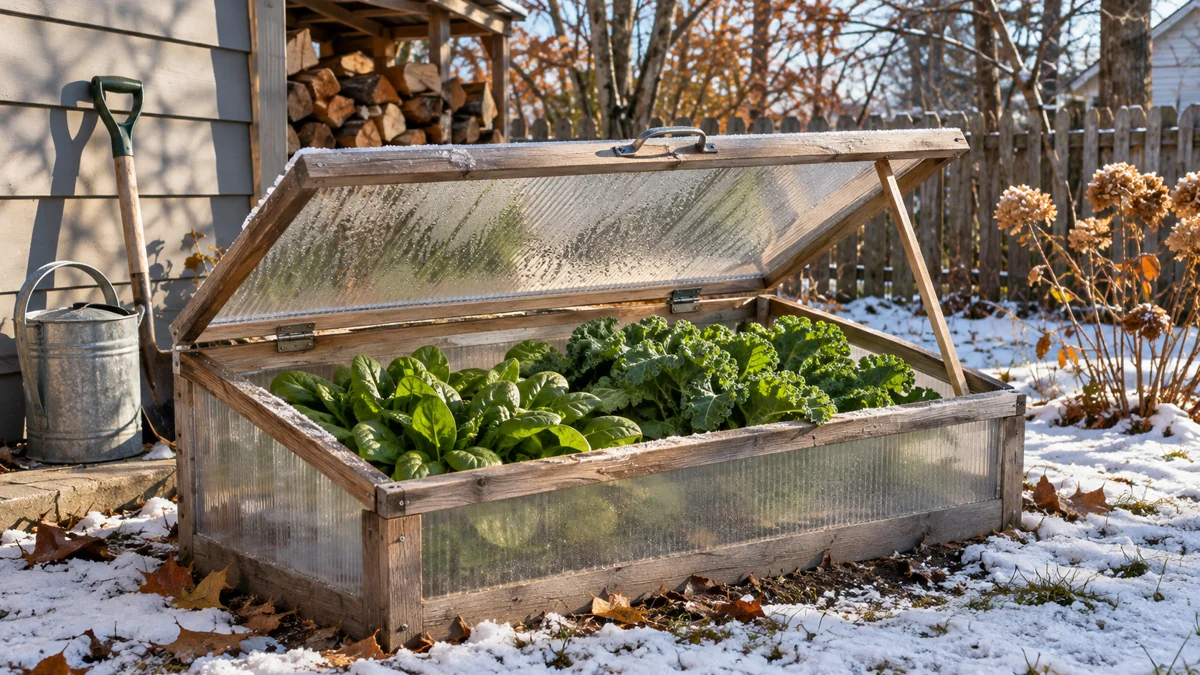
A cold frame is a small unheated structure with a transparent cover. It captures the heat of the sun and partially protects from the cold. It can also overheat on a sunny day: its opening and ventilation must be planned.
A sail, tunnel or mulch changes conditions without guaranteeing a universal temperature threshold. Check specifications, anchoring, water flow and snow loads. Do not rely on an unsupervised light greenhouse to maintain continuous production for a long period of frost.
Fresh-tolerant leafy vegetables can be interesting to start with: spinach, some lettuces and cabbages adapted. Garlic planted in the fall mainly prepares a crop to harvest later; it does not provide new bulbs all winter. The needs of asparagus, peas and beans require separate schedules.
Produce indoors with a small installation
A bright space can accommodate herbs and some young leaves. Examine the duration and intensity of light available, the moisture and the actual place of plants at maturity. Start with one or two easy-to-maintain containers.
Growing pots or bags must provide controlled drainage and protect household surfaces. Avoid standing water and arrangements that promote mould. Choose an appropriate growing medium rather than bringing pest-infested soil indoors without precautions.
Horticultural lighting can complement natural light. Check the area covered, the consumption, the distance to the sheets and the fixing method. Use equipment designed for the intended purpose and keep electrical connections away from watering.
Monitor and rate results
Inspect the leaves, drainage and condition of the protections. A small infestation is more easily managed when it is spotted early. For treatment products, check the authorized uses and label; a product presented as natural is not automatically risk-free.
Write down the planting dates, variety, conditions and quantities harvested. Compare the cost of seeds, electricity and materials with the learning and food obtained. This exercise helps to choose a proportionate installation in the home.
Your next action: select a single crop, a small location and a trial period. Prepare for care during your absences and keep your usual food supply.