
In this article
A shooting in a public place is one of the most unpredictable and brutal situations a citizen can face. It happens without warning, in ordinary places, and leaves very little time to think. This article is not meant to cause anxiety, but to help you act in an informed way if you ever find yourself near such an incident.
Emergency services respond as quickly as their resources allow. In real situations, a delay of several minutes between the incident and the arrival of first responders is unavoidable. That delay is the window in which your own decisions will have the greatest impact on your safety.
Before an incident: build good reflexes at all times
Preparing for an active shooter does not start the day something happens. It rests on simple habits built gradually into daily life.
1. Spot the exits whenever you arrive somewhere
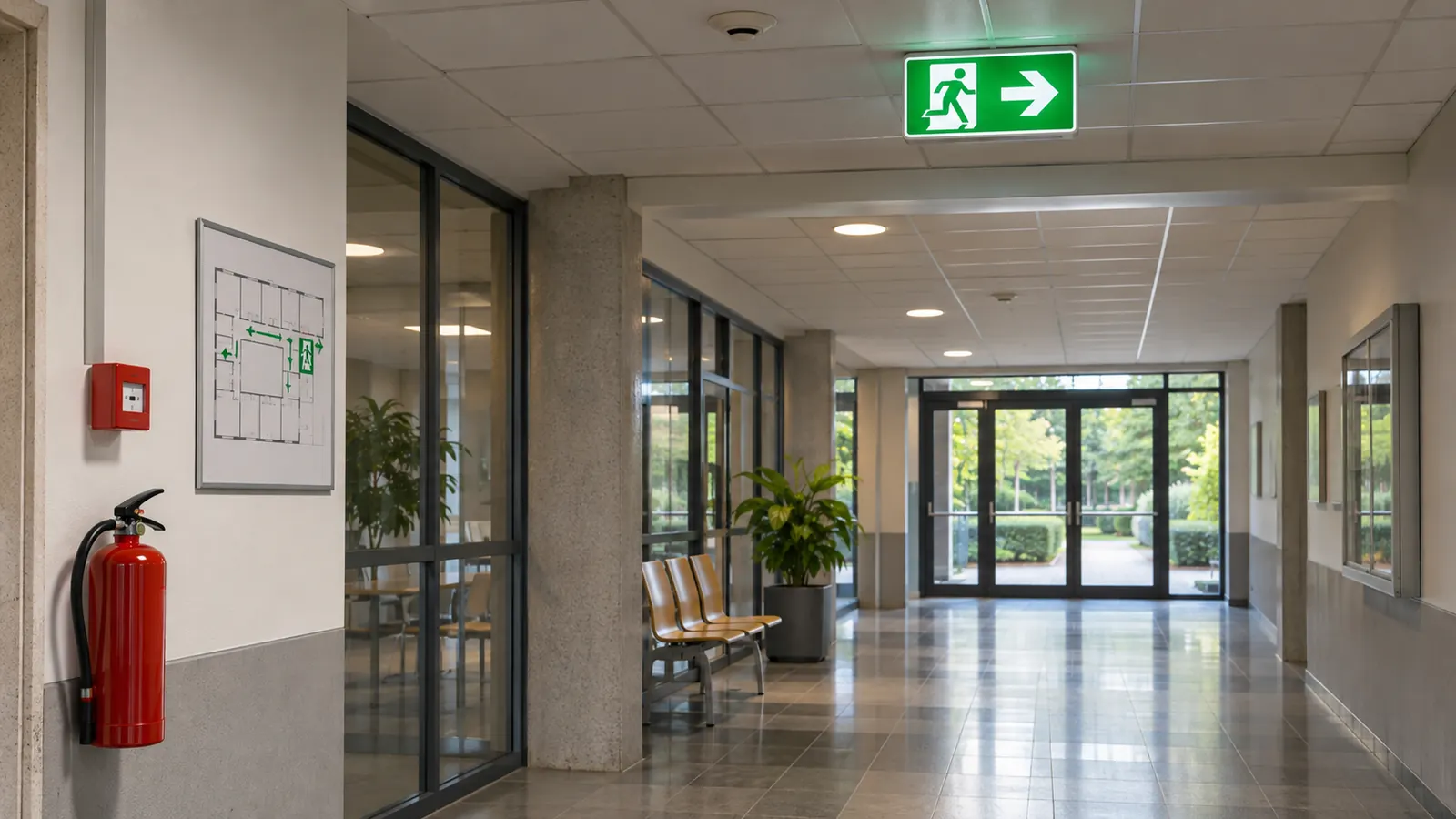
Theatre, shopping centre, concert hall, arena, restaurant: every time you enter a place, take a few seconds to identify the available exits. Look especially for secondary exits — staff-only doors, emergency exits, back doors — that most people would not notice in a panic. In a mass evacuation, the main exits concentrate the crowd and can quickly become dangerous.
2. Choose your position in a space strategically
Sitting near an exit or at the edge of a room is not paranoia: it is common sense that applies to many emergencies, whether a shooting, a crowd panic, a fire or an earthquake. The middle of a packed room is the hardest place to leave quickly.
3. Practise situational awareness
Situational awareness means keeping active attention on your immediate surroundings: the people present, unusual behaviour, exits, potential cover. It is not anxious watchfulness, but presence in your environment. Practised regularly, it becomes natural and lets you detect an emerging problem before it materializes.
Constant phone use in public spaces is one of the main things that reduces situational awareness. Looking up regularly and noticing what is happening around you is a simple reflex that can make a real difference.
4. Dress practically
This may seem minor, but it has a concrete logic: unremarkable clothing and closed shoes suitable for walking or running let you move quickly without drawing attention. In an emergency, being able to run and blend in can be useful.
During an incident: run, hide, fight
Protocols developed by several North American public safety agencies converge on a three-step logic, often summarized as “Run – Hide – Fight”. This is not a rigid procedure: it guides decision-making according to what the situation actually allows.
Run first
If an escape route is available, it is always the first option. Leave quickly, leave your belongings behind and don’t stop until you are out of range.
Hide if you cannot run
Find a room you can lock, turn off the lights, silence your phone and get out of the line of sight. The goal is not to be detected.
Fight as a last resort
If you are cornered and every other option is exhausted, passive stillness is the worst option. Trying to disrupt or disarm the shooter with whatever is at hand becomes the only path.
5. Leave as soon as something feels wrong
One of the best-documented obstacles in crises is normalcy bias: the brain tends to downplay unusual signals to fit an ordinary explanation. Witnesses of real shootings have described first interpreting gunshots as firecrackers, a show or a mechanical noise. That interpretation delay can cost precious seconds. If something seems wrong — a sound, a behaviour, a sudden crowd movement — trust your instinct and leave without waiting for confirmation.
Being in a state of moderate alertness (neither distracted nor hypervigilant) makes this reaction easier. It is not paranoia: it is a basic posture in any busy public space.
6. Leave your belongings behind
In a real situation, attachment to personal belongings can slow an escape considerably. Bag, coat, phone on the table: none of it is worth a lost second. The only exception is the people in your direct care — children, loved ones. If you are with young children, try where possible to stay between them and the source of danger as you flee.
7. Keep going once you are outside
Leaving a building does not mean you are out of danger. In documented incidents, people stopped outside to check their phones, not realizing they were still within the shooter’s range. Keep moving away until you are truly out of the area, sheltered behind a building or in a secure space. Only then is it time to call for help.
When running is no longer possible
8. Look for solid cover
There is an important difference between concealment (getting out of sight) and cover (getting behind an obstacle that can stop or deflect projectiles). A drywall partition or wooden door offers little real ballistic protection. A concrete wall, a structural pillar, a vehicle (engine side) or a stone counter are more effective cover. Lying on the floor also reduces your visible profile.
9. Hide and stay silent
If you are inside and the exit is blocked, find a room you can lock. Lock the door, barricade it if possible, turn off the lights and your phone’s sound. Move away from the door and out of the line of sight from windows. The goal is to make the room look empty. Staying silent and still may be necessary for a long time — minutes or more — until help arrives.
10. Act as a last resort
If you are physically cornered and every escape or hiding option is exhausted, waiting passively is generally considered the worst option. The last-resort logic is to actively disrupt the shooter: use available objects, try to disarm, and act together with others present if possible. This choice belongs entirely to the person in the situation, based on what they see as realistic at that precise moment.
Training on this kind of situation is offered by some emergency management bodies, response training centres and self-defence clubs. Practical preparation — even partial — is always better than purely theoretical reflection.
When police arrive
The first officers on scene are there to stop the threat, not to help the wounded: they will go past you. They do not know who the shooter is.
- Keep your hands empty, open and clearly visible.
- Drop anything (phone, bag, umbrella) that could be mistaken for a weapon.
- Avoid sudden movements, don’t grab the officers and don’t shout.
- Follow their instructions exactly and, if asked, say where you last saw the shooter.
After the incident
Once you are safe, several reflexes apply:
- Call for help as soon as you are out of danger (911 in Canada).
- Don’t go back to the scene, even to collect belongings.
- Let your loved ones know where you are and how you are as soon as possible.
- Cooperate with the authorities as they secure the area and carry out checks.
- Recognize that the psychological effects of such an event can appear days or weeks later, and seek support if needed.
Summary: the principles to remember
| Phase | Priorities |
|---|---|
| Before | Spot the exits, keep basic situational awareness, dress practically |
| During | Run first, hide if you cannot run, fight only as a last resort |
| Police arrival | Hands empty and visible, no sudden movements, follow instructions |
| After | Move away, call for help, don’t go back, seek support |
These recommendations draw on widely recognized principles of crisis management and emergency preparedness. They do not replace practical training or emergency services, but they can shorten reaction time and improve the quality of decisions in the first seconds of an incident.
Further reading
To prepare your workplace or family, see our guide to active shooter emergency planning and our advice on preparing children to run, hide and alert. For intense stress, read our guide to acute stress and acting methodically.
If you have lived through a violent event, stress reactions (disturbed sleep, flashbacks, anxiety) are normal in the weeks that follow. In Quebec, Info-Social 811 offers psychosocial support at any time; anywhere in Canada, 988 answers by call or text.
Frequently asked questions
Should I hide or run first?
Running is always preferable if an escape route is available and accessible. Hiding becomes the right option only when running would expose you to greater risk. The two are not equivalent: running takes you away from the danger, hiding keeps you in the incident area hoping not to be found.
Should I call 911 immediately?
Your priority during an active situation is to get to safety. Call as soon as you are safe and out of range. A call made while running can distract or slow you at a critical moment. If you are hiding, keep your phone silent; if you can call without being heard, 911 operators can listen and guide you.
Do these tips also apply to children?
The main principles apply, but having children with you changes how the situation is handled in practice. It helps to talk with them, calmly and in an age-appropriate way, about emergency exits, how to react to loud noises and meeting points. Family-oriented training exists in several regions.
Is specific training available?
Some emergency management bodies, police services and private training centres offer workshops on responding to active shooter situations. Check what is available in your area. Practical training, even short, is far more effective than purely theoretical preparation.