
In this article
A hasty start is easier when the transport and needs of your animals are already organized. This fifth week gives them an explicit place in the family plan: food, water, treatments, identification and accommodation.
Plan a place that accepts them
Call a loved one, a boarding house or an establishment that can accommodate your pet. Confirm conditions: species, number, size, vaccination, cage and owner’s presence. Terms and conditions vary depending on location and urgency; do not assume that a shelter will accept all animals. Service animals may be subject to special arrangements to be checked with the body concerned.
Note an alternative and contact details of the usual veterinarian as well as a veterinary emergency service. If you are absent, agree with a reliable person what they can do, without exposing them to a dangerous building or area.
Preparing a suitable transport
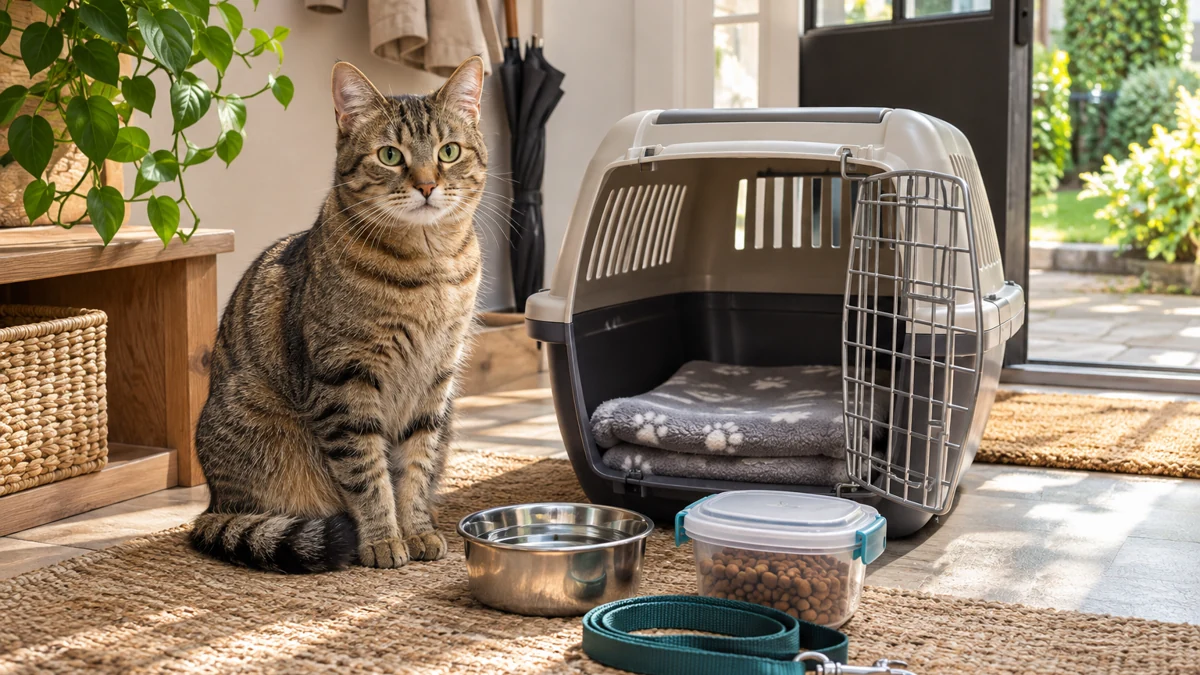
Check the size and closure of the cage or carry bag. The animal must be able to stay there under appropriate conditions. Make gradual and calm tests before the day of departure. An adjusted leash and harness remain useful for travel, depending on the species.
Do not infer from the name of a product that it is approved for the car or accepted by plane. Confirm the carrier's requirements and follow the instructions. For several animals, identify the material of each to avoid errors in an unusual place.
Creating a Familiar Reserve
Set aside the usual food, drinking water, bowls, a can opener if necessary and hygiene items. First prepare a base for at least 72 hours, then increase according to your plan, your space and local recommendations. Water requirements depend on species, size, health and temperature: assess them with the veterinarian rather than applying a single volume.
Add litter box and tray for cats, collection bags, proper cleaning products and blanket or familiar item. Organize a food rotation. For treatments, ask the veterinarian for the appropriate amount and storage conditions; do not replace a veterinary medicinal product with a human product.
Make identification useful
Check the medal, phone number and contact information associated with the microchip, if applicable. Keep a recent photo, vaccination records and medical information in a pouch. A photo of you with the animal can also facilitate some identification steps.
If an animal remains exceptionally on site, inform the responders of its presence according to the instructions received. A sticker does not guarantee its rescue. In the event of a fire, go out immediately and do not return to the building to look for it; forward the information to the firefighters.
Actions of the week
- Confirm a main reception and an alternative solution.
- Prepare food, water, hygiene and dossier for each animal.
- Have the treatment plan validated by the veterinarian.
- Check identification and try transportation without unnecessary stress.
- Add the animals to the family evacuation exercise.
Your expected result: a realistic plan to leave together, with transportable equipment and a confirmed place of reception.
Useful references
- Plan what to do for your animals - Gouvernement du Québec.
- Pets and service animals - Public Safety Canada.
Put this reading into practice
Perform the action as you wish and then check the result. Your follow-up remains specific to this route.
52 weeks to strengthen your preparation; Week 5
Predicting the needs of animals
Your action: Calculate the usual needs of the animal and check its transport and reception conditions.
To check: Prescribed treatments and identification are up-to-date; the veterinarian remains the reference for care.
To do