
In this article
When water is lacking or sewage disposal is disrupted, hygiene becomes a daily organizational issue. This week, prepare something to wash your hands, manage personal needs and keep waste while waiting for collection instructions.
Identify the failure before choosing a solution
A drinking water interruption, a boil notice and a sewer discharge do not require the same actions. Consult the municipality or water provider. If the sewer system is no longer functioning or repressing, do not use the connected toilets and appliances until authorized by the authorities or the professional concerned.
Do not automatically pour water into the bowl to activate a flush: this is only suitable if the drainage system can still be used and the instructions allow it. In the presence of contaminated water or an electrical hazard, keep people away and involve the competent services.
Preparing hand hygiene
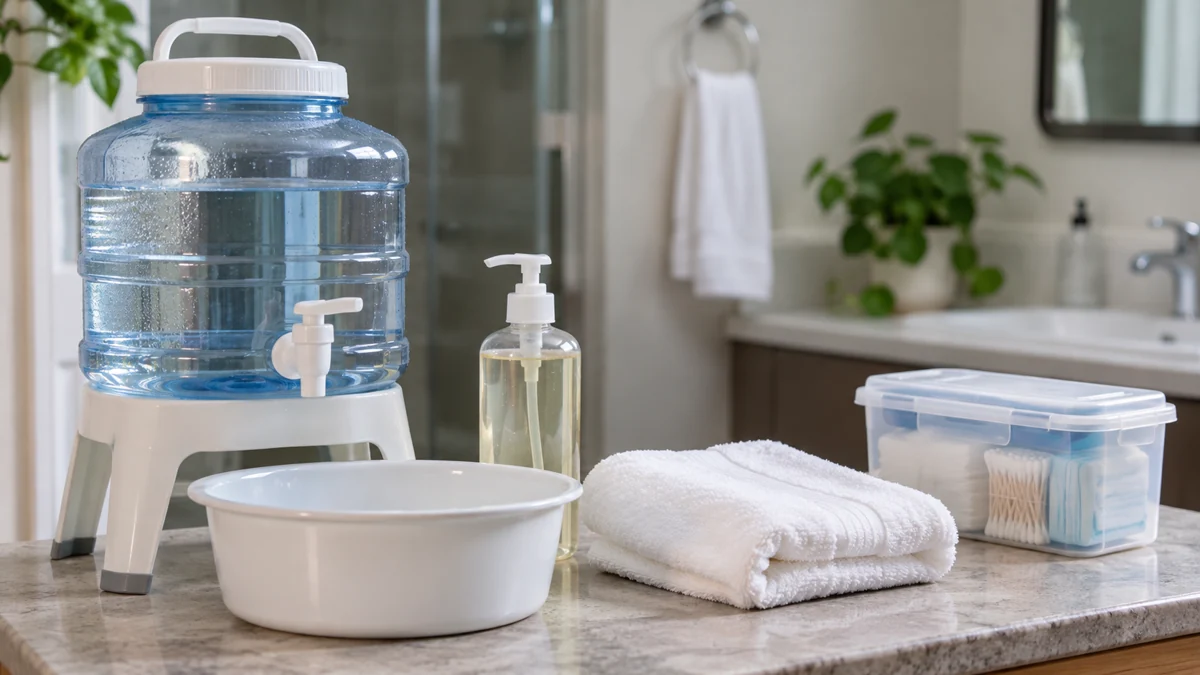
Reserve water and soap for essential actions, especially after the toilet and before preparing food. Organize a stable station, accessible to children with assistance, and collect wastewater according to local instructions. Separate this area from food and stored drinking water.
A hand sanitizer may be helpful in some circumstances, but does not always replace washing, especially if the hands are visibly dirty. Keep products in their packaging, out of the reach of children, and follow their label.
Providing a temporary health solution
Find out about portable sanitary equipment adapted to your home and the collection system planned by your municipality. Choose a solution that is stable, cleanable and usable by people in the home. Provide compatible consumables: bags and absorbent specified by the manufacturer, closure and appropriate temporary storage.
Human waste does not automatically throw itself away with ordinary garbage. Don’t burn them, don’t bury them, and don’t create a latrine in a land or public space without proper permission and framing. Their evacuation must protect people, soil and water sources.
Make a kit suitable for people
Gather toilet paper, collection bags, household gloves, soap and cleaning equipment. Add the menstrual protections, incontinence products, diapers and baby items that are actually used. Evaluate quantities from a typical week, then adjust your reserve to the family plan and available space.
Keep clean products separate from waste. Provide a closed and identified container for temporary waste, out of reach of children and animals. An ordinary storage bin is not necessarily waterproof or suitable for this purpose: check its function.
Clean up without creating another risk
Use each product according to its label. Never mix bleach with vinegar, acid or other cleansers. A deodorizer or absorbent does not disinfect automatically. For a space contaminated by a push-back, ask for the appropriate cleaning instructions and professional help.
Actions of the week
- Note where to find the instructions on water, sewers and collection.
- Prepare a hand washing station and personal needs.
- Choose a temporary sanitary solution and confirm the management of its waste.
- Separate clean, household products and waste.
- Check that everyone can use the device without the risk of falling.
Your expected result: a realistic hygiene kit and a sanitary solution for which you know the conditions of use and disposal.
Useful references
- Refoulements and site security - Ville de Québec.
- Customize your emergency kit - Public Safety Canada.
Put this reading into practice
Perform the action as you wish and then check the result. Your follow-up remains specific to this route.
52 weeks to strengthen your preparation; Week 8
Prepare for daily hygiene
Your action: Gather the appropriate hygiene resources and consider a water or sanitary break.
To check: Waste disposal follows local guidelines; products are used according to their label.
To do