
In this article
Week 4 established a first communication plan. This week, test its continuity and examine whether additional equipment meets a specific need. Receiving information, interacting with a group and calling for help remain different functions.
Test the existing plan first
Check the contact details of the out-of-area contact, the meeting places and the instructions for the children. Test a brief message with the people involved and make sure the paper list is accessible. A breakdown is not resolved only by buying a radio.
Identify the official stations and sources received in your area. Try it out from the housing and the fallback location. Note the reception limits and the power required.
Distinguish reception and broadcast
An AM/FM radio receives the broadcasts. A shortwave receiver can provide access to other stations depending on the conditions, but does not issue or guarantee local instructions. A weather strip advertised on an imported device is not automatically useful in all countries.
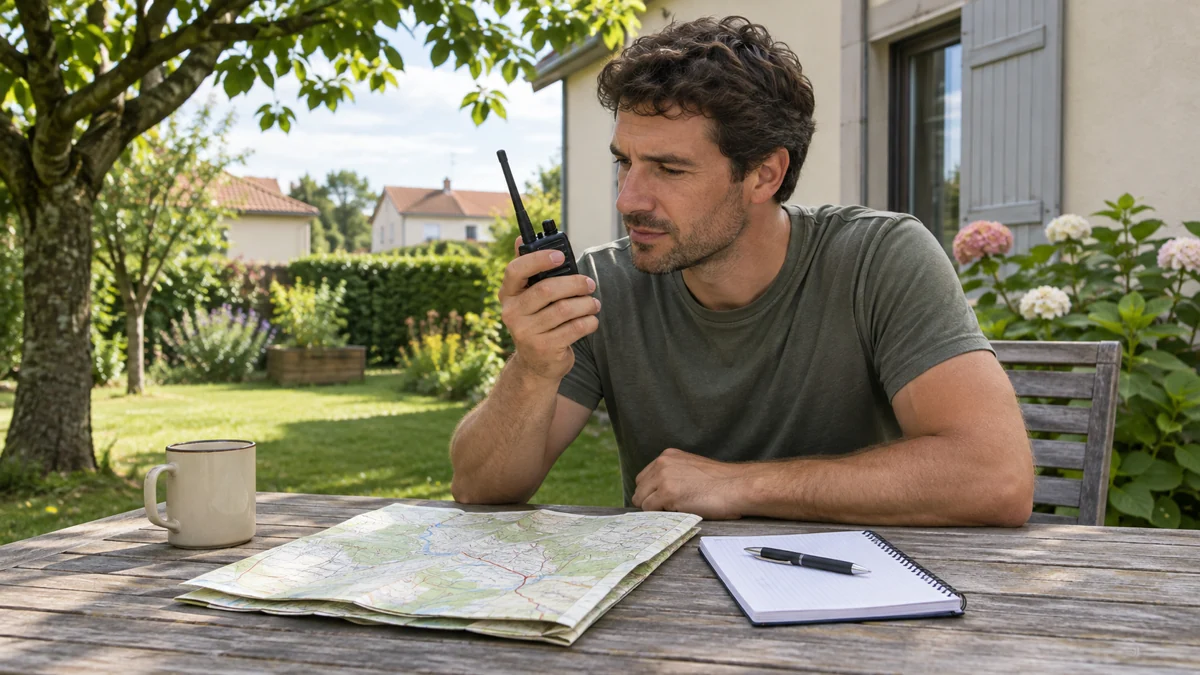
A transceiver allows an exchange if the devices, frequencies and conditions are compatible. The range depends on the terrain, buildings, antennas and any network used. A commercial distance does not replace a test on the intended route.
Check the rules of the territory
In Canada, amateur radio practice requests appropriate qualifications and authorizations from ISED. In France, check the ANFR requirements. Consumer service devices and frequencies also differ by country; a U.S. reference such as MURS does not constitute local authorization.
Before making a purchase, seek advice from a club or competent authority. Check the approval, functions and conditions of use. The existence of an emergency must not be used as a pretext to test an unauthorized program or disrupt a service.
Predicting people and procedures
A device only works in groups if users know when to listen, how to identify themselves and what message to convey. Set trial times and simple language. Avoid sensitive medical or personal information about a communication that may be heard by others.
Do not create a monitoring or policing device. Family communications and mutual assistance remain coordinated with the competent services. Military phones and improvised cable networks are not general needs for a home.
Maintenance of food and documents
Check compatible batteries, chargers and cables. Keep useful manuals and settings offline. A phone battery can extend a call if the network remains available; it does not restore the network.
A resistant notebook can receive the coordinates and results of the tests. Limit sensitive data and keep a useful copy in another place.
Actions of the week
- Test the family plan and local reception.
- Identify a real limit to solve.
- Check the rules before considering an issuer.
- Make an authorized trial with the persons concerned.
- Schedule maintenance and keep instructions.
Your expected result: tested communications and equipment selection based on known need, skill and rules.
Useful references
Put this reading into practice
Perform the action as you wish and then check the result. Your follow-up remains specific to this route.
52 weeks to strengthen your preparation; Week 38
Test the redundancy of communications
Your action: Compare the available solutions according to the areas visited; check subscription, recharge and call protocol of a possible specialized device.
To check: The limits are known; no device is supposed to guarantee an intervention.
To do