
In this article
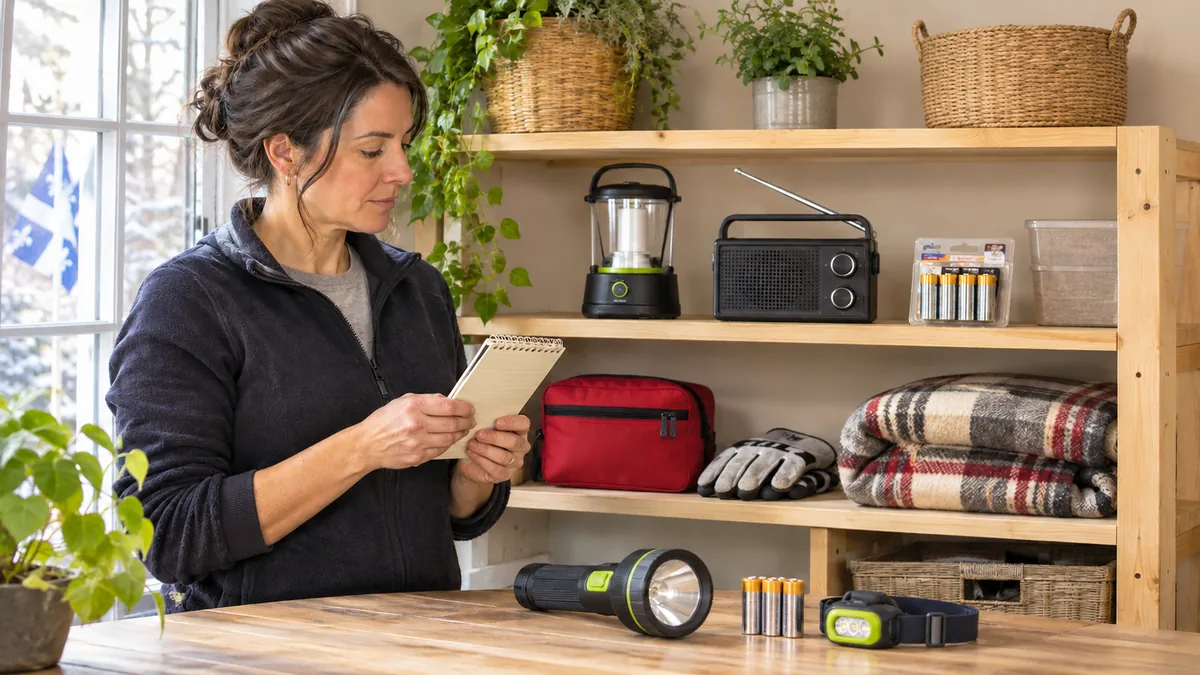
This second week of preparation is devoted to the inventory of domestic tools. The goal is to know what you have, what you know how to use and what is missing for simple tasks during a service interruption.
A useful tool is adapted to the task, in good condition and mastered by its user. Quality matters, but it does not replace competence or safety limits.
Beyond the simple knife
A knife does not replace the tools needed for routine maintenance. A hammer, a suitable key, a shovel or a lamp may be more useful depending on the problem. Limit yourself to simple and safe procedures; a damaged building must be evaluated by the right people.
Start with predictable short-term tasks: lighting, moving small objects, installing appropriate temporary protection, or performing a minor repair. Don’t buy everything in one week.
The principle of superposition
Divide the tools according to their uses: a domestic set and, if your travels warrant, a small kit in the vehicle. Adapt each set to the weight, available space and tasks actually being considered.
Before buying, check the existing tools and compare the features, condition, maintenance possibility and total cost. User reviews may help, but do not replace a hardware check.
Why basic manual tools?
Manual tools do not depend on a power outlet. A battery-operated drill can still be used as long as its battery is charged. In any case, the tool must be suitable for the task and the working conditions.
The basic tools allow :
- Prepare the transportable equipment in your plan, without delaying an emergency evacuation.
- Perform simple protection or maintenance tasks, when the premises are safe.
- Assist with tasks that are organized and compatible with your training; do not improvise a search or rescue operation.
- Maintain certain essential activities during a service interruption.
- Perform minor repairs in your skills; entrust structural damage and technical installations to professionals.
Supply Sources: Many quality tools can be found in local hardware stores, home improvement stores, and even at garage sales. The latter sometimes offer complete sets at a reduced price.
List of tools for week 2
Storage and protection
- Robust box, clearly identified, adapted to the volume and weight of the tools; no capacity imposed.
- Glasses of protection
- Working gloves
Lighting and energy
- Easy-to-use lamps, adapted to the age and capacities of each; batteries or charging compatible with the chosen model.
- Flashlights for each vehicle
- Rechargeable batteries
Tools to choose according to tasks
- Hammer
- Small lever or crowbar, only for authorized uses that you control
- Wood saw
- Cache, only if a specific task justifies it and if you know how to use it and store it safely
- Shovel
- Knuckle wrench
- Cordless drill and charged battery, if it meets your needs
- Multi-functional tool suitable for small planned interventions
Additional equipment
- Paracord
- Lighter and matches kept dry, out of reach of children; use only in an appropriate setting
- For pets: leash or pet carrier and additional set of ID plates
Actions to complete this week
- Check which tools you already have (most people already have some basics like hammers, shovels and lamps))
- Gather existing items and start organizing your emergency toolkit
- Create a shopping list for missing items to complete your kit
- See available resources: home improvement stores, local hardware stores, discount stores, garage sales
Next step: check the first aid kit, useful contact information and the special needs of the home. Adapt this weekly course to your means and priorities.
Sources and benchmarks
References for Quebec and Canada. Sources consulted on November 2, 2026.
Put this reading into practice
Perform the action as you wish and then check the result. Your follow-up remains specific to this route.
52 weeks to strengthen your preparation; Week 2
Inventorying the material
Your action: Sort resources by function and test useful items before planning a purchase.
To check: Objects work; their location and consumables are noted.
To do