
In this article
- What is the grey man approach?
- Everyday examples of selective attention
- Staying low-profile before an emergency
- Grey man gear
- Physical features matter
- Behaviour
- Mistakes to avoid
- Recognizing role impersonation and protecting yourself
- Staying low-profile during an emergency
- Staying low-profile after an emergency
- Watching a crowd to understand what draws attention
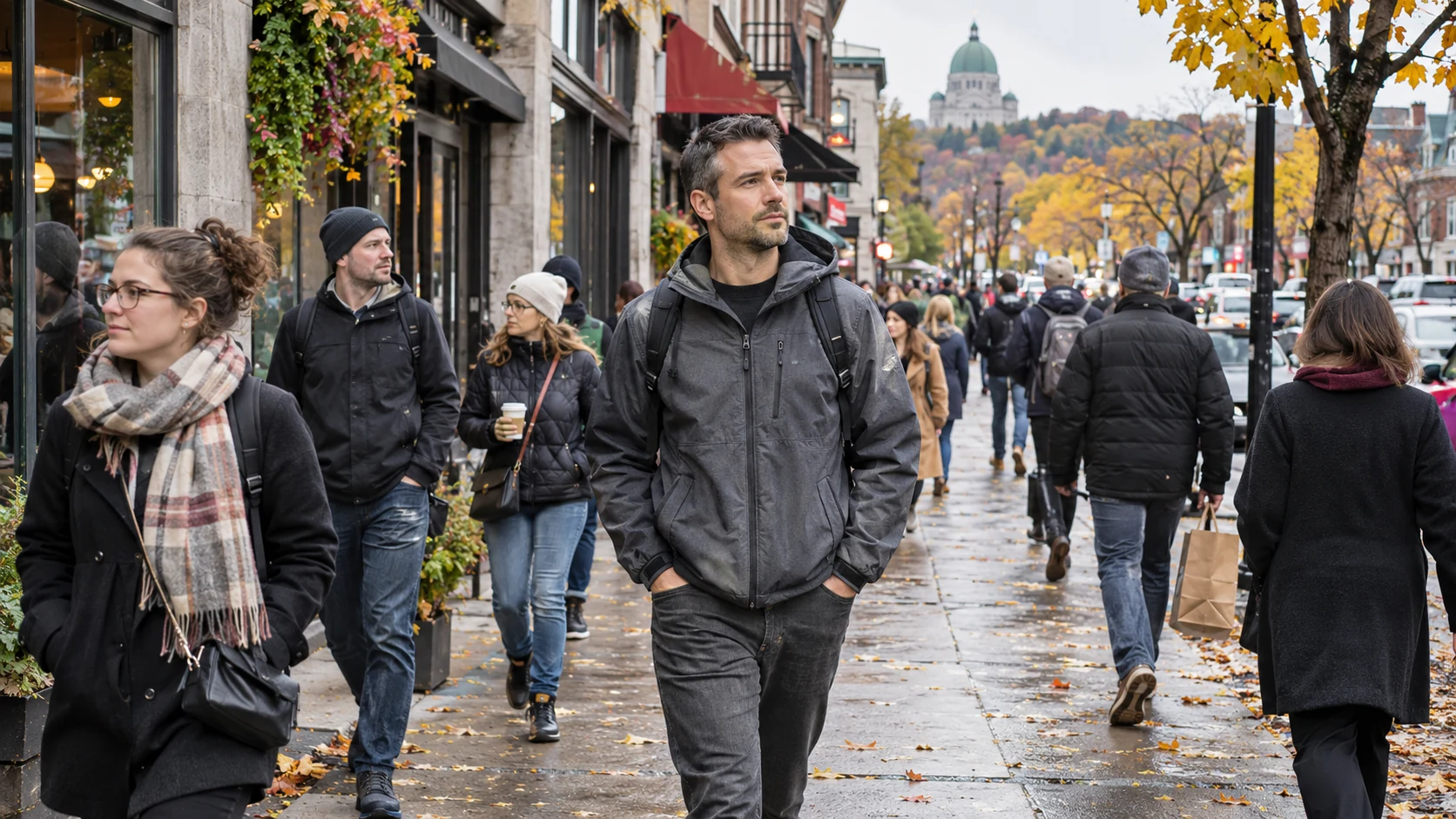
"Sometimes the best hiding place is in plain sight." The so-called grey man approach is about not drawing unnecessary attention: not showing off your gear, your resources or how prepared you are, so you can move around with more peace of mind. Let's look at what the psychology of attention can tell us, how to apply it before, during and after an emergency, and where its limits lie.
In short
- Looking and acting in a way that suits the setting draws less attention, but never guarantees anonymity.
- In an emergency, your safety and evacuation always come before staying low-profile.
- Discretion never means impersonating someone or carrying a concealed weapon: learn instead to recognize these behaviours in others.
The concept isn't new; we've covered it before, including in our article on leaving a disrupted urban area. Here we go further:
- What is the grey man approach and how does it work?
- Staying low-profile before an emergency
- Staying low-profile during an emergency
- Staying low-profile after an emergency
- Watching a crowd to understand what draws attention

What is the grey man approach?
It's a set of practices for not drawing attention to yourself and blending into your surroundings, a group or a crowd. It relies on a simple fact: human attention is selective. But it's not a scientific method for controlling what other people notice: attention and memory are complex, and no outfit guarantees you'll go unnoticed.
Your brain constantly filters out sensory data it considers useless. It can't consciously process most of the information reaching it at any moment; without that filter, you'd be in permanent overload. Fatigue, context, habits and experience also change what each person perceives. The practical takeaway: keep your attention available for your route and instructions, rather than treating this mechanism as a guaranteed safety technique.
Everyday examples of selective attention
A walk in your neighbourhood
Walking through your neighbourhood, you might notice a bunch of flowers, passing cars, a friendly dog and a few smiling neighbours. It feels like you took in a lot of detail, but it's only a tiny fraction of what was around you. The ants on the sidewalk, the thousands of pebbles and twigs, every bird that crossed your field of vision: your brain set them aside.
You may even have forgotten an ordinary person walking in the park. And if you did notice them, you quickly filed them as unimportant: not a threat, not a friend (to learn more, see our article on home security). That sorting varies with the situation, though, and doesn't prove that the people around you ignored you.
Our brain can't process even a fraction of the information available. So it filters, a lot, and focuses on what it considers most important.
Faces in a crowd
In a crowd, we remember unfamiliar faces poorly. Seeing, recognizing and remembering are three different things, and each person notices different details: don't count on nobody remembering you. A familiar face draws more attention because it means something to us.
It's not just faces: unusual features stick in memory too. A very tall or very short person, purple hair, a funny shirt, very strong cologne, an unusual animal or building: it takes something unique to get past the filter.
Before and after a purchase
You bought a car thinking you'd be one of the few people with that model? The very next day, you see it everywhere. There aren't more of them than before: you were already seeing them, but you weren't identifying them. Your attention changed.
The grey man approach uses this phenomenon in reverse: by matching your movements, actions and appearance to the activity, you draw less attention, with no guarantee of anonymity. Above all, aim for comfort, clear intentions and behaviour that respects the rules. For people preparing for emergencies, it's mainly a way to move around without displaying your gear.
Staying low-profile before an emergency
The principle: look as "normal", "ordinary" and "non-threatening" as possible, in how you dress, interact and even move. The first step is to observe the baseline: the dress code and usual behaviour of each place. They're not the same at the office, at an outdoor concert or on a beach.
For example, many people who prepare like tactical pants and backpacks. This clothing has real practical advantages and goes unnoticed in the woods, but it can stand out in the city, even if fashion is making it more common. Colours and patterns that look like what most people wear are more discreet in a crowd.
Grey man gear
Before getting to behaviour, here's what low-profile gear can look like. Discretion is relative: there's no outfit that blends in everywhere. Clothes that blend into a Montreal café may turn heads at the Calgary Stampede, and that's even truer from one culture or country to another. It's up to you to work out what's "typical" where you'll be. The following suggestions target the streets of a modern Canadian city.
Pants
These "low-profile tactical trousers" are gray and look completely ordinary. Perfect! We have mentioned some of these options in the past—specifically, "gray man" tactical trousers. They are comfortable, durable, breathable, and stretchy—what’s not to like?

Some links below are affiliate links: we may receive a commission at no additional cost to you. Products are examples by function, to choose according to your needs; buying the entire selection is unnecessary.
Backpack
For instance, consider a low-profile backpack or messenger bag, like this one. If you ever find yourself in an emergency situation within an urban environment, you will want a bag that moves in sync with your body.

What makes this type of bag useful: a quick-access bottom compartment, few outside pockets and a forgettable colour. It sits close to the body and doesn't draw attention.
Jacket
This item features both discreet storage and tactical functionality (including dedicated CCW pockets). Furthermore, it has a modern, sleek look.

In Canada, carrying a concealed firearm is prohibited for private individuals, except under exceptional authorization. An inside pocket is for your everyday items.
Accessories
Leave the multi-pocket tactical belt and the big survival knife at home. Choose tools for a useful task, with protective storage that's accessible for their normal use. Never make concealing a blade a goal: in Canada, carrying an item concealed for use as a weapon is an offence (section 90 of the Criminal Code), and a knife carried for self-defence is considered a weapon.
Physical features matter
A shaved head or very long hair sticks in people's minds more than an "ordinary" haircut. If you're particularly tall or short, heavy or thin, going unnoticed can be harder whatever you do. You can simply avoid accentuating these features, for example with neutral clothing.
For the grey man, the watchword is: ordinary.
That applies to your manners too.
Behaviour
In a crowd, pay attention to social cues. If everyone is chatting, do the same so you don't stand out. Have ordinary topics in mind, like the weather or local news, and avoid divisive subjects like politics or religion.
Too much or too little eye contact can also be memorable.
Stay aware of your surroundings, but discreetly, without constantly scanning the crowd or the room.
Mistakes to avoid
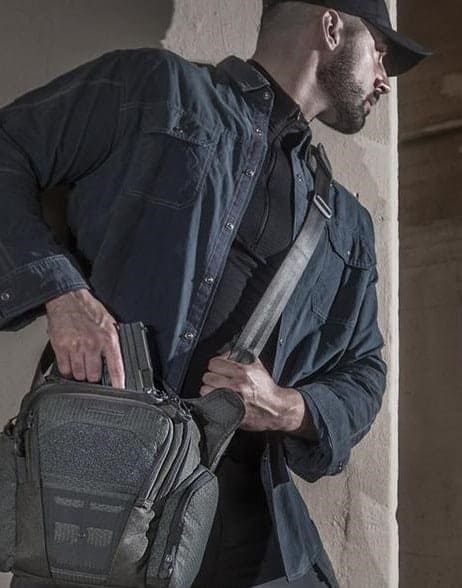
The most common mistake when trying to be low-profile is looking like the image below:

Blending in doesn't mean looking like you're hiding something: that's exactly what draws attention. A hooded jacket is fine, but don't put the hood up if nobody else does. Don't puff out your chest, and don't try to make yourself tiny either: people notice someone who looks like a bodyguard. Instead, copy the demeanour of an ordinary person where you are: not overconfident, not downcast, walking neither too fast nor too slow. Looking too sneaky has the opposite effect.
Recognizing role impersonation and protecting yourself
Some people naturally go unnoticed in a place because of their role: maintenance staff, delivery workers, security guards. That's exactly why ill-intentioned people sometimes imitate these roles to get into a building or event. Jobs and social situations are not costumes: presenting yourself honestly remains the rule. It's better to know how to recognize these behaviours than to imitate them.
Role impersonation: what you need to know
- Legal framework: in Canada, impersonating a police officer is an offence (section 130 of the Criminal Code), as is using someone else's identity to gain an advantage. Entering a restricted area without permission can also lead to charges.
- Real benefits and limits: a uniform or vest proves nothing on its own. Ordinary discretion gives no right of access.
- Risks: in an emergency, an ambiguous appearance creates confusion about roles and can delay help.
- Protecting yourself: don't let someone you don't know follow you into a secured building; ask for ID or call building management or the company concerned to check; never share an access code or personal information based on clothing alone.
- Role of the authorities: report suspicious behaviour to building security or the police; if you're in danger, call 911. In an emergency, follow the instructions of clearly identified staff.
Security guards, for example, move around easily in calm times, much less so in the middle of a crisis. Respect restricted areas and ask for help when you need directions or information.
Staying low-profile during an emergency
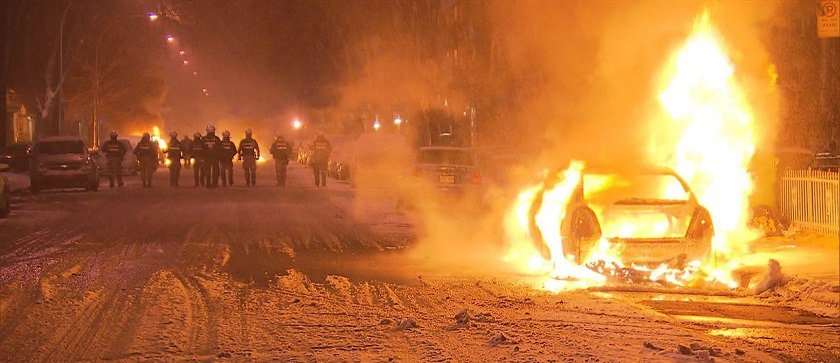
In a crisis, everyone becomes hypervigilant: the brain sorts information at top speed to find the best options to flee or defend. Without even realizing it, people then notice details that would otherwise go unnoticed. For example, someone who doesn't flinch at an explosion will seem to have known it was coming.
In a crowd, avoid pushing and watch for obstacles and changes in density. A collective movement isn't necessarily a safe route: look for usable exits and staff directions, without blindly following a group toward danger. When instructions or a danger require it, leave right away by a safe route. Protecting people and evacuating always come before staying low-profile.
Staying low-profile after an emergency
After an emergency, two types of people may turn their attention to you:
- those who need someone to guide them;
- those looking for a victim.
Those who need a guide
The vast majority of people belong to the first group. Less prepared or less equipped, they need help getting through the situation and will naturally look for someone who can give them answers and a sense of security. That doesn't make them caricatures.
You can help within your abilities while protecting your safety and your family's: clarify needs, point people to qualified staff and avoid roles you can't take on. Is hiding what you can do the right thing? That's your choice, but if you help, you won't go unnoticed anymore: you'll quickly become the centre of attention.
Those looking for a victim
The second group is usually smaller, but it can be far more dangerous. These are opportunists who may spot your gear and try to take it or coerce you. Not drawing their attention can be a matter of safety.
A few habits to protect yourself:
- Don't display your gear, supplies or money.
- Adopt an attitude similar to the people around you, without overdoing it: if everyone is dazed, a very confident person stands out.
- Stay alert, discreetly: people notice someone whose head is constantly turning.
- If a situation gets tense, move away, join a group or a safe place, and call 911. No possession is ever worth a confrontation. See also our article on leaving a dangerous area.
Watching a crowd to understand what draws attention
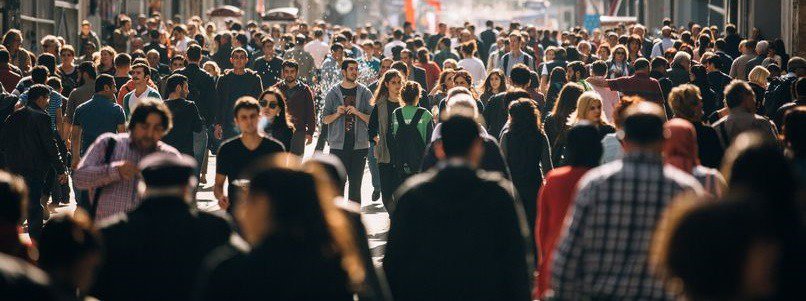
To sharpen your discretion, you need to understand what makes people memorable. The best way to learn is by observing. Sit in a busy public place, like a park, a mall or a café, and ask yourself what first catches your attention about passers-by: a particular walk, a strong perfume, a flashy piece of clothing? Anything you'd mention to a friend to describe someone is a memorable feature, to avoid or tone down in your own appearance.
Also notice what doesn't catch your attention: it's harder than it sounds. Observe the clothing, movements, body language and way of speaking that blend into that place, and how this changes from one setting to another. This exercise is for choosing comfortable, suitable clothing; it doesn't justify labelling people, or following or photographing someone to study their habits.
Over time, you'll learn to adapt to circumstances and go unnoticed by the casual observer. Happy practising!