
In this article
Stored water supports drinking, food preparation and basic hygiene when the usual supply is interrupted. It needs to be accessible, suited to the household and covered by a replenishment plan. There is no universal safe period without water: heat, exertion, age, illness and diet affect individual needs.
Establish an initial supply
For PrépaCivile planning, begin with two litres per person per day for drinking, plus two litres for food preparation and basic hygiene. This is a planning assumption, not a medical prescription or enough for every domestic use. Adjust for individual requirements, animals and expected conditions.
For four people over three days, that scenario gives 48 litres. Check the calculation with the water storage tool. Anyone who must restrict fluids or use a medical preparation should follow their care team's advice; they should not change treatment to match a calculator.
Choose suitable containers
Sealed commercially bottled water is a straightforward option when the packaging is intact and storage instructions are followed. When filling your own containers, use food-grade containers designed for water and clean and sanitize them as instructed. A container that held chemicals is not made suitable by rinsing.
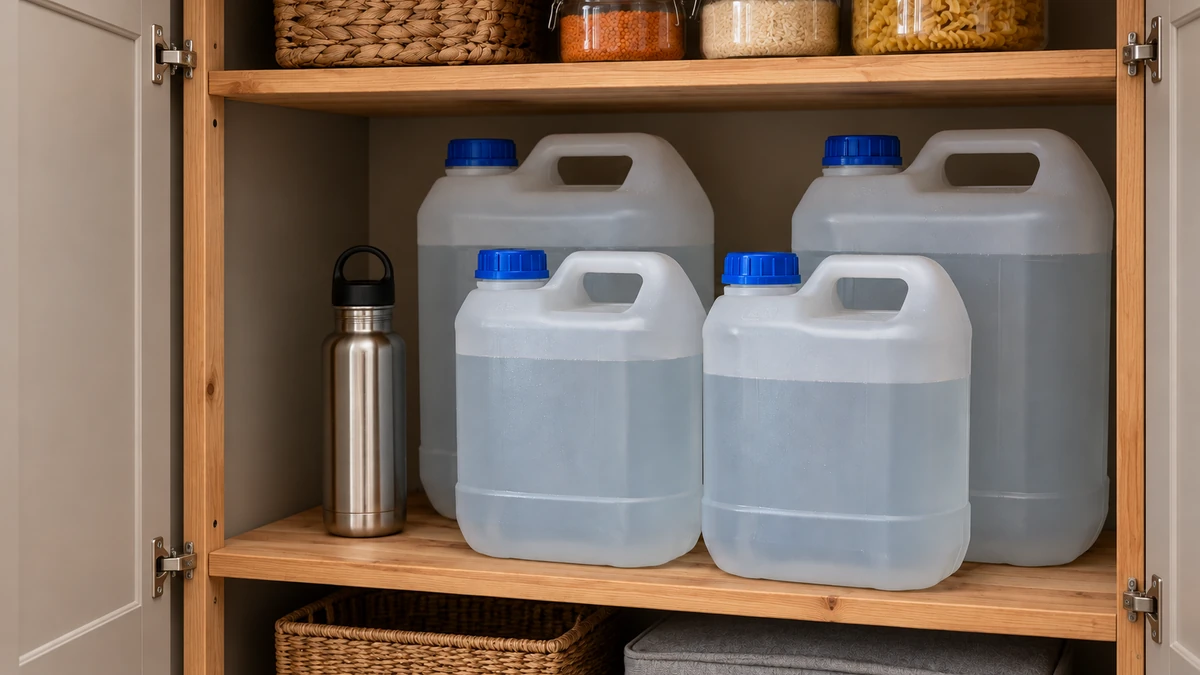
Choose sizes household members can lift and pour. Distribute the supply so that one leak or blocked access does not make all of it unavailable. Keep it away from heat, sunlight and contaminating substances. Label dates and arrange rotation rather than assigning the same shelf life to every water supply.
Distinguish temporary storage from a standing reserve
A purpose-made bathtub liner can hold water when an interruption is announced and the supply is still safe. Check its capacity, instructions, reuse restrictions and dispensing method. It occupies the bathtub and is of little help if the notice arrives after water stops flowing.
Water collected directly in an ordinary bathtub is not automatically safe to drink. Keep drinking water separate from water intended for other uses. Clear labels help prevent mistakes during an outage or in a poorly lit room.
Understand treatment limits
A treatment must address the actual hazard. Boiling can inactivate many microorganisms but does not remove chemical contaminants. A filter does not necessarily remove viruses or dissolved substances. UV treatment requires appropriate water clarity and correct operation. Combining marketing claims does not establish complete protection.
During a boil-water advisory in Quebec, official guidance calls for a rolling boil for at least one minute. Follow the advisory for all affected uses, then cool the water without recontaminating it. A do-not-drink or do-not-use notice may require a different response; boiling does not override it.
Avoid a universal chemical-disinfection recipe
Product concentrations and formulations vary. Do not guess a bleach dose or use scented products or unsuitable additives. If an authority recommends emergency disinfection, follow its instructions for the exact product, water volume and contact time. Use a safe alternative drinking-water source when available.
Cloudy water, possible chemical contamination or inadequate information are reasons to seek another source and official instructions. Improvised sand or charcoal devices may improve appearance without establishing that the water is safe to drink.
Include health and practical arrangements
Plan how to transport distributed water, which containers to bring and who can help someone with limited mobility. Keep hands, spouts and utensils clean. Do not dip a used glass into the entire supply. Seek appropriate advice for dehydration or illness; this article does not replace care or provide a homemade oral-rehydration recipe.
Finally, try preparing a meal with the water actually available. Cooking, dishwashing and hygiene needs are easily overlooked. Record the difference and gradually improve the usable supply.
References: Health Canada — food and water in an emergency · Quebec — drinking water contamination or shortage.
Equipment to assess for your needs
Canadian and French listings may differ in model, capacity or package. Check the exact item, instructions and suitability for your use. No price or stock availability is guaranteed.

LifeStraw Peak Series – Filtre à eau personnel Solo pour randonnée, camping, voyage, survie et préparation aux situations d'urgence Élimine les bactéries, parasites et microplastiques, bleu montagne
View on Amazon.ca
LifeStraw Peak Series - Paille filtrante Personal Water pour filtration, urgence, survie, et hydratation ultra-légère ; Sans BPA, Mountain Blue (bleu)
View on Amazon.fr
Nalgene Bouteille d'eau à large goulot de 946,2 ml, sans BPA, durable et anti-fuite, légère pour randonnée et salle de sport, travail et voyage, bleu céruléen
View on Amazon.ca
Affiliate links: PrépaCivile may earn a commission on qualifying purchases. Product names and images come from the Amazon listings reviewed. No prices or customer reviews are reproduced.