
In this article
- The quick answer: build a system, not just a stockpile.
- A practical battery system for emergency preparedness
- Understanding a few terms before you buy
- Main battery chemistries
- Batteries in a vehicle: beware of temperature extremes.
- Which batteries should be used for various pieces of emergency equipment?
- Standardizing formats: an excellent strategy
- Never mix batteries indiscriminately
- The charger is part of the system.
- A solar panel does not directly charge "just any battery."
- How to store batteries correctly
- Special considerations for lithium-ion batteries
- Think in terms of energy autonomy rather than the number of individual batteries.
- And what about for an evacuation scenario?
- Conclusion: the right battery depends on the intended function.
- Frequently Asked Questions
- Sources and references
- Related resources
- Equipment to compare for your needs
Batteries are one of those small resources whose importance becomes clear the moment the power grid goes down. Radios, headlamps, detectors, small medical devices, and communication equipment may all depend on them. However, an effective stockpile isn’t just about filling a drawer with random batteries; factors like chemistry, shelf life, temperature, and device compatibility matter a great deal.
When preparing for disasters such as power outages, the primary goal is to maintain a variety of power options suited to the specific devices used in your household.
The most robust strategy is not to choose a single "best" battery. For most households, a combination of low-self-discharge NiMH rechargeable batteries, long-shelf-life primary (non-rechargeable) batteries, and well-maintained built-in Li-ion batteries offers greater resilience.
The quick answer: build a system, not just a stockpile.
For most preparedness needs, three categories cover the essentials:
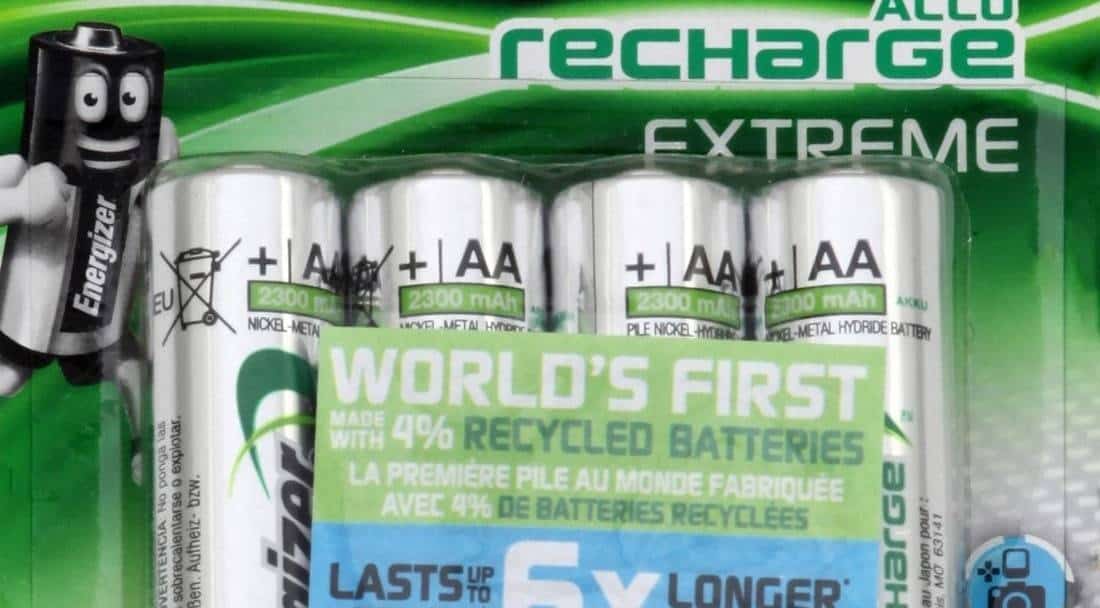
Low-self-discharge NiMH (Nickel-Metal Hydride)
Excellent for frequently used AA and AAA batteries: flashlights, radios, toys, small appliances, and other compatible equipment.
Primary Lithium
Very low self-discharge, lightweight, and performs well in cold temperatures. Particularly useful for equipment that is rarely used.
Rechargeable Lithium-ion
Essential for phones, power banks, high-output flashlights, modern radios, and many other electronic devices.
Alkaline batteries remain useful, especially when factors such as low cost, wide availability, or compatibility with specific devices are the priority.
In other words, it is no longer accurate to claim that there is "no reason" to purchase them.
A practical battery system for emergency preparedness
Simple setup
Low-self-discharge NiMH rechargeable batteries
- Eneloop AA / AAA: Panasonic states that standard models can be recharged up to 2,100 times (depending on the test method) and retain approximately 70% of their capacity after ten years of storage at 20°C.
- Panasonic Eneloop AA: Suitable for AA-powered devices that are used regularly or require a rechargeable backup supply.
Non-rechargeable primary lithium batteries
- Energizer Ultimate Lithium: Energizer currently claims a shelf life of up to 25 years for its AA and AAA batteries, provided they are stored under the conditions specified by the manufacturer.
Charger
- Smart charger: Choose a device that is compatible with the battery chemistry being used and capable of properly monitoring each individual charging channel.
Alternative power source
- Portable solar panel: Useful, provided it effectively powers the charger or power bank included in your system.
Understanding a few terms before you buy
Capacity
For small rechargeable batteries, capacity is often expressed in milliampere-hours, or mAh.
This value provides an estimate of the amount of available electrical charge, but it cannot be used on its own to compare batteries with different voltages.
When comparing more complex systems, energy capacity—measured in watt-hours (Wh)—is often more informative.
Voltage
The voltage must be compatible with the device.
A standard AA alkaline or primary lithium battery typically has a nominal voltage of around 1.5 V, whereas a rechargeable AA NiMH battery is usually around 1.2 V.
Many cylindrical Li-ion cells have a much higher nominal voltage, often around 3.6 to 3.7 V.
Having the same physical format does not mean it is the same type of battery. A cell that looks identical to another may have a completely different voltage, which could damage an incompatible device.
Self-discharge
Batteries gradually lose some of their charge, even when they are not powering any device.
The speed at which this loss occurs is known as the self-discharge rate.
This is an important factor for equipment that might remain in a kit for several months before being used.
Charge cycles
Rechargeable batteries age with use cycles and over time.
A cycle corresponds approximately to the cumulative use of 100% of the capacity, even when this consumption occurs over several partial recharges.
The actual number of cycles depends on factors such as:
- the depth of discharge;
- temperature;
- the charging rate;
- the battery chemistry;
- the charger;
- the natural aging of the cell.
Memory effect
The memory effect is primarily associated with older nickel-cadmium batteries when used with specific charge and discharge profiles.
Modern NiMH batteries do not need to be fully drained before being recharged.
Deeply discharging a battery solely to "avoid the memory effect" is therefore generally unnecessary and may even reduce the lifespan of certain battery technologies.
Main battery chemistries
Alkaline batteries
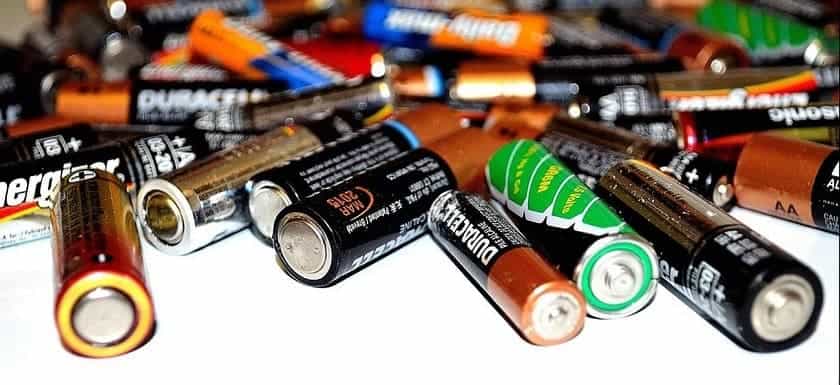
Alkaline batteries remain the most easily accessible household batteries.
They are inexpensive, available in many sizes, and now offer a much longer shelf life than that of older generations of batteries.
For example, Energizer claims up to:
- 12 years for certain alkaline AA and AAA batteries;
- 10 years for certain C and D sizes;
- varying durations for other sizes.
They therefore remain a reasonable choice for:
- remote controls;
- certain clocks;
- low-energy-consumption devices;
- an economical backup supply;
- equipment for which the manufacturer specifically designates this battery chemistry.
Advantages
- Low purchase price
- Very easy to find
- Wide variety of sizes
- Good shelf life
Limitations
- Standard models are not rechargeable
- Less efficient under high-demand conditions compared to some other chemistries
- Risk of leakage due to aging or certain usage conditions
Nickel-cadmium — NiCd
NiCd batteries are now much less common in consumer electronics.
While they are still used in some specialized equipment, their cadmium content, more pronounced "memory effect," and the availability of better-suited technologies generally make them an unsuitable choice as a new battery platform for household preparedness.
If existing equipment still uses them, the manufacturer's specific recommendations remain the definitive guide.
Standard NiMH
Nickel-metal hydride (NiMH) batteries have replaced NiCd batteries in many rechargeable AA and AAA devices.
Older NiMH models could exhibit relatively high self-discharge, making them less suitable for equipment left unused for long periods.
It is precisely this issue that led to the development of low-self-discharge models.
Low-self-discharge NiMH: an excellent choice for AA and AAA batteries
Low-self-discharge NiMH batteries—often referred to as "LSD NiMH"—represent one of the most well-balanced solutions for households that still rely heavily on AA and AAA devices.
For its standard "eneloop" batteries, Panasonic currently specifies:
- a minimum capacity for AA batteries of approximately 1,900 mAh;
- up to 2,100 cycles, based on the specified test method;
- approximately 70% of their capacity remaining after ten years of storage at 20°C, under the test conditions defined by the manufacturer.
The "eneloop pro" versions offer higher capacity—around 2,450 to 2,500 mAh, depending on the market—but Panasonic specifies a significantly lower number of cycles, up to approximately 500, based on the indicated test method.
Capacity and longevity do not always go hand in hand. A battery with a slightly lower capacity may be a better choice when the goal is to continue using it for many years.
Example of a smart charger to consider, depending on the formats supported: the Opus BT smart charger.
Primary lithium: an excellent option for long-term storage.
AA and AAA primary lithium batteries should not be confused with rechargeable Li-ion batteries.
They are non-rechargeable.
Their main advantages are:
- very long shelf life;
- low weight;
- good performance in cold conditions;
- good capacity under high demand;
- low risk of leakage for certain high-quality models.
Current Energizer Ultimate Lithium AA and AAA batteries are rated for a shelf life of up to 25 years at approximately 21°C (70°F), with an operating range stated as approximately -40°C to 60°C (-40°F to 140°F).
They are particularly useful when a battery needs to remain in a kit for several years without frequent maintenance.
Advantages
- Very long shelf life
- Low weight
- Excellent performance in cold conditions
- Good power output
Limitations
- Non-rechargeable
- Higher price than alkaline batteries
- Not all devices are compatible with every battery chemistry
Lithium-ion: useful applications with appropriate maintenance
Lithium-ion batteries require appropriate storage and maintenance rather than a blanket exclusion from emergency preparedness.
This conclusion is no longer tenable.
The reality is almost the opposite: a large portion of our modern emergency equipment now runs on lithium-ion (Li-ion) batteries.
They are found in:
- phones;
- power banks;
- rechargeable radios;
- high-powered flashlights;
- computers;
- cordless tools;
- portable power stations;
- many medical and electronic devices.
Li-ion batteries offer excellent energy density and can be recharged many times.
However, they require more disciplined storage practices.
For long-term storage, Health Canada currently recommends:
- a dry location;
- room temperature;
- a charge level of approximately 50%;
- checking the battery about every three months;
- recharging it to around 50% when necessary;
- protection against extreme temperatures;
- using a compatible charger from a reliable source.
Therefore, Li-ion is not a poor choice for emergency preparedness. It is an excellent option for equipment that is regularly maintained. It is simply not a "store it for ten years and forget about it" type of technology.
Batteries in a vehicle: beware of temperature extremes.
An emergency kit kept in a vehicle is exposed to much harsher conditions than one stored indoors.
A vehicle can become very hot in the summer and extremely cold in the winter.
Health Canada explicitly recommends not leaving lithium-ion batteries in a very hot or very cold car, and advises protecting them from extreme temperatures.
It would therefore be more accurate to say:
Avoid leaving loose lithium-ion (Li-ion) batteries or power banks in a vehicle subject to significant temperature fluctuations for long periods. Regularly inspect and rotate any electronic equipment left in the car.
For devices that use AA or AAA batteries and are intended to remain in a vehicle emergency kit for a long time, certain primary lithium batteries may offer an advantage, thanks to the wide operating temperature range specified by the manufacturer.
Which batteries should be used for various pieces of emergency equipment?
Flashlights, lanterns, and small equipment
For devices that use AA or AAA batteries and are used regularly, low-self-discharge NiMH (nickel-metal hydride) batteries are an excellent choice.
A small supply of primary lithium batteries can serve as a supplement, provided the device is compatible with them.
Emergency radios
Our guide explains how to choose an emergency radio.
SAME (Specific Area Message Encoding) primarily concerns the U.S. NOAA Weather Radio system; it is not a universal requirement for a backup radio in Canada or France.
In Quebec and Canada, the relevant sources of information and alerts vary. Nevertheless, a radio can remain very useful during an outage, especially if it can operate using multiple power sources.
For radios that use AA or AAA batteries:
- Low-self-discharge (LSD) NiMH batteries, provided they are used and recharged regularly;
- Primary lithium batteries, for long-term storage, when permitted by the manufacturer;
- Alkaline batteries, when compatible with the equipment and subject to a regular rotation schedule.
See also our article on emergency radios and communications.
Equipment in a bug-out bag (evacuation kit)
A bug-out bag must remain functional even if it has not been opened for several months.
Primary lithium batteries are particularly advantageous for compatible equipment due to their low self-discharge rate.
Low-self-discharge (LSD) NiMH batteries are a viable option, provided the bag is inspected regularly and a practical method for recharging is available.
Solar solutions can assist with recharging, though their performance depends heavily on the panel’s actual power output, sunlight conditions, the charger used, and the time available.
Smoke and carbon monoxide detectors
In this case, the priority is different:
Use the exact type of battery specified by the detector’s manufacturer.
Some modern devices feature a sealed battery designed to last for the entire service life of the unit, while others use replaceable batteries.
Therefore, it would be unwise to assume a general rule that lithium batteries are always the best choice.
For further information on fire preparedness, please consult our fire response plan.
Standardizing formats: an excellent strategy
Standardizing battery sizes simplifies maintenance and replacement of the reserve.
Whenever possible, limiting the number of formats greatly simplifies logistics.
A household where multiple devices use the same AA or AAA batteries can:
- keep fewer types in stock;
- use the same charger;
- rotate stock more easily;
- temporarily reallocate batteries between non-critical devices.
Standardization reduces the number of dependencies. For resilience, this is often more beneficial than accumulating a collection of specialized, mutually incompatible batteries.
Never mix batteries indiscriminately
Health Canada recommends against mixing:
- new batteries with used ones;
- rechargeable batteries with non-rechargeable ones;
- different types of batteries within the same device.
In general, a set of batteries used together should remain together throughout their service life.
Mixing cells that differ in their state of charge or technical specifications can lead to malfunctions, overheating, or leakage.
The charger is part of the system.
A rechargeable battery is only as good as its ability to be charged correctly.
A good charger:
- is designed for the specific battery chemistry;
- adheres to the appropriate voltage and current specifications;
- properly manages the end of the charging cycle;
- comes from a reliable source;
- bears a recognized certification, where applicable.
For Li-ion systems, Health Canada recommends using the intended charger—or a compatible replacement from a reliable source that carries a recognized Canadian certification mark.
A solar panel does not directly charge "just any battery."
The phrase "having a solar panel to charge batteries" can be misleading.
The panel is merely an energy source.
The actual system looks more like this:
Solar panel → regulation or energy storage (power bank) → compatible charger → battery.
Each component must be compatible with the others.
A small, few-watt panel may be sufficient to maintain certain devices, but it could prove inadequate for charging multiple batteries simultaneously under overcast skies.
Testing this entire setup before an outage occurs is far more valuable than simply owning the equipment.
How to store batteries correctly
Health Canada recommends, among other things, storing batteries:
- at room temperature;
- in a dry place;
- away from heat and direct sunlight;
- away from metal objects;
- in their original packaging whenever possible;
- out of reach of children.
The terminals should not be allowed to come into contact with coins, keys, or other conductive objects.
For a device that will remain unused for a long period, removing the batteries can also reduce the risk of leakage or corrosion.
Our detailed guide explains how to store batteries properly.
Special considerations for lithium-ion batteries
Li-ion batteries require a few extra precautions.
A battery that is swollen, punctured, dented, has a damaged casing, or shows signs of abnormal heating should no longer be used.
For long-term storage, Health Canada recommends a charge level of approximately 50% and checking the battery about every three months.
It is also advised against:
- exposing them to direct sunlight;
- leaving them in a vehicle that is very hot or very cold;
- charging them on a bed or sofa;
- using an incompatible charger;
- charging a battery that is frozen or below 0°C (32°F) without following the manufacturer’s specifications;
- ...modifying or repairing a damaged cell yourself.
A power bank is only a valid part of your preparedness strategy if it is properly maintained. A battery left forgotten in a bag for three years is not a reliable reserve, even if it was fully charged when it was first put there.
Think in terms of energy autonomy rather than the number of individual batteries.
The real goal is not to own a hundred AA batteries.
The goal is to determine which devices need to remain operational, and for how long.
For example:
| Need | Equipment | Primary source | Backup |
|---|---|---|---|
| Lighting | AA headlamp | LSD NiMH (Low Self-Discharge) | Primary Lithium |
| Information | Radio | Rechargeable AA batteries or USB power | Spare compatible batteries |
| Communication | Phone | Internal Li-ion battery | Power bank |
| Recharging | AA/AAA charger | Electrical grid | USB, power station, or solar |
This approach makes it possible to immediately identify any weak points.
If all communication devices rely on a single power source, that source becomes a critical point of dependency.
And what about for an evacuation scenario?
Equipment intended for evacuation should prioritize:
- weight;
- reliability;
- compatibility;
- low maintenance requirements;
- the possibility of recharging—provided that recharging is actually feasible in the given context.
Primary lithium batteries can be particularly advantageous in this regard, while Li-ion batteries remain relevant for devices that are essentially unavailable in any other format.
For further information, please also consult the guide dedicated to "bug-out bags" (evacuation kits).
Conclusion: the right battery depends on the intended function.
There is no single battery chemistry that is perfect for all emergency equipment.
Low-self-discharge NiMH batteries excel in applications using AA or AAA rechargeable cells.
Primary lithium batteries offer a long shelf life and excellent performance for emergency stockpiles.
Alkaline batteries remain cost-effective, widely available, and perfectly suitable for many types of devices.
Li-ion batteries have become essential for much of our modern electronics—provided they are regularly inspected and maintained.
From the perspective of civilian preparedness, the best strategy is therefore less about asking, "Which battery is the best?" » but rather to build a coherent system:
which equipment must remain operational, how long must it function, what source normally powers it, and what solution takes over when that source is no longer available?
It is this redundancy—planned in advance—that transforms a few batteries in a drawer into a genuine energy capability.
Frequently Asked Questions
Which batteries have the longest shelf life?
Among common AA and AAA formats, some primary lithium batteries offer exceptionally long shelf lives. Energizer currently claims a shelf life of up to 25 years for its Ultimate Lithium AA and AAA batteries, provided they are stored under the conditions specified by the manufacturer.
Are rechargeable batteries suitable for an emergency kit?
Yes. Low-self-discharge NiMH batteries are well-suited for devices using AA or AAA batteries, provided the kit is checked periodically. Li-ion batteries are also very appropriate for modern equipment, provided their charge level and condition are monitored.
Should alkaline batteries be avoided?
No. They remain suitable for many devices, and some now have a shelf life exceeding ten years. Their main disadvantage is that they are generally not rechargeable and may pose a risk of leakage as they age or if left in certain devices for long periods.
Can a power bank be left in a car?
Prolonged exposure to extreme temperatures is not recommended for Li-ion batteries. Health Canada advises against leaving them in a vehicle that is very hot or very cold. Therefore, any emergency kit kept in a vehicle should be inspected and its contents rotated regularly.
At what charge level should a Li-ion battery be stored?
For long periods of non-use, Health Canada currently recommends maintaining a charge level of approximately 50% and checking the batteries every three months, adjusting the charge back to this level if necessary.
Can different types of batteries be mixed in the same device?
It is best to avoid this. Health Canada specifically recommends not mixing new and used batteries, nor mixing rechargeable and non-rechargeable batteries. The set of batteries installed should match the device’s specifications.
Sources and references
- Health Canada — Safety, use, storage, and disposal of household batteries.
- Health Canada — Lithium-ion battery safety, storage, and charging recommendations.
- Panasonic Energy — characteristics and storage of low-self-discharge eneloop NiMH batteries.
- Energizer Canada — technical specifications and shelf life of alkaline and Ultimate Lithium batteries.
Related resources
Equipment to compare for your needs
Some links below are affiliate links: we may receive a commission at no additional cost to you. Products are examples by function, to choose according to your needs; buying the entire selection is unnecessary.