
In this article
- 1. Identify potential risks
- 2. Store food and water
- 3. Strengthen domestic security
- 4. Provide a special kit in case of power failure
- 5. Maintaining the essential bases
- 6. Install a local reception radio
- 7. Be ready for both summer and winter
- 8. Check your insurance
- 9. Protecting its important documents
- 10. Plan for entertainment
- 11. Maintaining your home regularly
- ✅ Practical painting - Home equipment & survival
Our home is our refuge, our fortress. It is where we store our possessions, rest, and feel safe. Yet a disaster can quickly turn this familiar place into a vulnerable environment.
Staying at home is suitable when the accommodation is safe and the instructions allow it. Also prepare the departure: a reserve or a safety device should not lead you to delay a necessary evacuation.
Here is a comprehensive guide to fortifying your home and preparing it to face different types of threats.
1. Identify potential risks
Each house is exposed to specific threats. Local Risk Assessment tornadoes, hurricanes, forest fires, industrial hazards, floods, blizzards, etc.
2. Store food and water
- Make up a well stocked pantry (preserves, rice, pasta, drinking water).
- Gradually build up the recommended reserve for your territory and adapted to the home. In Quebec, start with the needs for three days, then adjust according to your situation.
- Add comfort foods (chocolate, coffee, biscuits).
3. Strengthen domestic security
- Motion Detection Cameras and Lights
- Any anti-theft device must preserve the evacuation and respect the rules of the building. Have the changes checked by a competent person.
- Remove potential hiding places around the house.
4. Provide a special kit in case of power failure
- Rechargeable headlamps and lanterns
- Choose battery-operated or rechargeable lamps and lanterns for emergency lighting.
- Portable Solar Panel and external battery
- Dynamo or battery-powered radio
5. Maintaining the essential bases
- Fire extinguisher
- First Aid Kit
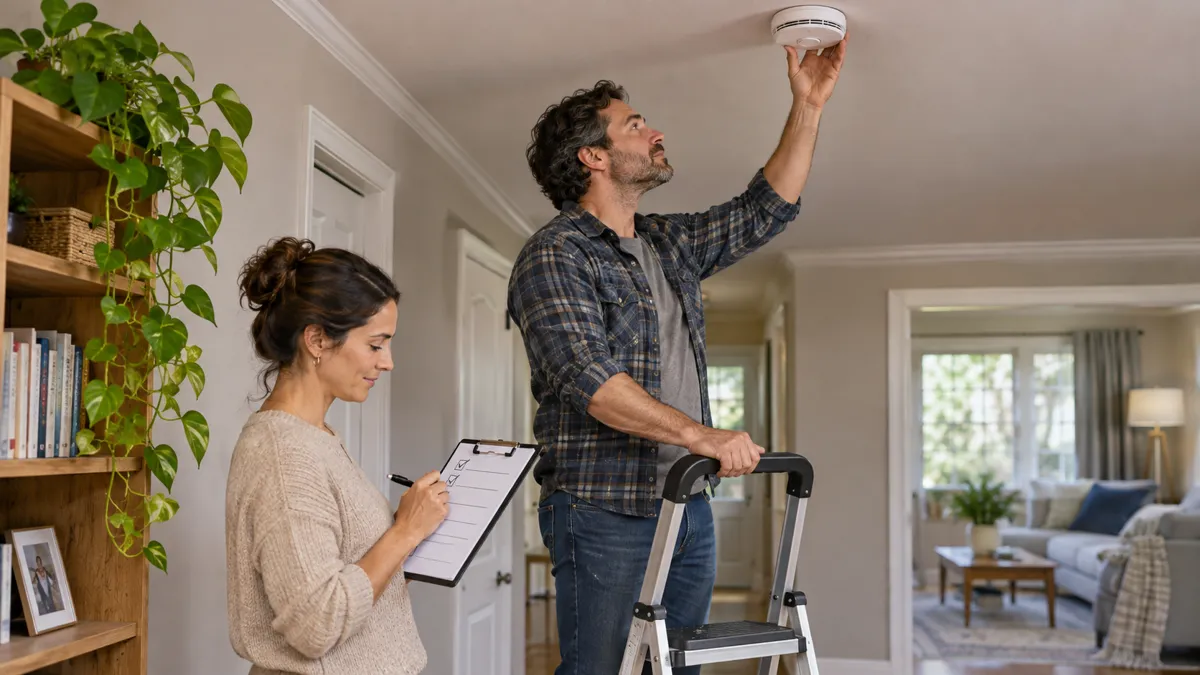
- Smoke and carbon monoxide detectors
- Keep the tools you know how to use. Do not handle a gas or electricity installation without proper instructions from the supplier or authorities.
6. Install a local reception radio
Choose a radio capable of receiving the stations and services available in your area. NOAA refers to a U.S. service; its reception and alerts are not guaranteed in Quebec or France. Test the device at home and keep the means of municipal notice.
7. Be ready for both summer and winter
- Battery fans, insulating curtains
- Safe extra blankets and heating
8. Check your insurance
- Review your contracts and Clarify the covers (fire, floods, earthquakes).
9. Protecting its important documents
- Choose a protection with documented fire and water resistance limits. Add a protected copy to another location; no chest is indestructible.
10. Plan for entertainment
- Board games, cards, books
- Manual activities for children
11. Maintaining your home regularly
- Pruning, clean gutters
- Repair of roof, fences, shutters
- Seasonal check of general condition
✅ Practical painting - Home equipment & survival
| Category | Recommended article | Example / Note |
|---|---|---|
| Energy | Portable Solar Panel | Charge phones and batteries in case of failure |
| Lighting | Rechargeable headlamp | Hands-free practice during a breakdown |
| LED Lanterns | Extended battery life, to be used according to instructions | |
| Security | Motion Detection Camera | Effective outdoor monitoring |
| Communication | Local reception radio in dynamo | Listen to local stations received; check current means of alert |
| Health & First Aid | Complete First Aid Kit | Include personal medications and dressings |
| Domestic Fire Extinguisher | Essential in the kitchen and near the heating | |
| Documents & Values | Fireproof & waterproof box | Check documented limits and keep a copy elsewhere |
| Comfort / Moral | Compact Board Games | Maintaining morale in the family |
Maintained housing, adequate reserves, and a known plan can reduce multiple vulnerabilities. Reassess the situation and follow the protection instructions when an event occurs.
👉 But never forget : Material goods are replaceable, not your family.
If staying at home becomes too dangerous, leave without hesitation.
See you tomorrow for the Day 26 from our series 31 days of preparation PrépaCivile.
In Canada, ECCC indicates that Radio-Météo and Bonjour Weather are no longer in service. For local weather, use current services, MétéoCAN and municipal notices; an AM/FM radio remains a complementary means when local stations broadcast.
Put this reading into practice
Perform the action as you wish and then check the result. Your follow-up remains specific to this route.
31 days to prepare better; Day 25
Check the home
Your action: Take a preventive visit: exits, alarms, storage and access to resources. Entrust technical problems to a qualified person.
To check: Outputs are free; anomalies are recorded with a tracking action.
To do