
In this article
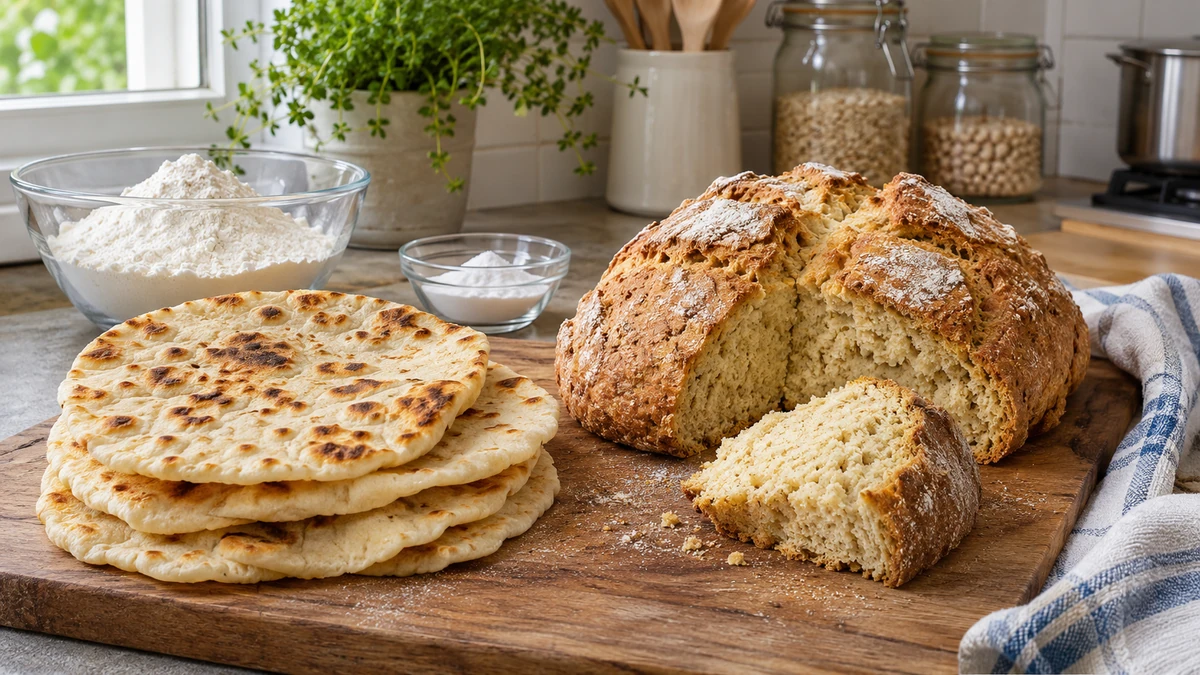
Bread and flatbreads can be made without commercial baker's yeast. Baking soda with an acidic ingredient, baking powder, rolled-out dough and natural fermentation follow different principles. Fermentation can nevertheless include wild yeasts: “without commercial yeast” does not mean without microorganisms. Nothing here establishes yeast as the ingredient most often missing from households; choose a method according to available resources, time and equipment.
The following thirteen formulations include ingredients and steps: soda and baking-powder breads, rolls, biscuits, breadsticks, roti, naan, lefse, luchi, pupusas, cornbread and injera. They belong to five families. Times and yields are indicative and depend on equipment and shape. The fermented formulation requires a complete method suited to the culture; these breads are not long-term preserved foods.
Method 1 — Soda bread (bicarbonate + acid)
Baking soda produces carbon dioxide (CO₂) when it contacts an acid — buttermilk, vinegar or lemon juice. This gas raises the dough without yeast. The result differs from sourdough or baker's yeast bread: the crumb is denser and the crust more rustic. The reaction is immediate; unlike yeast dough, no prolonged rest is needed.
Culinary substitute: one tablespoon of vinegar or lemon juice with one cup of milk can work in some recipes intended for acidified milk. This mixture is not identical to cultured buttermilk: acidity, texture and volume affect the result. The historical proportion is retained without guaranteeing that it balances every quantity of baking soda in this guide.
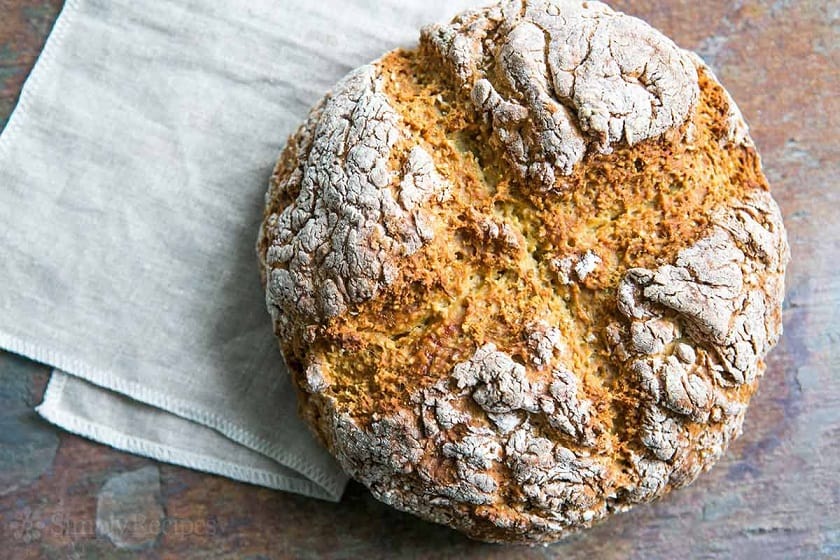
Irish soda bread
Information
- Preparation: 15 minutes
- Cooking: 55 min
- Yield: 1 loaf
- Cooking: oven at 220 °C (425 °F)
Ingredients
- 750 ml (3 cups) flour (white, whole wheat or mixture)
- 5 ml (1 tsp) baking soda
- 5 ml (1 tsp) salt
- 30 ml (2 tbsp) butter (or oil)
- 250 ml (1 cup) buttermilk
- Mix the dry ingredients. Incorporate the butter, cut into small pieces.
- Add the buttermilk and mix until a dough forms.
- Bring together briefly until uniform. Prolonged kneading can change a quick bread's texture; handle it according to the dough rather than seeking the elasticity of a long-fermented bread.
- Shape into a round ball and place on a lined baking sheet.
- Score a large X on top of the dough — this helps it bake evenly.
- The baking reference is 55 minutes at 220 °C, not a timing to apply blindly to every oven and shape. Check doneness against a comparable tested recipe; a golden crust or hollow sound alone does not prove the centre is cooked. Do not extend baking merely to reach the number if the surface burns, and never eat raw dough.
Method 2 — Baking-powder bread (chemical leavening)
Baking powder combines a base and acidic components, reacting according to its formulation. Its dosage differs from baking soda alone, and the two are not interchangeable in equal volumes. Combining them may address a particular recipe's acidity without guaranteeing a lighter crumb. Too much leavener or an unsuitable balance can spoil flavour and texture. Also check the product's date and condition.
Simple baking-powder bread
Information
- Preparation: 15 minutes
- Cooking: 20 to 35 minutes
- Yield: 20 biscuits or 1 loaf
- Cooking: oven at 190 °C (375 °F)
Ingredients
- 1 litre (4 cups) of all-purpose flour
- 10 ml (2 tsp) of baking powder
- 5 ml (1 tsp) salt
- 330 ml (1⅓ cups) milk (or water + 15 ml oil)
- Mix the flour, baking powder and salt in a large bowl.
- Stir in the milk and form a dough.
- Knead until uniform consistency.
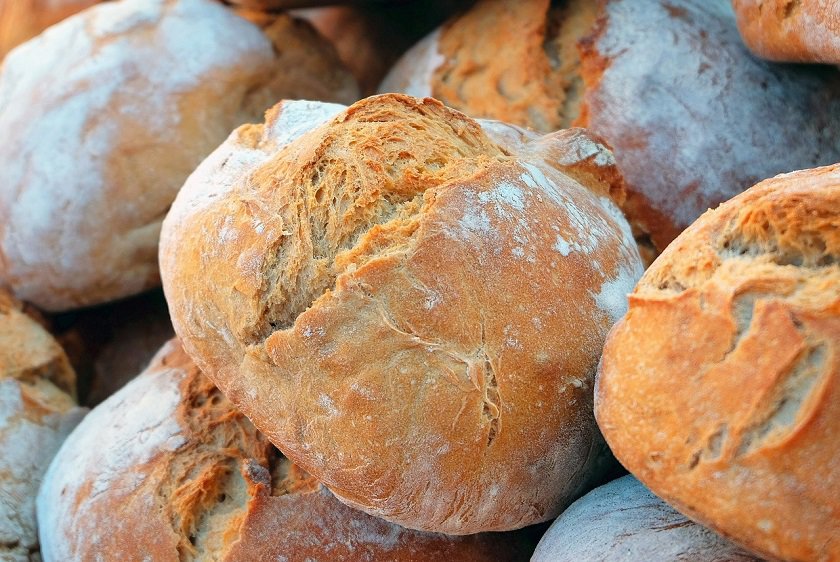
- For a loaf: shape into a loaf, score an X and bake 35 min at 190 °C (375 °F). For biscuits: form small balls and bake 20 min.
Historical variant with bicarbonate and baking powder — balance to check
Information
- Preparation: 15 minutes
- Cooking: 35 min
- Yield: 1 loaf
- Cooking: oven at 200 °C (400 °F)
Ingredients
- 1 litre (4 cups) of all-purpose flour
- 30 ml (2 tbsp) sugar
- Approximately 7.5 ml (1½ tsp) baking powder
- Approximately 7.5 ml (1½ tsp) baking soda — historical quantity not validated without checking the recipe balance
- 375 ml (1 ½ cup) lukewarm water
- 10 ml (2 tsp) cider or white vinegar
- Mix all dry ingredients in a large bowl.
- In a separate bowl, combine water and vinegar.
- Pour the liquid mixture over the dry ingredients and stir to form a dough.
- Mix until the dough is uniform. The combination of baking soda, baking powder and only 10 ml vinegar needs review against a tested recipe: historical proportions are retained for traceability, not certified as balanced. Do not add acid at random to try to correct the formula.
- Place on an oiled baking sheet and form a disc approximately 4 cm (1½ in) high. Score an X.
- The historical time is 35 minutes at 200 °C for a disc approximately 4 cm high. It validates neither chemical balance nor doneness for every dough. For actual cooking, choose a tested formulation and monitor the centre as instructed; do not treat colour and sound as the only food safety criteria.
Yogurt rolls
Information
- Preparation: 15 minutes
- Cooking: 20 minutes
- Yield: 15 rolls
- Cooking: oven at 188 °C (370 °F)
Ingredients
- 250 ml (1 cup) plain yogurt
- 125 ml (½ cup) oil
- 5 ml (1 tsp) sugar
- Approximately 12.5 ml (2½ tsp) baking powder
- 5 ml (1 tsp) salt
- 750 ml (3 cups) flour (all-purpose or a mixture)
- Melted butter or egg yolk (optional, for glazing)
- In a large bowl, mix all ingredients except flour.
- Gradually incorporate the flour to form a dough.
- Knead with floured hands up to uniform consistency.
- Shape plum-sized balls and place on an oiled baking sheet.
- Optional: brush with melted butter or egg yolk for a glossy finish.
- The baking reference of 20 minutes at approximately 188 °C is indicative and depends on portion size and the oven. Check complete baking, especially with an egg glaze. Never taste raw dough or glaze to test the mixture.
Baking-powder biscuits
Information
- Preparation: 15 minutes
- Cooking: 16 to 18 minutes
- Yield: 8 biscuits
- Cooking: oven at 230 °C (450 °F)
Ingredients
- 560 ml (2 ¼ cups) of all-purpose flour
- 20 ml (4 tsp) of baking powder
- 5 ml (1 tsp) salt
- 125 ml (½ cup) cold unsalted butter
- 250 ml (1 cup) buttermilk
- Mix the flour, baking powder and salt in a large bowl.
- Cut the cold butter into cubes and add to the flour mixture until a sandy texture is obtained.
- Gradually add the buttermilk and mix until a thick dough forms, softer than ordinary bread dough.
- Using a 60 ml (¼ cup) measuring cup, place portions of dough in an oiled pan or baking dish.
- Cook 16 to 18 min at 230 °C (450 °F).
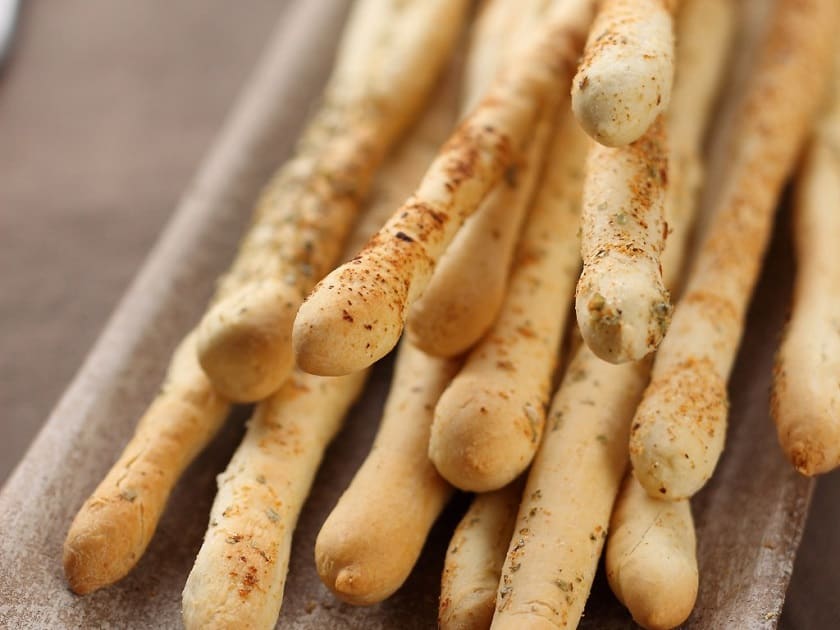
Breadsticks
Information
- Preparation: 15 minutes
- Cooking: 15 minutes
- Yield: 12 breadsticks
- Cooking: oven at 230 °C (450 °F)
Ingredients
- 310 ml (1 ¼ cup) of all-purpose flour
- 10 ml (2 tsp) sugar
- Approximately 7.5 ml (1½ tsp) baking powder
- 5 ml (1 tsp) salt
- 5 ml (1 tsp) garlic powder
- 10 ml (2 tsp) Italian seasonings
- 185 ml (¾ cup) milk
- 45 ml (3 tbsp) olive oil or melted butter
- Mix all dry ingredients in a large bowl.
- Gradually incorporate the milk to form a dough.
- Knead on a floured surface for a few minutes until soft and uniform consistency.
- Divide into 12 equal balls and roll into sticks. Twist the dough into shapes if desired.
- Cook 15 min at 230 °C (450 °F).
Method 3 — Flatbreads, with or without leavening
A flatbread is rolled out and cooked according to its recipe, but may contain a leavening agent or undergo fermentation. The naan selected here uses baking powder; the injera below is fermented. Steam can also form bubbles in dough. These preparations serve as side dishes or wraps according to tradition, without their shape guaranteeing a long storage life. Assess fillings, perishable ingredients and storage conditions.
Roti
Information
- Active preparation: 40 min (+ 30 min rest)
- Cooking: 15 minutes
- Yield: 12 rotis
- Cooking: skillet over medium-high heat
Ingredients
- 500 ml (2 cups) flour + 60 ml (¼ cup) for rolling out
- Pinch of salt
- 30 ml (2 tbsp) of oil or melted butter
- 185 to 250 ml (¾ to 1 cup) boiling water
- Mix flour and salt. Add oil.
- Gradually pour in boiling water while stirring with a utensil, avoiding splashes and burns. Do not knead excessively hot dough with bare hands; wait until it can be handled before the next step.
- Knead until uniform. The dough should retain a finger indentation.
- Cover with a damp cloth and let stand for 30 minutes.
- Knead again, then divide into 12 equal balls.
- Lightly flour each ball and roll it out thinly.
- Cook in a lightly oiled hot frying pan: on one side until bubbles are formed, then turn over and brown the other side.
- Brush with oil or butter immediately after removing from the pan (optional).
Naan
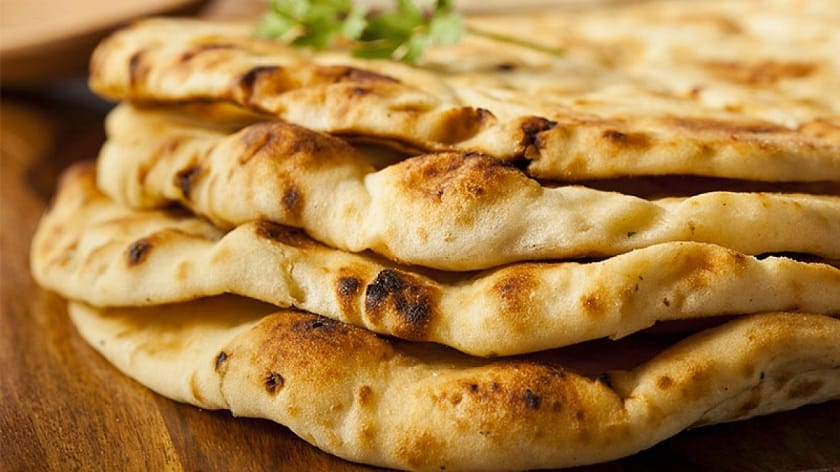
Information
- Active preparation: 20 min (+ 10 min rest)
- Cooking: 30 minutes
- Yield: 10 naans
- Cooking: skillet over medium-high heat
Ingredients
- 500 ml (2 cups) of all-purpose flour
- 10 ml (2 tsp) sugar
- 5 ml (1 tsp) salt
- 4 ml (¾ teaspoon) baking powder
- 30 ml (2 tbsp) oil
- 125 ml (½ cup) milk
- Mix all dry ingredients in a large bowl.
- Make a well in the center and incorporate oil and milk gradually. Make a dough.
- Knead on a floured surface until uniform. Add flour if the dough sticks.
- Let stand for 10 minutes.
- Divide into 10 pieces and roll into very thin ovals.
- The historical reference is approximately one to two minutes per side, depending on thickness and heat. Aim for cooked dough rather than charring; black areas are neither necessary nor proof of complete cooking.
- Brush with oil or butter after removing from the pan; season if desired.
Lefse (Norwegian potato flat bread)
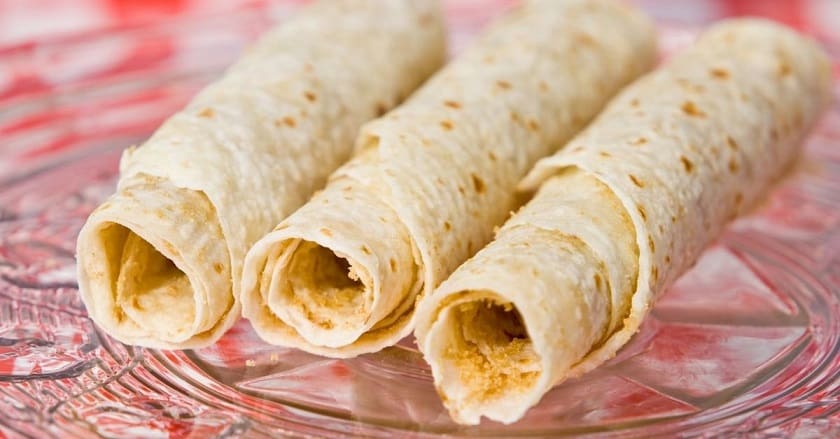
Lefse is an interesting alternative when flour is limited: it replaces some flour with potato. Its texture resembles a thick pancake. It is particularly useful for diversifying starch sources in stored foods.
Information
- Preparation: 4 hours (including cooling and rest)
- Cooking: 30 minutes
- Yield: 10 lefses
- Cooking: non-stick skillet
Ingredients
- 450 g (1 lb) of potatoes
- 60 ml (¼ cup) butter or oil
- 60 ml (¼ cup) heavy cream
- 5 ml (1 tsp) salt
- 250 ml (1 cup) flour
- Preheat the oven to 200 °C (400 °F). Pierce the potatoes with a fork and bake for 1 hour.
- After baking, handle potatoes carefully to remove and mash the flesh. Do not leave the mixture at room temperature for long: arrange cooling and refrigeration according to perishable food safety rules, especially with butter and cream.
- Mix potato flesh, salt, butter and cream until smooth.
- Gradually incorporate the flour to form a soft dough. Add flour if the dough still sticks.
- Refrigerate 1 hour.
- Divide into 8–10 portions, flour and roll out approximately 3 mm (⅛ in) thick.
- Cook in a hot non-stick skillet for 2–3 minutes per side, until lightly golden.
Luchi (fried flat bread)
Information
- Active preparation: 15 min (+ 30 min rest)
- Cooking: 30 minutes
- Yield: 10 luchis
- Cooking: skillet with frying oil
Ingredients
- 500 ml (2 cups) fine flour (type cake flour)
- 30 ml (2 tbsp) ghee, or approximately 37.5 ml (2½ tbsp) oil
- 5 ml (1 tsp) salt
- Approximately 125 ml (½ cup) of water
- Ghee or oil for frying
- Mix the flour, ghee and salt in a large bowl.
- Add the water in a thin stream while mixing until a smooth, soft dough forms.
- Cover with a cloth and rest for 30 minutes.
- Form plum-sized balls. Roll each ball into a disc approximately 6 mm (¼ in) thick.
- For fried breads, cooking takes place in hot oil or ghee, on each side, until puffed and cooked through. Use suitable temperature-controlled equipment and follow its instructions. Supervise continuously, keep water away from hot oil and never move a burning pan. Do not improvise this as an indoor outage solution; fuel-burning equipment is not automatically approved for indoor use.
- Remove with a slotted spoon and drain on absorbent paper.
The luchi is more oily than other flat breads and fits better with acidic dishes such as spicy curry or seasoned lentils. It is a different cooking technique from all the above — frying produces a unique light and swollen texture.
Method 4 — Maize flour bread
Nixtamalized masa harina and ordinary corn flour are not automatically interchangeable: they behave differently in dough. Corn does not naturally contain gluten, but the cornbread below also contains wheat flour. Check ingredients and cross-contact for gluten-free needs. Crumb depends on formulation, proportions and cooking; adding sauce does not make undercooked dough safe.
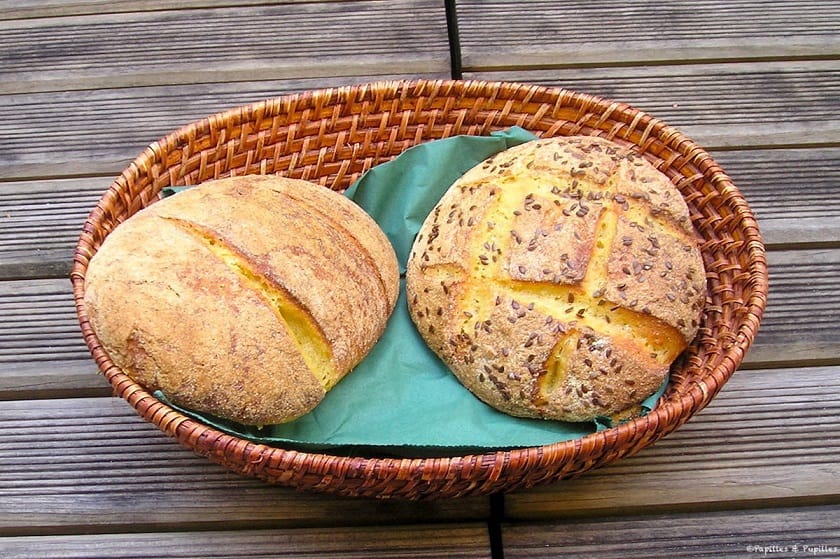
Pupusas (Salvadorian stuffed flat bread)
Information
- Preparation: 15 minutes
- Cooking: 30 minutes
- Yield: 18 pupusas
- Cooking: skillet over medium-high heat
Ingredients
- 1 liter (4 cups) of masa harina
- 10 ml (2 tsp) salt
- 750 ml (3 cups) of cold water
- 250 ml (1 cup) filling of choice (refried beans, cheese, sautéed vegetables)
- Oil for cooking
- Mix the masa harina and salt. Gradually incorporate water to form a dough.
- Prepare a shallow bowl with water and a drizzle of oil.
- Soak your hands in this mixture, then form a ball of dough the size of a plum. Flatten in the palm.
- Place approximately 10 ml (2 tsp) filling in the centre. Fold the dough over itself and seal the edges. Flatten into a round shape again.
- Allow two to four minutes per side as an indicative reference, adjusting for shape and complete cooking. Use a filling appropriate to the recipe and keep perishable ingredients cold before use. This timing is not sufficient guidance for raw meat substituted for the listed fillings.
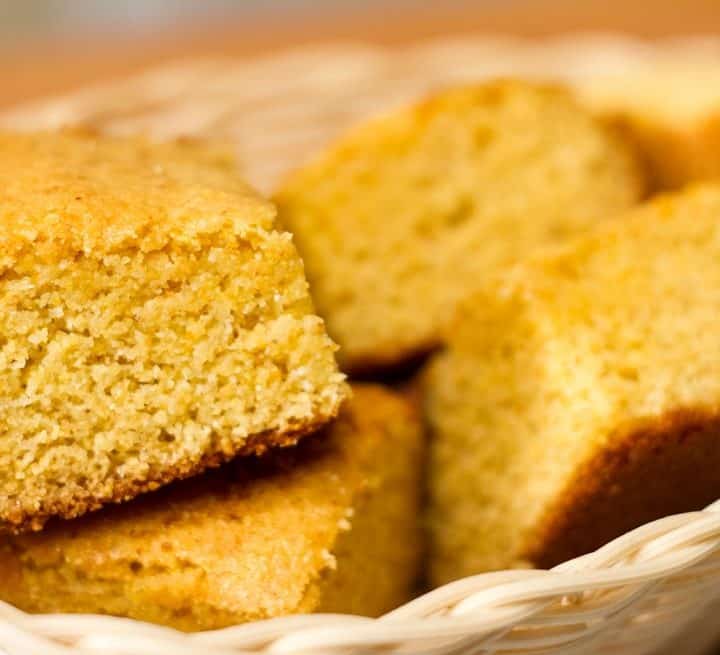
Egg-free cornbread
Information
- Cooking: 20-25 min
- Yield: 1 loaf (mould 20 × 20 cm / 8 × 8 in)
- Cooking: oven at 200 °C (400 °F)
Ingredients
- 310 ml (1 ¼ cup) of all-purpose flour
- 250 ml (1 cup) corn flour
- 160 ml (⅔ cup) sugar
- 5 ml (1 tsp) salt
- 5 ml (1 tsp) seasonings of choice (rosemary, oregano, basil)
- 15 ml (1 tbsp) of baking powder
- 310 ml (1 ¼ cup) milk
- 80 ml (⅓ cup) oil
- Mix all dry ingredients in a large bowl.
- Incorporate the milk and oil. Stir until uniform.
- Pour into a 20 × 20 cm (8 × 8") oiled mould.
- The baking reference is 20–25 minutes at 200 °C. A clean toothpick may help assess texture without validating food safety for every recipe. Follow a formulation and method suited to pan and thickness, and avoid contamination after cooking.
Method 5 — Naturally fermented bread (Ethiopian injera)
Injera is a fermented bread associated particularly with Ethiopian cooking, made through various formulations, often using teff. Its culture includes microorganisms present in ingredients and the environment; fermentation must not be equated with automatically and safely capturing yeast from the air. The intended result is a porous, soft, tangy flatbread. The parameters of a complete method matter more than a fixed number of days independent of temperature and culture.
Study this family as a skill to learn beforehand. Hygiene, culture monitoring and preparation conditions must be controlled: a three- to five-day interval does not validate every kitchen. Flour and water can produce different fermentations. Never improvise a prolonged wait assuming that cooking will correct all deterioration.
Historical formulation of injera — fermentation method to be completed and verified
Information
- Historical duration indicated: three to five days, not guaranteed as a success or safety criterion
- Cooking: 20 minutes
- Yield: 18 injeras
- Cooking: skillet over medium heat
Ingredients
- 250 ml (1 cup) teff flour. Substituting barley changes the recipe and introduces gluten; it is unsuitable when preparing food for someone who must avoid gluten.
- 250 ml (1 cup) of all-purpose flour
- Approximately 2.5 ml (½ teaspoon) salt
- 750 ml (3 cups) of drinking water; filtration or distillation is not required in principle and does not validate fermentation.
- Mix the flours and salt in a large bowl. Add water and stir until uniform consistency.
- The old method covered the bowl with a cloth and left it overnight at room temperature. This alone does not define controlled fermentation: for practical use, replace it with an appropriate complete recipe specifying conditions and culture. The ingredients remain documented.
- Stirring the batter the next morning and waiting another night does not, by itself, establish safe fermentation. Use a tested recipe with an appropriate culture, temperature and duration. Stirring demonstrates neither control of the culture nor freedom from contamination.
- The cycle was repeated for three to five days according to warmth. A higher temperature does not merely mean a shorter wait: it can change the culture and risks. Do not conduct the trial on this timetable alone without an appropriate method and discard instructions.
- Bubbles and a sour smell may accompany fermentation but do not alone prove it is wholesome or ready. Do not taste raw batter or use a mouldy or suspicious mixture. Criteria must belong to a controlled method, not an isolated sensory interpretation.
- The next historical step brought one cup of water to a boil, incorporated approximately half the fermented mixture, then returned this cooked mixture to the remainder. It is retained to explain the formulation without validating proportions or rescuing a questionable fermentation. Partial cooking does not repair an uncontrolled initial process.
- The formulation then added 80–160 ml water to reach a pancake-batter consistency. This texture adjustment is neither a safety control nor a guarantee of success; follow the proportions of the complete recipe selected.
- Cooking on one side in a lightly oiled skillet without turning does not by itself determine safe timing, temperature or cooking through the full thickness. To make injera, use a reliable complete method suited to equipment and culture, following its cooking and storage instructions.
Summary of methods
Soda bread
- Leavening agent: baking soda + acid (buttermilk, vinegar)
- Result: rustic bread, firm crust
- Timing: immediate (no rest)
- Key recipe: Irish soda bread
Baking powder
- Leavening agent: baking powder alone or combined with baking soda
- Result sought: quick bread crumb, depending on dosage, ingredients and mixture.
- Timing: immediate to 15 minutes of rest
- Key recipes: simple bread, biscuits, rolls, breadsticks
Flat breads
- Leavening agent: none in some recipes; baking powder in the naan selected here.
- Result: flat bread, supple, skillet cooking
- Time: 10 to 30 minutes rest
- Key recipes: roti, naan, lefse, luchi
Maize flour
- Leavening agent: baking powder or none
- The result varies according to recipe; the corn bread presented with wheat is not gluten-free.
- Time frame: immediate
- Key recipes: pupusas, corn bread without eggs
Natural fermentation
- Fermentation culture: yeasts and bacteria according to method and conditions.
- Result: flat porous, acidic bread
- Timing: potentially several days, defined by a complete method rather than the number of nights alone.
- Key recipe: Ethiopian Injera
Home-made lard bread
Another historical recipe to examine: lard bread, pre-ferment, smoked meat and cheese. These ingredients do not guarantee long storage; check the method and the cold chain before proposing it as a reserve.
Preserving food
Methods and equipment to build long-term food reserves.
Saving seeds
Produce and store your own grain and vegetable seeds for self-reliant production.
Benchmarks: raw flour — Health Canada ; management of a leaven crop — CSU Extension ; bicarbonate and baking powder — King Arthur Baking. The general resource on leaven does not automatically validate the complete injera method.