
Site pages and tools are available in English. Articles marked “French” open the original French version; English articles will follow.
PrépaCivile route · 8 steps
Understanding resilience
Eight readings and eight practical exercises to connect people, the organization of the home and community resources.
Your Progress
0 stage completed · 0 not applicable · 8 to be done
The tracking remains in this browser, on this device.
Start this learning pathHow to use this route
Each article reads alone or in the order of the series. Then take an example of your home or neighbourhood to apply an idea.
The pace is a proposal, not a deadline. Some steps require an appointment, training or outside help. Adapt the steps to people, housing and budget. "Not applicable" means that you have checked that the step does not concern your situation.
Step 1 to 4
Understanding people and their environment
Step 1 To do
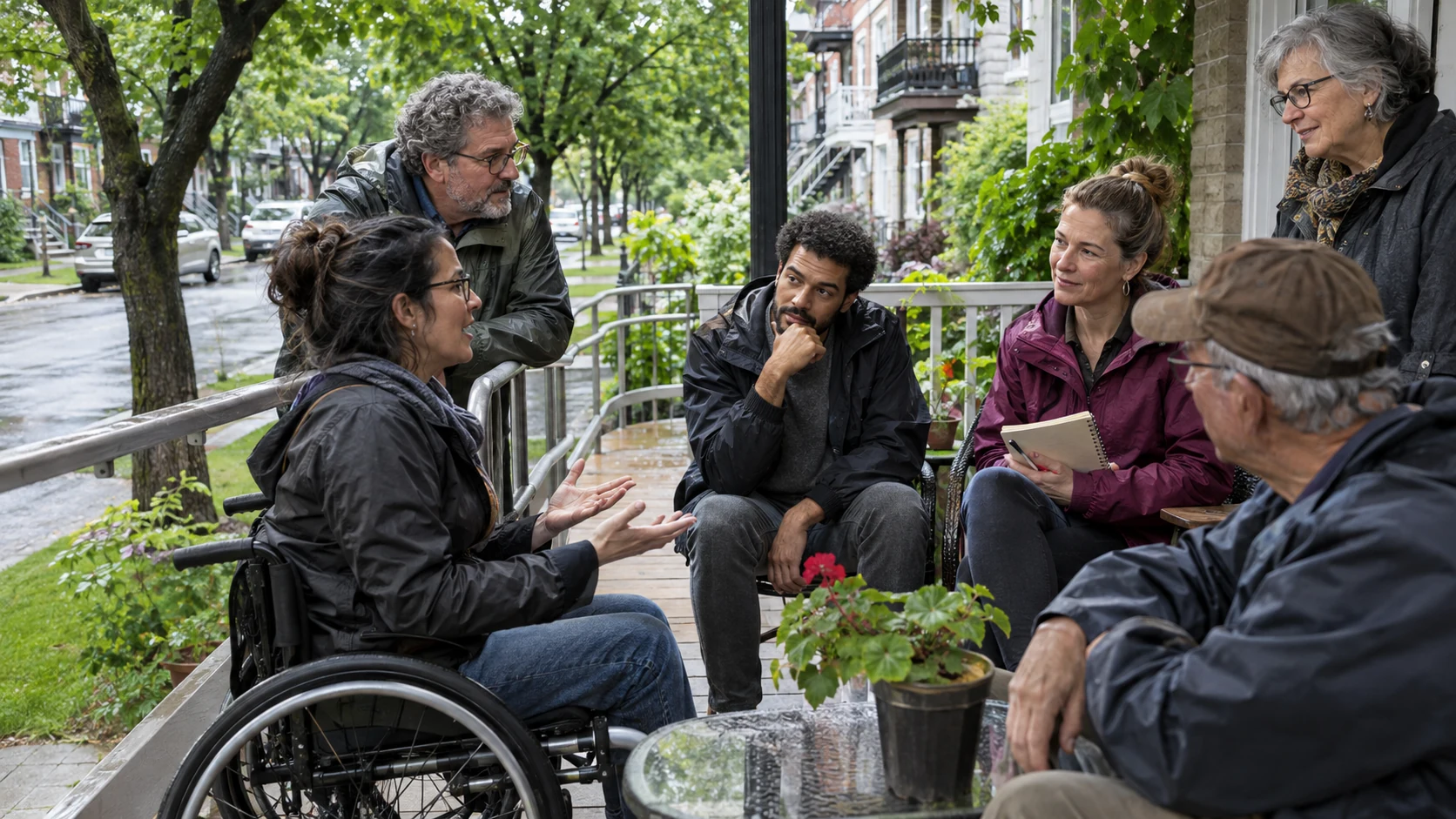
Understanding Risks and Resilience
Your action
Choose a local hazard and distinguish the phenomenon, the exposure of the home and the possible consequences.
To complete this step
Vulnerability and reduction action are identified; concepts are linked to a concrete example.
Read the article: Risks and Resilience: Useful Concepts for Preparing Your Home
Step 2 To do
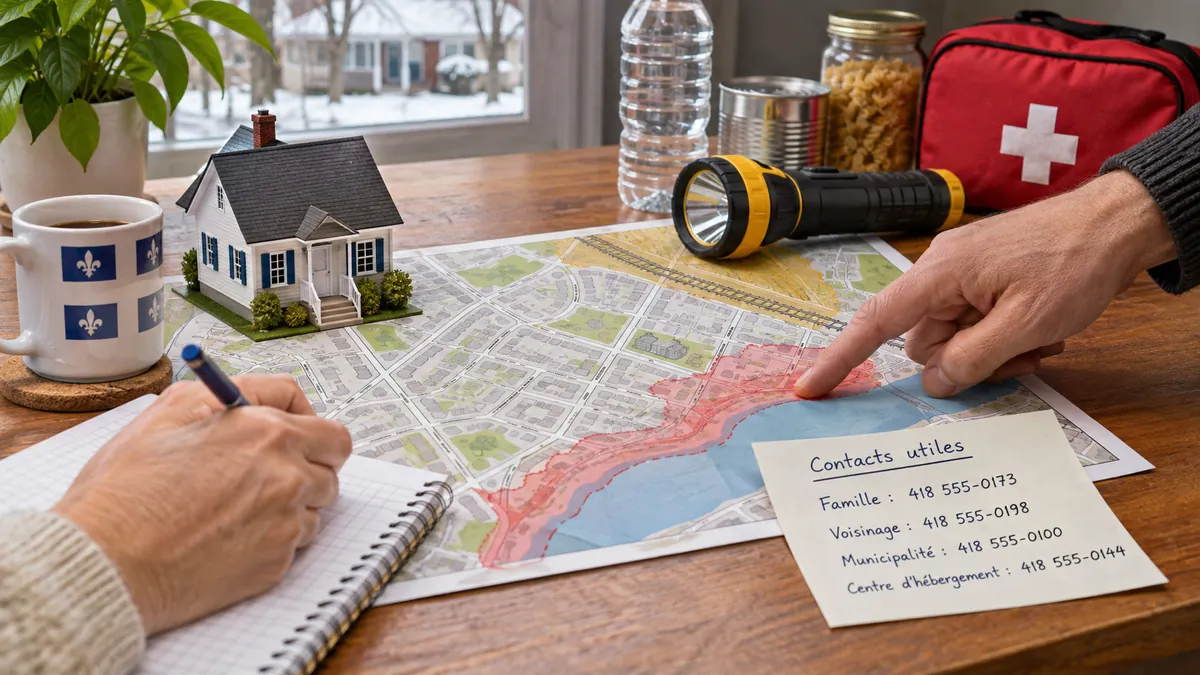
Taking people into account
Your action
Discuss each person's needs, constraints and resources without reducing material readiness.
To complete this step
Needs are expressed by the persons concerned; appropriate support is identified.
Read article: Human Resilience: Preparing People as Much as Equipment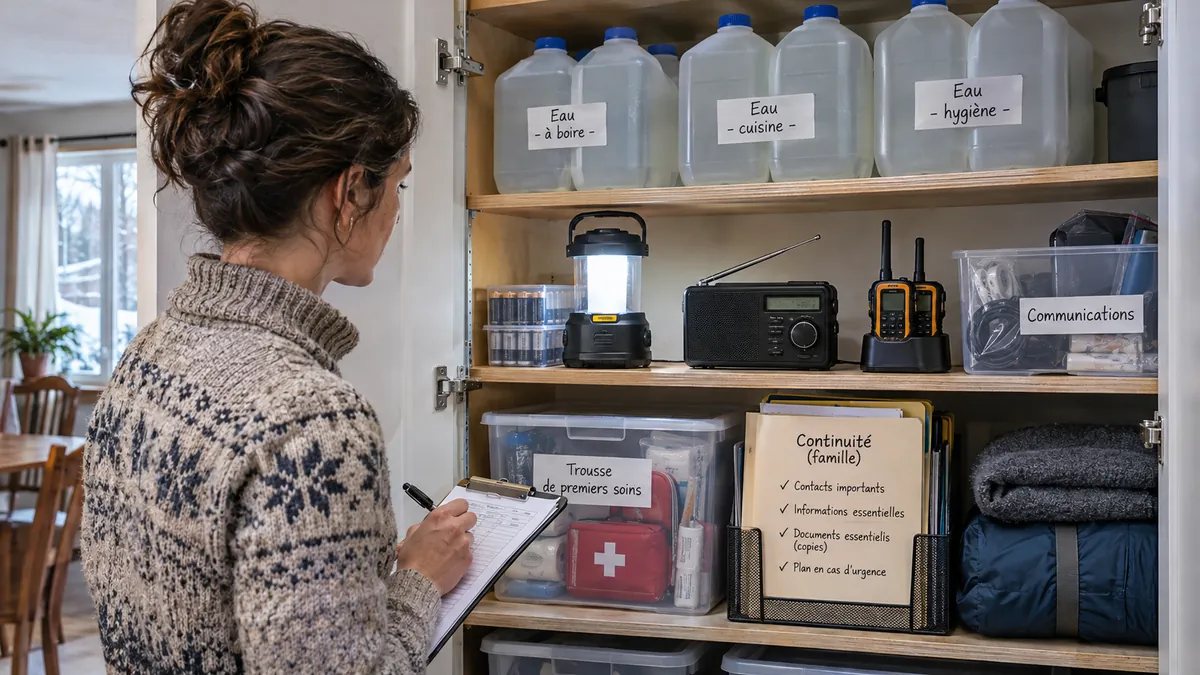
Step 3 To do
Organizing continuity of the home
Your action
For an essential activity, note who is acting, the resource required and an alternative.
To complete this step
A relay exists; the solution does not depend on a single person or device.
Read article: Home Organization: Continuity, Alternatives and Learning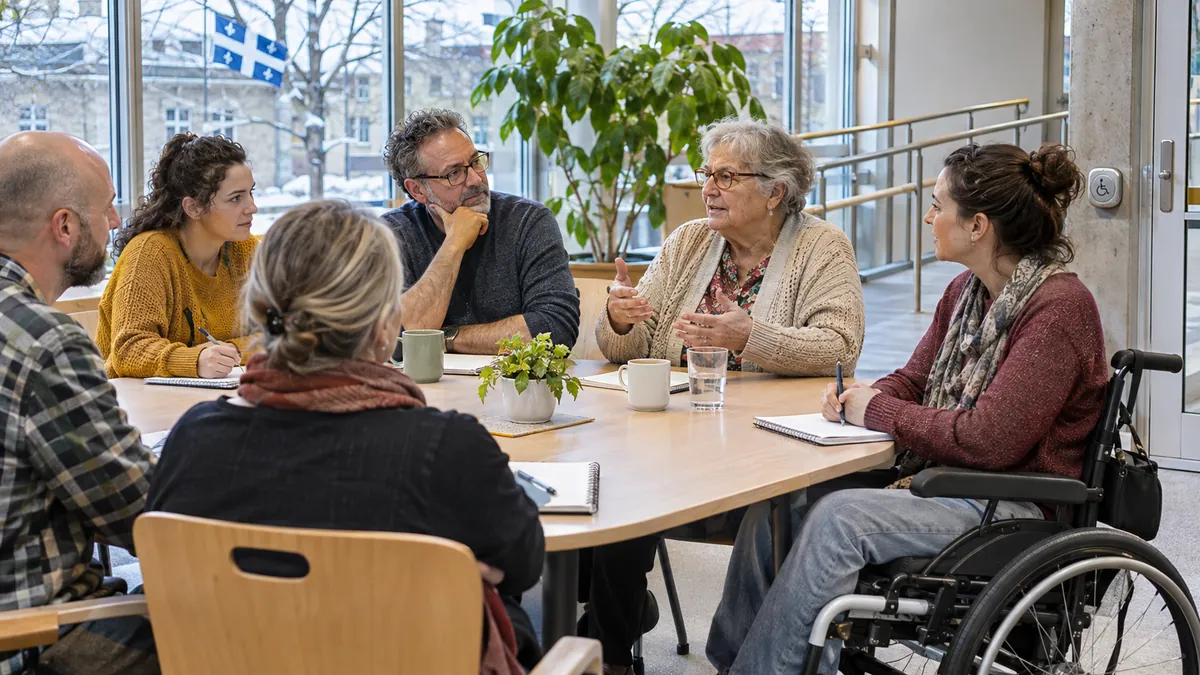
Step 4 To do
Understanding collective resilience
Your action
Identify the social services and links that contribute to your preparation, then a barrier to access help.
To complete this step
A verified local resource is noted; public and civic responsibilities are distinguished.
Read the article: Collective Resilience: Risk Culture and Access to Aid
Step 5-8
Coordinate, adapt and learn
Step 5 To do
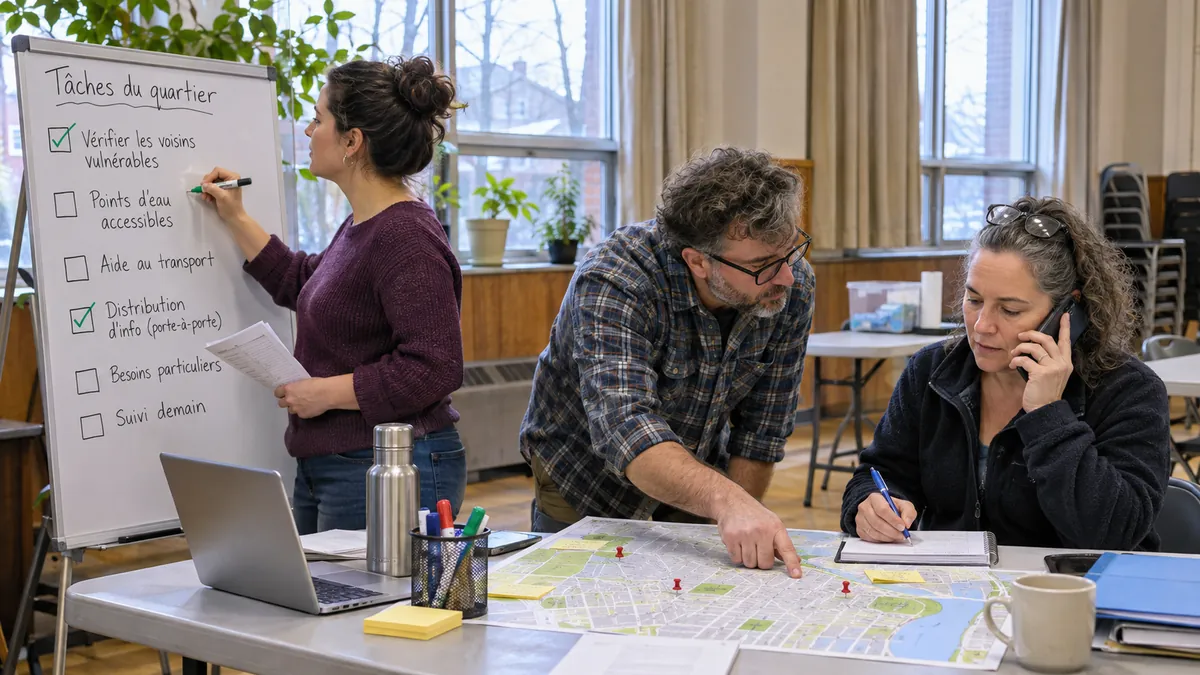
Sharing the facts and following the tasks
Your action
Simulate a short coordination on paper: confirmed fact, question to check, task, responsible and next point of situation.
To complete this step
The facts and assumptions are separated; no unnecessary personal data is disseminated.
Read article: Coordination in Crisis: Sharing facts and monitoring tasks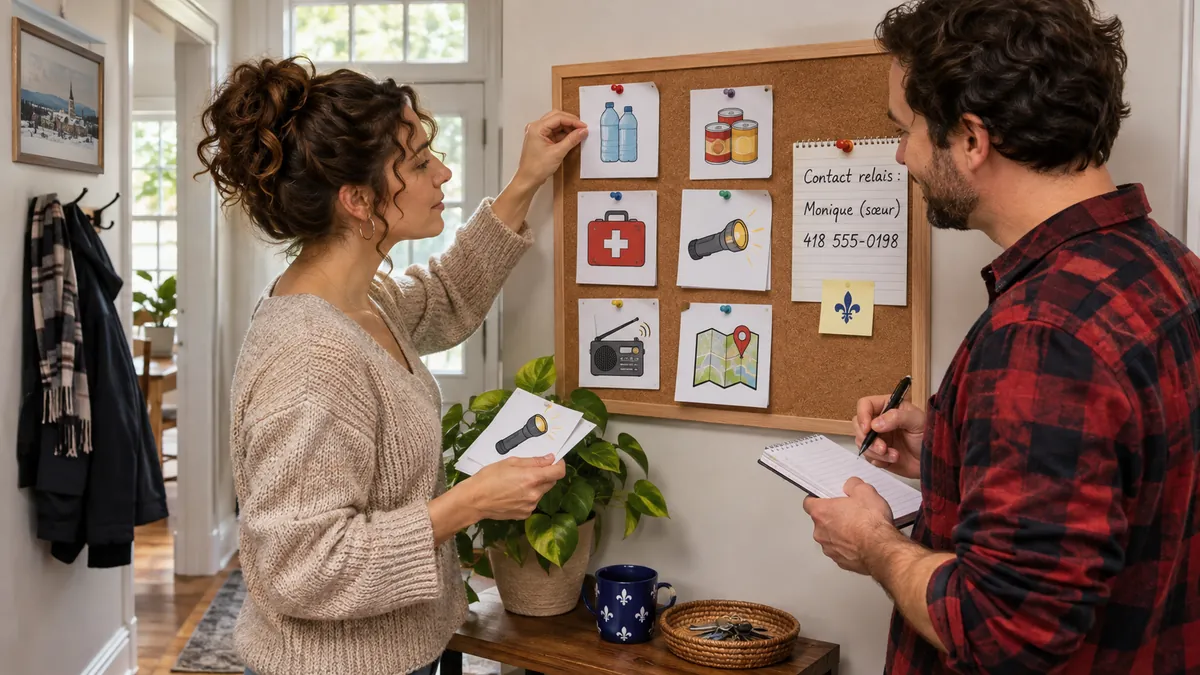
Step 6 To do
Divide roles and keep a relay
Your action
Divide two tasks according to capacity and availability, then agree when to ask for help or pass the relay.
To complete this step
Roles are assigned; fatigue and limitations are taken into account.
Read the article: Family Leadership in Crisis: Sharing Roles and Keeping a Relay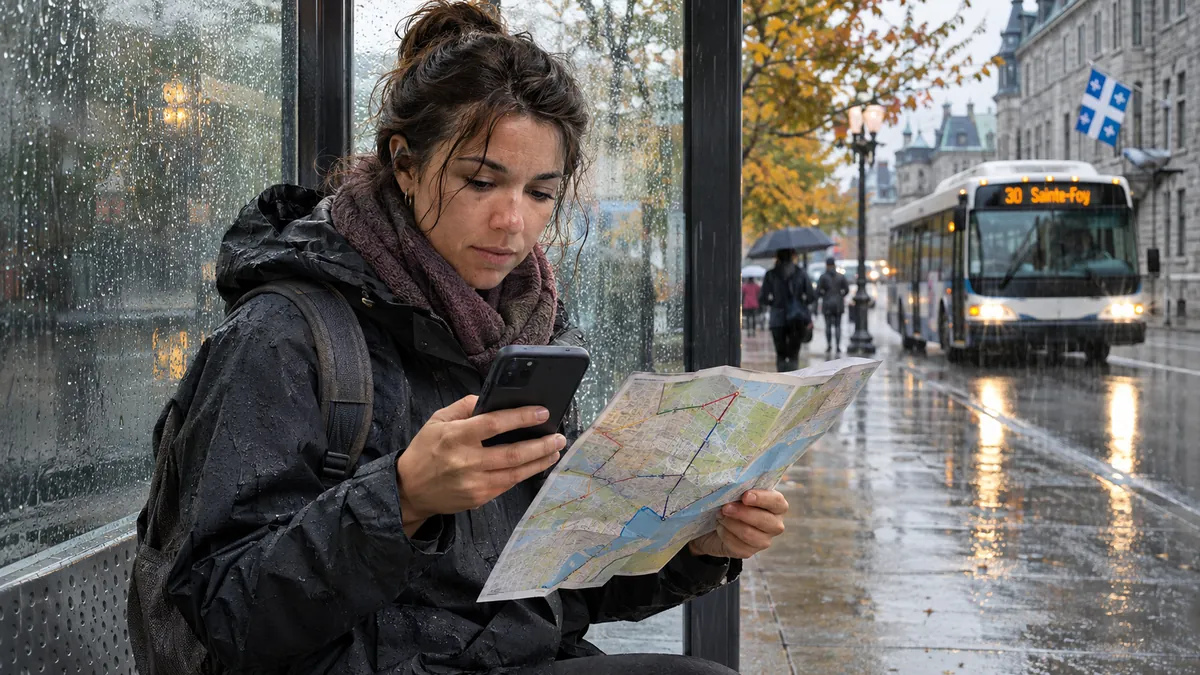
Step 7 To do
Adapting a plan to the unexpected
Your action
Take a hypothesis from your plan and change it: closed trip, absent person or device unavailable. Choose another safe option.
To complete this step
The change is explained; no dangerous technical improvisation is necessary.
Read article: Anticipating and adapting: preparing a plan that can evolve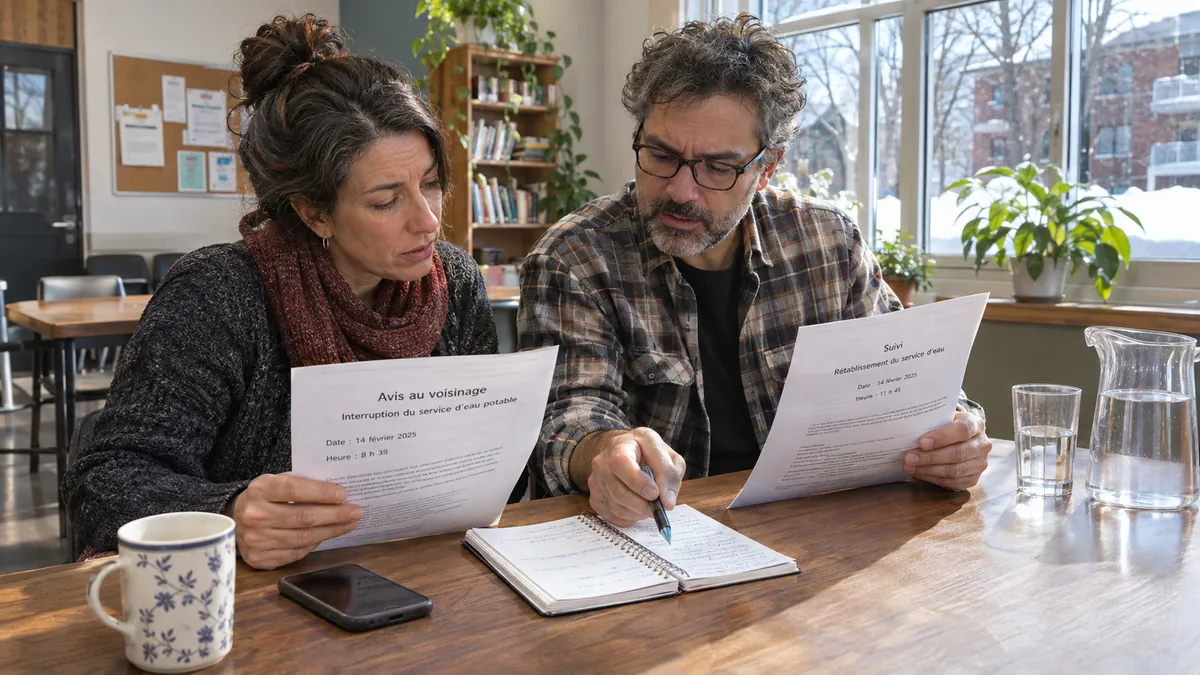
Step 8 To do
Check, learn and recover
Your action
After a real exercise or difficulty, distinguish facts, effects and improvements, then choose a feasible follow-up.
To complete this step
A useful lesson and an official are noted; individuals are not charged.
Read article: Critical and post-crisis thinking: checking, asking for reinforcement and learning
Take stock and prepare for the next round
To complete this course does not mean being ready for any situation. Take note of the useful actions, the still fragile points and the steps that require support. Set up a next review after a change of season, housing or situation.
Practical issues
Do I have to buy equipment at every stage?
No. Start with what you have. Associated resources can offer equipment with reported affiliate links; no purchase is required to follow this program.
Can I take another camera again?
The tracking remains in the browser used. It does not synchronize automatically. You can keep a paper list to change device.
What if one step doesn't concern my home?
Check the question and then use "Not applicable to my home". This answer is counted separately from the actions performed and can be cancelled.
What to do in a real emergency?
Interrupt the route and follow the local authorities. In case of immediate danger, contact the emergency services of your territory. These steps are used to prepare, not delay a request for assistance.