
In this article
- Hyperthermia is a body that is too hot. It ranges from heat exhaustion, where the body is still fighting, to heat stroke, a life-threatening emergency.
- The sign that tips the balance: confusion. Someone who is overheated and becomes confused, agitated or drowsy may be having heat stroke.
- For heat stroke, you cool first, immediately and hard, and call for help.
- Fever medication does nothing for heat stroke.
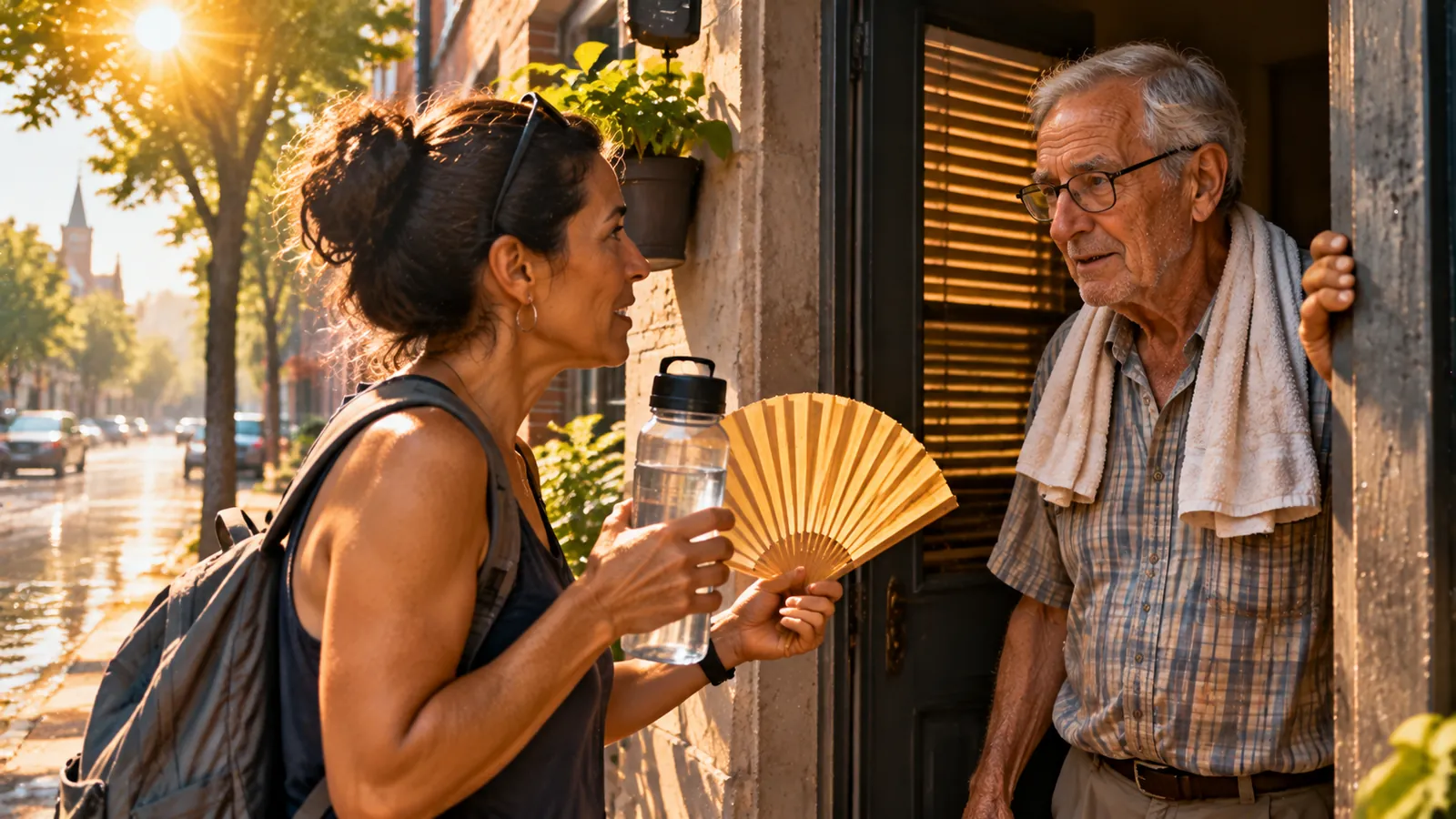
- Older adults, babies, people with chronic illness, outdoor workers: they are hit first. One visit a day during a heat wave saves lives.
01What is hyperthermia?
“Hyper” means high: hyperthermia is a body temperature that is too high, the opposite of hypothermia. The body can handle some heat stress: it sweats, sends blood to the skin, slows down effort. But when the heat it receives and produces exceeds what it can get rid of, its core temperature rises. Beyond a certain point, its cooling systems give out and organs are damaged.
It is often confused with fever, but they are not the same. Fever is deliberate: to fight an infection, the brain intentionally sets its “thermostat” higher. In hyperthermia, the thermostat is normal: it is the cooling that can no longer keep up. That is why fever medication, which acts on the thermostat, has no effect on heat stroke.
02From cramps to heat stroke
Heat does not strike all at once. It causes a series of problems, from mild to severe. Recognizing them early stops the progression.
03Heat exhaustion or heat stroke?
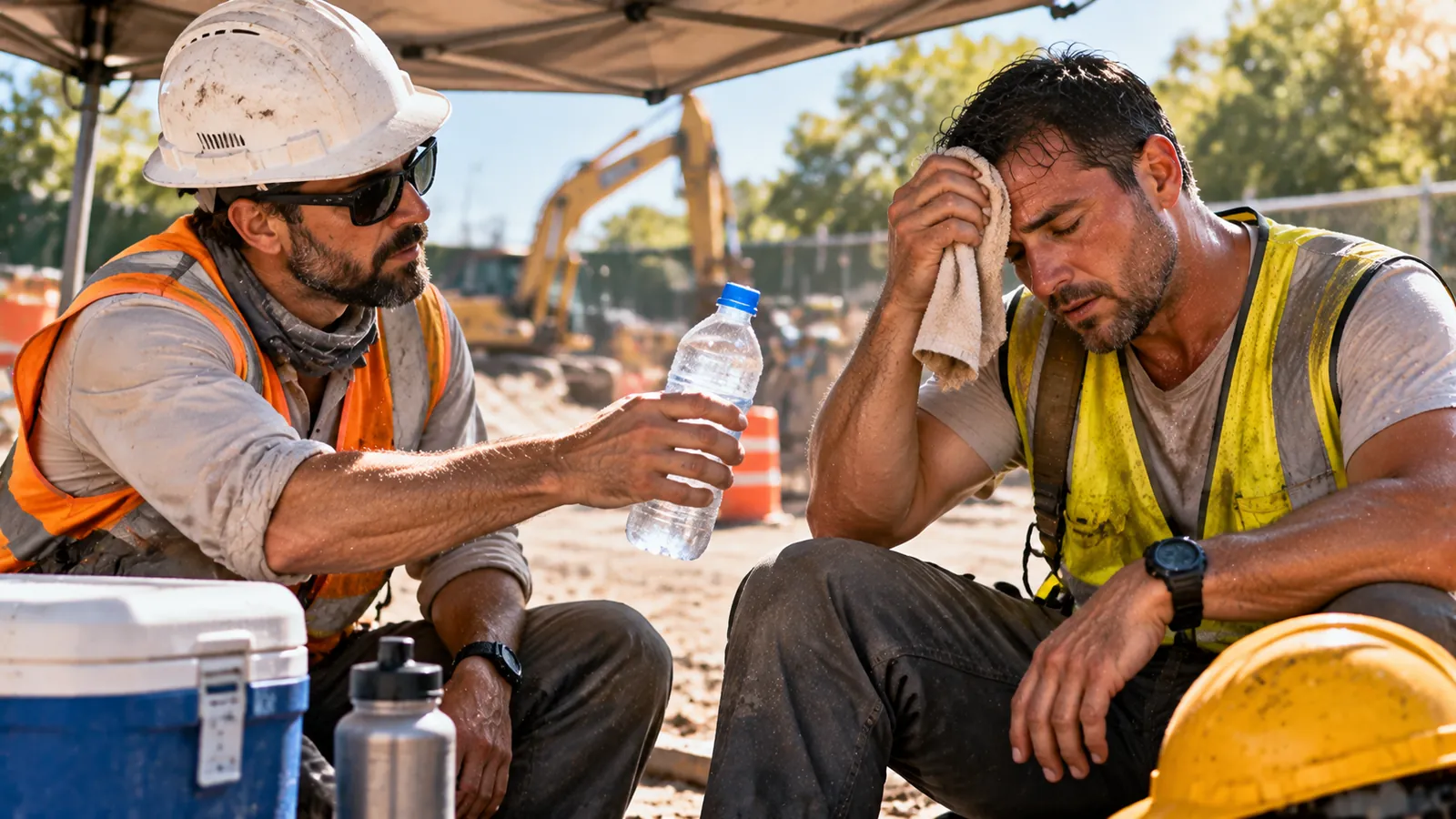
This is the distinction that matters most, because the response is not the same. In heat exhaustion, the body is fighting and will cool down if helped. In heat stroke, it no longer cools down: its temperature climbs and the brain is affected.
| Heat exhaustion | Heat stroke | |
|---|---|---|
| Mental state | Tired but clear-headed, answers normally | Confused, agitated, incoherent, drowsy or unconscious |
| Skin | Clammy, pale, heavy sweating | Very hot, red; dry in an older person during a heat wave, sometimes still sweating after effort |
| Other signs | Nausea, headache, cramps, dizziness, thirst | Vomiting, rapid pulse, seizures, loss of consciousness |
| Temperature | Raised, but usually below 40 °C (104 °F) | 40 °C (104 °F) or more |
| What to do | Cool place, cool down, drink; seek care if no improvement within an hour | Call for help and cool down immediately |
04Cool first: act in the first minutes
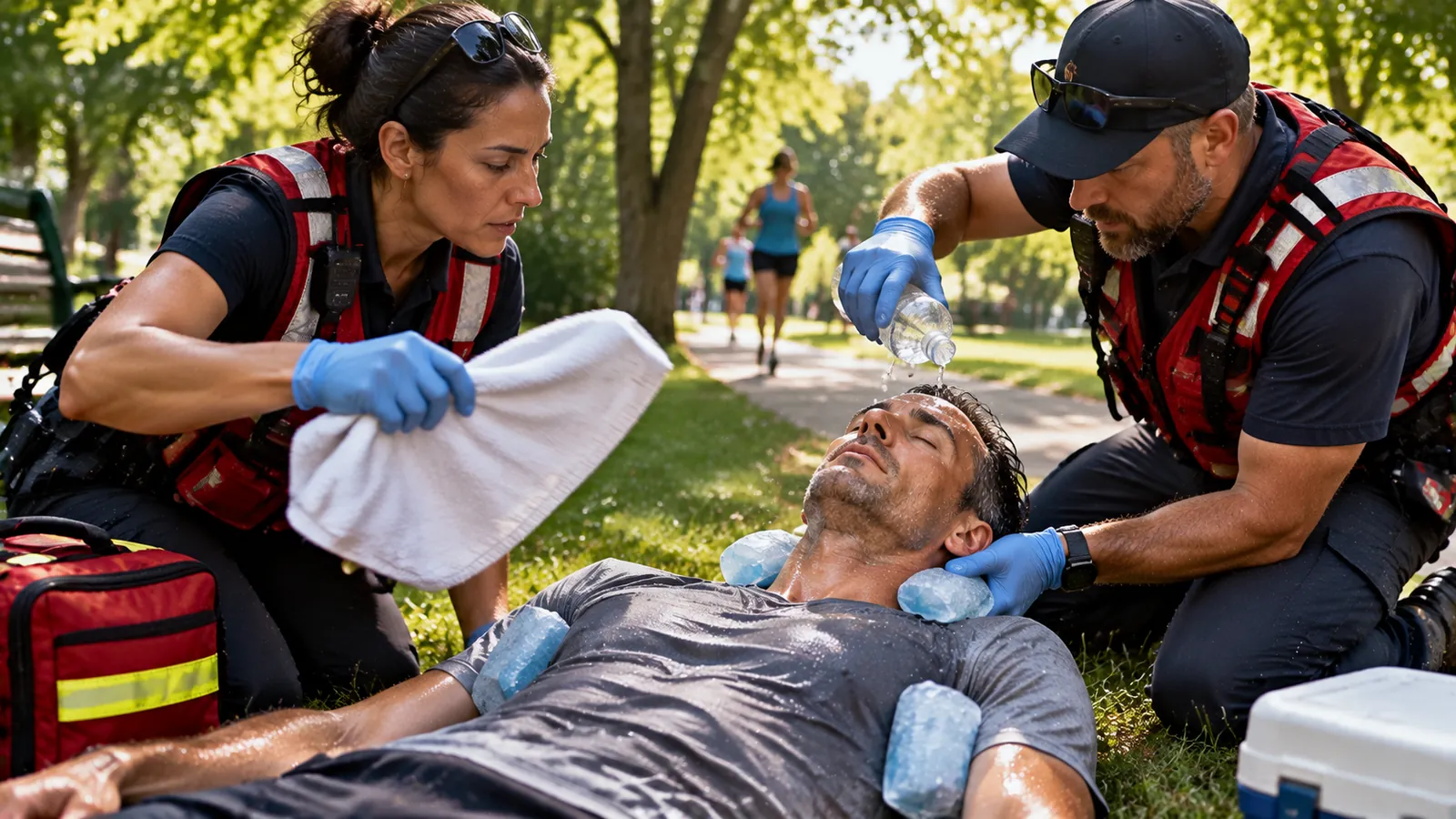
In heat stroke, every minute above 40 °C damages the brain, liver, kidneys and heart. The first aiders’ principle is clear: cool first, transport second. Call for help, then cool the person without waiting for help to arrive.
| Do | Avoid |
|---|---|
| Call 911 (Quebec) or 15 / 112 (France) | Waiting to see if it passes |
| Move the person to shade or somewhere cool, remove extra clothing | Leaving them in the sun or in a hot car |
| Keep cooling until help arrives or until they are clear-headed again | Stopping as soon as they “look better” |
| Place them in the recovery position if unconscious and breathing | Giving drinks to a confused or unconscious person |
| Give cool water in small sips if clear-headed (heat exhaustion) | Giving acetaminophen, ibuprofen or aspirin to “bring the fever down” |
05Who is most at risk
Heat waves mostly kill silently, at home. In France, the August 2003 heat wave caused about 15,000 excess deaths in two weeks, most of them older people. In Montreal, the summer 2018 heat wave was linked to more than 60 deaths, often people living alone, ill, in homes without air conditioning.

06Reading heat alerts
Temperature alone does not tell the whole story: humidity stops sweat from evaporating and makes heat far more dangerous. Weather services in both countries take this into account.
| Quebec and Canada | France | |
|---|---|---|
| The indicator | The humidex, which combines temperature and humidity to express how hot it feels | Forecast maximum and minimum temperatures over three days, compared with thresholds specific to each department |
| The alert | Heat warnings from Environment and Climate Change Canada, relayed by public health authorities | Météo-France heat wave vigilance: yellow, orange, red |
| Where to get help | Info-Santé 811, municipalities (air-conditioned spaces, pools, extended hours) | Canicule Info Service 0 800 06 66 66, municipal registers of vulnerable people |

What to do at each level
07Your tools
Someone is overheated: what should I do?
Answer a few questions about the person. The tool tells heat exhaustion apart from heat stroke and shows the steps to take, in order.
Educational tool, it does not replace first aid training. If in doubt, call for help.
Humidex calculator
Enter the temperature and relative humidity (from your thermometer-hygrometer or the forecast) to see how hot it feels and the risk level.
08Useful equipment
Things to keep your home and body cool, even during a power outage, and to keep an eye on how hot the room is getting.
09Key takeaways
- Hyperthermia is not a fever: fever medication will not stop it.
- Cramps, fainting, exhaustion: the body is still fighting. Cool place, cool down, drink.
- Confusion in someone who is overheated: think heat stroke, call for help.
- Cool first, hard and without delay: cold water, spraying and fanning.
- In a heat wave, one visit or call a day to vulnerable people, and never anyone alone in a car.
Sources and inspiration. This guide is inspired by the “Hyperthermia” section by Robert B. Kauffman (Frostburg State University, 2015), which draws on the scale of signs by G. Fear and J. Mitchell (National Search and Rescue, 1977) and the water requirements in SOLO’s Wilderness First Responder Review (2010). First aid steps follow current recommendations from first aid and sports medicine organizations; heat wave data come from Santé publique France and Montreal’s regional public health department; the humidex formula is that of Environment and Climate Change Canada. The text, examples, figures and tools are original and adapted to Quebec and France by PrépaCivile. This guide does not replace first aid training.