
In this article
- Faced with danger, the body takes over within seconds: racing heart, tunnel vision, slower thinking. It is normal, and you can prepare for it.
- Panic is rare. What costs lives is mostly denial (“it’s probably nothing”) and freezing.
- Those who make it combine five things: will, breaking things into small tasks, know-how they can apply, a bit of luck and a body in working order.
- The right mindset is realism and hope at the same time.
- The mind can be trained: a few simple, repeated habits change how you react on the day.
01What fear does to your body
The mind is the first area of preparedness, before water and food. Why? Because everything else goes through it: a perfect kit is useless if you stay frozen at the door, and one decision made calmly beforehand is worth more than ten purchases.
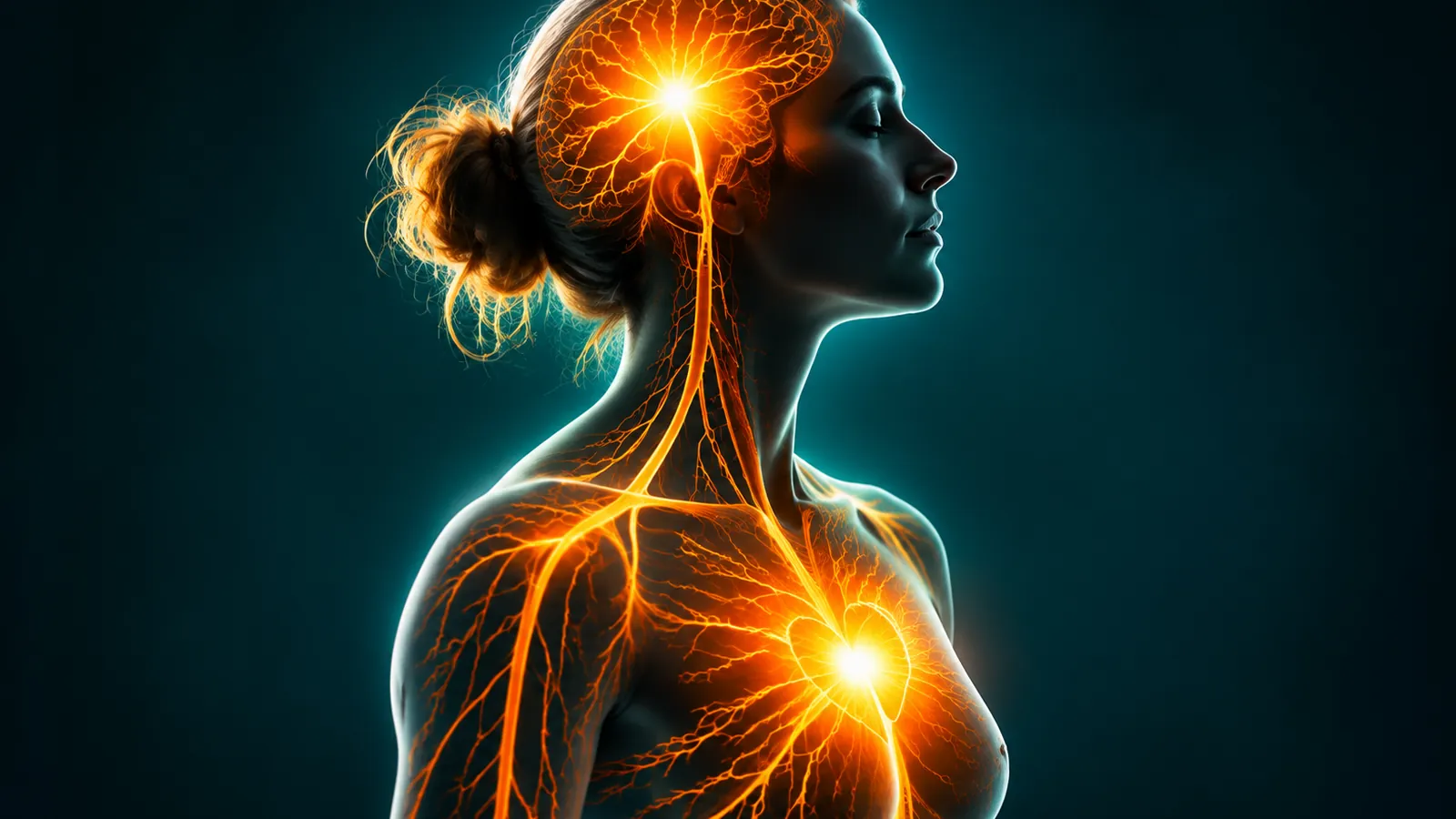
When the brain perceives a threat, a small structure called the amygdala sounds the alarm before you have even understood what is happening. The nervous system and stress hormones (adrenaline, then cortisol) get the body ready to run or fight. This program is ancient and very good at escaping a predator. It is far less good at reading an evacuation map or dialling a number.
| What you feel | What is happening | Practical consequence | The counter |
|---|---|---|---|
| Pounding heart, short breath | Adrenaline: the body gets ready for effort | Shaking hands, raised voice | Slow box breathing (see the tool below) |
| Tunnel vision | Attention locks onto the threat | You do not see the second exit | Deliberately turn your head, left then right |
| Clumsy fingers | Blood goes to the large muscles | Keys, buttons, phone code are hard | Emergency contacts reachable without unlocking; simple moves |
| Muffled sounds, distorted time | The brain filters what it deems secondary | You miss an instruction | Short, repeated instructions, and look at the person |
| Blank mind | Reasoning takes a back seat | You look for “what to do” instead of acting | A plan decided in advance, in three moves |
02Deny, deliberate, act: the three stages of reaction
Disaster accounts show a recurring pattern. Before acting, almost everyone goes through two stages, longer or shorter. Shortening them buys time, and sometimes lives.
Normalcy bias
Our brain assumes tomorrow will look like yesterday. A fire alarm that often goes off for nothing ends up moving no one. A flood “like the ones we’ve seen before” pushes people to stay, even when the situation has changed. This bias is the main cause of delay: we wait for one more piece of evidence, smoke, flames or water in the street, before leaving.
While deliberating, we watch others to know what to do. If nobody moves, we do not move. That is why a single person who says clearly “We’re leaving, now, by the left stairwell” can lead a whole group.
03Panic, freezing, mutual aid: what real disasters show
Movies show crushing crowds and looting neighbours. Decades of studies on real disasters describe something else.
| Common belief | What is most often observed | What it changes for you |
|---|---|---|
| “People panic” | Mass panic is rare. Calm is far more common, sometimes too much: people delay leaving. | The main risk is waiting. Set your departure thresholds in advance. |
| “In a crisis, it’s every man for himself” | Mutual aid is the norm: neighbours, passers-by and family are often the first responders. | Your network (circle, neighbours) is a survival resource. Look after it. |
| “I’ll react well when the time comes” | Freezing is common, even in people who are calm in daily life. | Practise key moves: they will stay available. |
| “Help will arrive quickly” | In a widespread crisis, responders are overwhelmed for hours, even days. | The first hours are you and those around you. |
| “You have to be tough to survive” | Will, flexibility and connection to others matter more than strength. | A strong mind can be built, whatever your profile. |
04The five factors that make the difference
Expedition doctors, journalists and researchers who have studied survivors arrive at similar lists. They can be summed up in five factors, from most to least important.
| Factor | What it is | How to develop it | Weight |
|---|---|---|---|
| 1. Will | Refusing to give up, having a reason to hold on: your children, a loved one, a goal | Know who and what you would hold on for; talk about it as a family | ●●●●● |
| 2. Small tasks | Breaking an overwhelming situation into steps you can do right now | Practise thinking in “the next 10 minutes” | ●●●●● |
| 3. Applied know-how | Not what you know, but what you can do under pressure | Practise: first aid, evacuation, shutting off gas | ●●●● |
| 4. Luck | It exists, but you partly make your own | Be ready to seize the opportunity when it comes | ●● |
| 5. Physical condition | A body in working order copes better with cold, effort and shortage | Walk, sleep, manage your treatments: no need to be an athlete | ●● |
The first three factors weigh the most. Luck and fitness help, but they do not make up for a lack of the other three. The test below gives you your profile on these five factors.
05Realism and hope: the paradox that keeps you going
James Stockdale, an American officer held as a prisoner of war for more than seven years in Vietnam, said the first to break were the optimists: those who told themselves “we’ll be out by Christmas”, then “by Easter”, and who collapsed at every missed date. Those who held on faced reality without softening it, while remaining convinced they would make it out one day.
In a crisis, it translates simply: “The outage could last a week, so we organize for a week” rather than “the power will be back tonight” or “we’ll never make it”.
06Breaking the overwhelming into small tasks
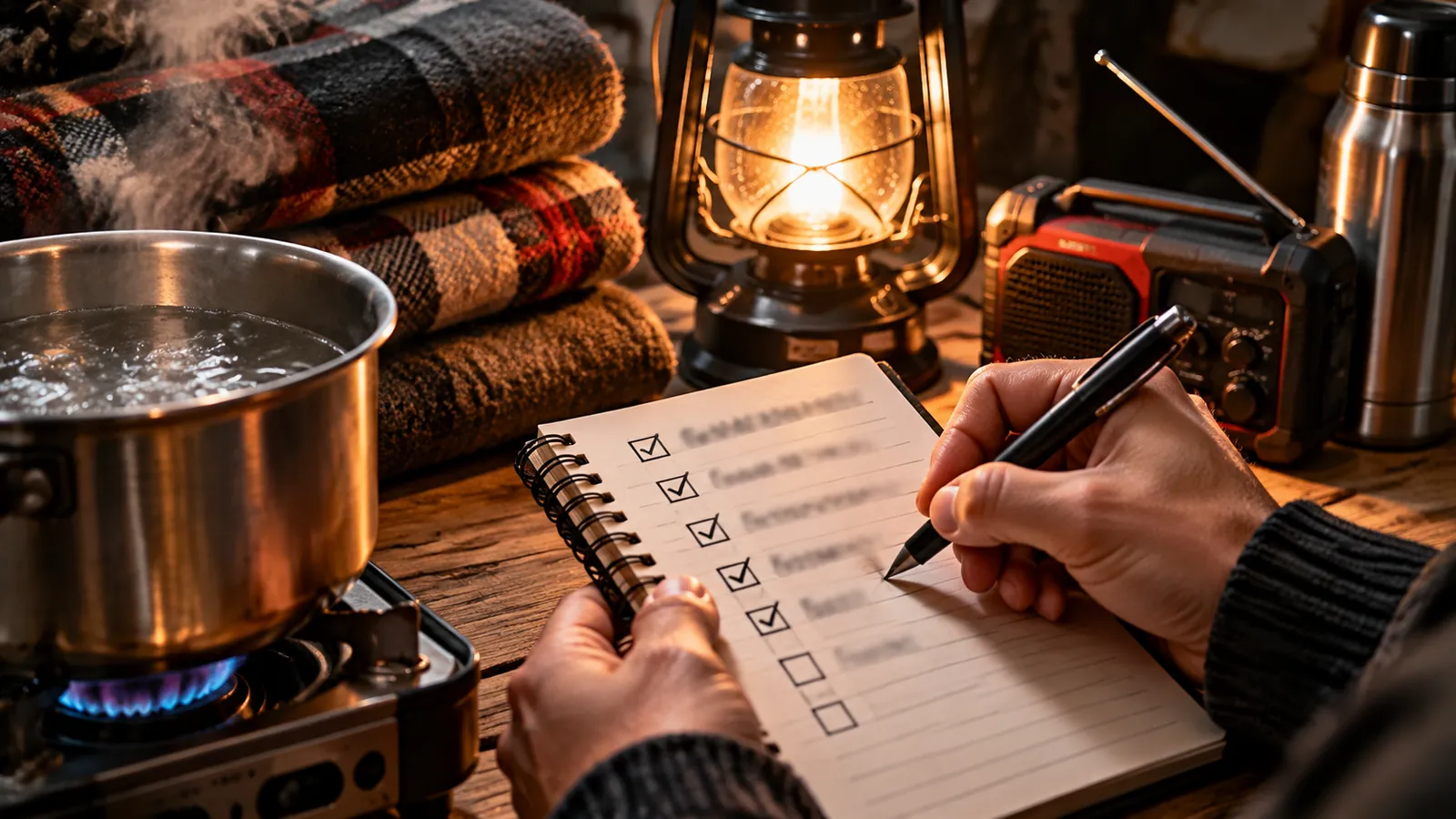
Faced with a huge situation, the brain overloads. Survivors’ counter is almost always the same: stop looking at the mountain, look only at the next step. “I crawl to that rock.” “I fill the pots with water.” Each small task completed brings back momentum and control.
| Example: ice storm, night 2 without power | What overwhelms | The small tasks |
|---|---|---|
| The next 10 minutes | “We don’t know when it will end.” | Close the doors of unused rooms. Turn on a light. Get everyone to drink. |
| The next hour | “The house is getting cold.” | Set up the warm room, blankets on the floor, toques for sleeping. |
| Today | “We’ll run out of everything.” | Take stock, plan three meals, call a neighbour. |
| Tomorrow | “I can’t see a way out.” | Listen to the radio at set times, decide on a threshold for going to the shelter. |
The 4 S method
When you feel the situation slipping away, four steps, in order:
07Tool: box breathing
Breathe in, hold, breathe out, hold, four seconds each. This technique, taught to firefighters, soldiers and healthcare workers, helps bring your heart rate back under control. It does not make fear disappear; it makes it manageable. Try it now, calmly: having practised it is what will make it come to you in a real situation.
Ready?
4 × 4 seconds
Cycle 0 / 4
08Test: your crisis mindset profile
Ten statements, one minute. Answer honestly: no one else will see your answers, they never leave your device. The result shows your strengths and the factor to work on first.
09Training your mind, day to day
No need for a survival course. What works best are small habits that prepare your brain to react without deliberating. Each one takes less than a minute.
| Where you are | The 30-second habit | What it buys you |
|---|---|---|
| Plane | Count the rows to the two nearest exits | Finding the exit in smoke or darkness |
| Hotel | Walk to the emergency stairwell when you arrive | Leaving without hesitation at night |
| Concert hall, shopping centre | Spot an exit other than the entrance | Avoiding the main-door bottleneck |
| Work | Take part in evacuation drills for real | The route becomes automatic |
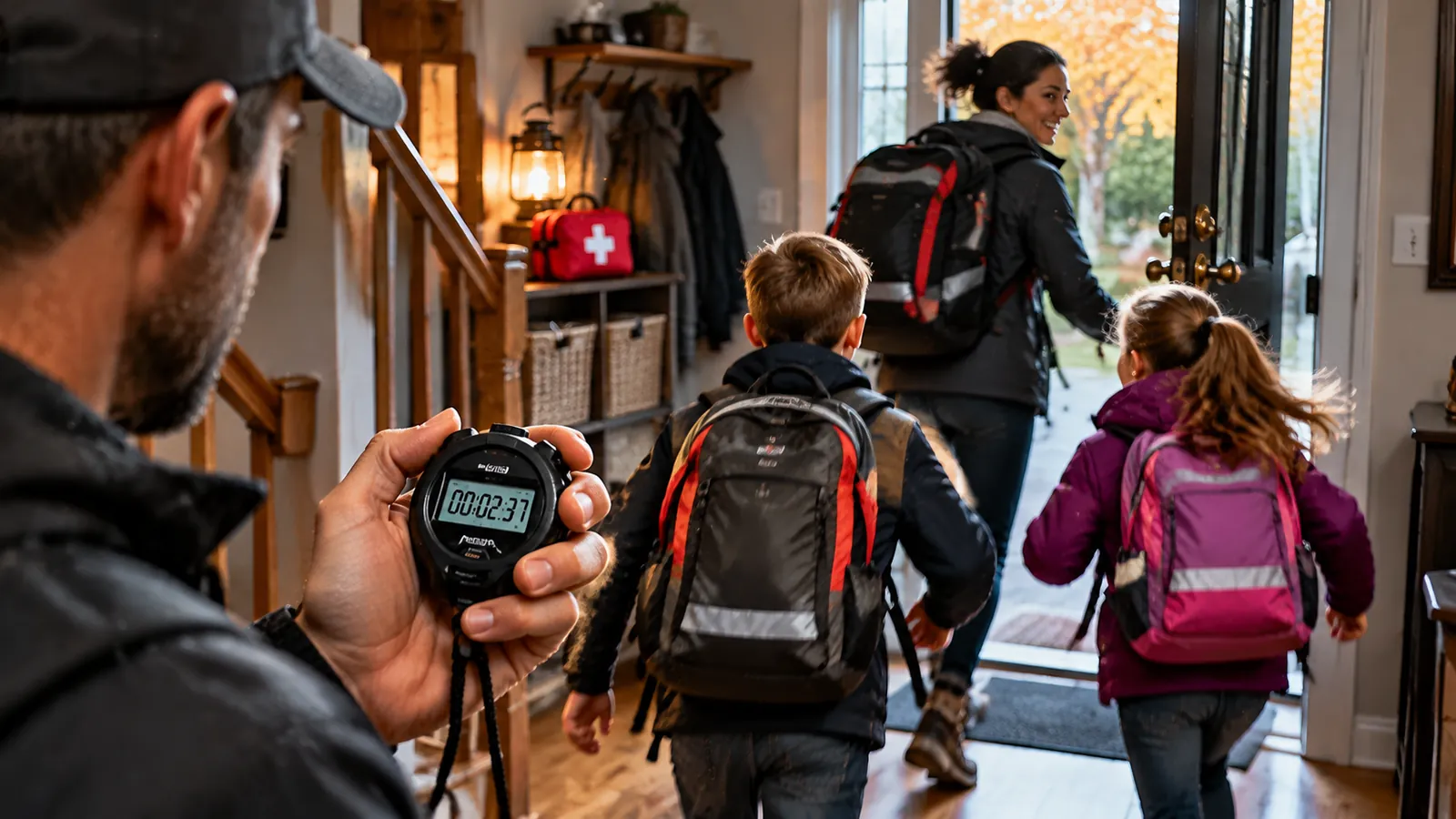
| Home | One timed family evacuation drill a year | Everyone knows their role and the meeting point |
| Car | Ask yourself “if the road were cut here, where would I go?” | A fallback route ready in your head |
10Keeping morale up when the crisis drags on
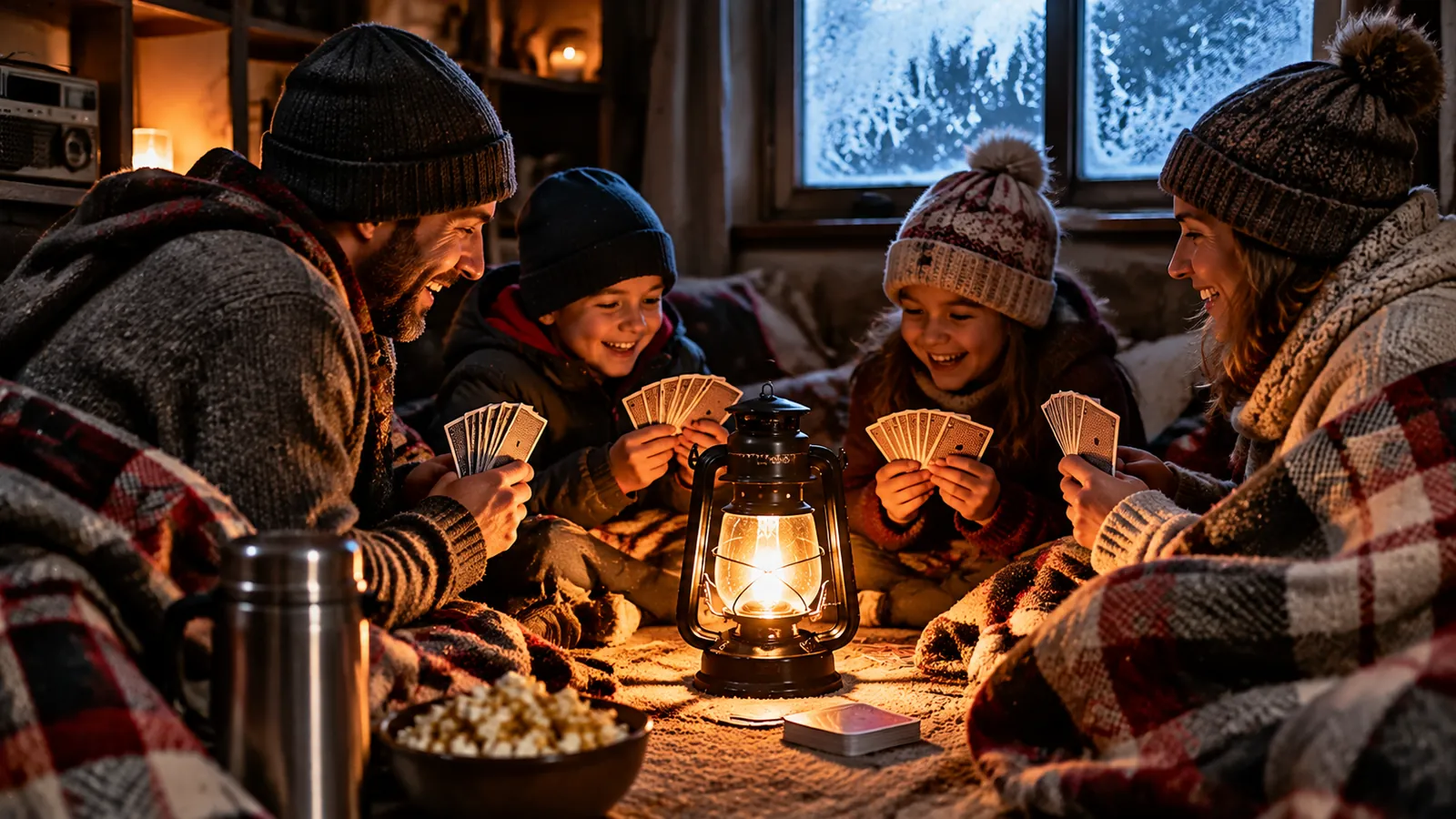
An alert lasts a few minutes; an outage or a lockdown lasts days. The challenge changes: it is no longer about reacting fast, but about lasting without wearing out. Morale then becomes a resource to manage, like water or food.
Children
Children read the crisis on adults’ faces. Explain simply what is happening, in words suited to their age, tell them what the family is doing to stay safe and give them a task. As much as possible, keep their anchors: comfort toy, bedtime story, bedtime.
When to ask for help
After a difficult event, it is normal to sleep badly, replay images or be on edge for a few days. If these reactions last more than a few weeks, get worse or stop you from functioning, talk to a professional.
| Quebec | France | |
|---|---|---|
| Need to talk, psychological distress | Info-Social: 811, option 2 (24/7) | Your family doctor; after a disaster, the emergency medical-psychological units (CUMP) |
| Immediate danger | 911 | 15 or 112 |
11Key takeaways
- Fear is a body program: normal, fast and partly predictable.
- The real danger is delay: denial and deliberation. Act first, check later.
- Will, small tasks and applied know-how matter more than luck and strength.
- Realism and hope together: “it’s serious, and we’ll get through it”.
- The mind is trained through small, repeated habits.
Sources and inspiration. This guide draws on chapter 2, “Psychology of Survival”, by Robert B. Kauffman (Frostburg State University, 2016), and on the books it reviews: Laurence Gonzales, Deep Survival (2005); Amanda Ripley, The Unthinkable (2008); Ben Sherwood, The Survivors Club (2009); Kenneth Kamler, Surviving the Extremes (2004); Joseph LeDoux, The Emotional Brain (1996); Eric Greitens, Resilience (2015). The text, examples, figures and tools are original and adapted to Quebec and France by PrépaCivile. This guide does not replace medical or psychological advice.