
In this article
- Preparing nothing is also a choice: the choice to live with whatever you already have at hand.
- Three questions are enough to frame your preparedness: what kind of event, how widespread, how long.
- The longer and wider the event, the slower outside help arrives, and the bigger your reserves must be.
- 72 hours is the official minimum in Quebec and in France. In the field, aim for 7 days, then 30.
- Gear comes after decisions: start with this guide’s self-assessment.
01Not choosing is already a choice
Open your cupboards. Most households have, without planning it, enough food for two or three days. That is often enough to get through a snowstorm or an evening without power. It is no longer enough when the outage lasts a week, when tap water is no longer safe, or when you have to leave home within thirty minutes.
So preparedness is not a yes-or-no question. It is a question of level: how much time, energy and money do you want to devote to your self-reliance, and for which kinds of situations? Between the ordinary pantry and the bunker lies an infinite range of reasonable positions. The danger is scattering your efforts: everything seems useful, everything seems urgent, and you end up buying gear without a plan.
02Six ways to prepare
There is no “right” profile. Each has its strengths and blind spots. Recognizing yours mostly helps you see what you are missing. Most people borrow from several profiles at once.
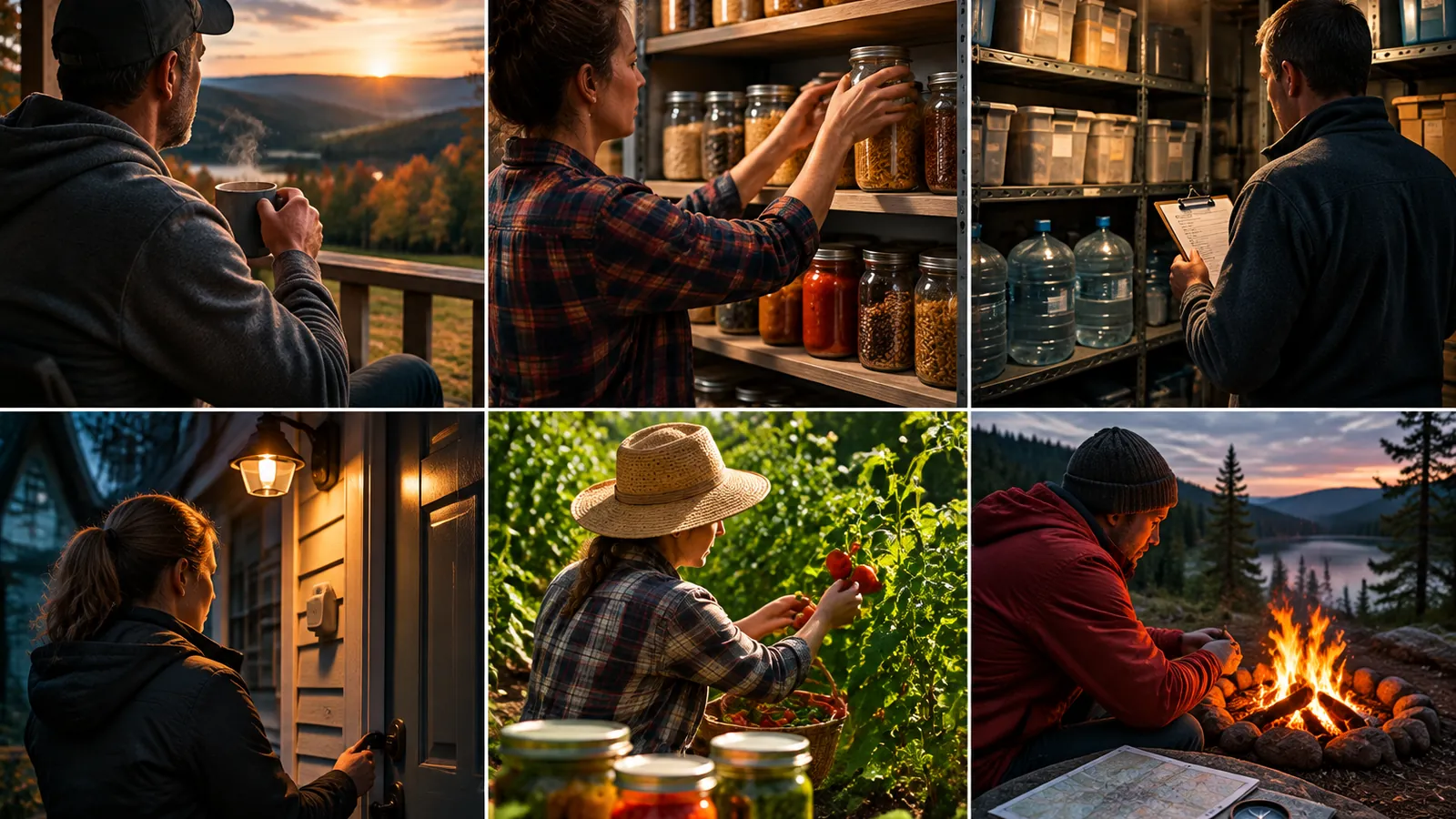
| Profile | What drives them | Strength | Blind spot | What to borrow |
|---|---|---|---|---|
| The trusting | “Nothing will happen, and if it does, the government will handle it.” | Does not wear out with worry | Depends entirely on others from the first hour | Calm: panic is expensive |
| The pantry planner | Keeping supplies “just in case”, like insurance | Simple, inexpensive, effective for short crises | Forgotten, expired supplies, or food too different from what you eat | Stock rotation: eat what you store |
| The shelter builder | Protection from the major catastrophe | Long-term vision, large volumes | Often neglects frequent, ordinary emergencies | Logistical rigour |
| The defender | Security and protecting the home | Awareness of human threats | Water, cold and health kill far more often | Vigilance and a security plan |
| The homesteader | A way of life: garden, canning, firewood | Living supplies, renewed naturally | Evacuation and sudden crises | Producing, not just storing |
| The woodsman | Know-how: fire, navigation, plants, shelter | Skills that never break down | Skills do not replace supplies in a city | Skills before gear |
Ask yourself two questions: which profile do you naturally lean toward? And which one would it do you the most good to add?
03The three-axis framework
To frame your preparedness, any situation can be described with three questions. Together, they tell you what to prepare for and how much.
| Axis | The question | Why it matters | Quebec example | France example |
|---|---|---|---|---|
| Nature | Natural, technological or human? | Natural hazards are often predictable by region; human crises much less so. | Ice storm, spring flood | Mediterranean flash flood, Seveso accident |
| Extent | My street, my region, the whole country? | The wider the area, the more spread out the responders and the more disrupted the supply chain. | 2023 wildfires | December 1999 windstorms |
| Duration | A few hours or several months? | This is the axis that changes your supplies and budget the most. | 1998 ice storm: weeks without power | Water restrictions during drought |
This framework complements the one PrépaCivile uses to assess every risk: hazard × exposure × vulnerability. The three axes describe the event; exposure and vulnerability describe your household. Your risk radar does this calculation for you.
04Circles of protection
In an emergency, everything revolves around one thing: keeping your body and mind in a state that lets you function. Day to day, you do it without thinking, surrounding yourself with successive layers of protection. A crisis is when one of those layers falls.
Seen this way, a fallout shelter is just a very thick circle 2, and a six-month stockpile is a way to feed the body without circle 3. But the reverse is also true: without morale, rest and clear decisions, the best supplies are useless. That is why attitude and the body come first among the planning areas below.
05Duration changes everything
The rule is simple: the longer the crisis, the more you need to plan. An evening without power is uncomfortable; a week in the middle of winter calls for a real plan. Stores run on just-in-time supply: when roads or power go down, shelves empty within days, as seen during the 1998 ice storm or at the start of the 2020 pandemic.
Preparedness levels
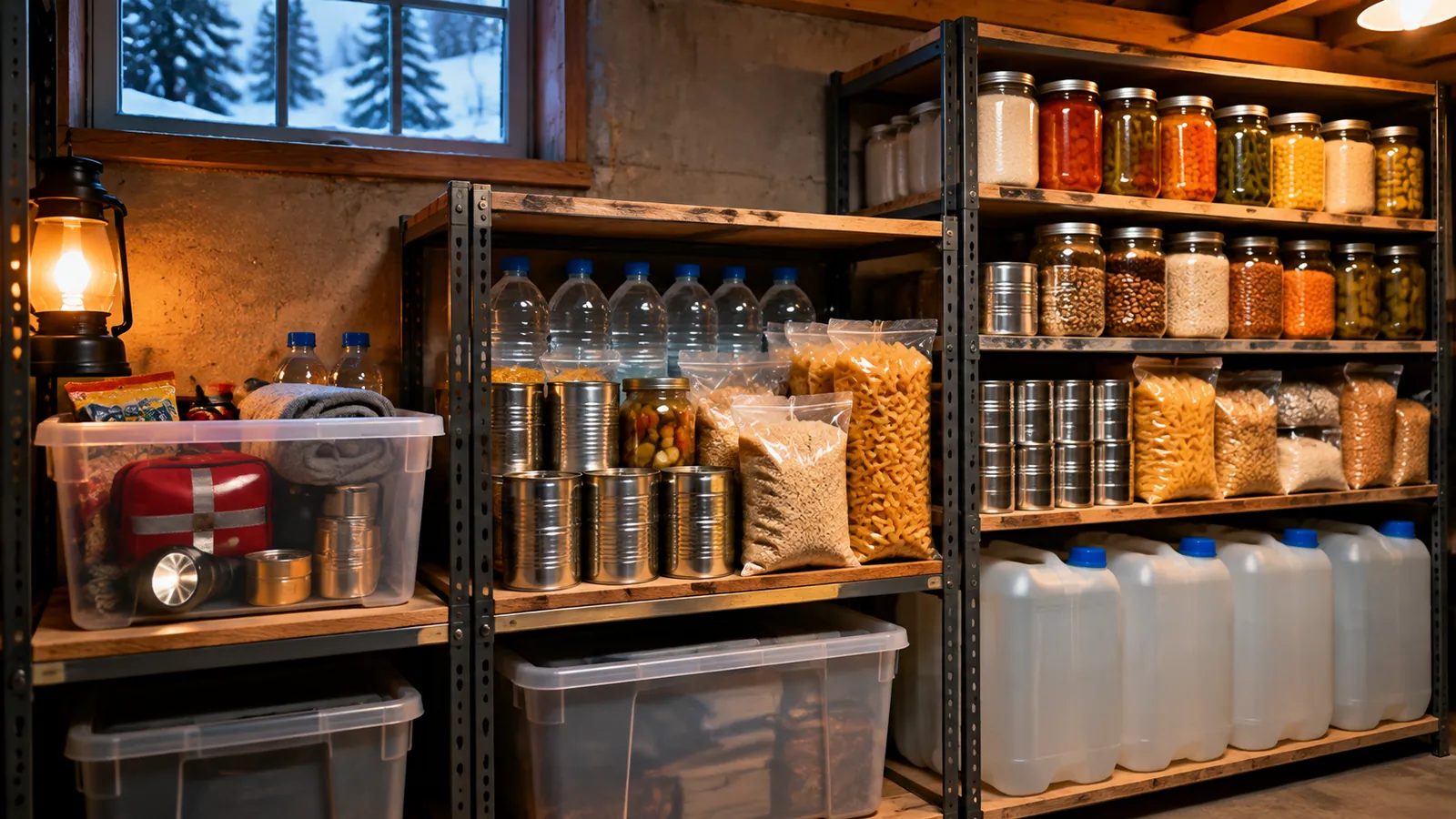
Rather than aiming far right away, move up one level at a time. Each level adds a new capability, not just “more of the same”.
| Level | Time to invest | Relative budget | What it covers | What it does not cover |
|---|---|---|---|---|
| 72 hours | One weekend | ● | Storm, short outage, boil-water advisory | Long evacuation, winter without heat |
| 7 days | A few hours a month for three months | ●● | Ice storm, flood, heat wave, banking cyberattack | Lasting shortages |
| 30 days | A year-long project | ●●● | Serious regional crisis, lockdown | Lasting disruption of society as a whole |
| Several months | Un mode de vie | ●●●● | Prolonged national crisis | Nothing is guaranteed: your human network matters as much as supplies |
06Extent decides the help
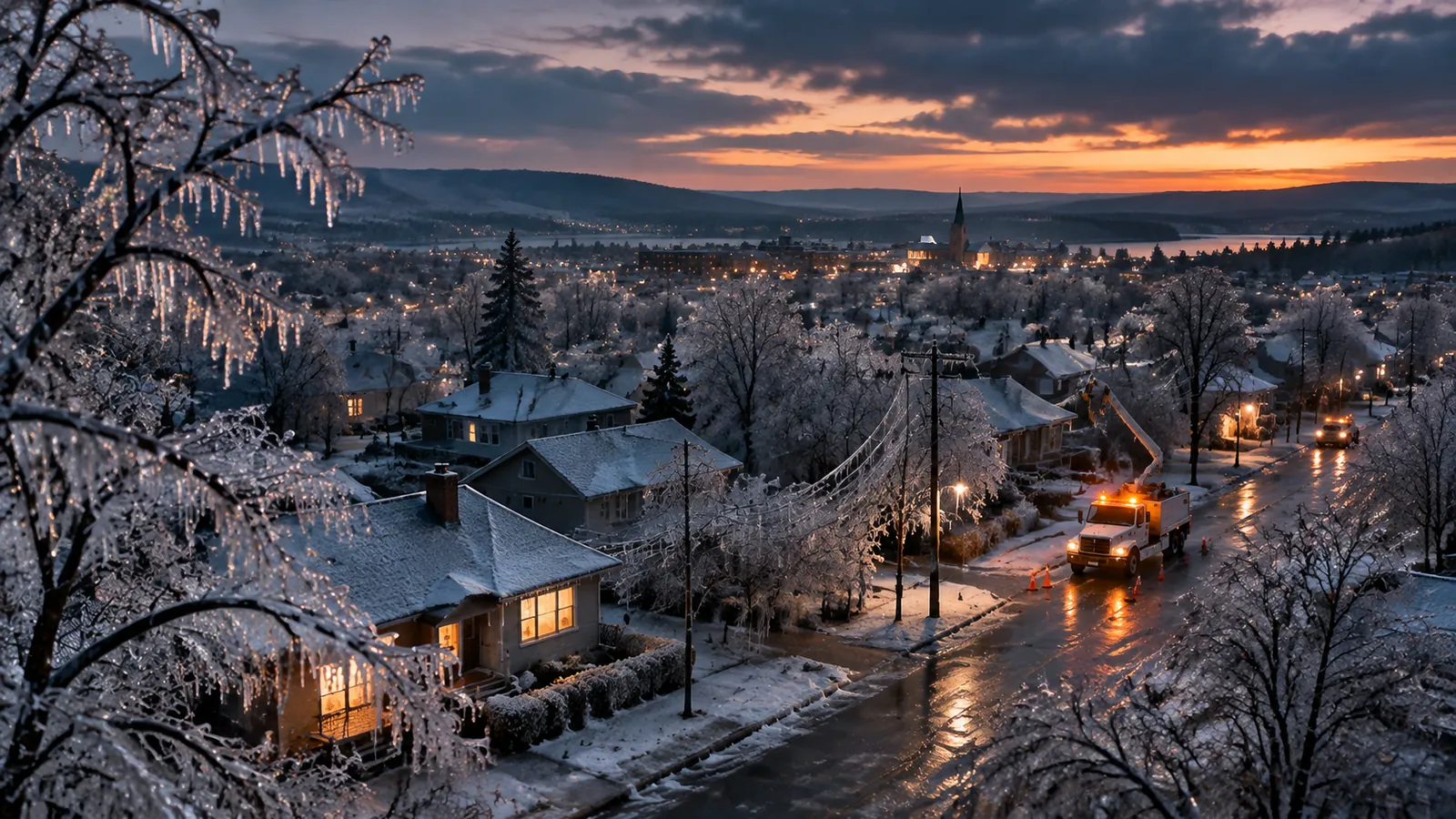
When fire hits your building, the whole city can help you. When ice hits the whole region, power crews, shelters and stores are overwhelmed. The wider the event, the longer you will have to rely on yourself.
| Extent | Who can help? | Realistic delay | What it means for you |
|---|---|---|---|
| Local (street, building, neighbourhood) | City, neighbours, family a few kilometres away | A few hours | A ready bag and a place to go |
| Regional (city, RCM, département) | Province or state, neighbouring regions | One to several days, up to weeks for power | Stay home for at least 7 days |
| National | Neighbouring countries, armed forces, NGOs | Several days to weeks, uneven help | 30 days of supplies and local mutual aid |
| Global | No one from outside: everyone is affected | Unknown | Local network, skills, production |
Historical benchmark: during the January 1998 ice storm, nearly 1.4 million Hydro-Québec customers lost power, some for more than three weeks. In December 1999, windstorms Lothar and Martin cut power to about 3.5 million households in France.
07The 12 areas to plan
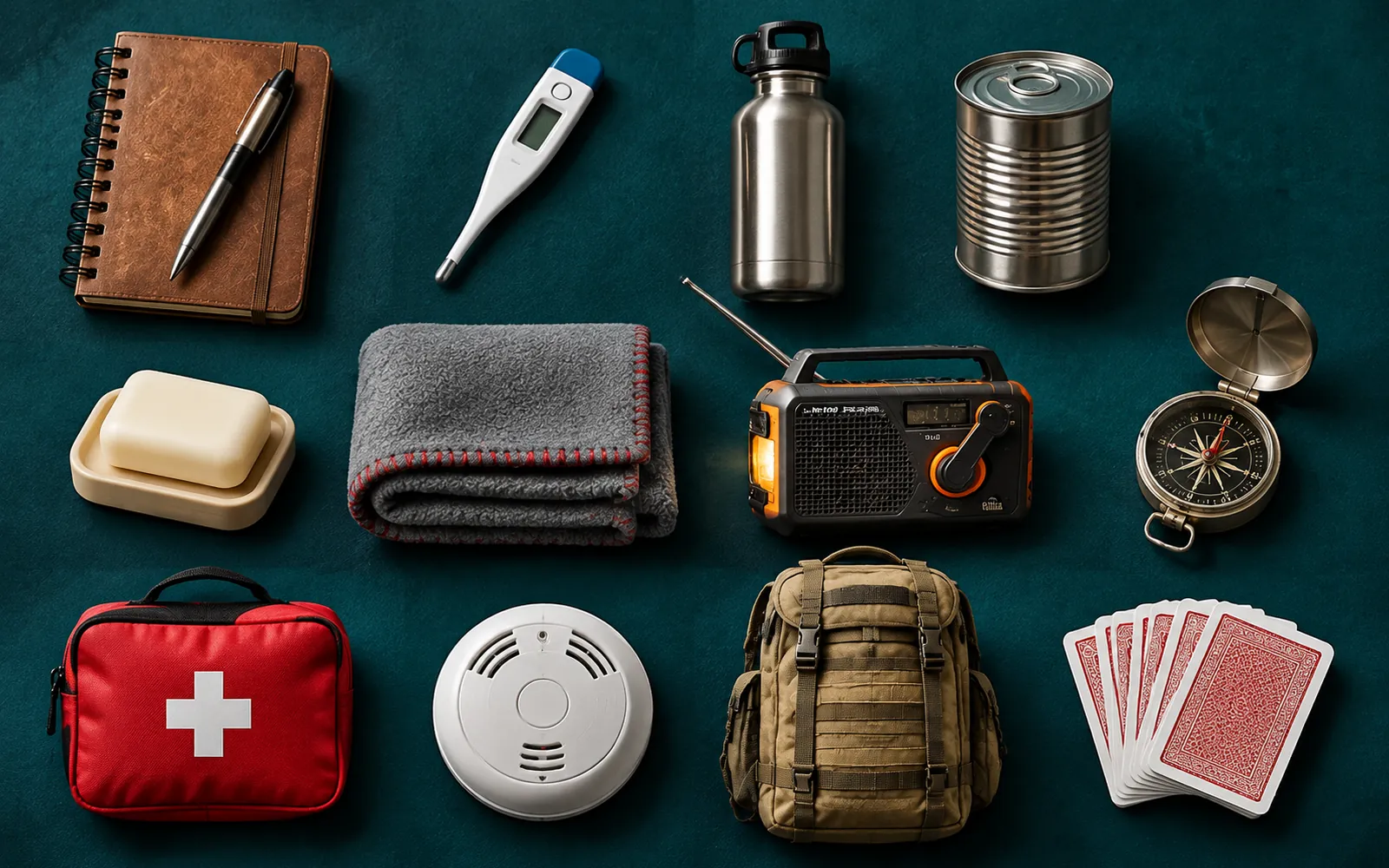
Whatever the situation, the same needs come back. These twelve areas form the structure of this guide series: each following guide will explore one or more of them. Note that the first two, often forgotten, shape all the others.
08The pocket dump test
Empty your pockets, or your handbag, onto the table. If an emergency struck right now, away from home, that is all you would have. That is your first circle of protection. The exercise takes two minutes and says a lot.
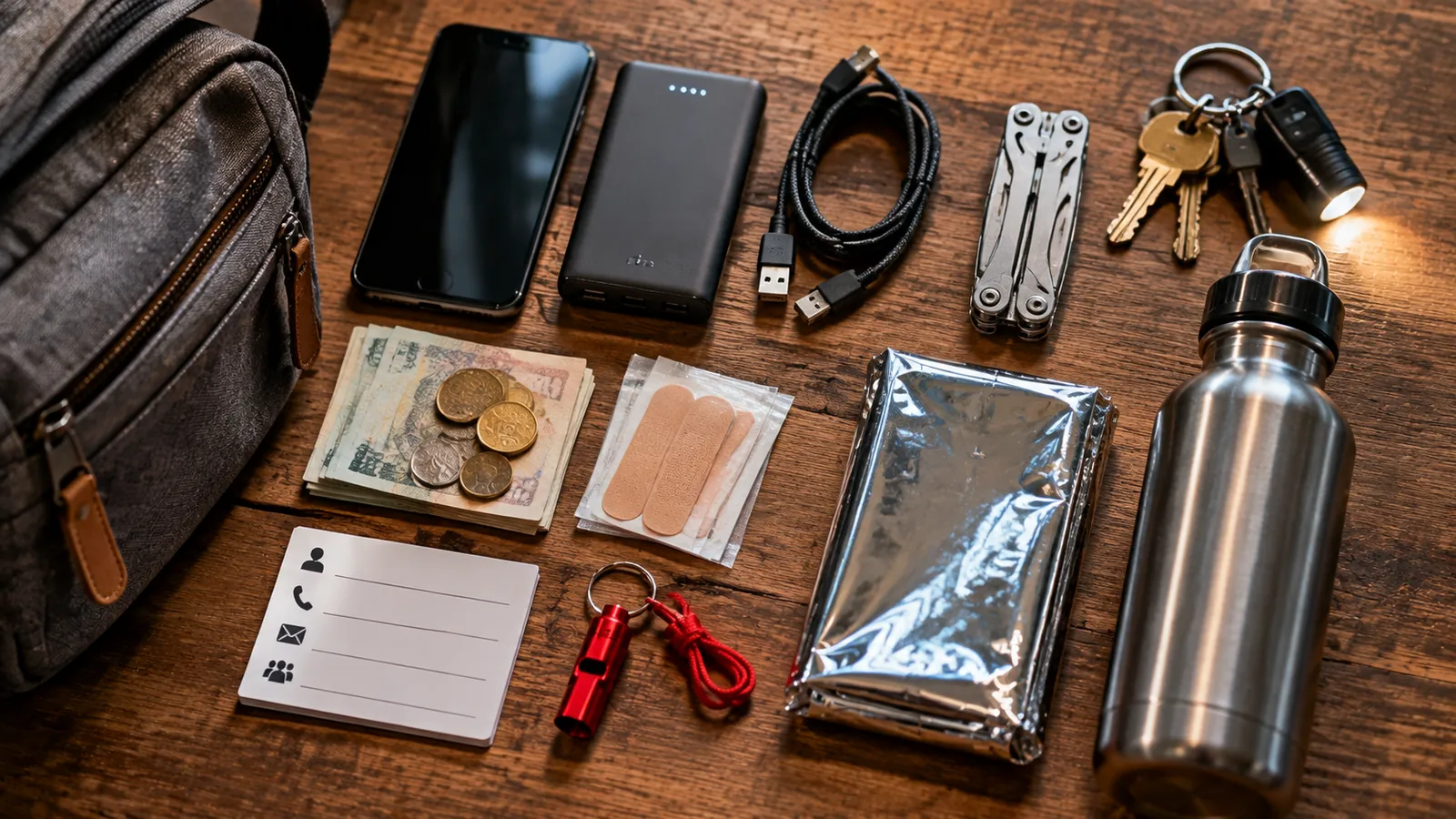
What do you have on you, right now?
Check what you actually have on you (not what is at home).
No one needs to carry everything all the time. The goal is to choose consciously: what does not fit in your pockets can go in your everyday bag or in the car.
| Where to keep it? | Always on you | Everyday bag | Car (winter included) |
|---|---|---|---|
| Communicate | Phone, paper contacts | Power bank, cable | 12 V charger |
| See | Keychain light | Headlamp | Flashlight and spare batteries |
| Stay warm | — | Emergency blanket | Blanket, toque, gloves, boots |
| Drink and eat | — | Water bottle, energy bar | Water, non-perishable snacks |
| Treat | Essential medication | Mini kit | Full first aid kit |
09Self-assessment: how far do you want to go?
For each situation, ask yourself: a year from now, do I want to be ready to get through this? There is no right answer. You are not committing to being ready; you are only saying whether you want to be. Time and budget will do the rest of the sorting.
How to read your result
- Your horizon: the longest duration you want to be ready for. That is your target level.
- Consistency: wanting to last a month without being ready for a three-day storm is putting the cart before the horse. Build from the shortest to the longest.
- Your priorities: compare your answers across natural, technological and human hazards. You often lean one way; check that it matches where you live.
10Your preparedness statement
Sum up your choices in one paragraph, like a mission statement. It will act as a filter: faced with an article, a purchase or a course, ask yourself whether it serves your statement. If not, it is not a priority.
Write yours
Take the self-assessment above: a first draft is written here automatically. Edit it as you like.
11Adapting to where you live
The past is the best indicator: hazards that have already hit your region will come back. Start with them before spectacular scenarios.
| Hazard | Quebec | France | Typical duration |
|---|---|---|---|
| Winter power outages | ●●● | ●● | Hours to weeks |
| Ice storm, snowstorm | ●●● | ● | Days |
| Floods | ●●● (spring) | ●●● (autumn-winter) | Days to weeks |
| Heat wave | ●● | ●●● | Days |
| Wildfires and smoke | ●● | ●● | Days to weeks |
| Windstorms | ● | ●●● | Hours to days (then outages) |
| Earthquakes | ● (Charlevoix, Outaouais) | ● (South-East, Pyrenees, French Antilles) | Seconds, then weeks |
| Industrial accidents | ● | ●● (Seveso sites) | Hours to days |
● = possible · ●● = frequent in some regions · ●●● = frequent across much of the territory. General benchmarks: your risk radar gives a picture specific to your address and household.
12Key takeaways
- Preparing nothing is a choice: make yours a conscious one.
- Nature, extent, duration: three questions to frame any situation.
- Move up in levels: 72 hours, then 7 days, then 30 days.
- Your first circle of protection is what you carry.
- A clear preparedness statement is worth more than a basement filled at random.
Sources and inspiration. This guide draws on the framework presented by Robert B. Kauffman in “Surviving the Unexpected Emergency” (chapter 1, Frostburg State University, 2015), itself based on Gene Fear’s work on wilderness survival (1972). The text, examples, figures and tools are original and adapted to Quebec and France by PrépaCivile. Historical benchmarks: Hydro-Québec (1998 ice storm); windstorms Lothar and Martin (December 1999). 72-hour recommendations: Government of Quebec and French government.