
In this article
- Water is your body’s coolant. At rest, somewhere cool, you already lose about 2.3 litres a day.
- In the heat, that climbs towards 3.3 litres; with heavy effort, it can exceed 6 litres. Almost all the extra goes out as sweat.
- The best indicator is simple: the colour and amount of your urine. Pale and plentiful, all is well; dark and scant, drink.
- Shade, light clothing and resting in the hottest hours can cut your water loss by up to four times.
- When you sweat heavily or have a stomach bug, water alone is not enough: you also need to replace salt.
01The engine’s coolant
Your body works like an engine: it burns food to power the muscles and organs, and gives off a lot of heat along the way. To keep the heart, lungs and brain at around 37 °C (98.6 °F), it has to get rid of that heat. It does so mostly by sweating, and a little by breathing. Either way, it loses water.
Like a car’s radiator, this system only works when it is full. A car low on coolant overheats; so does a body low on water. That is why water, along with shelter, is the first priority of any preparedness plan: you can last weeks without food, but only a few days without water.
02Where your water goes
Even without effort, you lose water constantly: through urine, of course, but also through your breath (the fog you see in winter), through your skin without even sweating, and a little through stool. What changes everything is sweat. Here are three typical days.
03How water is replaced
The main source of water is obvious: what you drink. But food also provides a significant share, often around a fifth of daily intake: fruit, vegetables, soups and even cooked dishes all contain water. In an emergency, when you eat dry or freeze-dried food, that share disappears, and you need to drink more.
| Drink | Counts towards hydration? | Good to know |
|---|---|---|
| Water | ●●● | The benchmark. Small regular sips rather than a litre at once. |
| Soup, broth, milk | ●●● | Hydrate and provide salt or energy. Useful in the cold and after effort. |
| Tea, coffee | ●●○ | In moderate amounts, they count towards your intake. Their diuretic effect is weak in regular drinkers. |
| Sugary drinks | ●○○ | They hydrate, but excess sugar does not help with diarrhea. Not a rehydration solution. |
| Alcohol | ○○○ | Makes you urinate more and blurs warning signs. Avoid it in a heat wave or a crisis. |
●●● good hydration · ●●○ fair · ●○○ weak · ○○○ avoid. Simplified comparison.
04Recognizing dehydration
Dehydration is measured as the percentage of body weight lost as water. For a 70 kg (154 lb) person, 2% is already 1.4 litres. Mild dehydration is common: the body handles it easily by drawing on its reserves. But beyond a few percent, performance drops, attention slips and accidents become more likely.
The best indicator: your urine
The kidneys filter waste from the blood and flush it out in urine. When water runs short, they concentrate it: urine becomes dark, scant and strong-smelling. It is the simplest and most reliable signal in the field.
05Shade, clothing and rest
What you do makes a huge difference to how much water you lose. A classic study carried out in the desert by Edward Adolph’s team in the 1940s measured sweat lost per hour on a 35 °C (95 °F) day according to activity, sun exposure and clothing.

06Salt matters too
Sweat is not pure water: it contains salt and other minerals (electrolytes). When you sweat heavily for hours, or lose fluids through diarrhea or vomiting, drinking water alone is no longer enough. The balance of the blood is thrown off, and it is this balance that turns ordinary dehydration into heat exhaustion or a medical emergency.
It is also why severe diarrheal diseases such as cholera kill mainly through dehydration. After a flood or a loss of safe tap water, a stomach bug can become serious, especially for a child or an older person.
| Situation | What to drink |
|---|---|
| Ordinary day, even a hot one | Water, and normal meals that provide the salt you need |
| Long effort in the heat (clean-up, outdoor work) | Water, with a salty snack or a sports drink |
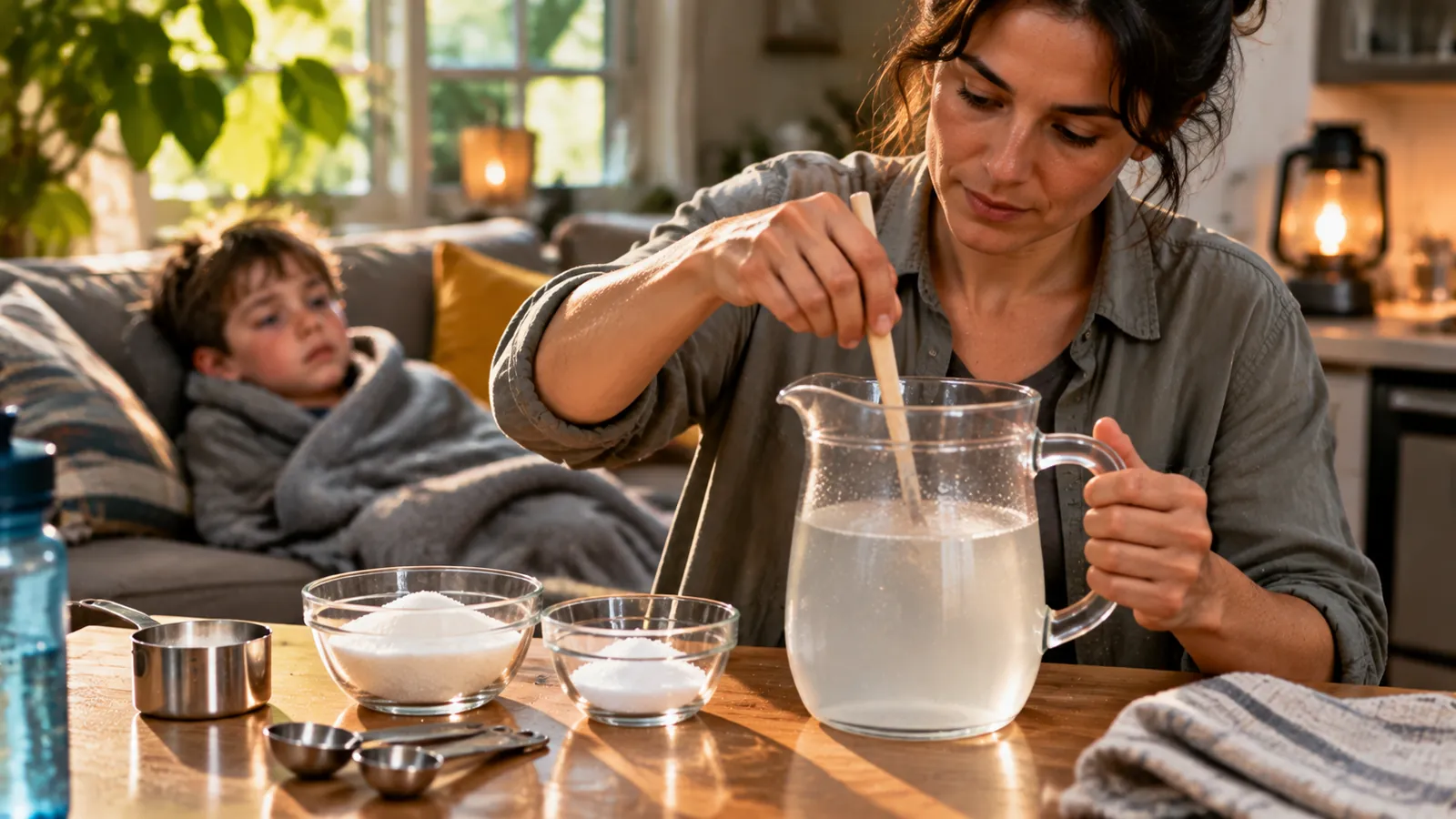
| Diarrhea, vomiting | An oral rehydration solution (pharmacy sachets), in small, frequent sips |
The opposite excess also exists: drinking very large amounts of plain water during hours of effort, without eating or taking salt, can dilute the salt in the blood. The right reflex is still to drink regularly, eat, and watch your urine.
07Planning your home water supply
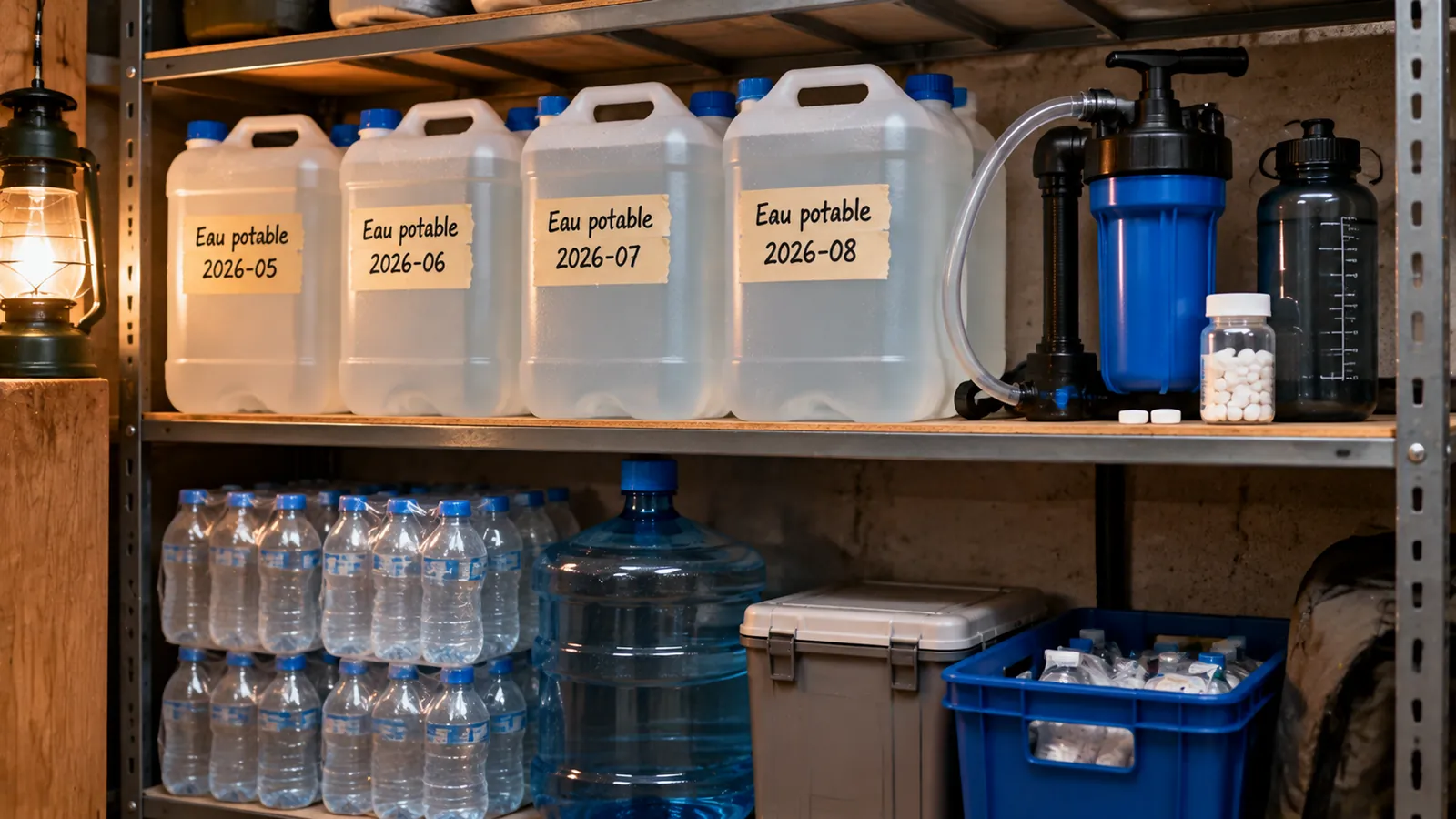
During an outage, a boil-water advisory or a supply cut, tap water may run short or become unsafe to drink. Authorities recommend keeping at least 2 litres of drinking water per person per day, plus water for cooking and hygiene, for at least 72 hours. As we have just seen, in a heat wave or with physical effort, you need to plan for more.
08Your tools
How much water for my household?
Enter your household and the length of time you are planning for: the tool calculates the supply you need, for drinking and for cooking and hygiene.
Am I well hydrated?
Pick the shade closest to your last urine, then tick what you are feeling.
Educational tool, not medical advice. If serious signs appear, call for help.
09Useful equipment
A water supply takes very little: food-grade containers, something to carry water and keep it cool, and something to treat doubtful water if your supply runs out.
10Key takeaways
- Water cools the engine: you lose at least 2.3 L a day, and much more in the heat or with effort.
- Watch your urine: pale and plentiful is good; dark and scant, drink.
- Shade, light clothing and rest in the hot hours greatly reduce losses.
- After heavy sweating or a stomach bug, replace salt too: oral rehydration solution.
- Keep at least 2 L per person per day for drinking, plus hygiene, and plan generously in summer.
Sources and inspiration. This guide is inspired by the “Dehydration” section by Robert B. Kauffman (Frostburg State University, 2015), which draws on E. F. Adolph and associates, Physiology of Man in the Desert (Interscience, 1947) and SOLO’s Wilderness First Responder Review (2010). The rehydration solution recipe follows World Health Organization guidance; water supply recommendations follow those of the authorities of Quebec, Canada and France. The text, examples, figures and tools are original and adapted by PrépaCivile. This guide does not replace medical advice.