
In this article
A heating failure in winter can quickly complicate the safety of the home. This week, prepare the clothes, monitor the situation and a fallback solution. Staying at home is not a goal to maintain if conditions become dangerous.
Preparing housing before breakdown
Have the heating systems and ducts serviced as required. Check the necessary smoke and carbon monoxide alarms. Correct air infiltration with suitable solutions, without blocking a ventilation, a duct or an exit.
Plan who can help with plumbing work and protection. Interventions must match the building and your skills. An owner, manager or professional can specify the appropriate measures.
Preparing people
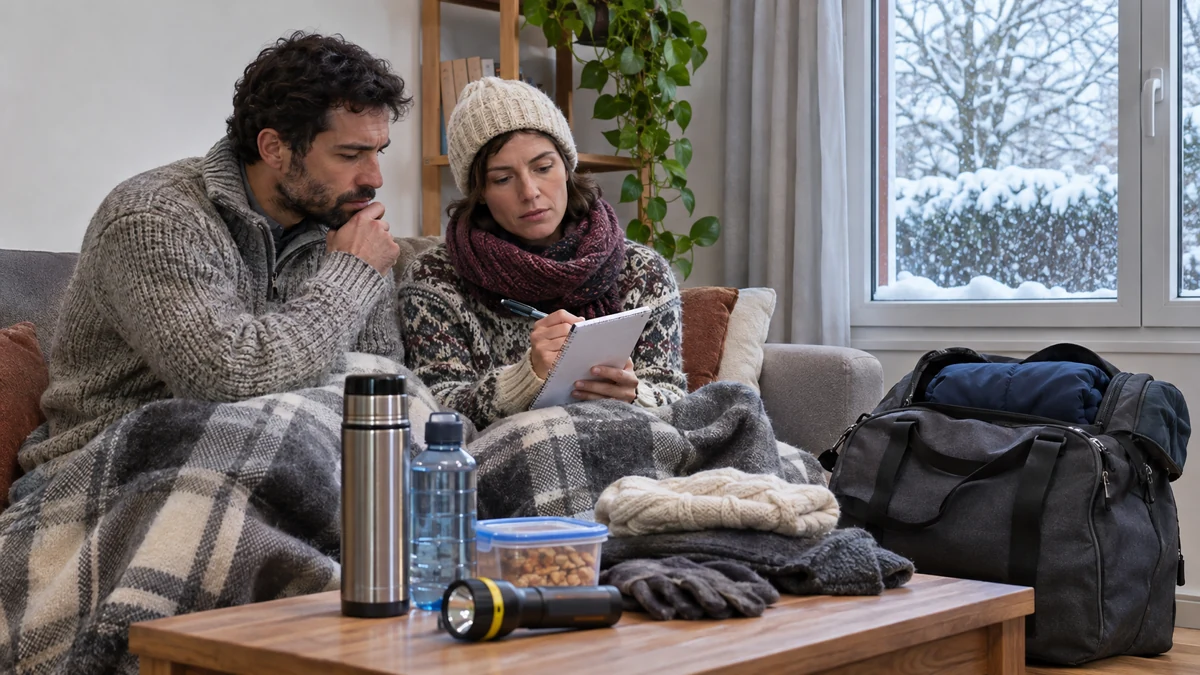
Keep dry clothes, several suitable diapers, socks and blankets. Consider children, seniors and people with a medical need. Keep track of isolated people and avoid waiting for them to ask for help if they can’t communicate easily.
An insulating blanket can complete the equipment, but it does not guarantee a safe stay in a dwelling that has become too cold.
A thin reflective blanket is a limited protective complement, not the equivalent of a winter bed or a heated place.
Refusing improvised heating
Do not use a barbecue, camping stove or other external combustion appliance in a dwelling, garage or tent. A generator operates only outdoors with the prescribed distances and precautions. A half-open window does not make a device unsafe.
Candle heaters, heated stones carried indoors, and hand-crafted lamps add to the risk of burning or burning. They are not part of a reliable plan. An additional heater must be explicitly authorized for the place and use, conform, maintained and used according to its instructions as well as local rules.
Track temperature and instructions
Consult the information of the electricity supplier and the municipality. Locate the places of warming or accommodation offered. Prepare transport, medicines, technical aids and animals before travel becomes difficult.
Pay attention to someone who is unusually confused, very sleepy or whose condition deteriorates in the cold. Seek medical help quickly; in case of immediate danger, call for help. Reactions and vulnerabilities vary, and coverage does not replace necessary care.
Preparing for departure
If safety is compromised or a safety instruction requires it, go to a safe place. Do not wait for an arbitrary period of time. Follow local building and facility recommendations before departure, only if you can safely apply them.
A bag ready and a list of items to take at the last moment make the transition easier. Also confirm the availability of the drop-off location and the reception of people with special needs.
Actions of the week
- Check heating, alarms and maintenance.
- Gather appropriate clothing and blankets.
- Spread the improvised means of heating.
- Locate a heated place and transport.
- Define who follows the most vulnerable people.
Your expected result: a plan to conserve heat and leave before the home becomes unsafe.
Useful references
- Power outage and temporary accommodation - Gouvernement du Québec.
- Preventing carbon monoxide exposure - Health Canada.
Put this reading into practice
Perform the action as you wish and then check the result. Your follow-up remains specific to this route.
52 weeks to strengthen your preparation; Week 40
Preparing for the cold
Your action: Check clothes, medical needs, trips and the possibility of reaching a heated place during a winter breakdown.
To check: Transportation and reception are confirmed; no improvised heating is provided.
To do