
In this article
This week, prepare lighting for rooms and trips during a breakdown. A suitable light helps to cook, read instructions and move around without constantly mobilising the phone. Flameless solutions are a practical starting point.
Distribute functions
Provide proximity lighting for everyone who needs it, and then mood lighting for the spaces that are actually being used. Check passageways, stairs, toilets and emergency storage. Avoid leaving cables or equipment in traffic lanes.
A headlamp leaves your hands free. Try the headband and settings with the user, including glasses if necessary. Keep a sufficient level of light without dazzling others.
Choosing a lantern for the common space
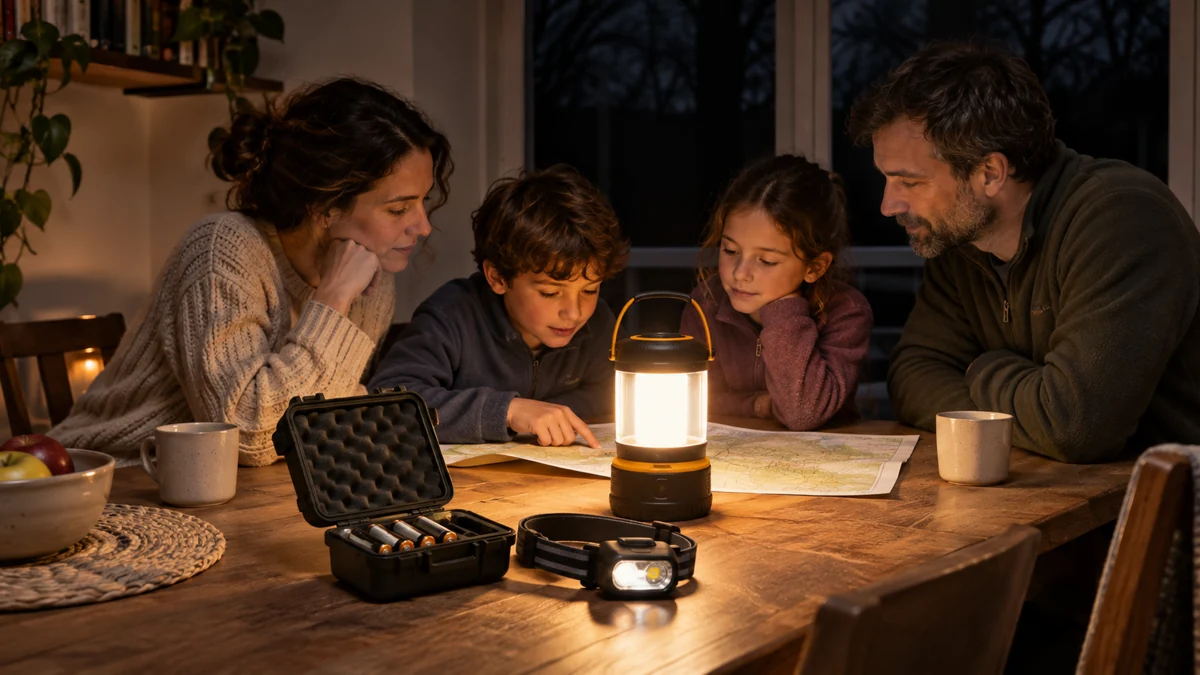
A battery-operated or rechargeable lantern can illuminate a table or room. Check the stability, controls and conditions of use. The maximum power advertised does not correspond to the range at all settings; test the level really useful.
Provide a small lamp in a fixed place to quickly find the material. Inform the children of its location and show them how to turn it on. Do not enter a smoky or electrically hazardous area simply because it is illuminated.
Ensure food
Identify compatible battery formats and cables. Keep batteries in proper packaging or storage, protected from short circuits and out of reach of children. Follow the instructions for storage and charging.
A solar lighting can complete the whole if its exposure and autonomy are sufficient. Test it according to the season. A garden lamp does not automatically provide adequate indoor lighting and should not be altered in an unplanned way.
Keep the flames out of the main plane
Fuel candles and lamps add risks of fire, burning and sometimes poisoning. Choose fireless solutions. Do not use an external combustion appliance in the housing, even during a breakdown, and strictly adhere to the conditions of any appliances designed for the interior.
Handmade grease lamps and improvised fixtures are not necessary for a family lighting plan. A bottle that diffuses daylight is not a nighttime light source and does not replace a safe installation.
Make an Announced Test
Choose an evening to briefly use emergency lighting, without cutting out essential equipment. Make sure that everyone sees enough for the planned gestures, that the devices remain stable and that the outputs are free. Note the refill or consumables to be prepared.
Actions of the week
- Divide the lamps according to people and spaces.
- Test controls, settings and comfort.
- Prepare compatible batteries or charging.
- Check the traffic routes.
- Fix a gap after an actual test.
Your expected result: simple and sufficient lighting, with known power supply and limited risks.
Useful reference
Carbon Monoxide Prevention and Combustion Devices - Health Canada.
Put this reading into practice
Perform the action as you wish and then check the result. Your follow-up remains specific to this route.
52 weeks to strengthen your preparation; Week 27
Testing the lighting
Your action: Try the lamps in the rooms and useful routes, checking for power and accessibility.
To check: Batteries or refills are suitable; the naked flame is not used as an ordinary solution.
To do