
In this article
This week, prepare the home for a significant period of circulation of an infectious disease. A pandemic does not follow a single scenario. The plan must be tailored to the agent involved, public health recommendations and the individuals involved.
Follow updated instructions
Identify public health channels and modalities for obtaining medical advice. The measures, available vaccines and recommendations may change. Do not rely on a general percentage of the population affected or on the idea that vaccination would always be useless during a pandemic.
Talk with a professional about the needs of people at risk and recommended prevention measures. Keep the usual treatments organized and check the renewal modalities. Do not accumulate medicines to treat an unknown disease.
Organizing life if a person is sick
Agree on who can help with meals, children, pets and shopping. Prepare a replacement contact if the usual caregiver also gets sick. Check employer, school and child care procedures without assuming that a closure will necessarily take place.
Keep a reasonable supply of regular products to limit travel when not recommended. Plan a delivery or help from a loved one as possible, without panic shopping or disproportionate amounts.
Adapting measures to a respiratory infection
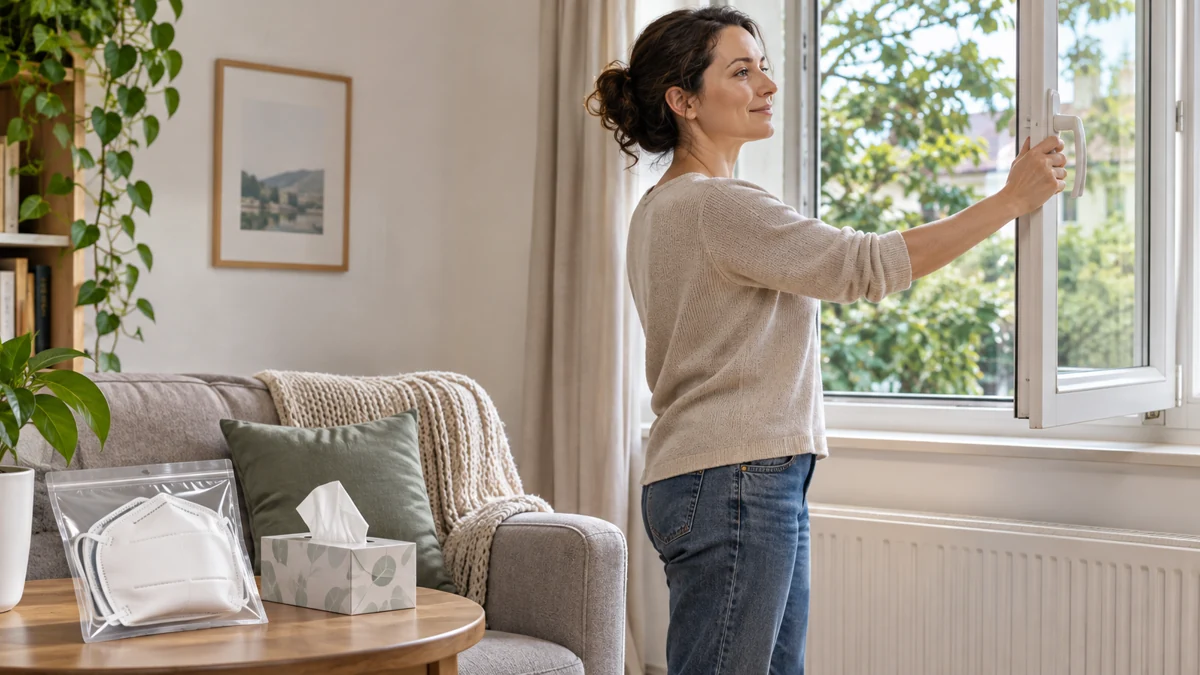
For respiratory diseases, the measures can combine recommended vaccination, reduction of contacts when sick, ventilation, well-fitting mask and hand hygiene. Follow the current recommendations for the situation and the person. A face shield is not interchangeable with a mask or respirator.
Do not seal vents for respiratory infection. Better air quality can help reduce risk; any modification to a system must remain compliant and fit for the building. Another external danger may require different instructions: then follow the specific alert.
Preparing useful consumables
Check soap, handkerchiefs, proper cleaning products, collection bags and thermometer. Choose masks or respirators according to recommendations and users. Check the size, fit and conditions of use before relying on the product.
Industrial suits, clothing sealing tape, and specialty chemicals are not a general shopping list for a home. Essential oils and supplements presented as “immunostimulants” do not replace preventive measures or care. Do not improvise a disinfectant from an unvalidated recipe.
Providing for the use of care
Write down the contacts and the information to be transmitted: symptoms, treatments, risk factors and evolution. Ask for an opinion when necessary. A severe breathing difficulty or other immediate danger requires help. Inform the services of symptoms before a trip according to the instructions received.
Actions of the week
- Identify public health sources and medical contacts.
- Check prevention and treatment with the professionals concerned.
- Distribute tasks if a person is sick.
- Complete useful consumables without excessive storage.
- Confirm solutions for running, working and guarding.
Your expected result: a home capable of reducing certain travel and following recommendations adapted to the event.
Useful references
- Reducing the risk of respiratory infections - Public Health Agency of Canada.
- Influenza Prevention and Risk - Public Health Agency of Canada.
Put this reading into practice
Perform the action as you wish and then check the result. Your follow-up remains specific to this route.
52 weeks to strengthen your preparation; Week 28
Preparing for an Infection Interruption
Your action: Consider a prolonged absence for illness, remote support and access to current health guidelines.
To check: The relays are agreed; the measures follow the health authorities and individual needs.
To do