
In this article
This week completes the tools of weeks 2 and 16. The goal is to be able to perform some common tasks during a breakdown and maintain the available equipment. Start with the work you can do safely; some remain the responsibility of a professional.
Take inventory by task
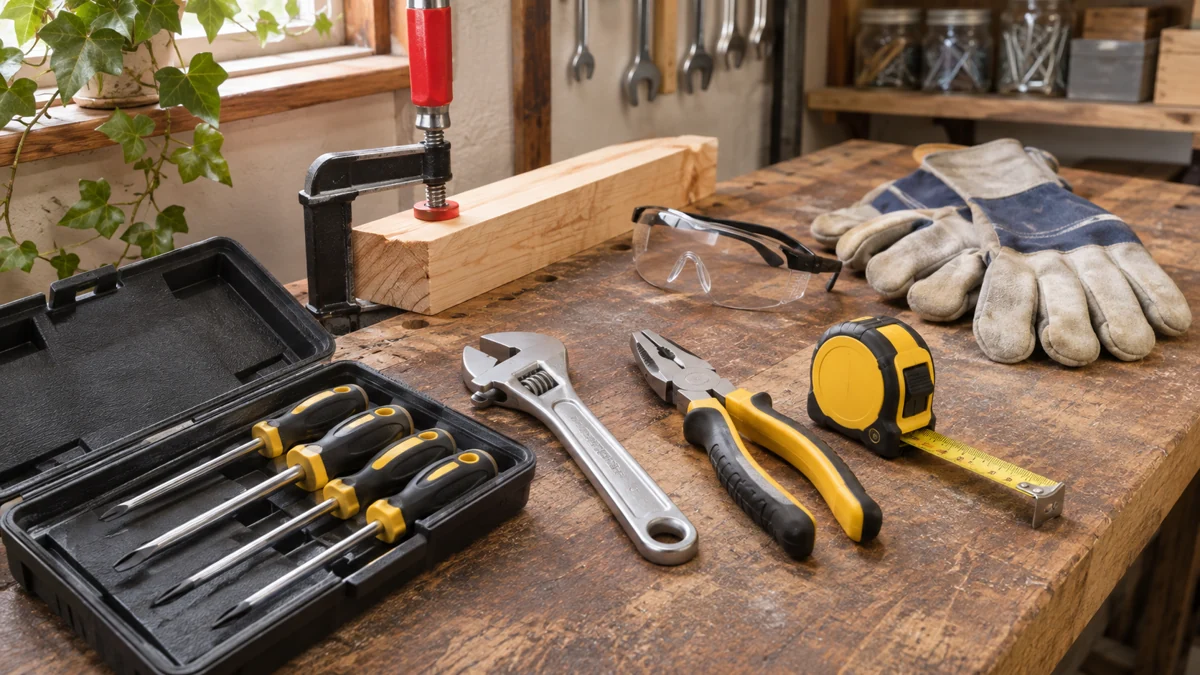
To tighten an assembly, measure a part or repair a simple object, a well-chosen small assembly may be enough. Check screwdrivers suitable for the screws present, clamps, keys, hammer and tape to measure. Quality is assessed by condition, ergonomics and adaptation to the task, not just by price or quantity.
A multifunction tool can troubleshoot, but does not always replace the right tool. Compare its functions and the constraints of the places where you will transport it.
Add the necessary protections
Choose the right protections for the job: glasses, appropriate gloves and shoes depending on the risk. They do not make a dangerous gesture acceptable. Read the package leaflet, stabilize the room and keep the children away. A bladed or striking tool requires space and correct technique.
Do not perform live electrical repair or gas intervention without proper qualification. A roof, a damaged tree or a weakened structure after a disaster can present dangers that go beyond home maintenance.
Preparing for the interview rather than multiplying purchases
Inspect the sleeves, fasteners and blades. Clean and dry the tools according to their instructions. Choose compatible parts and lubricants; a grease or household product is not a universal substitute. Keep products identified and separated from food.
A manual saw can respond to a specific wood cutting task in an authorized context. Check the blade, protection and skills. It is not essential to all housing.
Testing a small-scale failure
Choose an activity: prepare a meal without electrical equipment, find the equipment or clean a small room with manual equipment. Do not cut off a facility on which a medical device depends, the safety of the building or the preservation of treatments.
Observe the effort, time and consumables required. A short-term advertised exercise can reveal a lack without creating an uncomfortable or risky situation. Adapt it to the mobility and health of the participants.
Organize help and storage
Write down the contact information of a professional and the people who can help with an authorized task. The loan of a tool can avoid a purchase if its availability is realistic. Keep the tools in their place, with useful parts and a clear indication of the limits of use.
Actions of the week
- Identify three common tasks and their necessary tools.
- Check the condition of the equipment and the appropriate protections.
- Replace a worn-out part rather than buying an unnecessary set.
- Do a simple test under normal conditions.
- Write down what a professional needs.
Your expected result: a well-maintained set and tasks that you know the limits of.
Put this reading into practice
Perform the action as you wish and then check the result. Your follow-up remains specific to this route.
52 weeks to strengthen your preparation; Week 22
Testing the alternative resources
Your action: Choose a common resource outage and try a fallback solution without voluntarily interrupting an essential service.
To check: The test is safe; limits and consumables are noted.
To do