
In this article
Mentally preparing is about making the first actions more familiar and knowing where to find support. This week, work on a realistic and limited scenario. You don’t need to imagine every possible disaster to improve your ability to act.
Choosing a situation close to everyday life
Take a risk relevant to your home: a breakdown, an evacuation notice or a water interruption. Describe only the first decisions: where to find information, who to help and what material to make. A short exercise makes it possible to identify a specific lack without turning the preparation into a permanent source of concern.
Rely on local risks and plans. Movies and novels can be hobbies or topics of discussion, but are not emergency behavior guides. The instructions must come from competent sources and correspond to your territory.
Accepting different reactions
Stress can affect attention, sleep, emotions and decisions. People in the same household will not necessarily react the same way. Don’t assume that a calm person today will always do this, or that a worried person will be unable to help.
Avoid simplified explanations that attribute any reaction to a specific chemical imbalance. The most useful here is to organize the environment: short instructions, identifiable material, distributed tasks and the possibility of asking for help. Consistent material preparation reduces some practical difficulties; it does not immunize against distress.
Repeat without creating fear
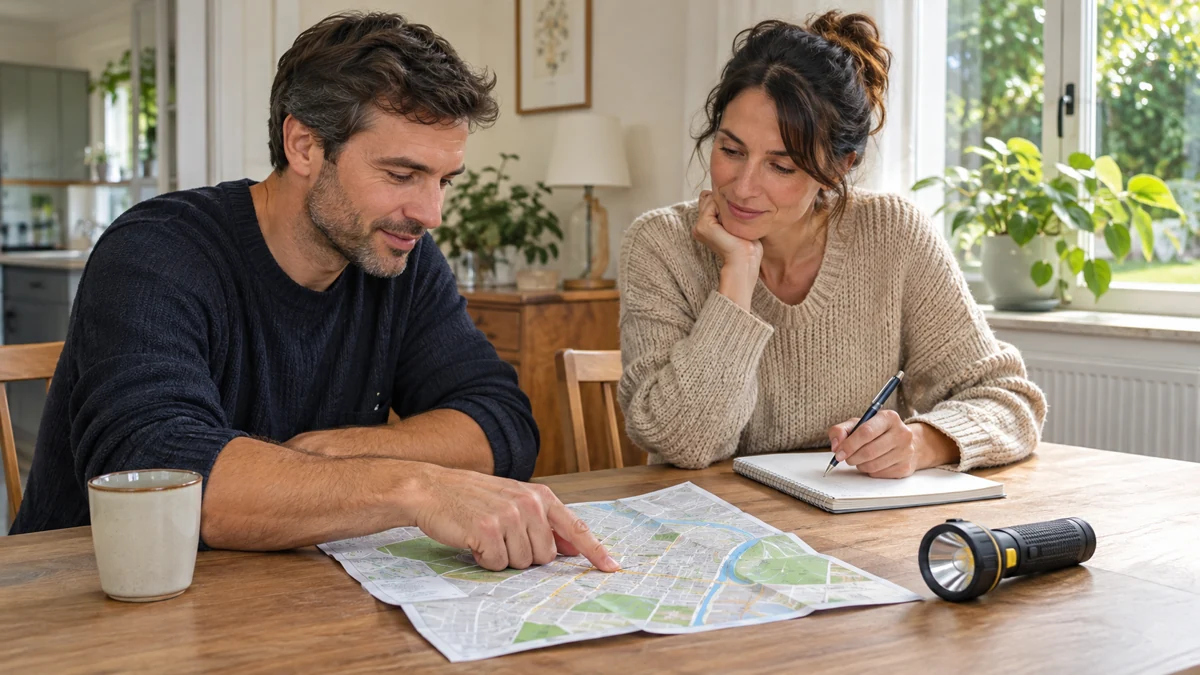
Announce the exercise and its purpose. For example: “We will find the lamp and read the starting plan. » Let everyone ask questions. With children, stay concrete and age-appropriate; don’t use surprise alerts or traumatic staging.
Divide one simple task per person, and then check what worked. Repetition can make a gesture more familiar, but does not guarantee an automatic reaction in all situations. If a step is too complex, simplify the plan rather than requiring more speed.
Also prepare rest and information
Choose reliable sources and times to check the news, keeping the alerts useful. Continuous exposure to disturbing images can become difficult to bear. Preserve as much as possible the usual meals, rest and ties. Offer a relay if a person runs out.
Note support contacts with other household resources. If intense reactions persist or make it difficult to meet daily needs, seek professional advice. A difficulty in coping is not a failure of preparation.
Make a useful return
After the exercise, ask: what did we find easily? What information was missing? What improvements are we going to make? Limit yourself to one or two achievable corrections. Avoid judging reactions or comparing household members.
Actions of the week
- Choose a local scenario and define your first decisions.
- Check an official source and useful contacts.
- Do an announced exercise of a few minutes.
- Provide a relay and a way to ask for support.
- Correct a point in the plan and then resume a normal activity.
Your expected result: a first known sequence, a simpler plan and permission to ask for help.
Useful references
- What to do to get better after a disaster - Government of Quebec.
- Request support after a disaster - Gouvernement du Québec.
Put this reading into practice
Perform the action as you wish and then check the result. Your follow-up remains specific to this route.
52 weeks to strengthen your preparation; Week 14
Simplify decisions under stress
Your action: Prepare a short list of first actions for a plausible scenario, with a moment of pause and a relay.
To check: Instructions are kept on a page; uncertain information remains identified.
To do