
In this article
Get away from the threat whenever possible, use alerting and follow network-specific directions.
Space and movement change the options
A bus, a train and a station do not offer the same exits or the same devices. Identify the means of call and keep an eye on the ads without turning each move into permanent monitoring.
An immediate attack or threat requires adequate protection. Do not try to observe or film closely, and do not publish the position of people who take shelter.
Leaving the danger if a safe exit exists
When stopped, an exit away from the threat can allow you to move away to a safe place. Do not go to the attacker and do not stay nearby to recover property. Help people you can accompany without exposing yourself.
Do not jump from a moving vehicle and do not descend onto the tracks or into a tunnel on your own initiative. Electrical hazards, movement and access require a controlled evacuation.
Alert with accurate location
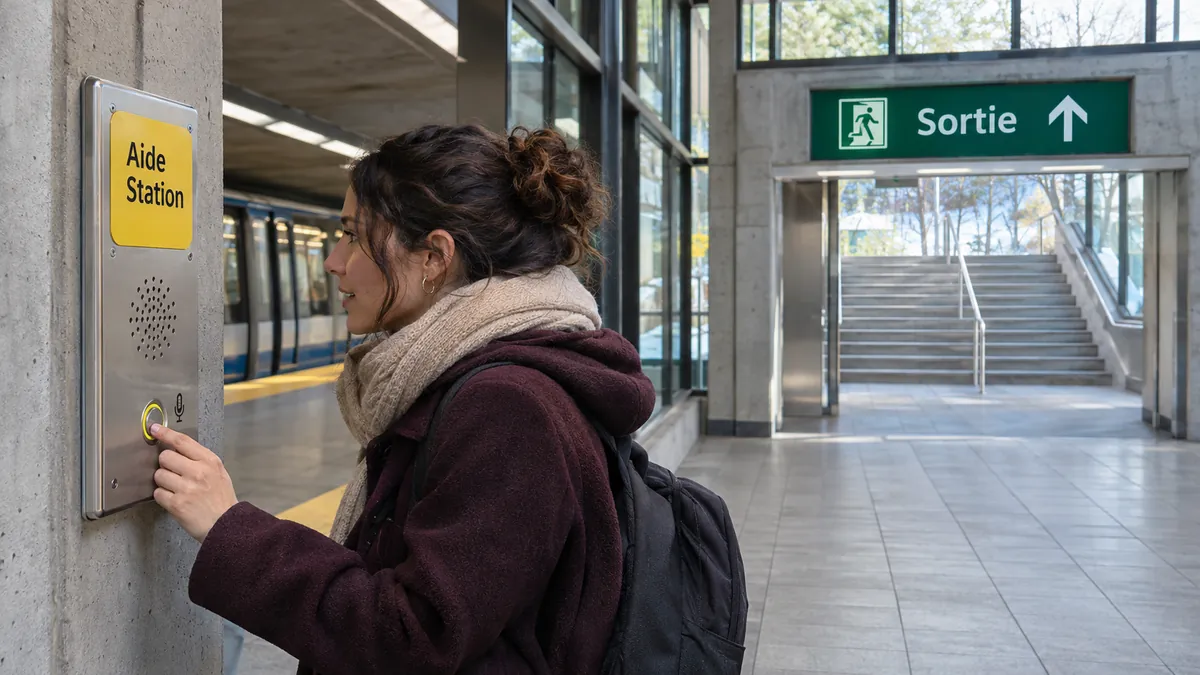
In case of immediate danger, call 911 when it can be done safely. Also use the device provided to reach the driver or staff. Give the network, line, station or location, direction of travel and useful observations.
In Montreal, the STM says it prefers the intercom in the majority of emergencies aboard the metro. The emergency brake is reserved for extreme situations; it stops the train at the station. The two devices should not be confused.
The five-digit car number helps the STM locate the situation. Do not assume that the operation of the equipment is identical in all networks or that the phone can be used everywhere.
When the exit is not accessible
Increase the distance and seek accessible protection without getting close to the threat. A seat or glazing is not guaranteed ballistic protection. Follow the directions of the staff and rescue.
Physical confrontation is the last resort in the face of imminent danger when other options are not possible. This text does not propose a technique of combat or citizen intervention against an armed person.
Children, mobility and supervised evacuation
Keep the children with the adult and give a brief instruction. Report any need for assistance to staff. Do not improvise the movement of a person or a mobility aid in a dangerous access.
When the police arrive, keep your hands visible and follow their instructions. During an evacuation, listen to announcements and directions from the STM or emergency services. Seek medical help if needed once in the shelter.
Sources and Updates
Documentary verification: November 3, 2026.
- STM - emergency on the metro or bus
- McGill - Protection protocol in the presence of an active shooter
- RCMP - civilian training presentation, archiveOriginal PDF · source language preserved