
In this article
- Step 1: Declutter and clean without dispersing contaminants
- Step 2: Reduce entry points
- Step 3: Understand the limits of using a cat or dog
- Step 4: Examine smelly repellents without overestimating them
- Step 5: Know the limits of ultrasound devices
- Step 6: Use Effective Traps
- Step 7: Enhancing the safety of your food stocks
- Conclusion
- References to be consulted before intervention
Building food reserves means protecting them throughout their storage period. In a house, apartment, garage or outbuilding, rodents can damage packaging and contaminate surfaces. This risk does not make their presence inevitable: the organisation of storage, the maintenance of the building and the detection of clues make it possible to choose suitable measures.
In Europe and North America, situations vary according to species, building and environment. Rats and mice may find food, water and shelter, but it would be excessive to say that they always cross all protections. An intervention aims to remove access and attractiveness, and then to treat the observed activity, without multiplying products at random.
Mice and different species of rats can damage packaging, wood, certain plastics or cables. The exact species and the damage must be identified as far as possible; gnaw marks alone does not reveal the severity of an affected electrical installation. If a cable appears damaged, do not handle it and have the hazard checked by a competent person.
Old housing may have hard-to-detect openings, but recent construction is not exempt from control. Look for clues without disturbing droppings. Food whose packaging has been gnawed or contaminated is not to be recovered by removing only the visible part: plan its disposal and the cleaning of the premises according to sanitary instructions.
The following seven topics cover prevention, containers and the limits of common solutions. They are not a comparative test conducted by PrépaCivile. Buying seven products cannot guarantee elimination of an infestation: assess access points, signs of activity and the need for professional intervention.
Step 1: Declutter and clean without dispersing contaminants
Reduce easy shelters near stocks: unnecessary cardboard, paper and piles of objects that prevent you from seeing the floor or walls. This should not become a challenge to the cleanliness of occupants: a rodent may enter a maintained dwelling. If excreta or nests are present, arrange their treatment before moving objects and lifting dust.
The historically proposed mixture of water and lemon juice is not a validated method of disinfecting droppings here. Do not sweep or vacuum dry droppings. Use the protections and disinfectant provided in the sanitary instructions, with the indicated contact time. High contamination, confined space or difficult cleaning warrants specialized assistance. The masking of an odour does not demonstrate that the biological risk has been removed.
After the treatment of contaminated materials, clean the surfaces with a product suitable for their use and then follow the necessary disinfection and rinsing steps, especially around the food. A mint-scented soap alone is not evidence of the elimination of infectious agents or a barrier preventing the return of mice. Never mix cleaning products to enhance a supposed odor or efficiency.
Step 2: Reduce entry points
In a building, look for safely accessible entry points around doors, pipes and foundations. Distinguish openings to repair from ventilation and drainage that must remain functional. Choose building-compatible repairs rather than indiscriminately sealing every opening; request professional advice when needed.
Expanding foam alone may be eaten and does not constitute a guarantee of exclusion. Depending on the location, a repair may require metal mesh, flashing, cement or other suitable assembly. Steel wool and mesh must be secured and integrated into a suitable repair; do not place them in contact with an electrical installation or in a duct which must remain open. Have the ventilation, fire protection or technical area validated.
Door bottoms and joints can help limit certain passages when properly adjusted and maintained. Check dimensions and material rather than waiting for an absolute barrier. A fire door, air vent or drainage opening should not be modified to interfere with its function; ask for a compatible solution if you are a tenant or live in a condominium.
Step 3: Understand the limits of using a cat or dog
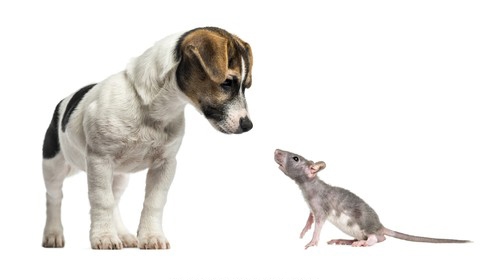
A pet does not guarantee protection of stored food; avoid contact and injury or contamination risks.
A cat or dog may chase a rodent, but this does not make it a guaranteed, safe or sufficient method of treating a building. Adopting an animal to give it this mission also creates obligations of care. Bites, parasites, contact with sick animals and toxic baits can expose them; ask the veterinarian for advice rather than send the pet after rodents.
The historical anecdote on a Jack Russell hunting rats, snakes and bats is not presented as a verified experiment by the author PrépaCivile. A dog of this breed does not have guaranteed efficacy. Avoid particularly letting him handle a bat or wild animal; a contact or bite requires an appropriate assessment. The narrative does not justify reproducing a hunt in the dwelling.
Pets have their own place in the household, but do not replace the exclusion of access, the protection of food, or professional control if necessary. Also protect their kibble and water, clean the dining areas and keep them away from traps. An animal presence does not automatically prevent rodent-related diseases and does not make a contaminated stock edible.
Step 4: Examine smelly repellents without overestimating them
Smell plays a role in rodent behaviour. This is not enough to demonstrate that a strong smell will keep them out of a building containing food and shelter. A product must be evaluated for its use, effectiveness and risks; a fresh scent or discomfort to the occupant is not a result of pest management.
Peppermint appears in many household tips, but a few drops do not guarantee protection for stored food. Check evidence applicable to the product and situation. Never apply essential oil to food, food containers or near animals without checking the risks: natural does not mean harmless.
The following products were cited as repellents. We keep them to explain their limitations, not as a list of treatments to sprinkle or combine in closets:
- Cayenne pepper: the irritation it can cause does not demonstrate lasting protection of reserves. Avoid powder dispersal and contact with eyes, children, animals or food.
- Tea tree oil: do not consider it a safe solution for the home or animals. Its use must comply with the product's warnings; no pest control recipe is validated here.
- Cinnamon: A food spice is not automatically an authorized and effective product against infestation. Spreading it can add contamination or hinder cleaning without resolving accesses.
- Cloves: a pronounced smell does not constitute an effective test. Do not use them to declare a safe closet and return food to it, while there are still signs of activity.
- Lavender: a fragrance or plant does not replace an intervention on food inputs and sources. Check the risks of a concentrated preparation rather than assuming it benign.
- Mothballs: Do not divert them from their intended use to place them as rodent repellents near reserves or in living rooms.
Naphthalene and paradichlorobenzene in some moth-control products can cause harm. The old humorous formula according to which they would also cause humans to flee should not mask the problem: a pesticide is used only for use and under the conditions of its label. A strong odour does not authorize its use in a food closet. Do not mix these products with other substances and keep them out of the reach of children.
Essential oils are not necessarily safer than other products. Repeated application does not demonstrate efficacy and may increase exposure. Before buying a repellent, check the authorized use in your country, warnings and actual conditions of use. Priority measures continue to be the elimination of access and attractiveness, the monitoring signs of activity and an intervention adapted to the observed activity.
Step 5: Know the limits of ultrasound devices
These devices emit high frequency sounds and are marketed to disrupt certain animals. The presence of a light, the absence of audible noise for you or the mention of a large surface does not show that rodents have left the site. Identify what the manufacturer actually promises and do not replace the other measures merely by plugging in a device.
Rodents may adapt to a device and return. A period of a few weeks is not a guaranteed protection window. Continue checking activity, captures and damage rather than judging effectiveness solely by night-time sounds.
Obstacles and the room layout may limit exposure to sound. This does not demonstrate that an appliance effectively protects any open room. The advertised coverage area should not be interpreted as a certification of exclusion of pests; check also the precautions for household animals and conditions of use.
A quieter attic does not establish that stored food or wiring is protected. If you use a device according to its instructions, maintain monitoring and other prevention measures. Assess results through actual signs of activity rather than sound alone; PrépaCivile does not claim to have tested this device.
Step 6: Use Effective Traps
There are mechanical traps, live capture devices and electric models. Their choice depends on the species, location, risk of contact and possible maintenance. A newer or more expensive product is not automatically better than a properly selected and installed mechanical trap. Read the instructions and secure access to avoid exposure to non-target individuals and animals.
Rodent traps
Affiliate links. Check the model, dimensions and operating requirements; a product name does not establish suitability for your circumstances.
Canada — Amazon.ca
Lot de 2 pièges à souris sans cruauté de qualité supérieure pour l'intérieur et la maison, sans danger pour les enfants et les animaux domestiques, attraper…View on Amazon.caAbsolutely avoid glue traps. However troublesome a rodent may be, avoid methods that cause prolonged suffering. This type of trap is not only cruel, but can also be dangerous if other pets or children are accidentally exposed to it.
Live capture, especially with a product sold under the Kensizer brand, is not automatically without injury or risk. The model and its maintenance must be checked, and a cage containing an animal may be exposed to bites or contamination. The historic distance of 160 km is not a release rule: moving an animal can be discouraged or prohibited and move the problem. Ask the authorities or a specialist for the species and place concerned; do not handle an animal with bare hands.
Electric traps have their conditions of use and safety; the announced speed of killing should not be promised for any model or species. Keep them out of the reach of children and animals, comply with moisture restrictions and disconnect or neutralize the device according to the instructions prior to maintenance. Removal of a body does not dispense with cleaning and disinfection precautions.
The improvised trap with a bucket is not accompanied here by an evaluated and safe process. Some setups create risks of falling, prolonged drowning of the animal or contact at removal. We do not propose a manufacturing recipe. Recurrent infestation mainly requires correction of entry points and accessible resources, with an appropriate device or the help of a professional rather than a succession of craft traps.
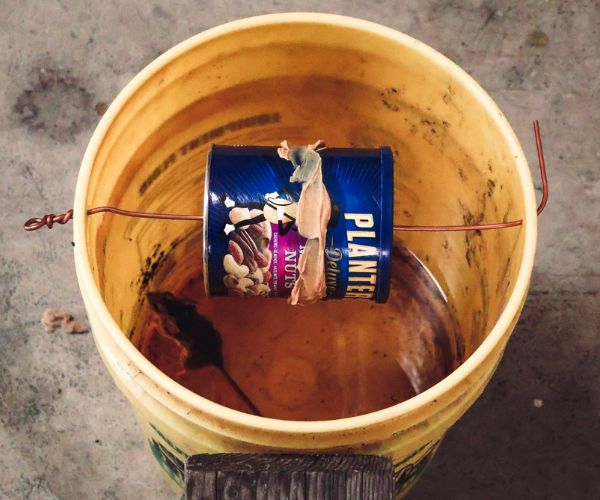
Illustration of an improvised device, not construction instructions; trap selection must account for people and non-target animals.
Step 7: Enhancing the safety of your food stocks
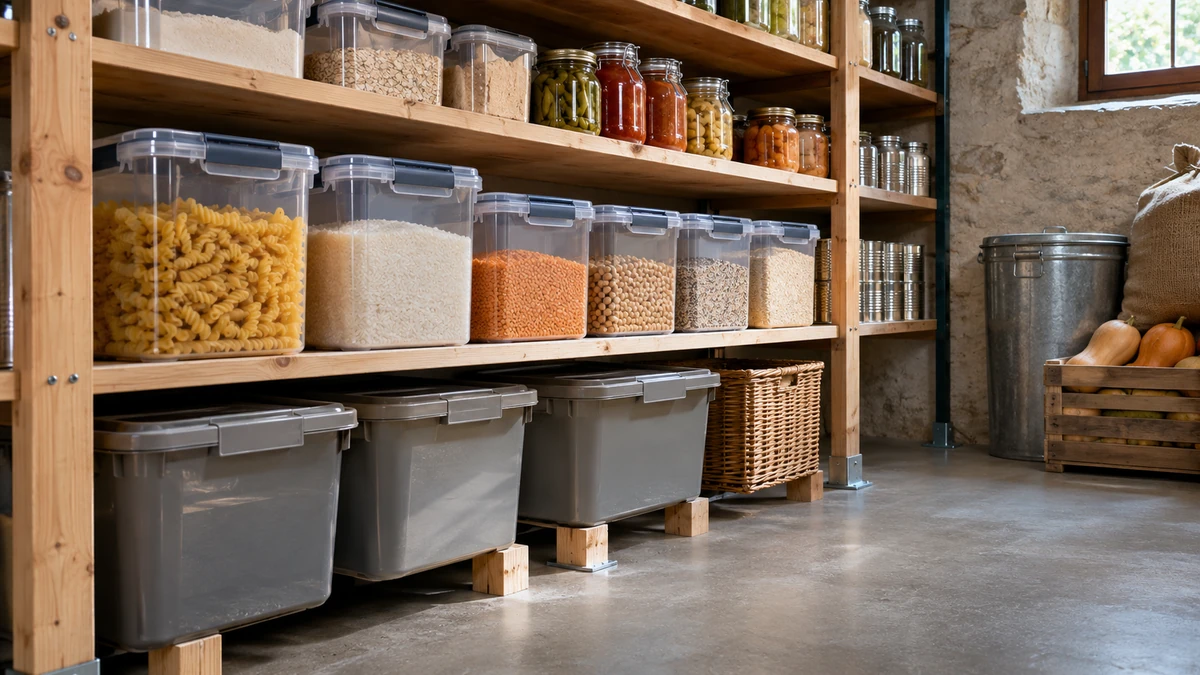
Choose closed, inspectable and resistant food containers for intended use. Glass and metal can offer a barrier that is harder to gnaw than a bag, but lids, joints and damage also count. Gamma-type food buckets and seal lids facilitate certain storage without providing universal proof of rodent resistance. Check the food compatibility and integrity of each element.
A Mylar type barrier bag may limit certain exposures of a suitable food when properly packaged. The bag alone does not resist gnawing and does not disinfect its contents. Placing it in a bucket adds mechanical protection that must be checked for limits. Shelf life also depends on moisture, product, packaging and temperature; this combination is not validated as the "best" for all commodities.
Some rodents may damage plastics; it is not necessary to invoke a rat from another region as evidence of local infestation. For dried fruits and nuts, keep an appropriate food package and then a resistant outer container if necessary. A metal can must remain intact, closed and suitable for storage; it does not stop the rancidity of the nuts and does not remove the need to inspect supplies.
These precautions may reduce losses, but there is no guarantee that stocks will remain intact. Leave space for inspection around containers, date your inspections and note new clues. If the damage continues, review access and intervention with a competent person before returning a reserve to the same location.
Conclusion
Rats and mice can contaminate reserves and damage a building. The aim is to prevent access and treat the problem without further exposing the home. Avoid direct handling, contaminated dust and diverted products; high infestation or contamination that is difficult to clean deserves specialized intervention. The emergency doesn't justify improvised poison.
Containers are part of a broader strategy: building access, clean feeding areas, waste, monitoring and proper control. In case of evacuation, their weight limits what you can carry. Prepare a quantity that can be transported in protected food packages, without claiming to carry a whole reserve or make a soft bag invulnerable to rodents.
The versatility should not confuse different functions. Peppermint oil is not validated here as repellent against mice, spiders and wasps, or as a disinfectant. Instead, choose containers and accessories for effectively compatible uses to reduce the material being transported. Sanitary and pest control products keep their labels and should not be transferred to food packaging.
Pets also need preparation: food, water, care, identification and suitable means of transport. A pet may need to be carried or placed in a carrier during an evacuation. Don't rely on him as a sanitary barrier, a heating device or a self-contained hunter, that adds no demands to the family plan.
If these measures are insufficient, have the causes and solutions assessed by a professional. Do not use home poisons: their dose, exposure and effects on children, animals and non-target species are not controlled. A Rodenticide, when indicated and authorized, is strictly subject to its label, applicable rules and storage and installation precautions.
The seven themes make it possible to distinguish prevention, cleaning, limits of repellents, choice of control and protection of foodstuffs. They do not prove the effectiveness of a personal campaign that has not been documented. You can report information to check or offer feedback via "Contribute to this article": a contribution is reviewed before integration and does not replace a health recommendation or the opinion of a specialist.
References to be consulted before intervention
- Health Canada: rats and mice.
- Public Health Agency of Canada: Hantavirus-related prevention and cleaning, especially for significant contamination.
- Health Canada: Essential Oil Precautions.
- Quebec: Wild animals on property, for precautions and rules that depend on species.