
In this article
Do you lack a roof or gutters for collecting rainwater?
Several configurations are possible, but collecting water does not make it safe to drink. Define the permitted use, materials, storage arrangements and treatment options before relying on the volume collected.
All six methods from the source are retained: a tarp, a butterfly structure, an inverted collector, ground collection, a basin and an open container. They have different constraints; none guarantees an emergency supply or safe water. For collection limitations, also consult the rainwater collection good-practice guide.
What you need to collect rainwater without gutters or a roof
Consider four shared functions: collecting, conveying, storing and drawing water. Not all systems have the same components, and an improvised device does not perform like a designed installation. The area, materials and intended use determine the precautions, alongside local rules.
- Collection surface: a larger surface can receive more rain, with losses and contamination risks specific to its material, cleanliness and setup.
- Conveyance: without gutters, water can drip or flow directly into the container.
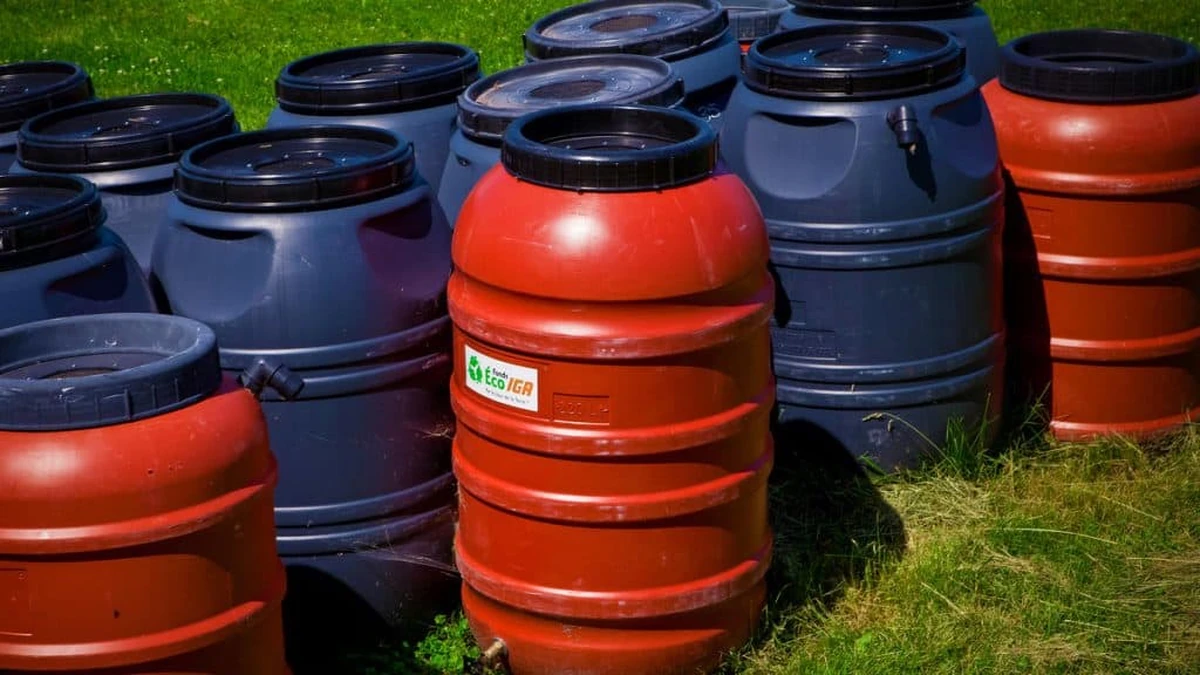
- Container: choose a material compatible with the intended use, a suitable lid and protected access, particularly for children. A pond is not equivalent to a closed food-grade container. Prevent mosquito breeding, falls and unauthorized access; closing a container does not sterilize the water or eliminate all evaporation.
- Accessing the water: if the container has no tap, you will need another way to draw water from it.
Ways to collect rainwater without gutters or a roof
1. A tarp
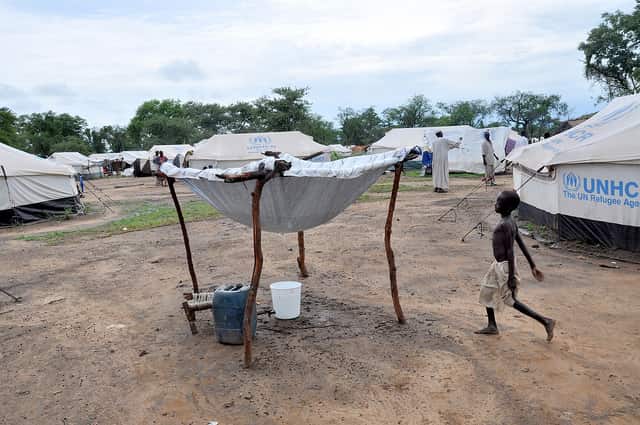
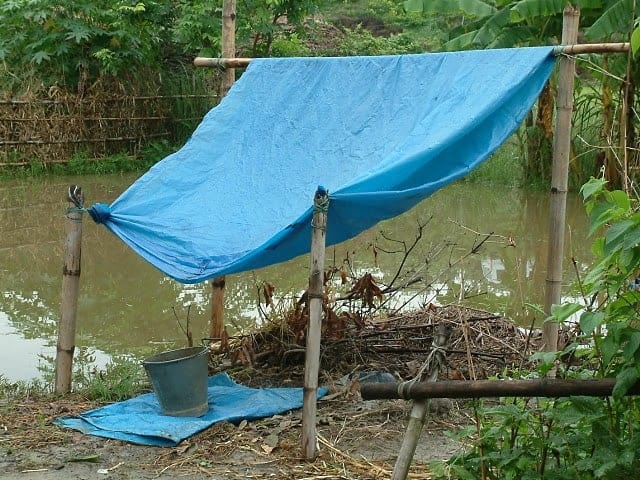
A tarp can provide a portable collection surface if its material and condition suit the intended use. A construction tarp, a treated tarp or one previously soiled is not automatically suitable for water intended for consumption. Check the anchors and wind loads as well.
The key is to set up the tarp so that the rain runs to a single point.
One option is to make a hole in the centre of the tarp, as shown in the first photograph. Alternatively, arrange the tarp so that it slopes downwards, as shown in the second and third photographs.
A poncho or bag can form a surface in an improvised example, without guaranteeing food compatibility or the absence of chemical treatments. Do not drink collected water simply because the item has been used this way. Equipment carried for shelter may also be needed for protection from rain; do not sacrifice a safe shelter for a small, uncertain yield.
A tarp can nevertheless be useful in an evacuation bag: it can collect rain and also provide a temporary survival shelter.
Provide a stable slope and attachment, without a heavy object that could fall or a pocket where water accumulates weight. One litre weighs approximately one kilogram. Do not install the collector over a person or a passage, and take it down if conditions make the structure unstable.

How much rainwater can a tarp collect?
Calculate volume using explicit assumptions: area in m² × rainfall in mm × collection efficiency = litres. With 25 mm of rain and an illustrative efficiency of 75%, a 9 × 9 ft tarp, approximately 7.53 m², produces about 141 L; a 10 × 12 ft tarp, approximately 11.15 m², produces 209 L. These are scenarios, not “typical” rainfall or guaranteed volumes. Losses, overflow, the setup and contamination can reduce the water that is actually usable.
Consult the rainwater collection calculator for a more detailed estimate.
2. A butterfly rainwater collector
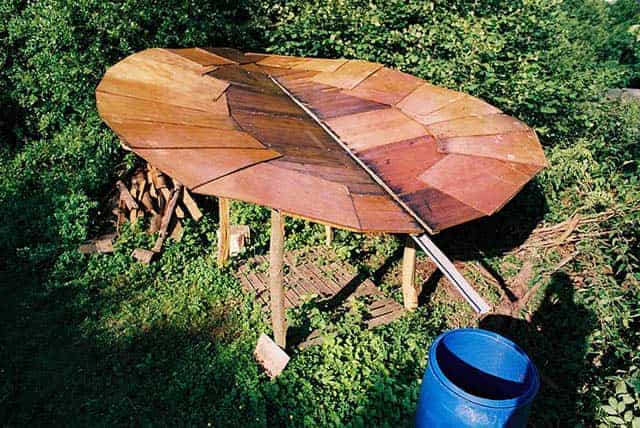
This type of rainwater collector is sometimes called a “butterfly” system because its two sides slope upwards like wings. Water lands on the wings and runs towards the centre, then drips into a collection device.
The photograph illustrates a collector shape, not a validated design. A plywood support and plastic lining must be suitable for the intended use and outdoor conditions; a garbage bag is not automatically a food-grade lining. A watertight centre joint does not guarantee water safety or structural resistance to wind and loading.
3. An umbrella-style rainwater collector
An inverted collector directs water towards a central point and possibly a tube. Its shape resembles an upside-down umbrella, but the design must address loading, anchoring, materials and maintenance. The existence of commercial products does not demonstrate that a homemade version would be simple, safe or permitted for drinking-water use.
These collectors need secure anchoring because wind can easily knock them over.

4. Collecting rainwater at ground level
Ground collection directs runoff towards a storage area. The water may carry animal waste, microbes or chemicals; it is not automatically a drinking-water source, including for some uses involving animals. Earthworks, erosion and drainage require permission and suitable advice; do not divert water towards a neighbour or alter a protected environment without authorization.
The source images show collection configurations. The attribution to the fifth through eighth centuries is not supported by an identifiable reference and is not presented as an established date. A historical example does not validate the sanitary conditions or rules for a present-day installation.


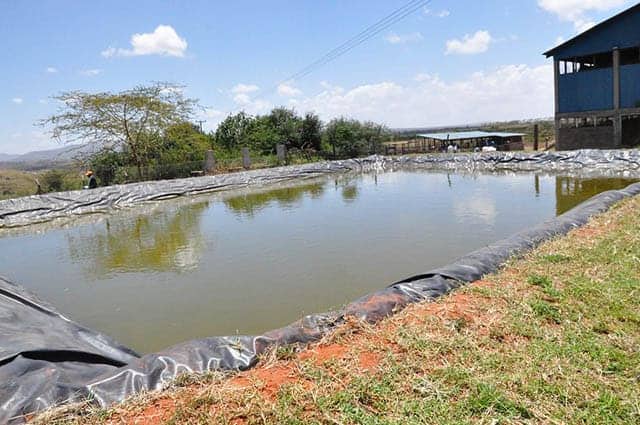
5. Rainwater basins
Digging a pit and lining it with plastic is not a general preparedness recommendation. Buried services, stability, fall or drowning hazards, maintenance and permissions must be assessed before any construction. A tarp at the bottom guarantees neither durability nor safe water.
These collectors are generally not recommended because evaporation can cause substantial water loss and standing water quickly becomes dirty.
Requirements for a basin depend on its location, size and the environments affected. Check with the relevant authorities rather than assuming a small pond needs no permit or that the practice is prohibited everywhere. A basin existing somewhere else does not establish its suitability as a primary resource in your situation.
6. Buckets and tubs
A clean, compatible container can collect rain according to the area of its opening. Place it on a stable support beyond the reach of children and animals, then protect the stored water. Rain falling directly into a container may also contain contaminants; the container does not guarantee drinking-water safety.
Increasing the surface area increases potential volume, subject to losses and the setup. Additional surface area can also introduce contaminants: treated wood, unsuitable plastic and debris are not appropriate for every use. Do not confuse the amount collected with the amount that is safe. Plan treatment suited to the risks, and another source if chemical contamination is suspected.
CDC: rainwater collection and health risks. The water’s final use and local rules must be checked; basic filtration does not address every type of contamination.