
In this article
- A Two-Tiered Reality
- Possible causes of a prolonged interruption
- Housing and shelter
- Water: storage, backup sources, and filtration
- Off-grid cooking
- Alternative energy
- Communication and information
- Prioritizing your actions
- Points of caution
- Further reading
- Sources and References
- Related resources
- Equipment to compare for your needs
A power outage—whether it lasts a few hours or several weeks—has a different impact today than it did thirty years ago. Our lifestyles rely on an interconnected chain—electricity, water, the internet, supply chains—that can become fragile very quickly. Preparing for a power interruption means first understanding what such an event entails in practical terms, and then identifying simple measures to maintain an acceptable level of comfort and safety.
A Two-Tiered Reality
Not all power outages are the same. A blackout lasting a few hours in a single neighborhood is a minor inconvenience that is easily managed. A prolonged interruption covering a large area—such as the one caused by the January 1998 ice storm in Quebec, which left hundreds of thousands of people without electricity for several weeks in the middle of winter—is an entirely different matter.
Short-term outage (a few hours to 2–3 days)
- Limited disruption to food and household routines
- Preserving the cold chain (keeping food refrigerated/frozen)
- Providing basic lighting
- Maintaining communication
Prolonged outage (one week or more)
- Uncertain water supply
- Heating becomes critical in winter
- Food supply requires a complete rethink
- Potential for becoming cut off from information
The resources and equipment needed are essentially the same in both cases. What changes is the quantity required, the duration for which they must last, and the ability to maintain a functional daily life over an extended period.
Possible causes of a prolonged interruption
Several scenarios can lead to a significant power outage. Understanding them helps in better calibrating one’s preparations.
Grid failure
The Quebec power grid, like most North American grids, has structural vulnerabilities. A cascading failure can have repercussions that extend well beyond the initial affected area. Learn more about network vulnerabilities.
Natural disasters
Ice storms, snowstorms, floods, and tornadoes—these events can damage distribution infrastructure over vast areas. The 1998 ice storm remains the historical benchmark in Quebec for illustrating the impact of a prolonged winter power outage.
Electromagnetic pulse (EMP)
An EMP—whether natural (such as a coronal mass ejection) or man-made—can disrupt electronic systems on a large scale. The extent of the damage depends directly on the intensity of the event. Understand EMPs and their real-world impact.
Housing and shelter
In most power outage scenarios, the building itself remains standing and usable. The primary challenge then becomes keeping it habitable without the usual comfort systems.
Maintaining heat without electricity
During a Quebec winter, thermal management is an absolute priority. Several practical measures can help significantly extend the heat retained within a home:
- Consolidate occupants into one or two rooms, rather than attempting to heat the entire home.
- Close the doors to unused rooms to keep heat contained within the occupied spaces.
- Apply plastic film to windows to reduce heat loss.
- Have extra blankets, warm clothing, gloves, and wool socks on hand.
- Emergency thermal blankets (such as aluminized foil blankets) can supplement regular blankets.
Oil or kerosene lanterns can help keep a confined space slightly warmer, in addition to providing light. However, they require adequate ventilation to prevent the risk of carbon monoxide poisoning.
Preventive home maintenance
Part of preparing for prolonged power outages involves regular maintenance of your home: checking insulation and sealing, ensuring fire extinguishers are in working order, and inspecting alternative heating systems. A well-maintained and well-insulated home will better withstand a long-term disruption to standard climate-control systems.
Water: storage, backup sources, and filtration
A prolonged power outage can disrupt water pumping and distribution systems. The general rule of thumb found in emergency preparedness guidelines is to have about one gallon (approximately 3.8 liters) of water per person, per day, for consumption and basic hygiene.
Storage options
- Outdoor rainwater collection system (check local regulations).
- Water bricks—compact, long-shelf-life containers for water storage.
- WaterBOB — a liner designed for a standard bathtub, allowing for the rapid storage of a large quantity of clean water in anticipation of an expected service interruption.
Water sources available within the home
In the event of an outage, several water reservoirs are already present in a typical home:
- Water heater — generally contains several tens of liters of clean water.
- Swimming pools — water that can be used for non-consumptive purposes after filtration and treatment.
- Household plumbing — may contain water that can be recovered via gravity.
- Toilet tank — water that is generally not chemically treated; it can be used as a last resort for non-consumptive purposes.
Filtration and purification
Water from uncontrolled sources must be filtered and purified before consumption. A high-quality filter is a worthwhile long-term investment. Low-cost filters may not provide the performance required in a real-world emergency.
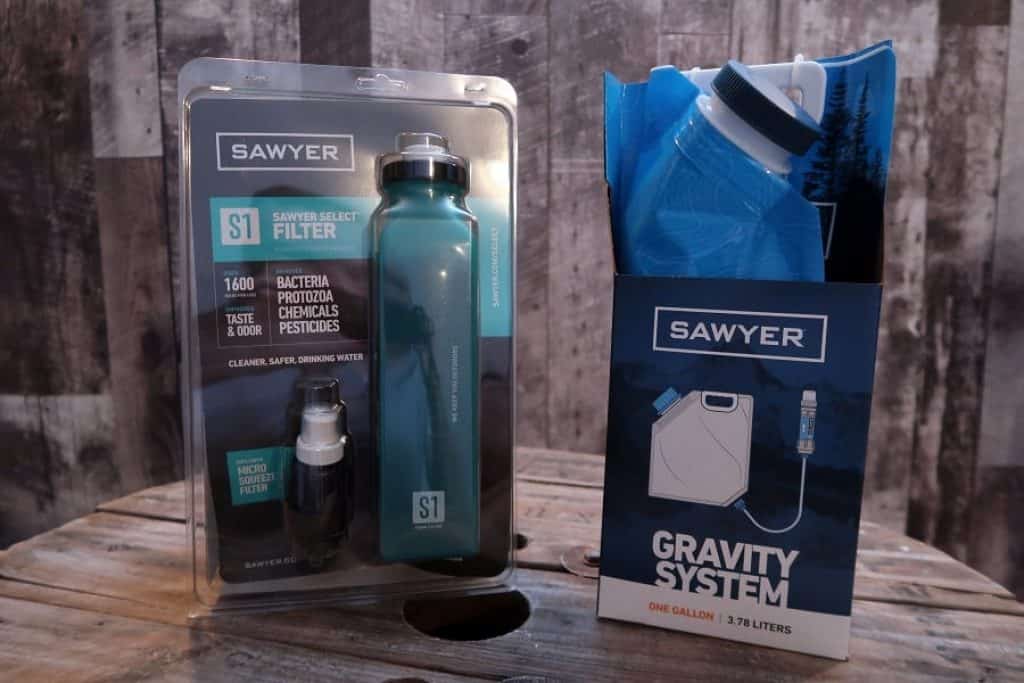
Opt for a reputable, tested filter designed for emergency conditions. See our review of the Sawyer Select filter.
Off-grid cooking
During an outage lasting a few days, one can rely on foods that require no cooking or very little preparation. As an outage continues, having an alternative means of cooking becomes a practical necessity—as well as a significant source of mental comfort, especially if children are present.
Items to prioritize for emergency food supplies:
- Long-shelf-life foods that do not require refrigeration.
- Foods that are easy to prepare, ideally requiring little or no water.
- Some comfort foods (chocolate, coffee, tea, biscuits) to help maintain morale.
Alternative energy
Having a backup energy source allows for the maintenance of essential functions, such as lighting, charging communication devices, powering medical equipment, or running a refrigerator for a few hours.
- Generator — a versatile solution, but it requires fuel and must be used outdoors to avoid the risk of carbon monoxide poisoning.
- Portable batteries and solar chargers — for small electronic devices and lighting.
- Candles — for basic lighting; use with caution (fire hazard).
- Flashlights and lanterns — opt for LED models that use rechargeable batteries.
Fuel and equipment runtime
Owning a generator or a camping stove is only useful if the necessary fuel is available. It is wise to anticipate your needs based on the equipment you have chosen:
- Gasoline — for internal combustion engine generators. Storage must comply with safety guidelines and expiration timeframes.
- Propane or butane gas — for portable stoves. Small canisters are convenient; larger ones offer a longer runtime.
- Kerosene — for lanterns and certain heating stoves.
- Spare batteries — for all portable equipment.
Communication and information
During a prolonged outage, maintaining access to information quickly becomes a priority. Knowing what is happening, estimating the likely duration of the disruption, and coordinating with family members all require having planned for communication methods that do not rely on the standard electrical grid.
- Battery-operated or hand-crank radio — allows you to receive emergency bulletins broadcast by authorities without depending on the electrical grid or the Internet.
- Amateur (HAM) radio — for those who wish to go further, amateur radio offers independent and resilient communication capabilities.
- Pre-established family plan — define a meeting point, an out-of-area contact, and a procedure to follow in case of separation, all in advance.
- Mobile hotspot — when connected to an uninterruptible power supply (UPS) or inverter, this can help maintain temporary access to digital information, provided the cellular network is still operational.
Prioritizing your actions
Given all these factors, it can be helpful to structure your preparation in a logical order—from the most urgent to the least urgent—tailored to the context of Quebec.
- Water — maintain a minimum reserve and have a means of filtration available.
- Heat — identify a supplementary heating solution suitable for your home, especially for the winter months.
- Food — keep a stock of long-shelf-life staple foods and an alternative method for cooking.
- Lighting and basic energy — flashlights, candles, portable batteries.
- Communication — battery-operated radio, a family emergency plan, and knowledge of emergency contact numbers.
- Fuel — ensure a supply that is compatible with the equipment you have on hand.
Preparing for a power outage is not intended to replace or allow one to opt out of public utility services. Rather, it aims to reduce immediate dependency, buy time, and prevent hasty decision-making during the first few hours of an interruption.
Points of caution
- Carbon monoxide — generators, camping stoves, and combustion-based lanterns must never be used inside an enclosed space without adequate ventilation. Carbon monoxide poisoning is silent and potentially fatal.
- Fire — using candles and lanterns under unusual circumstances increases the risk of fire. Keep fire extinguishers in good working order.
- Refrigerated medication — if any household members rely on medication that requires a cold chain (refrigeration), plan ahead for how to manage it.
- Vulnerable individuals—the elderly, young children, and those with specific medical conditions—are at greater risk from the consequences of a prolonged power outage. Take this into account when planning for your household.
Further reading
A power outage is one of the most likely and well-documented scenarios that a household in Quebec might face. Preparing for this possibility—even in a basic way—significantly improves your ability to navigate an interruption without having to make rushed decisions.
- Understanding the vulnerabilities of the electrical grid
- Preparing for an electromagnetic pulse (EMP)
- Building a 30-day food supply
- Testing your family’s preparedness skills
- Review of the Sawyer Select water filter
Sources and References
Local guidelines and product manuals take precedence for your specific situation. References consulted for this update include:
- CDC — Using a generator outdoors, away from openings
Related resources
Equipment to compare for your needs
Some links below are affiliate links: we may receive a commission at no additional cost to you. Products are examples by function, to choose according to your needs; buying the entire selection is unnecessary.