
In this article
- I. Understanding the risks of metro derailments
- II. Before the trip: Personal preparation
- III. During Derailment: Immediate Reactions
- IV. After the derailment: Actions to be undertaken
- V. Safe evacuation of the metro
- VI. Injury and first aid management
- VII. After the incident: Steps to follow
- VIII. Prevention and future preparation
- Conclusion
- Reference sources and instructions
The metro provides daily travel to many cities, including Montreal. Operating rules, equipment and emergency devices differ across networks. This guide addresses possible difficulties in a serious incident, including a derailment, without providing an undocumented accident rate or reliability rating. The instructions of the network you are using remain the practical reference.
An incident can cause sudden stoppage, falls, injuries and serious concern. It does not automatically lead to collective panic and a passenger cannot always identify a derailment from a tremor. The challenge is to limit your exposure, report the facts and understand the announcements, without seeking to inspect the train or tracks.
This guide covers the themes of pre-travel preparation, incident protection, alert, evacuation and post-event. It is neither a rail intervention manual nor a guarantee of survival. The examples are mostly Montreal; do not translate to another metro the location of a control or the function of a signal without reading the local indications.
Security begins with knowledge and preparation. Take the time to inform yourself and prepare yourself to ensure your safety and that of your loved ones while travelling by metro.
I. Understanding the risks of metro derailments
Understanding major hazard categories helps to interpret a situation, but does not allow a traveller to diagnose a technical cause. A tremor, noise or stop may have several explanations. Report what you have observed, without declaring a specific breakdown or waiting to establish that it is a derailment to ask for help.
A. Potential causes of derailment
1. Technical deficiencies
Technical failures may occur in a rail accident. The text does not have a statistical analysis to classify them as the main cause of all metro derailments. The following categories describe possibilities to be examined by investigators and specialists, not conclusions on the STM.
- Mechanical problems : Wear of mechanical components of the train, such as axles, wheels or brakes, can cause malfunction.
- Track and equipment: defects or degradation may affect their condition. The relevant conditions depend in particular on the type of track, the tunnel and the maintenance programme. A passenger cannot qualify a visible mark as dangerous wear or deduce a weather cause for an underground structure.
- Control and Signalling: A failure may affect operation, but the term "guidance error" alone does not describe a derailment mechanism. The operation and protections differ according to the network; only the event analysis can establish a cause and effect link.
2. Human errors
Even with advanced automated systems, the human factor plays a crucial role.
- Driving errors A driver can misinterpret a signal or react too slowly to an unexpected situation.
- Non-compliance with security protocols Non-compliance with established procedures may result in dangerous situations.
- Training and organization: they are part of the elements that managers and investigators can examine. Do not conclude that there is insufficient training or misconduct by an employee solely on the basis of an incident or partial video.
3. External factors
Elements outside the railway system may also cause derailment.
- Items on the rails : The presence of debris, rocks or intentionally placed objects can derail a train.
- Intentional acts: they are a possible hypothesis in certain events, without being an explanation by default. Report an object or factual behaviour of concern; do not pursue a person and do not spread a charge of sabotage without confirmed information.
- Natural disasters : Of floods sudden landslides or earthquakes can damage metro infrastructure.
B. Possible consequences of a derailment
Understanding the potential consequences of a derailment will allow you to better anticipate the dangers and react accordingly.
1. Physical injuries
- Shocks and Trauma : The abrupt stop or the train's jerky movements can cause falls or collisions between passengers.
- Projections of objects : Baggage, personal belongings or equipment of the train may be projected during the incident.
- Crushings In the most serious cases, deformations in the structure of the train can trap or injure passengers.
2. Dangerous situations
- Fires : Sparks or short circuits can trigger a fire on board.
- Toxic fumes : Combustion of materials can produce smoke harmful to health.
- Exposed electricity : Damaged electrical cables present a risk of electrocution.
- Floods : In underground tunnels, pipeline ruptures or infiltrations can cause water to rise.
3. Psychological stress
- Movements of people: A rush toward a door can create falls or blockages. Fear does not systematically cause general panic. Leave the passages free and use simple indications rather than shouting conflicting orders.
- Anxiety and confusion : Lack of information can increase stress and lead to inappropriate reactions.
- Psychological trauma : To experience such an incident can have long-term implications for mental health.
Understanding these risks helps to formulate useful questions before the journey, without predicting each incident. The observed signs must be reported to the staff; do not search for the origin of a technical problem. The following section examines the preparations that remain compatible with network instructions and the specific needs of passengers.
II. Before the trip: Personal preparation
Before a trip, a few preparations can facilitate a call or a wait: battery available, accessible health needs and knowledge of the means of assistance. They do not guarantee a reaction or validate a route in a tunnel. The preparation remains proportionate to the trip; a purchase of equipment is not a condition for entitlement to assistance.
A. Choice of equipment and clothing
1. Wear appropriate clothing
- Closed and non-slip footwear :
- Choose stable shoes compatible with your trip if possible. If your mobility requires other equipment or assistance, prepare this need according to your possibilities. A type of shoe does not guarantee an evacuation and does not justify faulting an injured person.
- Comfortable clothing :
- Wear clothes that allow freedom of movement. Overtight or bulky clothing can hinder your travel in case of an emergency.
2. Useful things to have on yourself
- Mobile phone charged :
- Make sure your phone is sufficiently charged before you leave. It may be essential to call for help or obtain information.
- Compact flashlight :
- A small flashlight can be very useful in case of power outage or in poorly lit areas. If you don't have one, your phone's lamp function can be used, but it quickly consumes the battery.
- Whistle :
- A whistle can help you report your position to first responders if you are stuck or if visibility is reduced.
- Small first aid kit :
- Small kit: a few suitable supplies can be useful, without turning the passenger into a medical worker. The drugs correspond to the needs and instructions of the persons concerned; do not distribute a so-called "basic" product without checking whom it is intended for.
- Bottle of water :
- Water: useful for your hydration during the journey if it suits you. Do not present it as a means of making a filter against smoke: a damp cloth does not protect against carbon monoxide or against all toxic gases.
- Personal medicines :
- If you have any specific medical needs (asthma, allergies, diabetes), keep your medication at hand.
3. Avoid bulky or dangerous objects
- Large luggage :
- Limit heavy or bulky objects that may interfere with your evacuation or injure other passengers in the event of a collision.
- Sharp or flammable objects :
- Respect the safety rules by avoiding the transport of prohibited or dangerous items.
B. Know the Montreal Metro
1. Familiarization with stations
- Study the metro plan :
- Take the time to look at the network's plan for stations, connections and exits. This will help you to move more quickly in the event of an emergency.
- Identify emergency exits :
- Benchmarks: Identify public exits on the platform and the location of the call devices indicated. From a train, do not deduce that a technical door seen in the tunnel is an exit for passengers or that it is accessible from your position.
- Observe security displays :
- Read the safety instructions displayed in stations and trainsets. They contain valuable information on the procedures to be followed.
2. Understanding evacuation plans
- Plans displayed in trainsets and stations :
- Evacuation information: Read the instructions available to the public and follow the announcements. A plan of the network describes the stations; it is not a map to walk on the tracks to the nearest supposed station. Train traffic and power conditions must be managed by the operator.
- Awareness of alarm signals :
- Learn to recognize the sound and light signals that indicate an emergency situation.
3. Identification of safety equipment
- Fire extinguishers :
- Note the location of the fire extinguishers in the stations and, if possible, in the trainsets.
- Emergency intercoms :
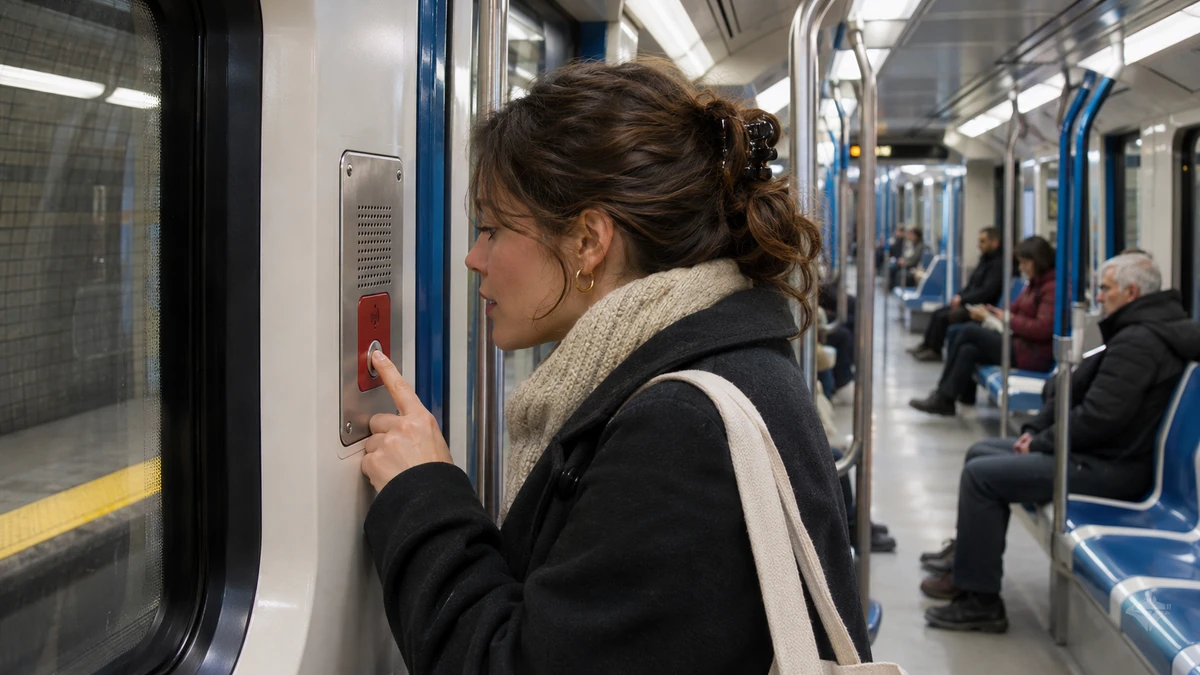
- Identify intercoms or call buttons that communicate with the driver or control centre.
- Safety hammers :
- Equipment: An exit control or emergency window, where it exists, depends on the equipment. Do not assume that every train in Montreal has a red hammer near a window. Identify the actual indications, without manipulating a device to test it or seek to open an exit during train movement.
C. Mental preparation
1. Anticipating emergency situations
- Visualization :
- Anticipation: you can remember where to ask for help and how to contact a loved one. There is no need to mentally repeat a catastrophic scenario. If your concern is heightened by this reflection, limit it to a concrete task and address the difficulties with a trusted person.
- Knowledge of procedures :
- Learn about the evacuation procedures and official instructions of the Société de transport de Montréal (STM).
2. Stress management
- Relaxation techniques :
- Learn simple stress management techniques, such as deep breathing, that can help you stay calm in a critical situation.
- Proactive Attitude :
- Benchmark: knowing how to ask for assistance and recognize your limits is part of the preparation. A positive attitude does not make any situation manageable and the appearance of fear or hesitation does not mean that you have failed.
Pre-travel preparation can help to regain contact, treatment needs and alerts, without ensuring an effective response or the absence of injury during a derailment. The next section examines the actions with their limitations. During the incident, the instructions of the staff and emergency services take precedence; do not descend on the tracks or undertake an autonomous exit on the basis of a scenario.
III. During Derailment: Immediate Reactions
Sudden movement can occur without allowing time to apply a posture. First try to limit the fall with the immediately available supports, without moving through the train to reach a theoretical location. The points below are general points, not a protection position approved for all seats or all types of accidents.
A. During impact
1. Adopting a safe position
Protection: during a tremor, use the available supports without taking an exposed trip. It is not clear whether a derailment is imminent or whether a single posture can be applied to a passenger sitting, standing or using a mobility aid.
- Squat if possible :
- Do not always try to squat in the middle of the passage or bring your knees back against your chest during the movement: this position is not validated here for a subway. If you are sitting, stay as stable as possible; if standing, hold an available support without crossing the carriage.
- Protect the head and neck :
- If you are exposed to objects or shock and can do so without losing balance, protect your head. This gesture is not a complete protocol and must not cause you to give up the only support that prevents you from falling.
- Hold on firmly :
- If you can't squat, hold a bar or handle firmly to maintain your balance.
2. Avoiding hazardous areas
- Get away from doors and windows :
- Doors and windows: Stay away from damaged elements and do not force a door. A sudden stop does not mean that all the doors will open or all the windows will break; observe the real dangers rather than moving on a supposition.
- Watch for unstable objects :
- Pay attention to any baggage or personal items that may fall from luggage racks or seats.
B. Just after the train stopped
After the stop, find an immediate danger and listen to the announcements. A stationary train is not necessarily secure for an exit. The loss of lighting does not prove that the track power is off; the absence of a visible train does not demonstrate the stoppage of traffic.
1. Stay calm and manage stress
- Deep breathing :
- Take some slow and deep breaths to reduce stress and clarify your mind.
- Emotional Control :
- To be heard, call for help with a simple message if necessary. Do not blame a person who screams or trembles and do not present his reaction as the cause of a general panic. Give a useful marker rather than a repeated injunction to calm down.
2. Assessing your physical condition
- Check for injuries :
- Physical condition: Identify and report pain, bleeding or difficulty in breathing. Personal verification does not exclude an internal injury or a serious problem. If you can't get around, tell responders.
- Move carefully :
- Movements: Avoid unnecessary manipulation of a painful area, but do not remain exposed to immediate danger only to avoid movement. Follow emergency instructions to reconcile protection, breathing and mobilization.
3. Observing the immediate environment
- Identify hazards :
- Look for signs of immediate danger, such as:
- Smoke or odor of burning : may indicate a fire.
- Presence of water - could report flooding or leakage.
- Exposed electric cables : risk of electrocution.
- Look for signs of immediate danger, such as:
- Listen to the announcements :
- If the sound system is working, listen carefully to the driver's or STM personnel's instructions.
4. Preparing for possible evacuation
- Identify emergency exits :
- Evacuation: Identify the indications without opening a door or entering the tracks on your own initiative. In Montreal, follow announcements and instructions of the STM or emergency services; ask for assistance if you can't complete a directive.
- Taking essential belongings :
- Belongings: take only what is immediately accessible and does not delay a safe evacuation. Do not look for a bag under debris and do not go back for documents; instead, report a treatment or mobility aid you need.
- Helping others :
- If you are in a position to do so, offer your help to people who are injured or in distress nearby.
C. Specific measures according to the situation
1. In case of smoke or fire
- Lowering your position :
- Smoke: Get away from the danger by a possible route and according to the instructions received. Keeping lower may limit exposure in some configurations, but does not make the air breathable and does not allow you to cross a smoky area to look for a supposed exit.
- Protecting your airways :
- A tissue, whether dry or wet, does not filter toxic gases and does not provide respiratory fire protection. Don't waste time wetting it and don't get into the smoke thinking you're protected by it.
- Avoiding flames :
- Never cross a burning area. Look for another way out.
2. If the car is tilted or unstable
- Move carefully :
- Tilted or unstable train: Avoid putting weight or force on damaged components and report the situation. Slow walking is not enough to ensure stability; do not attempt to move occupants according to an improvised distribution rule.
- Avoid sudden movements :
- Encourage others to remain calm and avoid rushing to one end of the car.
3. In case of darkness
- Use a light source :
- Turn on your flashlight or use the lamp function of your phone to illuminate your path.
- Make your presence known :
- Talk to other passengers to assess the situation and coordinate your actions.
4. If you're stuck
- Don't panic :
- Stay as calm as possible to conserve your energy.
- Report your position :
- Signaling: Use an available means, such as voice or lamp, without striking an electrical installation, unstable object or damaged glass. Avoid exhausting yourself with continuous signals when rescue can already hear you.
- Save your phone's energy :
- Phone: prioritise useful communications, keep the possibility of receiving a callback and reduce unnecessary functions. A message received from a relative should not distract you from announcements or emergency instructions.
In summary, during a derailment, your priority is to protect yourself physically during the impact, then quickly assess your situation while remaining calm. By taking thoughtful measures and avoiding panic, you increase your chances of staying safe and being able to help others if possible.
In the next section, we will discuss the actions to be taken after the derailment, including the safe evacuation of the metro and the management of dangerous situations that may occur.
IV. After the derailment: Actions to be undertaken
After the train stops, tracks and equipment may present hazards that passengers cannot verify. This section examines the alert and assistance needs; it does not provide a diagnosis that allows everyone to declare a safe exit. If a hazard changes, describe it immediately with your location, without waiting to identify the exact cause of the accident.
A. Ensuring personal safety and safety of other passengers
1. Assessing your physical condition and that of others
- Self-assessment :
- Check if you have any injuries, even minor ones, that could worsen if you move.
- Observation of others :
- Look around to identify people who may need help.
- Pay attention to signs of distress or unconsciousness in other passengers.
2. Offer help if possible
- Basic first aid :
- If you are trained, provide assistance to the injured by practicing first aid actions.
- Prioritise serious injuries such as heavy bleeding or difficulty breathing.
- Helping people in panic :
- Support: Use a clear voice and short sentences to help a person understand an instruction. It is not necessary to qualify the whole group as panicked in order to offer it assistance.
- Encourage others to remain calm and follow coordinated actions.
3. Avoid dangerous movements
- Safe travel :
- Move slowly to avoid tripping on debris or causing falls.
- Avoid touching damaged equipment :
- Do not handle cables, panels or electrical appliances that may be damaged.
B. Environmental risk assessment
1. Smoke or fire
- Identify source :
- Smoke or flames: report what you can see without trying to reach their source. Opening a panel or entering another car to investigate the origin may expose you to greater danger.
- Action to be taken :
- Do not take a layer of air close to the ground as a safe area: the concentration of smoke and its circulation vary. Moving away along an accessible route is different from improvising a route through the tunnel.
- Fabric on the face: it does not protect from fire gases. This limit must remain clear even if you have water; improvised protection does not allow the stay or the passage into the smoke.
- Preparation for evacuation :
- Alert: immediately signal flames, smoke and difficulty breathing. Do not wait for a fire to be deemed "uncontrollable" by passengers to request instruction and assistance.
2. Electrical hazards
- Exposed cables :
- Electricity: Report a cable or equipment that is obviously damaged from your seat. Do not look for cables in a technical area and do not touch anything to check if the power supply is cut.
- Avoid contact :
- Do not touch any electrical equipment to avoid electrocution.
- Inform others :
- Notify passengers near identified electrical hazards.
3. Possible flooding
- Water monitoring :
- Check if water infiltrates the car or tunnel.
- Associated risks :
- Water can conduct electricity; avoid walking in water if possible.
- Moving to high areas :
- Rising water: report it and any blocked access. Do not exit to an assumed higher part of the tunnel by crossing the track or water. The electrical configuration and risks are not deduced from the public plan of the stations.
C. Communication and request for assistance
1. Use emergency devices
- Emergency intercoms :
- If available, use them to contact the driver or control centre.
- Provide clear information about your situation and any immediate danger.
- Alarm buttons :
- Devices: intercom, brake and platform control do not all have the same function. In Montreal, see the STM's instructions: Do not trigger multiple devices to "attract attention" or assume that an alarm signal automatically cuts power to all tracks.
2. Calling for emergency services
- Use your mobile phone :
- Call 911 to reach emergency services.
- Provide specific details:
- Location: line, direction, last known station and, if visible without a dangerous search, car number. State whether you are on a train, a platform or elsewhere; clearly identify any uncertainty about your location.
- Situation: Describe the shock, stop, smoke or injuries observed. If you don't know if it's a derailment, say it instead of announcing a technical diagnosis.
- The approximate number of people affected.
- Save battery :
- After the call, turn off the non-essential functions of your phone to keep the battery.
3. Report your position
- Attracting rescuers’ attention :
- If you hear emergency teams, shout or use a whistle to indicate your location.
- Using visual signals :
- If possible, use a flashlight or your phone light to make light signals.
- Coordination with other passengers :
- Organize so that first aid workers can locate you more easily.
D. Deciding to evacuate or remain
1. Follow the official instructions
- Listen to the announcements :
- If the sound system is working, follow the instructions of the driver or STM personnel carefully.
- Waiting for help :
- Expectation: a prolonged stop does not allow an exit into the tunnel. The decision and procedures for evacuation take into account train traffic, power and available routes. Keep in mind the instructions, while pointing out an immediate danger that may not be known to the operator.
2. Assess the need for immediate evacuation
- Early hazards :
- Immediate hazard: alert without delay and get away from the danger as far as possible inside accessible spaces. This guide cannot determine remotely which crossing would be safe if you are directly threatened; no written instructions remove the hazards of the tracks.
- Unable to communicate :
- Absence of response: Retry an available means of calling and indicate the evolution of the danger. Do not treat the silence from the announcement system as an authorization to open a door or walk to a station. The priority of a general guide is not to provide you with a route whose safety conditions are unknown.
3. Precautions before evacuation
- Know the risks :
- Tracks: Consider traction equipment dangerous, even if it does not look like a "third rail" seen in a photo. A lack of noise or light does not confirm a power cut or stoppage of traffic.
- Inform others :
- Coordination: forward the verified instructions and signal the needs of the group. An announcement between passengers does not transform an unsupervised exit into an authorized evacuation.
- Do not evacuate alone :
- Group: Stay in contact with your loved ones if possible, without delaying an instruction to move or forming a gathering in front of a door. The presence of several persons does not ensure the safety of a journey on the tracks.
Essential limit: to be convinced that an exit seems preferable does not allow to check the electrical state, the passage of a train or the accessibility of a tunnel. Do not descend on the tracks of your own initiative. In the event of a direct threat, alert and follow the available means and instructions; this guide does not provide a stand-alone evacuation procedure.
The following section explains the dangers and principles of a supervised evacuation. It preserves the examination of doors, windows, lanes and paths, but does not provide a recipe for window breakage or a method for walking alone in an in-service rail network.
V. Safe evacuation of the metro
Evacuation may require operational measures and assistance that passengers do not control. The following points are used to understand the instructions received and to signal a need, not to decide that the track is safe. A stopped train, an open door or a silent tunnel does not demonstrate that the other hazards have been neutralized.
A. Decision to evacuate or remain
1. Wait for instructions from staff
- Listen to the announcements :
- If the sound system is working, follow carefully the instructions given by the driver or STM staff.
- Presence of staff :
- If STM employees or emergency services are present, follow their instructions without hesitation.
2. Report a rapidly evolving threat
- Early hazards :
- Smoke, flame, water or major damage: describe what is observable, without trying to assess a risk of collapse alone or waiting for a theoretical severity threshold.
- Lack of communication :
- If instructions are missing, use the available call devices and ask for help with your position. An extreme situation may require immediate decisions, but a general guide cannot remotely validate a door, window or route on the tracks.
B. Evacuation procedures
1. Opening of doors
- Locked automatic doors :
- Doors: Do not force them and do not open them in motion. A manual opening shall be used only as indicated by the equipment and the operator's instructions or assistance; its existence does not demonstrate that the outer space is accessible.
- Use of the manual mechanism :
- Control: its location and role vary according to the train model. Do not look for a supposed universal lever under a panel or close to a technical circuit and do not remove a covering to find one.
- Before any supervised exit, follow the direction given and ask for the necessary assistance. Report if the device does not work or if access appears blocked; do not force a damaged door with an improvised tool.
2. Exiting through windows
- As a last resort :
- Windows: Some train models may have identified exits, others may not. A broken glass exposes to cuts, a fall and an arrival on a dangerous area. Do not decide to break it because the doors do not open during a stop.
- Use of safety hammer :
- Equipment: The presence of a red hammer is not established for all trains; do not transpose a photo of a car or other network. Only use an identified exit device under the prescribed conditions.
- Glazing: No generic instruction to strike a window corner is validated here for subway trains. The types of glazing, the devices and the outside environment differ. This guide therefore does not propose a method of breaking glass as a stand-alone evacuation solution.
- Cautions :
- Cuts: Clothing is not a guarantee against glass fragments or sharp edges. If a damaged exit is part of an identified evacuation path, report the difficulty and ask for help from the responders.
- Crossing: Do not engage in an opening without knowing the arrival area, height and applicable instructions. An emergency window is not an improvised access to the nearest station.
3. Movement along tracks
- Extreme caution required :
- The metro tracks are dangerous environments, with risks of electrocution and falls.
- Avoid power rail :
- Traction: Running rails and electrical equipment do not have the same layout in all metros. The term "third rail" is not sufficient to describe Montreal equipment and does not recognize each hazardous element.
- Do not attempt to identify a live element by its colour, shape or absence of sparks. A passenger cannot test a power cut. Stay off the tracks and follow the instructions of those who supervise the evacuation.
- Walking on planned trails :
- Walkway: a footbridge or side access is used only in the context indicated by the operator or emergency services. Do not assume that it is continuous, accessible or separated from all equipment from an overview from the car.
- Environmental monitoring :
- Pay attention to obstacles, debris, hanging cables or puddles.
- Stay in the group :
- Supervised movement: follow the order and the required spacings, without changing the route yourself. Tell a responder if a person cannot follow or if an obstacle appears; do not leave the person behind the group alone without reporting.
4. Evacuation direction
- Moving toward the front of the train :
- Driver: Use the accessible communication device rather than walking on the tracks to the head of the train. The driving station should not be searched through damaged areas for information.
- Getting to the nearest station :
- Direction: the nearest station is not necessarily the destination of evacuation. A route also depends on traffic, access, smoke and operations. Follow the one given by the operator or emergency services.
- Follow the indications :
- Signalling: it completes an evacuation, without allowing autonomous entry on the tracks. An exit sign seen from a distance does not guarantee the accessibility of the exit or the absence of risks between your position and the exit.
C. Instructions when moving in tunnels
1. Lighting
- Use a light source :
- Turn on your flashlight or the lamp function of your phone to light up your way.
- Save battery :
- Use the light only when necessary to preserve the battery of your device.
2. Attention to obstacles
- Continuous monitoring :
- Look where you stand to avoid tripping over ties, cables or debris.
- Avoid puddles :
- Do not walk in the water, as it can be a conductor of electricity.
- Cables and equipment :
- Do not touch cables or technical equipment that may be damaged or energized.
3. Follow the group
- Staying together :
- During a supervised evacuation, keep in touch with the group and the person leading the evacuation without blocking a way out to wait for someone. Report a separation; do not go looking for a person in another branch of the tunnel.
- Communicate :
- Talk to others to coordinate your movements and report hazards.
- Helping the most vulnerable :
- Assistance: Ask the person what support they want and report their needs to the stakeholders. Do not carry the person or remove their mobility aid on your own initiative to speed up the group.
4. Understanding why we should not enter the tracks on your own
- Make yourself safe :
- A train moving in the same environment creates a major danger. The recommendation to press against a wall is not a validated method of protection: clearances and equipment differ. Do not enter the tunnel to rely on this gesture and immediately report anyone present on the tracks.
- Report Your Presence :
- Waving your arms or a lamp does not guarantee that a driver will see you or that he will be able to stop his train. This gesture does not replace the operator's alert and does not neutralize traffic.
- Don't panic :
- If a hazard situation on the tracks is already under way, use the available alert and follow the rescue. This guide does not provide a universal safe haven or manoeuvre for safely passing a moving train.
D. Upon arrival in a station
- Reach the platform safely :
- Supervised arrival: use the indicated access to the platform and available assistance. Do not climb onto an edge or equipment on your own initiative. The transfer may be difficult or dangerous, particularly with an injury or mobility aid.
- Follow the instructions of staff :
- Once in the station, follow the direction of STM employees or emergency services.
- Do not obstruct accesses :
- Get away from the evacuation areas to allow other passengers to exit.
An evacuation from the metro is not limited to following the rails to a station. It depends on operating arrangements, a chosen path and assistance needs. Respecting these limits, reporting an immediate threat and transmitting a location can help; the calm or cohesion of the group does not guarantee the neutralization of railway hazards.
In the next section, we will discuss the steps to be followed after leaving the metro, including the steps to be taken to ensure your continued safety, cooperation with the authorities and support for other passengers.
VI. Injury and first aid management
Injuries may occur in a serious incident, but their number and nature are not foreseeable in this guide. The following benchmarks do not replace training or instructions from 911. Before any gesture, ensure your own safety, alert and report breathing difficulties, severe bleeding or loss of consciousness. Do not enter a dangerous area to reach a person without adequate protection and coordination.
A. Treatment of minor injuries
1. Cuts and scratches
- Clean the wound :
- If you have clean water available, rinse the wound gently to remove dirt or debris.
- Stop bleeding :
- Apply direct pressure to the wound with clean tissue, handkerchief or, as a last resort, clean clothing.
- Maintain appropriate pressure for bleeding and seek urgent help if it is severe or does not stop. Do not delay the call to wait for a fixed number of minutes and do not remove an object deeply embedded in a wound.
- Protect the wound :
- If possible, cover the wound with an adhesive bandage or a clean bandage to prevent infection.
- Monitor signs of infection :
- Although advanced care should be performed by professionals, note any redness, swelling or increased pain.
2. Contusions and hematomas
- Cold application :
- Local cold: For a minor bump or bruise, a cold source protected by a tissue can provide relief if tolerated. Do not press ice directly against the skin and do not delay an assessment for significant pain, deformation or other worrying signs.
- Avoid unnecessary movement :
- Rest the affected area as much as possible.
3. Suspicion of a sprain or fracture
- Immobilize affected area :
- Limit movements of the joint or injured limb.
- Limb support: Avoid putting it back in place and limit manipulation. An improvised splint is not an obligation; its placement may aggravate pain or injury if it is not controlled. Follow instructions from 911 and your training.
- Elevation :
- Comfort: Leave the limb supported in a tolerated position, without forcing an elevation or delaying care. A pain after a shock does not allow a passenger to distinguish with certainty a sprain from a fracture.
- Do not attempt to realign :
- Do not try to put a bone back in place or force a limb into its normal position.
B. Management of serious injuries
1. Loss of consciousness
- Check responsiveness :
- Tap the person's shoulder gently and call her to see if she's responding.
- Check breathing :
- Responsiveness and breathing: Call 911, report if the person does not respond and if his/her breathing is absent or abnormal. Gasping is not normal breathing. Follow the dispatcher's instructions, especially for resuscitation and the use of a defibrillator available.
- Side safety position :
- If the person does not respond but breathes normally, the protection of the respiratory tract must be ensured. The lateral position may be indicated; after trauma, limit unnecessary movements and follow 911. A suspicion of neck injury does not justify leaving the airways obstructed.
- Do not move unnecessarily :
- Displacement: Distinguish unnecessary manipulation from a gesture necessary to breathe, resuscitation or avoid immediate danger. Do not apply an absolute instructions of immobility that would prevent a vital gesture; be guided and transmit the circumstances of the shock.
2. Important haemorrhage
- Apply direct pressure :
- Use a clean cloth, a compress or your hand protected by clothing to apply firm pressure to the wound.
- Raise injured limb :
- Haemorrhage: limb elevation is not a substitute for direct pressure and should not delay it. For life threatening bleeding, apply the learned gestures and instructions from 911; a tourniquet requires a specific indication and correct use, not from an improvised recipe with the objects in the carriage.
- Do not remove embedded objects :
- If an object is impaled in the wound, do not remove it. Stabilize it in place with bandages around until the rescue arrives.
- Watch for shock signs :
- Concerning condition: pallor, sweat, confusion, weakness or unusual breathing may warrant urgent help. Place the person in a position tolerated according to instructions, limit heat loss and monitor his/her breathing. Do not make the person walk, drink or lie flat to apply a general rule.
3. Burns
- Cool the burned area :
- Thermal burn: if safe, cool the area with clean, cool water, without ice, while avoiding excessive cooling of the whole body. Guidance varies by context; around twenty minutes is commonly advised for a small burn when this can be done safely. Major, electrical or chemical burns and inhalation injuries require appropriate help. Do not delay calling for help to finish cooling.
- Do not apply substances :
- Do not apply creams, oils or other substances to burn.
- Cover the burn :
- Use a clean tissue or sterile compress to protect the affected area.
4. Respiratory difficulties due to smoke
- Evacuate to fresh air :
- Help the person move to a place with fresh air if possible.
- Comfortable position :
- Position: Allow a conscious person who is breathing to take a position that facilitates breathing, as directed. Do not force a semi-seated position in an unconscious, injured or untolerant person.
- Watching breathing :
- If the person does not respond and does not breathe normally, immediately alert and start resuscitation according to instructions from 911, with a defibrillator if it is accessible. Lack of certification must not delay requesting help or the guided instructions.
C. Support for other passengers
1. Moral assistance
- Stay calm and reassuring :
- Your calm can help calm others. Speak with a soft and encouraging voice.
- Listening actively :
- Listen: propose a presence and respect if the person does not want to speak. Do not pressure the person to recount what happened as a supposed way to prevent trauma.
- Offer water if available :
- Drink: Do not give a drink to a person who is unconscious, confused, having difficulty swallowing or whose serious condition requires care. Hydration is not a universal method of calming or treating an injury.
2. Collective organization
- Assigning roles :
- If the group is large, suggest designating people for specific tasks:
- Call 911 : Someone with a functional phone can be responsible for contacting the emergency services.
- Assistance to the injured Those with first aid knowledge can focus on the injured.
- Evacuation: relay verified instructions and assistance requirements, without replacing staff to choose an exit or declare a de-energized track.
- If the group is large, suggest designating people for specific tasks:
- Effective communication :
- Share the information you have with other passengers to reduce confusion.
- Support for vulnerable people :
- Pay particular attention to children, the elderly, pregnant women and people with reduced mobility.
3. Prevention of panic
- Encourage calm :
- Remind others of the importance of staying calm for the safety of all.
- Avoiding rumors :
- Do not relay unverified information that could cause confusion or panic.
- Focus on positive actions :
- Focus the group's attention on the steps to be taken and the solutions.
In summary, the management of injuries and the provision of first aid are vital skills in the event of a metro derailment. By providing appropriate assistance to the injured and by morally supporting the other passengers, you contribute to the safety and well-being of the group until the arrival of professional relief.
In the next section, we will discuss the steps to follow after the incident, including how to cooperate with the authorities, ensure your own well-being and seek psychological support if necessary.
VII. After the incident: Steps to follow
Once you have evacuated the metro and are in a safe place, it is important to follow certain steps to ensure your continued safety, receive the necessary care and assist the authorities in their intervention. This section details the actions to be taken after the incident.
A. Make yourself safe
1. Moving away from the danger zone
- Get away from the immediate area :
- Outside: reach a safe area according to the perimeter and directions, without stopping in front of the accesses. Do not present secondary explosions or collapses as inevitable; report the observed hazards and do not return to the evacuated area.
- Joining the assembly points :
- If designated assembly points are planned, head to those areas where emergency services can take care of you.
2. Don't hinder rescue
- Avoid blocking accesses :
- Keep access lanes open to allow emergency vehicles and first responders to reach the site unimpeded.
- Follow the instructions of the authorities :
- Obey the instructions of firefighters, police and other emergency personnel.
B. Seeking and receiving medical care
1. Medical assessment
- Have your wounds checked :
- Assessment: Report exposure to smoke, shock, injury or any symptoms to responders for appropriate assessment. Lack of immediate pain is not enough to rule out a problem. Conversely, an early stress reaction is not automatically a post-traumatic disorder that would be confirmed by an on-site examination.
- Report your symptoms :
- Tell medical staff about any symptom, even minor, such as dizziness, nausea or pain.
2. Assistance to others
- Helping the wounded :
- If you are able to do so, assist the injured while waiting for the arrival of the rescue.
- Provide information :
- Provide first aid workers with details of the condition of other passengers left inside or on specific injuries observed.
C. Cooperating with the authorities
1. Provide useful information
- Testimony of the incident :
- Share what you saw and lived during the derailment. Your information can help understand the causes of the accident.
- Describe potential hazards :
- Report anything you have noticed that could represent a continuous danger, such as gas leaks, fires or damaged infrastructure.
2. Observe procedures
- Answer questions :
- Authorities may need to collect information for their investigation. Answer honestly and accurately.
- Do not hinder investigations :
- Avoid spreading unverified information or rumours that may complicate the work of investigators.
D. Support your psychological well-being
1. Recognizing the emotional impact
- Accept Your Emotions :
- It is normal to feel fear, anxiety, shock or confusion after such an event.
- Do not minimize your feelings :
- Recognize that you have experienced a traumatic experience and that your reactions are legitimate.
2. Seek support
- Talking to loved ones :
- Share your feelings with friends or family members you trust.
- Consult a professional :
- If you experience persistent symptoms of stress, anxiety or sleep disorder, consider consulting a psychologist or other mental health professional.
- Support groups :
- Collective support: a moderated support group may be suitable for some people, but not necessary for all. Check the moderation, confidentiality and qualifications of stakeholders; do not disseminate medical information or identifying stories in a public forum to obtain a diagnosis.
E. Communicate with your loved ones
- Inform your loved ones of your situation :
- As soon as possible, contact your family or friends to reassure them about your condition.
- Provide clear information :
- Indicate where you are and if you need additional help.
F. Recover your personal belongings
- Recovery procedure :
- The authorities will be able to arrange for the recovery of personal effects left on the metro. Follow the instructions to recover your property.
- Reporting of lost objects :
- If you have lost important items, report them to the competent authorities.
G. Participate in administrative processes
- Official reports :
- You may be asked to complete reports or statements about the incident.
- Insurance :
- If you have suffered material loss or injury, contact your insurance company for further information.
- Legal assistance :
- If necessary, find out about your rights and possible remedies.
H. Take the time to recover
1. Physical rest
- Give your body time :
- Physical stress can have delayed effects. Rest and monitor your health.
2. Gradual resumption of activities
- Back to Routine :
- Take up your daily activities at your own pace.
- Avoid over-stimulation :
- Limit exposure to the media reporting the incident if it causes anxiety.
In conclusionAfter surviving a subway derailment, it is essential to take care of your physical and emotional safety. By following these steps, you will contribute not only to your own recovery, but also to the recovery of your community. Remember that seeking help and support is a sign of strength, no weakness.
In the next section, we will discuss the importance of prevention and training in order to be even better prepared to deal with such situations in the future.
VIII. Prevention and future preparation
Prevention and preparedness are essential to reduce the risks and impacts of a metro derailment. By taking a proactive approach, you can improve your personal safety and contribute to the safety of other passengers. This section proposes steps to be taken to be better prepared in the future.
A. Training in emergency situations
1. Participate in first aid training
- Learning about lifesaving actions :
- Register for first aid courses delivered by recognized organizations such as the Canadian Red Cross or the Lifesaving Society.
- These trainings teach you how to respond to various emergency situations, including bleeding, fractures, cardiac arrest and the use of Automated External Defibrillators (AEDs).
- Keep your skills up to date :
- First aid techniques are evolving. Renew your certifications regularly to keep informed about best practices.
2. Information about metro safety protocols
- Consult the STM resources :
- Visit the official site of the Société de transport de Montréal (STM) to access the safety instructions specific to the metro network.
- Download the available brochures and guides detailing emergency procedures and preventive measures.
- Participate in information sessions :
- Information: See the activities actually announced by the STM. Do not assume the existence or availability of a safety workshop; a public event does not replace specialized training or permission to access tunnels.
B. Sharing knowledge
1. Raising awareness
- Discuss contingency plans :
- Talk to your family, friends and colleagues about steps to take in the event of a derailment or other emergencies on the subway.
- Encourage them to think about their own action plans.
- Organize workshops :
- If you are a member of a community, association or school group, propose to organize safety information sessions on public transport.
2. Encourage others to train
- Recommend training :
- Share information on first aid courses or emergency preparedness workshops with your people.
- Using social networks :
- Broadcast links to useful resources, articles or educational videos on metro safety.
C. Continuous personal preparation
1. Updating your security equipment
- Check your equipment regularly :
- Make sure your flashlight works and the batteries are charged.
- Check the contents of your first aid mini kit and replace obsolete or used items.
- Adapt your equipment to your needs :
- If you develop new medical conditions, make sure you have the necessary medicines on you.
- Consider adding additional items based on seasons, such as an emergency blanket for winter.
2. Exercise vigilance
- Keep tuned to your environment :
- When travelling, note the locations of emergency exits, fire extinguishers and emergency intercoms.
- Vigilance: Report an observable danger without judging the appearance, origin or state of health of a person. Unusual behaviour is not enough to demonstrate malicious intent; seek appropriate assistance rather than physical intervention.
- Know network updates :
- Follow the STM news to be informed about work, changes in schedules or changes in security procedures.
D. Contributing to collective security
1. Citizen participation
- Report anomalies :
- Anomaly: Report the location and facts to the staff or through the appropriate emergency channel. Never go down the track to remove an object, inspect damage or retrieve a phone.
- Respecting safety rules :
- Always follow the instructions displayed on the subway, such as not blocking doors, not operating alarms for no good reason, and avoiding running on platforms.
2. Community involvement
- Join local initiatives :
- Participate in neighbourhood committees or working groups focused on public transport safety.
- Collaborate with the authorities :
- Take part in public consultations organized by the STM or the City of Montreal to improve the services and safety of the metro.
E. Family and personal planning
1. Develop a family action plan
- Discuss emergency procedures :
- As a family, define the steps to follow if one of you is involved in a subway incident.
- Determine meeting points and emergency contacts.
- Teaching instructions to children :
- If you have children, make sure they understand the basics of safety in the subway and know how to respond to an emergency.
2. Preparing emergency information
- Contact List :
- Keep a list of emergency numbers, including medical contacts and persons to be notified in the event of an accident.
- Medical information :
- If you have allergies, medical conditions or specific needs, wear a medical bracelet or keep an accessible information card.
These approaches can help to use alerts and organize certain needs, but technical prevention is also the responsibility of the operator and the network managers. Training and a kit do not allow access to the tracks. Requesting assistance and following appropriate instructions are fully part of the preparation.
Together, by remaining vigilant and well prepared, we can minimize risks and ensure safer travel for all.
In the next and final section, we will summarize the key points of this guide and highlight the importance of continuous preparation to ensure your safety and that of your loved ones while travelling by metro.
Conclusion
The Montreal metro contributes to the city's travel. In a serious incident, real conditions, network operations and means of intervention count as much as individual actions. This dossier does not indicate the rarity of a derailment and does not promise that a preparation will make it possible to escape unharmed; it aims to avoid initiatives that would add dangers to those of the event.
The detailed themes allow us to select the following benchmarks, to adapt to the network borrowed and to the instructions received:
- Understanding risks Knowing the potential causes and possible consequences of a derailment helps you anticipate hazards and respond appropriately.
- Personal preparation : Before travelling, take a proactive attitude by dressing yourself properly, taking useful items and familiarizing yourself with the metro network.
- Immediate reactions during the incident Stay calm, protect yourself physically, and quickly assess the situation to take appropriate action.
- After the stop: report the facts and needs, do not open a door to go down the tracks on its own initiative, and follow the instructions of a supervised evacuation.
- Injury management Learn basic first aid to treat minor injuries and provide vital support pending the arrival of professionals.
- Steps after the incident : Ensure your continued safety, cooperate with the authorities, take care of your psychological well-being, and inform your loved ones.
- Prevention and future preparation : Train yourself in emergency situations, share your knowledge, and stay vigilant while you travel.
Safety in transport combines design, maintenance, operation, rescue and user behaviour. A well-prepared person may be injured or need help; this is not a personal failure. Transmitting clear information and avoiding a stand-alone exit on the tracks can help not increase the risk of the incident.
We encourage you to continue your preparation efforts by participating in trainings, raising awareness and keeping a close eye on safety instructions. Every gesture counts, and together, we can help make the Montreal metro even safer for all.
Keep in mind where to ask for help and how to keep an eye on the instructions. Check your network's official information before spreading a procedure to your loved ones. A general list does not allow for the neutralisation of electrical hazards, the guarantee of a journey in a tunnel or the replacement of the intervention of the teams responsible.
Reference sources and instructions
- STM: emergency in the metro or bus, for means of warning and assistance during evacuation.
- STM: Safe travel, especially the rule of never entering the tracks.
- STM: distinguishing emergency and non-emergency reporting.
- American Red Cross: Life-threatening bleeding and St John Ambulance: Lateral position and limits after trauma.
- WHO: Burns and first gestures.
Emergency notices posted on the equipment and instructions of the responders take precedence during the incident. The documents of other networks are not operating instructions for the Montreal metro.