

In this article
- Why do nuts go bad?
- Shelf life of nuts
- Storing nuts harvested from trees
- How to store nuts for the long term
- Nut Stock Rotation and Management
- Recognizing signs of spoilage
- Frequently asked questions about storing nuts
- Conclusion: Fresh nuts all year round through proper storage
- Sources and References
- Related resources
- Equipment to compare for your needs
Nuts are a nutritious and versatile food that many families keep in large quantities. Rich in protein, essential fatty acids, and other nutrients, they are perfect for use in cereals, baked goods, and sauces. However, unlike sugar, flour, or salt—which can be stored for long periods depending on product quality, packaging, and stock rotation—nuts present specific storage challenges.
This comprehensive guide will explain how to store nuts for the long term, ensuring their freshness, nutritional value, and food safety are preserved.
Fundamental principle: Nuts contain natural oils which, while beneficial for health (omega-3 and omega-6 fatty acids), make them vulnerable to oxidation. Proper storage protects these valuable nutrients while preventing them from becoming rancid, contaminated, or spoiled.
Why do nuts go bad?
Yes, all types of nuts can go bad. Exposure to air, high temperatures, and light causes the fats and nutrients to break down. Moisture accelerates this degradation process and also allows mold and bacteria to grow.
The five main enemies of nuts
1. Rancidity
Nuts become rancid when their fats break down through oxidation. Exposure to heat and air causes nuts to turn rancid very quickly. The polyunsaturated fatty acids found in nuts oxidize easily when exposed to oxygen in the air, which alters their smell and flavor.
2. Pests
Pantry moths are particularly fond of nuts. Some people also encounter issues with rodents getting into their food stores. Learn how to prevent and eliminate pantry pests.
3. Mold and Aflatoxins
Nuts are susceptible to mold, which produces byproducts known as aflatoxins. These carcinogenic compounds can damage the liver and irritate the lungs. High humidity is the primary cause of mold growth.
4. Pathogenic Bacteria
In addition to mold, nuts can harbor dangerous bacteria. Outbreaks of *Salmonella* and *Listeria* have been linked to contaminated nuts.
Odor Absorption: Nuts can sometimes absorb the smells of other foods stored nearby. While this does not make them dangerous, it significantly affects their taste. Never store nuts near chemicals, cleaning supplies, or strongly scented foods (such as onions, garlic, or pungent cheeses).
Health Risk Factors
Some nuts may carry mold and mycotoxins. General contamination statistics cannot be used to assess a specific batch in your home. Purchase from reliable suppliers, keep nuts dry, and discard any that are moldy or suspicious—do not taste them. Cooking or superficial sorting does not guarantee the elimination of toxins.
Shelf life of nuts
Recommendations vary, but most sources indicate that nuts can be stored for up to 3 months in a pantry, 1 year in a refrigerator, and 3 years in a freezer. However, shelf life varies significantly depending on several factors.
The major impact of temperature
Of all the variables that affect shelf life, temperature has the most significant impact. Even a slight increase can drastically reduce the lifespan of nuts. The table below contains data drawn from various scientific studies.
Ideal temperature: Studies converge on a range of 10–15°C for optimal medium-term storage, and 0–4°C (refrigeration) for long-term storage. Standard room temperature (20°C) drastically reduces their shelf life.
Shelf life in months at different temperatures
Nuts in the shell vs. shelled
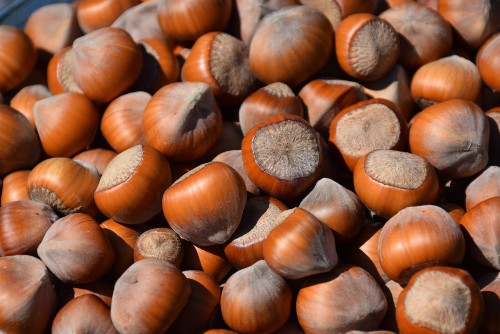
It should come as no surprise that nuts in the shell last longer than shelled nuts. The shell allows nuts to survive the winter and germinate in the spring. It acts as a natural protective barrier, preventing oxygen and moisture from reaching the kernel inside.
The advantage of the shell: Nuts that remain in their shells will last about 20–50% longer than shelled nuts. If you have the space and the patience, always opt for nuts in the shell for long-term storage.
Roasted vs. unroasted
Much like with coffee storage, roasting breaks down the natural oils in nuts and triggers the process of becoming rancid. Consequently, roasted nuts do not keep as long as unroasted ones.
Certain types of unroasted nuts can last up to four times longer than their roasted counterparts. If your goal is long-term storage, always buy raw nuts and roast them yourself when you are ready to eat them.
Whole nuts vs. pieces
Whole nuts will keep about twice as long as nut pieces. This is because pieces have a much larger surface area exposed to the air, which accelerates oxidation.
✅ For long-term storage
- Nuts in the shell
- Whole, raw nuts
- Unroasted
- Resilient varieties (cashews, hazelnuts)
❌ Consume promptly
- Shelled nuts
- Pieces and powders
- Roasted nuts
- Delicate varieties (pistachios, pine nuts, chestnuts)
Which nuts have the longest shelf life?
Some nuts are more delicate than others due to the types of fats they contain and their moisture content.
Nuts that spoil very quickly: Pistachios (especially at 30°C/86°F: only 0.25 months!), pine nuts, and chestnuts (maximum 1–2 months, even under optimal conditions).
Nuts ideal for long-term storage: Cashews, hazelnuts (up to 24 months at 0°C/32°F), and walnuts in the shell.
Storing nuts harvested from trees
If you are fortunate enough to harvest your own nuts (from walnut or hazelnut trees in your garden or on your property), you must dry them properly before storage. This step is crucial for preventing the growth of bacteria and mold.
Harvesting and drying process
- Harvest timing: Harvest the nuts when the husk (the green outer covering) turns brown and splits open naturally. The nuts will then fall to the ground. It is essential to complete the harvest before the first frosts.
- Immediate husk removal: After harvesting, remove the outer husk right away to prevent moisture from the husk from being absorbed into the shell. Wear gloves, as the husks will heavily stain your hands.
- Air-drying: Spread the nuts out on a screen, wire rack, or tray in a well-ventilated area, protected from rain and direct moisture. An attic, a ventilated garage, or a root cellar with good air circulation are all suitable locations.
- Drying duration: Allow the nuts to dry for 2 to 4 weeks, depending on the ambient humidity. Every few days, crack open a test nut; if the kernel is still rubbery or damp, continue the drying process.
- Testing for complete dryness: A properly dried nut will make a clear, rattling sound when shaken (indicating the kernel is moving freely inside). The shell should be shiny and a rich brown color, with no cracks or holes.
Accelerated drying: Use a preservation method appropriate for the specific variety and level of maturity. A thirty-minute treatment at a low temperature is insufficient to ensure complete drying or the elimination of *Salmonella*. For commercially dried nuts, avoid adding moisture and store them in sealed containers in a cool environment.
Criteria for a well-dried nut
- Kernel moisture content: 4–8% (slightly higher for hazelnuts and macadamias)
- Shell is shiny and intact
- Kernel is firm, not rubbery
- No musty or damp odor
- Clear sound when the nut is shaken
How to store nuts for the long term
Nuts are generally not an ideal food for ultra-long-term storage, unlike rice or dried beans. Even under ideal conditions, they will eventually go rancid. It is best not to store nuts for more than 2 years, and to stock only the amount you can rotate through within that timeframe.
Rotation principle: Use the FIFO (First In, First Out) system—consume the nuts that have been in storage the longest first. Always label your containers with the date of purchase or harvest.
Method 1: Freezer (recommended)
This is the simplest and most effective method for long-term nut storage. The low temperature drastically slows down oxidation and prevents mold growth.
How to proceed:
- Place the nuts in airtight containers or securely sealed freezer bags.
- Remove as much air as possible (use a straw to suck the air out of the bags).
- Label with the type of nut and the date.
- Store in the coldest part of the freezer (-18°C or lower).
- Freeze in small portions for easier use.
Shelf life: 2 to 3 years in the freezer. Nuts can be used straight from the freezer (they thaw very quickly) or left at room temperature for 15 minutes.
Method 2: Root cellar
Root cellars are ideal for storing unshelled nuts for a year or more. The cool (0–12°C) and stable temperature naturally preserves the nuts.
Specific challenges:
One issue with storing nuts in a root cellar is humidity. Most root cellars require about 80–90% humidity to preserve root vegetables. Nuts, however, require 55–70% humidity to maintain an ideal moisture content of 4–8% in the nutmeat.
Solutions:
- Create a separate area with dehumidification if you are storing a large quantity of nuts.
- Use containers that are well-ventilated yet rodent-proof (e.g., wire-mesh crates).
- Regularly stir or rotate your stock to promote airflow.
- Place food-grade silica gel packets in the storage area to absorb excess moisture.
- Monitor conditions using a hygrometer.
Method 3: Sealed containers with oxygen absorbers
Oxygen absorbers are packets containing iron that remove oxygen from the air. When used with an airtight container (such as a Mylar bag or a Mason jar with a Gamma-style lid), they create an anaerobic storage environment.
Advantages:
- Eliminates the oxidation that causes rancidity
- Prevents the development of pests (they cannot survive without oxygen)
- Can be combined with storage in a cool cellar
Oxygen absorbers can limit oxidation in sufficiently dry nuts, but they do not sterilize the product, nor do they justify a universal shelf life of two to four years. Cold storage and stock rotation remain the simplest ways to maintain quality.
Method 4: Preservation in honey
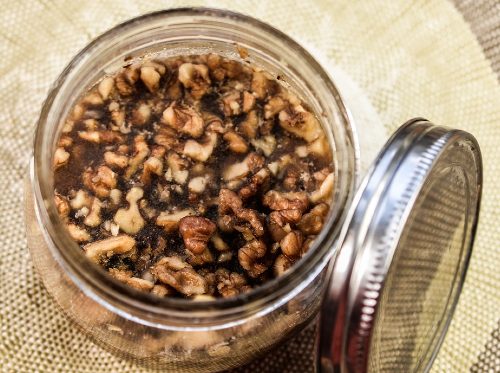
Nuts mixed with honey can be prepared in small quantities for prompt consumption. Honey’s own stability does not automatically extend to added ingredients: nut moisture and handling change the mixture. Do not use it as a home method for years of room-temperature storage.
Procedure:
- Use clean, dry shelled nuts (ideally lightly roasted for extra flavor)
- Fill a sterilized jar two-thirds full with the nuts
- Cover completely with high-quality liquid honey
- Stir to remove any air bubbles
- Close, date and refrigerate for prompt consumption; follow a validated recipe for any longer storage.
The stability of a nut-and-honey mixture depends on the moisture content of the ingredients. Honey does not guarantee a two-year shelf life for such a mixture at room temperature. Prepare only small quantities for consumption in the near future, and follow a validated preservation recipe if you intend to store them for longer periods.
Method 5: Canning in Syrup
Traditional recipes for canning nuts in syrup are not a validated method for room-temperature storage. The NCHFP (National Center for Home Food Preservation) no longer provides a canning procedure for nut kernels, with the exception of a specific process for raw (green) peanuts. For your nuts, opt for dry storage, refrigeration, or freezing; do not attempt to adapt a recipe intended for canning fruit in syrup.
Method 6: Refrigeration (Short- to Medium-Term)
For consumption within 6–12 months, the refrigerator is an excellent option that requires no special preparation.
Instructions:
- Store in airtight, food-grade glass or plastic containers.
- Place in the coldest part of the refrigerator (0–4°C / 32–39°F).
- Avoid storing near foods with strong odors (such as cheese or fish).
- Check monthly for any signs of moisture or mold.
Nut Stock Rotation and Management
Even with the best storage methods, proper management of your stock is essential to minimize waste and ensure that the nuts you consume are always fresh.
FIFO System (First In, First Out)
FIFO Principle: Always use the nuts that have been in storage the longest first. When you purchase or harvest new nuts, place them behind the older ones. Always label each container with the date.
Effective labeling system
Each container should indicate:
- Type of nut: Almonds, walnuts, cashews, etc.
- Condition: In-shell, shelled, raw, roasted, pieces
- Date: Date of purchase or harvest
- Quantity: Approximate weight
- Source: If relevant (garden, farmers' market, store)
Regular inspection
Even when stored properly, inspect your nuts regularly:
- Monthly: Quick visual check of the containers
- Quarterly: Open, smell, and taste a nut
- Every six months: Stir/shake the containers in the root cellar
Recognizing signs of spoilage
Knowing how to identify nuts that are no longer safe to eat is an important food safety skill.
Visual signs
❌ Nuts to discard
- Presence of mold (white, green, or black spots)
- Discolored shell or kernel (unusual yellowing or browning)
- Presence of insects or webbing
- Significant cracks in the shell
- Damp or sticky texture
✅ Nuts that are still good
- Uniform color characteristic of the variety
- Firm and crunchy texture
- Shell is shiny and intact
- No suspicious odors
- Clear sound when shaken
Scent test
Rancid nuts give off a characteristic odor:
- Smell of paint or varnish: A clear sign of advanced rancidity
- Sour or bitter odor: Oxidation of fats
- Musty odor: Presence of mold, even if invisible
- Lack of a fresh, nutty aroma: May indicate a loss of freshness
Taste test
If the appearance and smell seem fine, taste a small amount:
- Bitter or metallic taste: Rancidity
- Soft or rubbery texture: Excessive moisture or aging
- Unpleasant aftertaste: Early signs of spoilage
- Musty taste: Fungal contamination
When in doubt, throw them away. The savings are not worth the risk of food poisoning or exposure to aflatoxins.
Frequently asked questions about storing nuts
Can you eat nuts past their "best before" date?
Nuts do not have a strict "expiration date" like dairy products. The date provided is a "best before" date, which ensures optimal freshness. Nuts can still be consumed after this date, provided they have been stored correctly and show no signs of rancidity, mold, or infestation. Always rely on your senses: sight, smell, and taste.
Do frozen nuts lose their nutritional value?
No. Freezing is an excellent way to preserve the nutritional value of nuts. Omega-3 fatty acids, proteins, vitamins, and minerals remain intact. In fact, freezing protects these nutrients from the oxidation that occurs at room temperature. Once thawed, nuts also retain their crunchy texture.
How long can nuts be stored in the pantry?
This depends heavily on the temperature of your pantry. At 20°C (typical room temperature), shelled nuts will keep for 1–4 months, depending on the variety. Nuts in the shell can last 3–6 months. In a cool pantry (15°C or lower), you can double these timeframes. For optimal storage beyond 6 months, use a refrigerator or freezer.
Why do my nuts taste bitter?
A bitter taste or a rancid odor indicates spoilage—discard any such nuts. Never taste a product that appears moldy to check its condition. Rancidity and mold contamination are two separate issues; the absence of an odor does not guarantee that the nuts are safe to eat.
Should nuts be washed before storage?
No, never wash nuts before storing them. Water introduces moisture, which encourages mold growth. Commercially sold nuts are already cleaned. For nuts harvested from your own garden, simply remove the husks and any debris, then ensure they are completely dry. Wash nuts only just before consumption if you deem it necessary, then dry them immediately.
Are plastic containers suitable for storing nuts?
Yes, provided the plastic is food-grade and airtight. Glass is slightly preferable, as it does not absorb odors or transfer compounds. Avoid thin or non-food-grade plastics. For storage periods exceeding 6 months, opt for glass, food-grade Mylar bags, or vacuum-sealed containers. Always ensure that the container seals tightly.
What quantity of nuts should I store for my family?
Calculate your current monthly consumption and multiply it by the desired storage duration, taking into account the preservation method you have available. For example, a family that consumes 1 kg of nuts per month could store: 3 months (pantry) = 3 kg; 12 months (refrigerator) = 12 kg; or 24 months (freezer) = 24 kg. Start modestly and adjust based on your actual turnover. It is better to replenish your supply frequently than to end up with wasted, rancid nuts.
Conclusion: Fresh nuts all year round through proper storage
Storing nuts requires more attention than other staple foods due to their high content of beneficial fats, which are nonetheless vulnerable to oxidation. However, with the right techniques, you can enjoy fresh, nutritious, and flavorful nuts for months—or even years.
The three pillars of successful preservation:
- Temperature: The cooler, the better. The freezer is your best ally.
- Protection: Use airtight containers to block out air, moisture, and odors.
- Rotation: Implement a strict FIFO (First-In, First-Out) system and conduct regular inspections.
Remember that nuts are not like rice or dried beans—their shelf life depends on the quality of the product, its packaging, and how well it is rotated. Aim for a turnover period of 12–24 months at most, and only purchase or store what you can reasonably consume within that timeframe.
By investing a little time in proper storage organization, you will ensure a steady supply of high-quality plant-based protein, essential fatty acids, and valuable nutrients—a key component of any balanced long-term food storage strategy.
Next steps: Assess your current nut consumption, identify your preferred varieties, and start with a small test supply covering 3–6 months. Then, adjust based on your actual needs and the storage space you have available.
Sources and References
Local guidelines and product manuals take precedence for your specific situation. References consulted for this update include:
- NCHFP — Why older methods for canning nuts have been discontinued
Related resources
- Long-term rice storage: methods, containers and common mistakes
- Reference 2
- Long-term coffee storage: preserving freshness and flavour
- Food storage: nine practical principles
- Does bottled water expire? Storage dates and practical precautions
- NCHFP — Why older methods for canning nuts have been discontinued
Equipment to compare for your needs
Some links below are affiliate links: we may receive a commission at no additional cost to you. Products are examples by function, to choose according to your needs; buying the entire selection is unnecessary.