
In this article
A temporary shelter may limit outdoor exposure, but effectiveness depends on site, materials, weather and the person. Preserve existing ways to raise the alarm and protect yourself before building. A difficult hike does not automatically require branch construction; a suitable tarp or safe accommodation may meet the need more simply.
This page retains every stage and photograph of the source demonstration. It is not a structurally tested model or a verified PrépaCivile build. Personal observations belong to the original account; the adaptation explains stability, fire and use limitations before practical lessons. Explore shelter and evacuation resources.
Location, location, location
Location is an important shelter-building consideration. Examine:
- A safe environment without flooding, falling-tree or other environmental hazards
- Prevailing winds and orientation away from them
- An authorized, accessible site compatible with potential searches; discretion must not prevent responders locating you.
- Access to routes, travel, food and water for longer stays
The source considered hiding from hostile people. Do not make that a general preparedness priority: when lost, a known position and signals may support searches. An actual threat needs distance and assistance rather than deeper entry into dangerous terrain for camouflage.
Visual concealment guarantees neither safety nor protection. Suitable location and covering must also permit finding and leaving the camp. Do not accumulate materials solely to hide from people searching for you.
Different environments require different considerations; this article focuses on a woodland lean-to.
Assessing the demonstration’s site choice
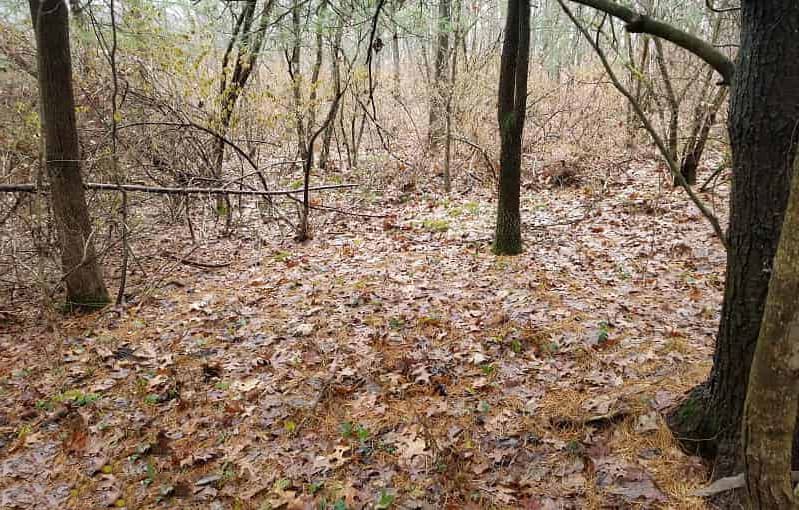
A suitable location matters.
Assess branches, water, wind, slopes and exit options without promising every need is immediately met. Nearby water may also mean flooding, dampness or unstable banks. Preserve safe access and site rules rather than prioritizing isolation or fuel.
An old fireplace or deer bed does not establish safety, permission or suitability for people. Conditions may have changed and wildlife may still use the route. Examine current hazards and instructions rather than treating traces as stability checks or guarantees of discreet rest.
Step 1: a firm foundation
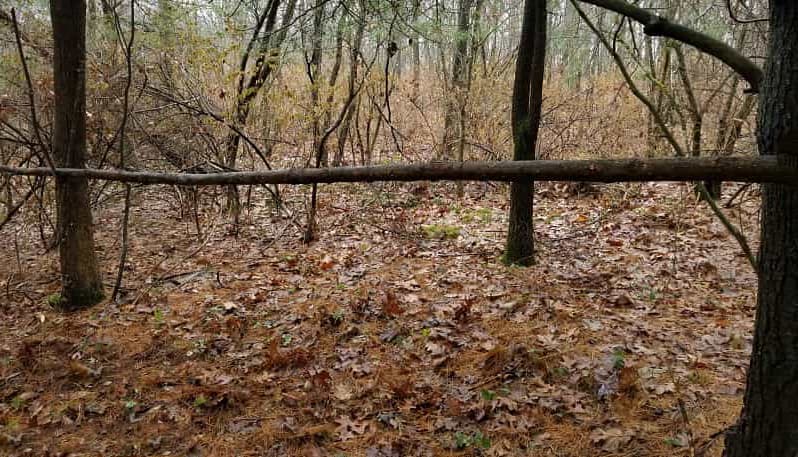
The source used fallen timber supported between a tree and a Y-shaped branch. Photos explain the arrangement, not its strength. Rotten wood, slippery support or heavy pieces can fail. Do not stand beneath an unverified support or treat a natural fork as a safe structural connection.
The shelter needs a strong, reliable main support.
Do not add a trench as a matter of course: it may alter drainage, damage roots and breach rules. The demonstration did not include this work. Choose an authorized site and suitable fastening without excavation or settling in a water-exposed depression.
Step 1.5: consider available equipment
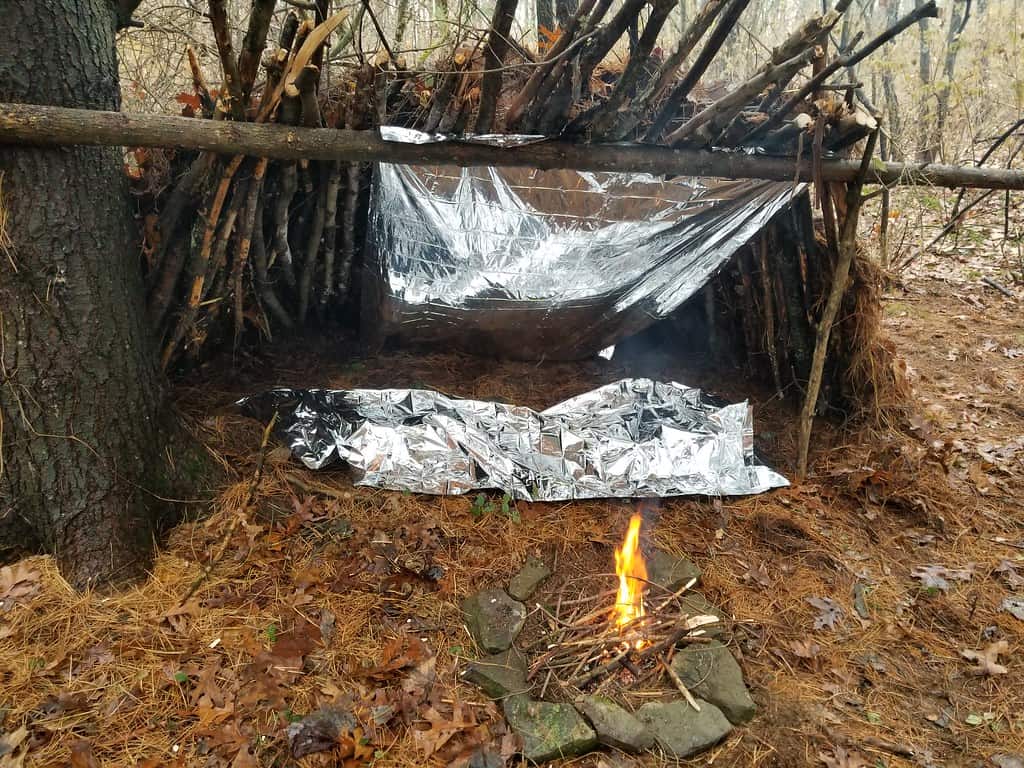
The source used two reflective blankets, one in the roof and one on the person. They guarantee neither adequate insulation nor safe fire reflection. Materials may be fragile or heat-sensitive. Read instructions and plan suitable ground and weather protection without making film load-bearing.
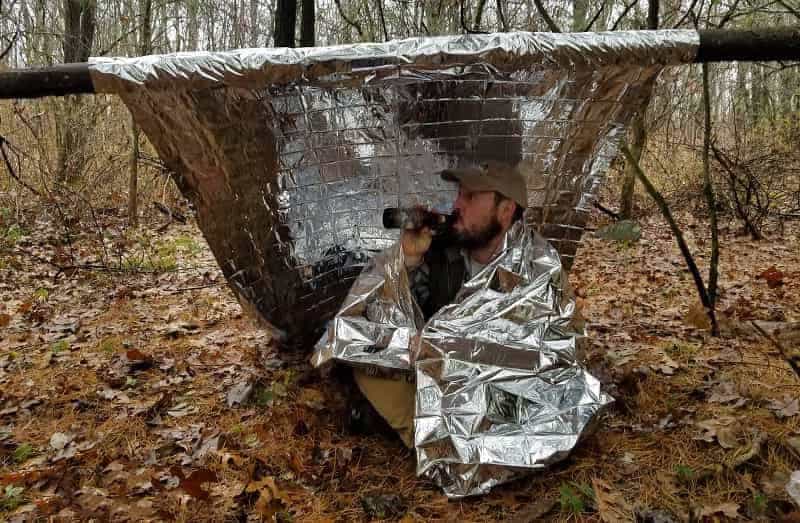
Besides emergency blankets, the demonstration used paracord, an axe, a knife and a survival shovel.
Available equipment is not automatically suitable. Cutting tools require skill and a work area; protected sites may prohibit activities. Plan only useful, safe tools; improvisation must not mean suspending loads or heating unsuitable material.
Step 2: collecting materials
Working one stage at a time need not be slow or laborious.
It focuses attention on one task; here the demonstration gathered roof materials together before assembly.
The account described initially collecting about half the estimated materials, then reassessing. That is an observation, not a sizing method. Useful quantity depends on stability, purpose and permitted materials. Avoid exhaustion and excessive collection rather than assuming an initial pile guarantees completion.
Deadwood is not automatically lawful or ecological to collect: it may support organisms or belong to protected habitat. It may also be weakened. Check rules and condition; cutting living wood is not a replacement without permission and competence.
The reported collection hour guarantees no equivalent time on another site, alone or in poor weather. Plan accessible protection beforehand and stop if fatigue, cold or light make continuing risky.
Step 3: beginning assembly
The source sought to simulate urgency by working quickly. Learning must not sacrifice stability checks or create artificial pressure. Keep exercises supervised, announced and stoppable, with a tent or other fallback. Speed does not validate structural safety.
The demonstration leaned collected branches close together against the main support. Thinner branches filled gaps between larger or strongly curved pieces. This describes the observed assembly without validating fastenings or covering-load capacity.
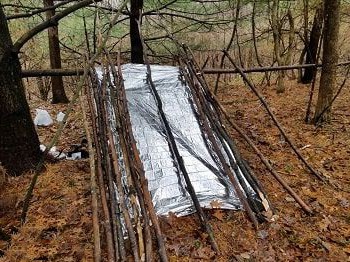
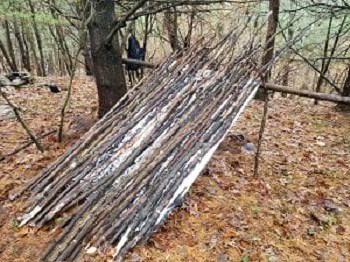
Unfastened leaning branches may move even during one night. Wind, movement and covering weight can displace them. Learn appropriate lashings and design safely; do not sleep beneath instability because the stay is short.
The account noted that poles could have been cut to uniform length for a longer stay rather than its overnight emergency example.
Step 4: side walls
The demonstration added short side walls for several reasons:
- Increasing overall protective coverage
- Side protection may limit some spray or wind without guaranteeing structural safety.
- Improving visual camouflage
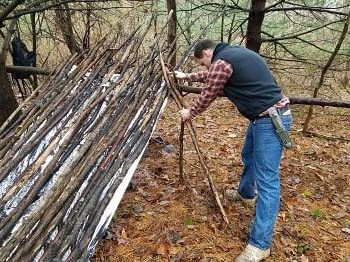
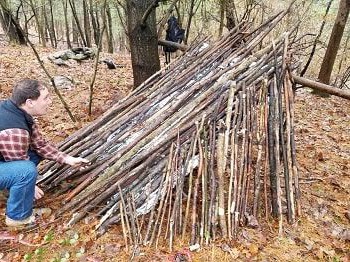
A side wall adds loads in other directions. Copying the roof shape does not validate support; check stability without anyone underneath and reject heavy or uncertain pieces.
Because these walls occupy another plane from the roof, their poles lean against roof-structure ends. The account described coordinating this arrangement as more awkward but possible.
The assembly direction is not universal guidance. It depends on supports and avoiding falling components. Photos do not replace learning fastening and load checks.
Step 5: covering
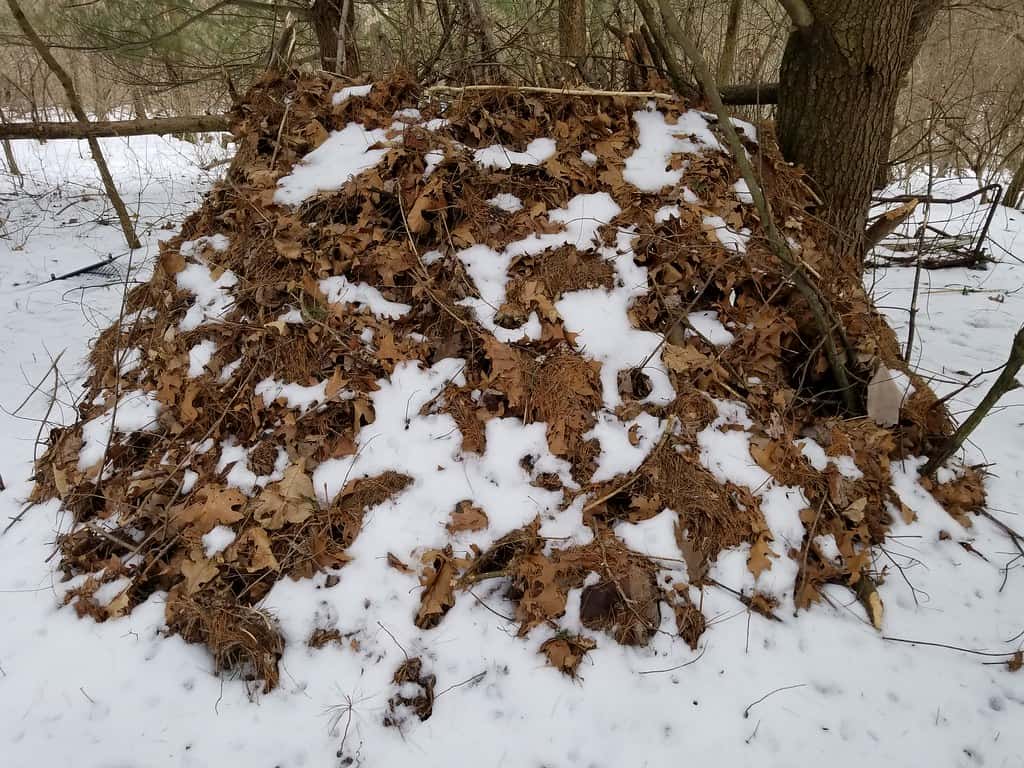
Leaves and needles illustrate a protective principle without guaranteed waterproofing or insulation. Natural materials may contain moisture, insects or irritants. Do not remove protected ground litter or exceed support capacity; wetness and snow can substantially increase weight.
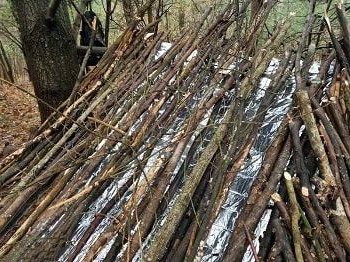
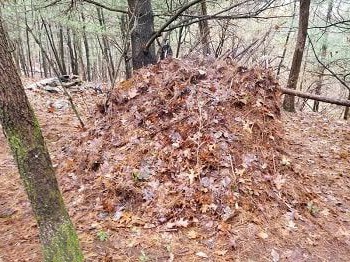
The account described adding a larger pile at the base to stop upper material cascading down, and pressing leaves and needles into the lean-to’s branches to help retain them.
Fire near the shelter: correcting the example
Keep any permitted fire well away from sleeping arrangements.
The source placed a small fire nearby and considered wet leaves almost impossible to ignite. That reasoning is unsafe: wet material may dry and burn, while heat and sparks reach films and clothing too. Do not reproduce the arrangement. Any fire needs permission, distances and supervision, away from the shelter; it is not necessary for every protection and must never be lit inside this assembly.
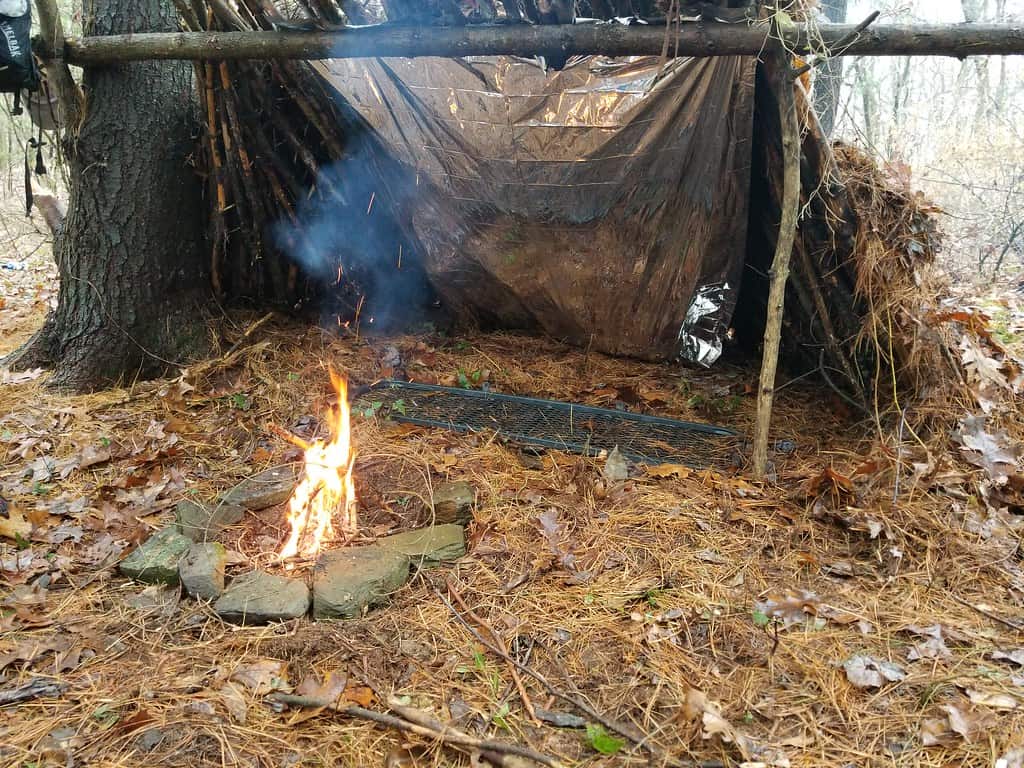
The finished shelter
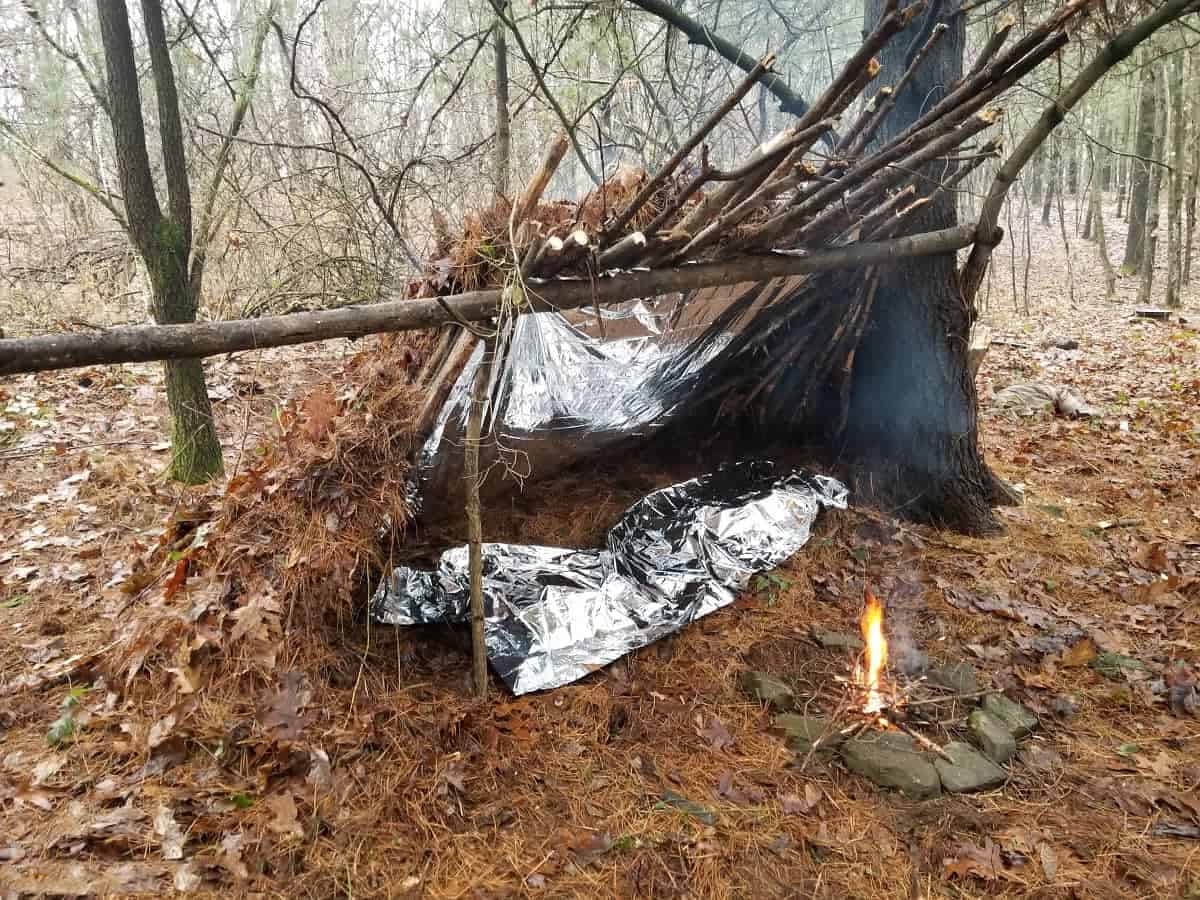
Returning two months later
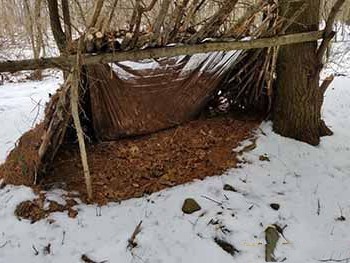
The return is a source report, not independent testing. A dry patch on one visit proves neither safe temperature nor stability throughout two months. Recheck supports and conditions before use without entering an aged structure to test strength.
Reported absence of maintenance does not validate two-month resistance. Wood and fastenings change even when leaves remain. Cover repair does not restore structural stability. Plan authorized dismantling and site restoration rather than leaving an unattended structure.
Dry ground matters but does not alone prove the shelter “does the job.” Ground insulation, wind, rain, temperature and condition of the person matter. A photograph or visit guarantees no dry, warm night under other conditions.
Optional changes
The original demonstration kept the shelter basic. More elaborate online builds may reflect experienced builders’ skills rather than a suitable model for an untrained reader.
A longer stay needs reassessment of permission, structure, humidity, needs and assistance. More material does not guarantee greater safety. A suitable tent or other accommodation may be preferable to increasingly heavy modifications.
- An A-frame changes loading and access; do not create it by stacking another wall without suitable design.
- A second layer also adds weight, particularly when wet. Assumed insulation does not justify overload or a doubtful support.
- An elevated platform introduces fall and collapse hazards. It is not automatically easy or comfortable; prefer suitable ground insulation and purpose-designed support.
- Branches and foliage change as they dry and may be unlawful to collect. Weaving does not guarantee a durable roof; assess actual conditions and alternatives.
Using resources carefully
The demonstration reported using deadwood with a friend. This is not automatically authorized, and an emergency creates no general permission here to collect or cut. Planning a safe outing with carried resources and rescue options reduces major improvisation.
To limit tree damage, the source author recommended only fallen deadwood for practice. This preference is not permission: deadwood may be protected habitat and collection prohibited. Obtain permission and choose an exercise respecting site rules.
For practice, obtain permissions and limit harm, including to deadwood. In actual difficulty, seek protection and raise the alarm without extra risks from unfamiliar cutting or construction. The account does not suspend local rules.