
In this article
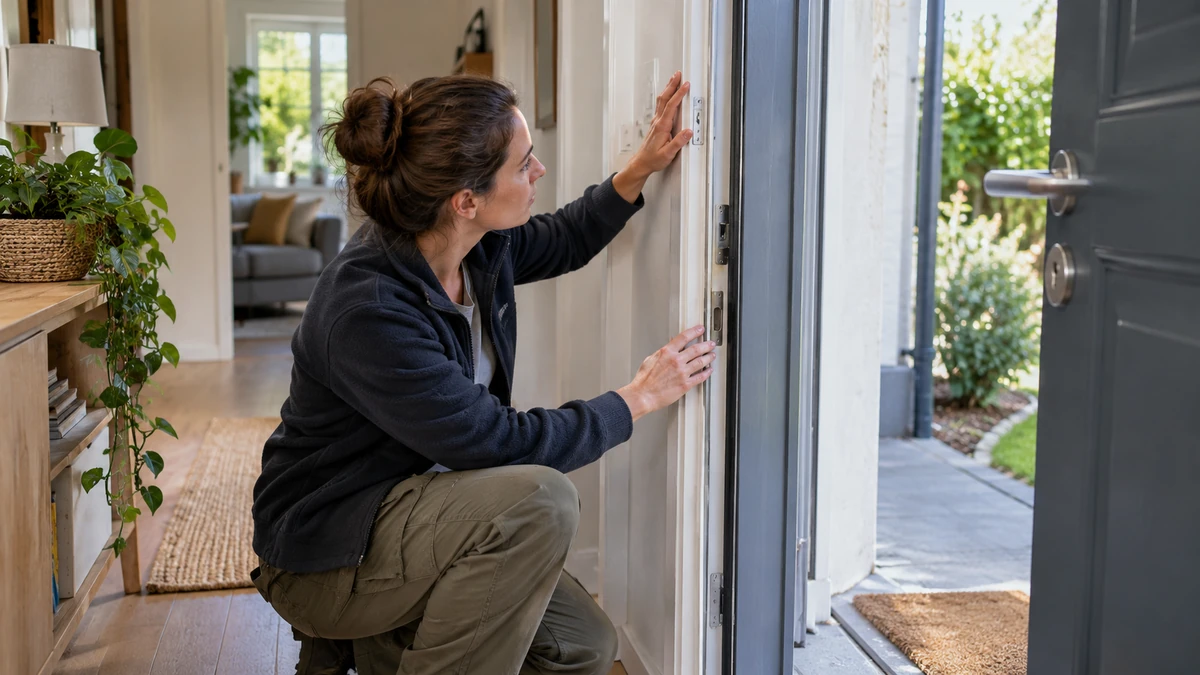
Household preparedness includes water, food, skills and protecting the home. Reviewing doors, windows, lighting and habits can reduce some opportunities for intrusion. This guide offers a preventive approach suited to available resources and occupancy status: homeowner, tenant or condominium owner. It is neither a guarantee against theft nor a confrontation plan.
Protecting supplies and property can help, but people's safety takes priority over recovering possessions. Burglary must not be presented as an inevitable consequence of disaster. Everyday prevention remains relevant regardless of a crisis scenario.
Firearms are not a prerequisite for home protection to recommend to the public. Do not build a plan on the assumption that laws will stop applying. For households, prioritize suitable locks and closures, communications, options to leave or create distance, and calls to emergency services. Avoid seeking confrontation to protect objects.
Prevention combines several measures and their maintenance. No product, wall or system alone guarantees family safety. Changes must also preserve fire protection, accessibility and other occupants' rights.
Part 1: Understanding burglars
Understanding opportunities for intrusion helps review habits. A person's appearance, age, income or illness, however, cannot predict their behaviour. Examine observable facts and local sources rather than a uniform portrait of offenders.
Intrusion can occur by day or night, with occupants present or absent. Circumstances vary by area and study period. Television police dramas are not data; foreign statistics do not automatically describe neighbourhood risk.
Historical statistics: what cannot be asserted without a source
- Breaking and entering and a violent home invasion are not necessarily the same statistical category. Before using a percentage of affected households, check the population, period and definition. A statistic cannot predict what will happen to your home.
- The claim that “90% of doors are vulnerable to bump keys” is not a universally verified measurement. Resistance depends on the lock, door, frame, installation and test conditions; one technique does not describe every entrance.
- The historical “10 a.m. to 3 p.m.” range does not define safe hours outside which intrusion cannot occur. Check the period of local data before generalizing a time window.
- A low income does not identify a person as an offender or conclude that a particular dwelling is at risk. Exposure, site characteristics and prevention opportunities deserve a separate analysis, without stigmatizing occupants.
- Someone known to the occupants can also be involved in an intrusion: familiarity does not replace access precautions. To interpret a figure about known offenders, check the relationship definition, location, period and primary publication. Assess observable actions rather than group membership.
- The same applies to the old 65% figure for violent intrusions: without a period of time or identifiable population, it does not describe the present risk of a home. A known relationship does not guarantee safe interaction.
- The historical proportion of 18% of victims having let the offender in is not established here. Verifying identity from a distance remains a useful precaution without making victims responsible for the offence.
- The old reference to 30% of entries through an unlocked opening is not presented as a current rate. Locking access points where appropriate and checking operation remains relevant without a universal percentage.
Three approaches mentioned in the prevention texts
Three approaches can be considered: highly prepared offenders, selection of accessible targets and immediate opportunities. This framework helps examine a property’s vulnerabilities without being an exhaustive scientific classification. Several behaviours may coexist.
An accessible opening or visible object can create an opportunity, without the possibility of assigning a proportion here to each mode of intrusion. The aim of prevention is to reduce opportunities and facilitate alerting, not to make the neighbour's home more attractive or to designate social groups.
1: Professionals
Some offenders plan their actions; the text supplies no data to calculate their share. Do not confuse more extensive preparation with a stable category whose actions can be predicted.
A target with valuable assets may attract interest, but affluent neighbourhoods are not the only ones involved. Selection depends on access and other circumstances, not just the apparent value of a house.
Fences, alarms and cameras provide different functions. None is insurmountable, but that does not establish they are useless against every organized offender. Check coherence, installation and maintenance rather than seek absolute protection.
The degree of preparation does not guarantee an absence of violence. Even someone apparently seeking to enter and leave discreetly can be dangerous; do not approach to test their intentions.
Organized behaviour does not establish that a person will not panic or be armed. Planning distance and calling for help remains safer than relying on a supposed profile.
Substance use, appearance and health cannot establish that someone is a ‘professional’ offender or dangerous. Observe specific actions, possible threats and options for reaching safety without diagnosing intent from appearance.
Areas concerned: any property may present vulnerabilities; a rich neighbourhood is not enough to predict the mode of intrusion.
Measures to be considered: protection of access, discretion, detection and family plan, without promising that only one device will arrest all perpetrators or that nothing could deter them.
2: Thieves
Other offenders may identify easy entrances without specialized means. This possibility calls for checking routines and closures rather than imagining a uniform personality.
Visible objects and signs of absence can reveal information about the home. Target selection nevertheless varies; do not present every household appliance as evidence of wealth or assume removing it eliminates risk.
Making access harder can reduce some opportunities without ensuring the household is spared. The goal is to protect the home and neighbourhood, not supposedly shift theft to a less-equipped house.
Areas concerned: do not reserve this hypothesis for middle-class neighbourhoods; examine the actual exposure and access of each dwelling.
Possible measures: maintained closures, suitable lighting and detection. A dog is not a certified system or equipment to be acquired solely for this purpose.
3: Opportunists
An opportunity can be taken with little preparation. That does not prove such offenders are systematically most dangerous or dependent on a substance. Avoid judgement based on supposed substance use; an observed intrusion is more relevant than an imagined profile.
An accessible door or window can create an opportunity. It does not mean no reconnaissance occurred or that a method can be distinguished from the street. Maintaining functional closures and reporting damage helps reduce some vulnerabilities.
Surprising someone during an intrusion can provoke an unpredictable reaction. Do not try to test their calm, detain them or recover property. Creating distance and alerting emergency services where possible is the guiding principle regardless of the label assigned to the offender.
Areas concerned: student housing, modest or affluent neighbourhoods can all be affected. Prevention constraints differ; avoid associating the status of occupants with an alleged danger in the neighbourhood.
Measures to be examined: access properly locked and organization of absences, without believing that a sign of presence guarantees to dissuade any offender.
Part 2: Reducing Opportunities for Intrusion
First identify opportunities you can reduce without turning the home into a fortress. Knowing limitations and keeping a usable exit is as important as adding a lock.
Some of these tactics may seem obvious. However, some things are likely to endanger the safety of your home without you being aware of them, including your use of social networks.
1 : Hide evidence of the presence of valuables
Many of us leave curtains open during the day to let in light. Those windows can also show potential offenders the valuables inside.
A visible screen or appliance may attract attention without establishing what is elsewhere in the home. If needed, adjust layout or window coverings while preserving daylight, ventilation and exit access.
The same applies to expensive decorations and gadgets in your home.
Packaging left in clear view can reveal recent purchases. Managing it is ordinary discretion, without assuming offenders inspect every piece of waste.
You just bought a new laptop? Don't throw the box in the trash, where everyone can see it! It's a business card of what you have inside.
Practical advice
- Keep valuables away from windows and doors.
- Fold and deposit the cartons according to the collection rules, without unnecessarily displaying recent purchases. It is not a matter of keeping bulky packaging indefinitely or blocking an exit to hide them.
2: Social networks
You probably have already heard that you should not publish information about your holiday plans on social media.
Before posting, ask who can see dates, location and images. You do not need to stop sharing experiences; delaying some posts until after returning reduces information about absence.
Posts may reveal absence or possessions. The extent of this use cannot be calculated here from an old survey example; a precaution can remain useful without claiming every post leads to theft.
The figure "four out of five burglars use social networks" is not included as a general rate: the survey, sample and questions should be identified. A survey of detained persons would not automatically represent all intrusions.
A photo may show objects, an address or a location, and a series of messages may specify a period of absence. Examining the combined information is more useful than an uncontextualized figure.
Do you think your privacy settings will protect you?
Those settings help, but do not control screenshots, sharing or every future access to accounts.
Also protect accounts with strong passwords, updates and available additional authentication. Do not claim every account can easily be hacked; limiting sensitive information is a complementary precaution.
Do not post
- Vacation plans.
- Updates to your status during your vacation.
- Photos showing valuable objects in your home.
- Information on recent major purchases.
3: What an animal can and cannot contribute
Accounts from convicted people mention dogs among the things they noticed. Without an identifiable primary survey, measured effectiveness or recommendations for a type of dog cannot be inferred. An animal may signal movement without guaranteeing protection.
Responses vary with the animal, situation and training. Slogans contrasting protection of owners and property do not describe every dog. Animal welfare, bite prevention and the keeper's responsibility remain essential.
A dog may bark, hide, approach or react otherwise; not make it the basis of an intrusion plan. Provide for safe containment, transport and care during absence or evacuation.
Don't buy a dog just because you live in a low-income neighbourhood or fear an intrusion. Adoption involves care, time and sustainable means. Instead, start with the accesses, lighting and contact plan suitable for the accommodation.
Practical advice
- If you have a dog, prioritize humane training for recall and handling without endangering visitors, neighbours or responders. Do not encourage aggression or treat barking as proof of intrusion.
- A “Beware of the dog” sticker is not protection by itself. Do not present false signage as equivalent to a working device; examine simple measures actually available instead.
4: Security system
An alarm can detect certain events and notify designated people, depending on sensors and active services. It does not physically block entry or guarantee no break-in. Define what is monitored and what happens when it activates.
The former proportion of half of the perpetrators deterred by an alarm does not constitute a demonstrated rate of effectiveness for your home. The responses to a survey and the results of an installed device are different measurements.
Alerting and response depend on transmission, verification and available resources. Do not promise an alarm will always be followed immediately by police attendance.
Historical times of eight to twelve minutes on site and seven minutes for police are not retained as applicable averages without local sources and definitions. Do not use them to calculate an intervention window or assume a set number of minutes is safe to wait.
The level of safety of a system depends on the model, its installation, accounts and maintenance. A possibility of circumvention does not render any alarm unnecessary, but invites to examine dependencies and alternatives.
It is therefore not justified to promise a 50% reduction in the risk of intrusion. Choose an alarm according to needs, recurring costs and actual use, in addition to physical measures and family plan.
Practical advice
- If a complete system is beyond the budget, strengthening habits, access points and lighting may help. A sign alone provides neither detection nor transmission; do not buy one as a supposedly equivalent alarm replacement.
- A DIY installation is not automatically more secure against hacking than a professional one. Choose according to required skills, instructions and applicable requirements, then check settings and authorized access.
- Consider backup transmission and battery autonomy where they meet a need. A cellular connection can supplement wired or Internet service, but also depends on power and coverage. Test actual behaviour during an outage.
5: CCTV Security Cameras
Alarm and camera provide different functions that can complement each other. A camera can contribute to detection, verification and documentation, depending on its settings; the deterrent effects are neither identical nor guaranteed.
After all, thieves can simply hide their faces.
Images can help document an event, but usefulness depends on framing, quality, retention and compliance with rules. Do not present them as a certain way to identify or convict an offender.
However, security cameras can be an excellent tool when used in combination with alarm systems.
For example, a motion notification can lead to checking the image from a safe place, without going out to investigate. It can also come from an animal, from a household member or from a change of light. Plan how to interpret the alert and when to contact the appropriate services.
An uncertain image never justifies threatening a person or reacting with a weapon. The aim is to avoid confrontation and to communicate reliable facts, not to choose a target remotely.
An entrance camera or peephole can show a visitor without opening the door. A delivery or service visit can also be checked through a known official channel, rather than calling a number the visitor supplies as the only proof.
The image and a remote conversation bring elements, not a complete confirmation of identity or intention. If a doubt persists, do not open and check otherwise; an outfit or logo alone does not constitute an access permit.
Outdoor Nest Cam: check the exact generation, services still operating and required subscriptions before comparing an offer. Similarly named devices may have different features. A camera guarantees neither immediate intervention nor prevention of every intrusion.
Historical characteristics to be verified on the exact model
- Live viewing: check power, network and access conditions. Round-the-clock viewing does not necessarily include continuous recording.
- Activity Notifications: Check categories, settings, subscriptions and network dependencies. A notification is not a guaranteed automatic emergency call.
- Outdoor resistance: check the model's rating and temperature limits, as well as protection of its connection.
- Microphone and speaker, if any: check available functions and applicable privacy rules; do not record conversations of others without distinction.
- Installation: follow mounting, power and account requirements. Easy installation does not remove the need to secure digital access and respect shared spaces.
6: Situational awareness
Knowing the normal operation of access helps to identify damage or change to be verified. Vigilance is not a permanent surveillance of people; rely on facts rather than on their appearance and keep habits compatible with the life of the neighbourhood.
The text does not provide statistics to say that almost all offenders spot the target in advance. A verification routine remains useful for access and equipment, without having to attribute an intention to each visit.
A request at the door may be legitimate, mistaken or deceptive. Responding without opening and checking independently where needed maintains distance. Do not treat every wrong address as evidence of burglary planning.
Pay attention to:
- Utility workers: when access is requested, verify the visit with the organization using its usual contact details. There is no need to question every worker in the street; distinguish an entry request from work observed at a distance.
- Door-to-door callers, charities and religious or political groups: you can decline a visit or verify an organization without opening. Do not treat their activity as proof of an offence or call emergency services solely because of group membership.
- An unfamiliar vehicle or presence: waiting or tinted windows do not prove reconnaissance. If specific actions concern you, describe them objectively to relevant services without following, filming closely or confronting anyone. Avoid publicly sharing licence plates or unsubstantiated accusations.
- A request to use the toilet: you can keep the door closed and direct someone to an accessible public place if you know one. The need may be genuine; do not automatically treat it as attempted theft. State an access boundary without accusation.
- Damaged lighting or detector: check the fault and arrange repair without unreasonable delay. The historical anecdote of a friend burgled two days after bulbs were unscrewed is neither a new PrépaCivile account nor proof of a causal link in every case.
- Window or door found open: check habits, offenderized persons and operation. If traces of break-in are present or an intrusion is possible, do not enter to search for yourself; get away and contact the police. A change does not alone prove the intention of a visitor.
7 : When you're away
An absence, whatever the season, deserves a few checks. Without identifiable local data, do not classify summer or holidays as universally the most at risk. Instead, adapt the preparation to the duration of the departure and to the needs of the accommodation.
Simulating certain habits and organizing housing monitoring can limit the signs of absence, without any certainty of deterrence. The neighbour who helps must not take on the role of an intervention agent or put himself in danger.
Practical advice
- Use a timer or connected lighting according to needs and instructions. Either can help; a phone is not necessary to simulate occupancy. Check Internet dependence and do not leave a heating appliance running to create an illusion of presence.
- Arrange mail collection: also ask a neighbour to remove leaflets left at the door.
- Leave a car parked in the driveway.
- Do not rely on a pair of shoes as a security device. If retaining this old example, place nothing that obstructs access, creates a trip hazard or breaches shared-space rules.
- Arrange snow removal and access checks with someone trusted. Occasional footprints do not replace maintaining an exit or actual checks on the home.
- A device simulating lighting or an audio program can be an option, without any guaranteed effect. Do not unnecessarily leave a TV or device to operate without examining safety, consumption and instructions; a simple timer may be sufficient for the intended need.
- Tell trusted neighbours and agree precisely on checks: mail, access, reporting and contact methods. Mutual support can complement measures, without proof here that it is always the greatest deterrent. If uncertain, ask them not to enter a home possibly occupied by an intruder.
Part 3: Examining access points and areas of the home
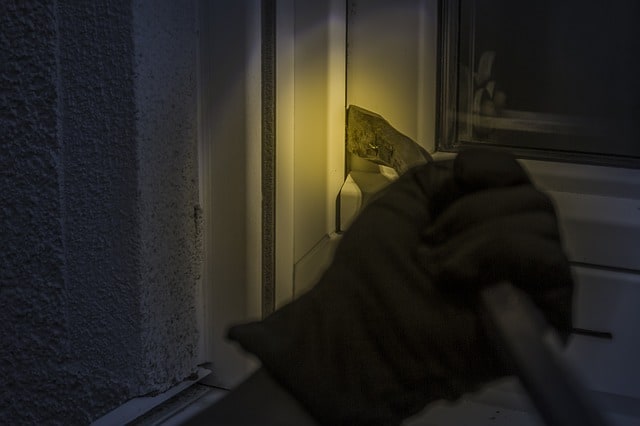
Home protection is often described as “installing a security fence” or “improving door locks”. These steps matter, but protection involves understanding and securing the home's entry points.
Seek coherence across the home: ordinary access points, shared spaces and exits must work. You cannot protect every imaginable point of attack; choose proportionate measures that add no danger for occupants or responders.
Let's take a look at the different ways to secure your home:
Perimeter and barrier
Many people confuse the terms “perimeter” and “barrier”.
Both concepts can help interpret a site, but they are not a universal residential defence obligation. A zone describes a space; a measure addresses a specific need.
- Perimeter: separate areas outside and inside your home
- Barriers: devices or arrangements that restrict certain accesses, with safety, use and evacuation constraints to be respected.
The four zones below are one possible framework, not a standard requiring four protective lines for every home. Apartments, houses and accessible residences need different solutions.
1st Perimeter:
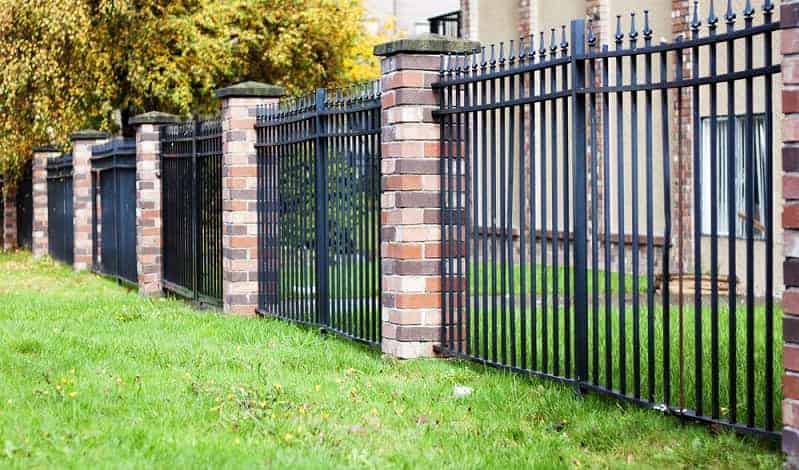
For most houses, The first perimeter is the property boundary.
A fence can define access if permitted and suited to the site. Greater height does not ensure security and may obscure views or impede an exit; check rules and design before construction.
2nd Perimeter:
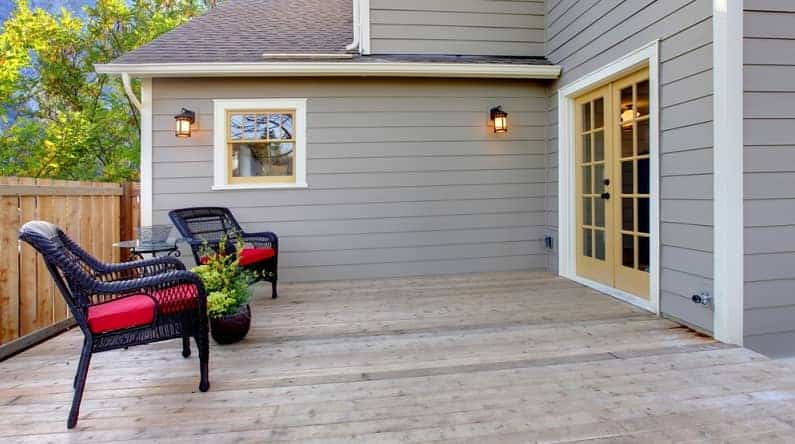
The next perimeter area is the yard itself.
Maintaining vegetation near access can improve visibility. It is not a question of removing any tree or obstacle: account must be taken of shade, neighbourhood, security and maintenance rules.
We enjoy trees and greenery in a garden; prune them and keep them clear of windows and doors. Avoid providing concealment for someone trying to open a window.
Lighting, detectors and a driveway alarm can signal movement without forming a physical barrier. Adjust them to avoid nuisance and repetitive alerts; an animal does not replace controllable equipment.
LED security lights with motion detection
Motion-activated LED security lights
Affiliate links. Check the model, dimensions and operating requirements; a product name does not establish suitability for your circumstances.
Canada — Amazon.ca
LEPOWER Lampes de sécurité LED avec détecteur de mouvement pour l'extérieurView on Amazon.caWireless driveway alarm
Wireless driveway alarm
Affiliate links. Check the model, dimensions and operating requirements; a product name does not establish suitability for your circumstances.
Canada — Amazon.ca
Alarme d'allée - Capteur de mouvement longue portée de 1,2 km - 1 récepteurView on Amazon.caFrance — Amazon.fr
Alarme de sécurité d'allée sans Fil - 1 récepteur et 2 détecteursView on Amazon.fr3rd Perimeter:
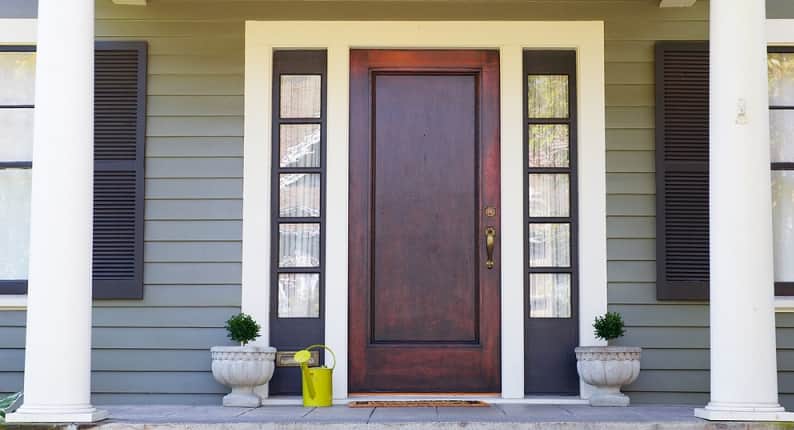
The third perimeter is outside your home.
If an intruder manages to cross the first two perimeters without being detected, he will then head to your home.
The barriers here are your windows and doors.
4th Perimeter:
If an intrusion occurs, the plan must consider a safe exit or creating separation behind a door according to circumstances. A room identified beforehand may be an option, without requiring anyone to reach it along a dangerous route.
A refuge room does not require supposedly bulletproof walls or combat furniture. Ballistic performance needs specialized design and testing; it cannot be inferred from ordinary materials or furniture. Prioritize communication, accessibility and avoiding confrontation.
Perimeters of apartments
In an apartment building, the perimeters will be very different. The first perimeter often corresponds to the entrance or driveway leading to an emergency exit. For apartments on the ground floor, the perimeter can be the sidewalk itself.
Common spaces and evacuation routes cannot be freely altered by an occupant. Do not place barbed wire or obstacles in an alley, entrance or exit. Instead, discuss with the manager the offenderized access controls, lighting and residents' needs.
Identifying access points helps discuss possible improvements with those responsible. Adding barriers is not always beneficial: a difficult exit or obstructed responder access can worsen another risk. The aim is safe use of the whole building.
How to secure windows
The windows have different resistances depending on the glazing, frame and installation. An ordinary appearance does not make it possible to know their performance at break-in.
A defective latch or frame deserves a repair, but resistance is not derived solely from the price or material of the latch.
Do not test a window yourself by hitting or forcing it. Check the characteristics and condition with a competent person if an improvement is envisaged.
This will cost money, but consider the methods below to make your windows more resistant to burglary.
Window locks
Suitable locks can improve an access point, but cost and simplicity vary by model and building. Before adding one, check compatibility with the opening needed for evacuation.
These devices may limit certain opening modes, without being infallible or guaranteeing a duration of resistance. Their effectiveness depends on the attachment and the entire window.
There are several different options for window locks. Some people choose to use multiple locks on windows.
Locks or pins must suit the model and instructions. Do not deem every plastic component inadequate or add multiple locks that cannot be operated quickly from inside when needed.
Sliding window lock
Sliding-window lock
Affiliate links. Check the model, dimensions and operating requirements; a product name does not establish suitability for your circumstances.
Canada — Amazon.ca
Prime-Line Products U 9809 Serrure de fenêtre en vinyle, zinc moulé sous pressionView on Amazon.caLocks for sliding windows
Sliding-window locks
Affiliate links. Check the model, dimensions and operating requirements; a product name does not establish suitability for your circumstances.
Canada — Amazon.ca
Lot de 10 verrous de fenêtre pour fenêtres verticales et horizontales, verrous de fenêtre coulissante, butées réglables en aluminium, installation sans…View on Amazon.caFrance — Amazon.fr
Shop Square Lot de 10 serrures de fenêtre et de porte coulissantes en aluminium réglable, utilisé pour rail de 0,9 cm, butée de porte de sécurité,…View on Amazon.frImpact resistant glass
Adapted glazing can provide additional strength for a specific need. Request a documented performance and a quote; replacement is not automatically necessary or possible for all dwellings.
The impact resistance varies depending on the glazing and its mounting. A classification does not prove the impossibility of crossing or a resistance equal to all the stresses.
A noise may be noticed, but does not guarantee that a neighbour will hear or intervene. Physical protection and alerting should be considered as different functions.
Ballistic-rated glazing is a specialized project requiring an established need. “Bulletproof” does not mean absolute protection; do not apply this choice to every residential window.
Resistance to break-in, debris impact resistance and weather performance meet separate criteria. A product does not automatically protect against a hurricane or tornado because it resists certain shocks. Check the exact performance, frame and installation.
Film for window
Film can change glazing behaviour according to the product and attachment. It does not turn every window into a break-in barrier. Distinguish fragment retention, privacy, solar protection and documented resistance: these are different functions.
Transparent safety film
Affiliate links. Check the model, dimensions and operating requirements; a product name does not establish suitability for your circumstances.
Canada — Amazon.ca
BDF S8MC - Film de fenêtre de sécurité et de protection 8 mil Transparent - 30 cm x 4,3 mView on Amazon.caFrance — Amazon.fr
BDF S8MC Film de sécurité pour fenêtre Transparent 30,5 x 4,3 mView on Amazon.frInstalling bars or grilles:
A grille can restrict access, but appearance and cost are not the only criteria. First check whether the opening is part of the home's means of escape and which requirements apply.
However, I would like to warn you that these same bars can be a danger, for example by trapping you in your home during a fire.
If a grille is allowed on an opening needed for evacuation, its inside release must meet applicable requirements and remain usable by occupants. Have design and escape options checked; adding a simple latch does not establish compliance.
Reject an anti-theft improvement that prevents escape during a fire. Explain and test actions without placing anyone at height or at risk of falling.
How to secure doors
An entrance's resistance depends on the whole assembly: door, frame, fixings, lock and any glazing. A poorly installed reinforced door does not correct every weakness; examine elements together.
Screws and anchors vary according to the building. Do not assume that all doors are based on a few small screws; have the condition and compatibility of any modifications evaluated.
Learn more about preventing a door from being forced in.
The historical 7.6 cm reference is not a universal installation rule. Length, anchorage and materials must suit the actual substrate without striking hidden utilities or altering a fire door. No frame-and-door combination makes forced entry practically impossible under every condition.
If you cannot make this change (for example if you are a tenant), consider these cheaper and less invasive options:
- A suitable, correctly attached strike plate can improve some assemblies. Screws and anchors depend on the substrate and manufacturer; do not extrapolate a resistance time or alter a rental door or fire safety closure without agreement.
- A supplementary bar or device may obstruct entry but also escape and responder access. Check authorized use and unlocking options rather than promise quick installation prevents every forced entry. Reject systems incompatible with evacuation.
Supplementary security latch
Door safety bar
A deadbolt can form part of a suitable lock assembly. Its quality alone is insufficient: frame, alignment and anchorage matter, and unlocking from inside must remain compatible with occupant safety and building requirements.
Many people opt for "smart locks", which use codes or your smartphone to unlock the door.
Connected locks span many generations; describing them all as an emerging technology is no longer relevant. Compare power, any mechanical backup, code management, updates and supported services for the exact model. Connectivity is neither proof of weakness nor a guarantee of security.
Single-cylinder deadbolt
Single-cylinder deadbolt
Affiliate links. Check the model, dimensions and operating requirements; a product name does not establish suitability for your circumstances.
Canada — Amazon.ca
Kwikset Pêne dormant monocylindre 660 avec SmartKey® en chrome satinéView on Amazon.caYale Assure Lock
Yale Assure lock
Affiliate links. Check the model, dimensions and operating requirements; a product name does not establish suitability for your circumstances.
Canada — Amazon.ca
Serrure Yale Security Deadbolt Lock SL avec Z-Wave, serrure de porte sans clé en nickel satiné avec clavier électronique à écran tactile pour code,…View on Amazon.caSliding patio doors
Check a sliding door's lock, tracks and glazing. Do not attribute particular preferences to offenders; begin with the installed device's condition and operation.
The resistance varies greatly depending on the system. A lock that no longer works must be repaired; a recent lock is not automatically fragile and does not dispense maintenance.
The visibility from the outside may be reduced if necessary by appropriate arrangement, without masking the exits or preventing ventilation required. Visible assets do not predict a certain intrusion.
To secure your sliding doors
- Film: choose according to purpose. Clear safety film does not hide possessions; some privacy films depend on lighting and may allow views inside at night. Check performance and distinguish discretion from mechanical resistance.
- Glazing: Examine an improvement if the risk, budget and building warrant. The desired strength must be documented for the installed assembly; there is no general obligation to replace all sliding doors.
- Additional lock: check compatibility with the model, intended use and evacuation. A loop lock or double-bolt lock is not automatically better suited and must not complicate escape.
- Security bar: a suitable device can restrict sliding but must remain accessible and permitted. An improvised dowel is not a universal solution; plan rapid removal without tools if the exit is needed.
- Anti-lift device: ask the manufacturer or installer for a solution compatible with the tracks and maintenance. A component screwed in without checking can interfere with operation or damage the assembly. Do not select a device from a general description alone.
Privacy film
Privacy film
Affiliate links. Check the model, dimensions and operating requirements; a product name does not establish suitability for your circumstances.
Canada — Amazon.ca
d-c-fix 346-0276 Film autocollant pour vitrage Motif Perle 45 x 198 cmView on Amazon.caFrance — Amazon.fr
d-c-fix Film pour fenêtre Anti Regard Perle 45 cm x 2 mView on Amazon.frPatio door foot lock
Patio-door foot lock
Affiliate links. Check the model, dimensions and operating requirements; a product name does not establish suitability for your circumstances.
Canada — Amazon.ca
Verrou de sécurité pour porte coulissante de patio Wintek, verrou à pied, se fixe sur la rail supérieur - Porte de patio protégée pour enfants - ou le rail…View on Amazon.caFrance — Amazon.fr
Wintek Verrou de sécurité pour porte coulissante de terrasse, s'adapte sur le rail supérieur, à l'épreuve des enfants pour porte de terrasse ou rail…View on Amazon.frDoor safety bar
Garages
The garage is an access to be included in the home check, especially if it communicates with the accommodation. It should not be ignored because it is less used, or presented as a necessarily easy entry.
Check door closing, lock condition and opening habits. Repair observed defects; susceptibility to lock picking cannot be inferred without knowing the mechanism.
A closed garage can conceal activity from outside; also check the door between garage and home and its fire protection functions. Do not store objects that block access or prevent required closing.
Electronic means of access have limits and must be chosen and maintained like other equipment. The existence of hijacking techniques does not prove that any door can be opened with a universal device.
Oh, and let's not forget how many people leave their garage door opener in their car where it can easily be stolen!
Use these methods to secure your garage:
Rolling-code garage door openers:
Some old systems use fixed codes. Before replacing a device, identify its generation and the functions actually offered, rather than considering that all old door openers share the same code.
Vulnerabilities depend on protocol and model. The claim that a simple recording always allows reuse of a current door's code is too broad. Update systems, revoke lost remotes and follow manufacturer advice for the installed system.
Rolling codes can reduce some replay attacks without making a system invulnerable. Also examine physical access, power, connected accounts and procedures for replacing controls.
Inside your garage, there is an emergency unlocking device that allows you to open the door manually.
The emergency release must stay functional. If access from outside concerns you, request an approved solution for the model; a possible bypass does not justify removing a safety device.
Do not block the emergency release with ties or improvised fittings. Any protection must match instructions and preserve intended use during an outage. Have settings and safety functions checked by someone qualified.
Secure doors:
Service doors to/from your garage must be secured with the same level of defense as other doors in your home.
Add lighting:
Place motion-activated lights at the front of the garage and near its doors. Lighting can deter opportunistic burglars.
Part 4: Preparing a response without confrontation
An unusual noise does not prove intrusion, but may justify cautious checking from a safe place. If intrusion is possible, avoid going to find the person or entering an area where the situation is unknown.
What options should the family plan provide for?
Do not pursue someone with a weapon or bat, or fire warning shots as prevention. The plan aims for distance, a safe exit or separation and contacting emergency services according to circumstances. Possessions do not justify deliberately seeking confrontation.
Drawing up a plan is an important way to improve safety. Discussing a break-in procedure with your family is not paranoia. It is preparedness.
Discussing options can reduce improvisation without guaranteeing an outcome. Adapt the plan to occupants' abilities, the layout and their ages; it must change if a route becomes dangerous.
A refuge room: one option among others
A room allowing separation and communication can be part of the plan, but is not always the best or only option. A safe exit may be preferable. Do not cross the home to a compulsory room if that exposes you to a suspected intrusion.
The goal is not to defend a position against an opponent. It is about putting a door or a distance between people and danger, and then passing on useful information. Do not promise unverified ballistic protection or resistance.
Plan for family members to gather only if the routes are appropriate. Some may need to remain in separate locations and report their positions; do not require shared movement through a dangerous area.
An immediate refuge room is not a bunker project or long-term self-sufficient accommodation. Location, escape possibilities and assistance needs matter more than the space's name.
Features of a refuge room
- A place that all family members can easily access
- Has a secure door that can be locked
- Wall protection: do not assume that a concrete or steel wall meets a given ballistic performance. Such a performance requires a specific study; it is not a general requirement for a family room.
- Furniture: do not present it as protection against gunfire. Ordinary furniture can conceal someone without stopping a projectile, and can obstruct an exit or cause a fall.
- Contains a mobile phone that can be used to call the police
- Is supplied with first aid supplies
- Possible access to cameras: useful only if it does not delay urgent communications. The loss of network or power must be considered; the absence of image does not prove the absence of danger.
Where to place the secure room
You want to place the secure room in a place where all family members could easily access it in case of invasion.
Do not infer an absence of violence from the time of day. Distinguishing theft while occupants are absent from intrusion involving confrontation requires data and definitions; it does not predict someone's intentions inside the home.
The plan must therefore consider several moments and configurations, rather than only a night intrusion. Occupants can be separated, sleep or work at home; their ability to move differs.
Proximity to bedrooms can matter if it supports a safe option, but does not define an ideal room. Examine routes, windows, communications and every occupant's needs.
Bedrooms are not necessarily on the same floor, and some people cannot change rooms quickly. Several options prevent a plan from forcing movement through an exposed corridor or staircase.
A walk-in closet or bathroom is not automatically suitable: it may lack an exit, phone reception or accessible space. Having water is not immediate protection. Assess the location's limitations rather than reuse a personal arrangement as a model.
A basement may have advantages or disadvantages depending on access and people. It is neither usually bad nor automatically safe. Do not go there by default if the route is uncertain or if there is a risk that there will be no possibility of communication and exit.
Planning the needs of children and people in need of assistance
An alarm can provide warning without ensuring everyone hears or interprets it identically. Discuss actions according to age, sensory abilities and possible movement. Procedures must remain simple and must not ask children to investigate.
For example, if a child hears a disturbing noise, what adult can he reach and by what means without moving to the noise? Provide several responses adapted to housing rather than an obligation to cross the corridor or wake everyone up.
A threat to a parent must not become a frightening exercise imposed on a child. Explain simple actions and trusted adults in age-appropriate language. Specialized advice can help design a plan when a particular risk is identified.
The parents' bedroom closet was presented in the historical account as one household's choice. It is neither a description of the PrépaCivile author's home nor a solution evaluated for everyone. Keeping the example reminds us to examine actual routes.
Similarly, fetching a child across the corridor cannot be promised safe. Plan communications and assistance according to conditions rather than recommend an automatic dash into an area whose situation is unknown.
There is no "ideal" solution to get everyone into the secure room. You need to assess different factors, such as your children's age, each person's level of sleep, and where you were able to place the secure room.
Review the plan in peace, with exercises without threat or violent role play. A child who hesitates or hides should not be blamed. Repeat simple gestures, adapted to his age, and then review what was difficult.
From a safe place: communicating and waiting for instructions
Contact emergency services as soon as possible without necessarily waiting for everyone to gather. Give the address, observations and occupants' known locations. A car alarm does not guarantee an intruder will leave; do not make it an automatic response if it increases exposure.
A megaphone is not a universal intimidation technique. An announcement may reveal your position or change an intruder’s response unpredictably. Reach safety, avoid confrontation and follow emergency responders’ instructions.
If a household member cannot be located, report their last known position rather than shout a threat or announce uncertain information. Precise reporting helps responders; searching must not become a pursuit inside the home.
Do not search or pursue the intruder
Your priority is people's safety, not arrest or recovering property. A safe exit, separation and calling emergency services are options to adapt to the situation; a single room is not mandatory.
A missing relative does not create general authorization to search rooms or confront an intruder. Immediately tell emergency services where the person might be and follow instructions.
Even then, I would advise against trying to clear the house yourself.
An improvised search can expose you to confrontation, confusion or injury. The old unsourced figures about accidental shootings are unnecessary to recognize the danger. Do not seek a method to become an armed responder in your own home.
Practical advice
- Images accessible from a safe place can sometimes bring information, but do not guarantee a complete location. Do not track an intruder from room to room or publicly disclose unverified accusations or images.
- Tactical movement techniques, sometimes called “slicing the pie”, are not a recommendation for family preparedness. Here they are replaced by avoiding searches, reporting facts and relying on competent responders.
- Practise communications, recognizing the address and exits, without weapons or threatening simulations. An exercise can reveal a difficulty; it does not guarantee everyone will stay calm or that moving through the home will become safe.
Hostage situations at home
Unlawful confinement or extortion is a serious emergency. The Cheshire murders in Connecticut illustrate the potential seriousness of an intrusion, but one tragedy cannot establish a trend or a response protocol for a Quebec household. Prevention aims to reduce opportunities for intrusion and prepare ways to request help.
No injury-free outcome rate is established here. No simple list guarantees safety in captivity. The following elements identify limits of general preparedness advice; they do not replace specialist assessment or instructions suited to the event.
Coercive situations: limits of general advice
- Try to limit sudden movements if possible without blaming fear or freezing. Nobody can be ordered to stay calm as a guarantee of safety.
- Do not initiate confrontation to protect possessions. Decisions under threat are complex; avoid prescribing unconditional obedience that could worsen a particular situation.
- Neither escape nor resistance can be universally recommended through an article. Perceiving a safe opening remains uncertain; seek emergency help as soon as an appropriate possibility exists.
- An offender's behaviour cannot be inferred from a single model. Language giving an impression of control does not ensure someone will be spared; avoid promises of psychological outcomes.
- Supposedly establishing rapport does not guarantee less violence and must not become a technique required of the victim. Do not make people responsible for the outcome because they did not build a connection.
- When police arrive, follow instructions, avoid sudden movements and keep hands visible if possible. Do not prescribe dropping to the ground in every configuration: instructions received for that situation take priority over a reflex learned from reading.
- If the alarm provider offers a duress code, agree on it beforehand through actual procedures and verify its purpose. A phrase invented in an article is not automatically recognized by the operator and must not be presented as a universal signal. Do not conduct a test that could trigger a response without arranging it with the provider.
Review housing without unnecessary work
Start with an ordinary visit with the people concerned: check the closures, the condition of the accesses, the lighting and the means of communication. Record the observed defects and transmit them to the owner or manager when necessary. Before purchasing a camera, bar or lock, define the need and verify evacuation, recurring costs and maintenance. Divide three feasible actions and then revisit those that have been carried out. Sensors and cameras do not replace functional fire alarms or an exit plan.
Prevention targets: SPVM advice on absences ; access verification — SPVM ; prevention and reaction after break-in — Sûreté du Québec. Historical trade references remain to be qualified before being offered as affiliated cards; no Amazon rankings or test results are assumed.