
In this article
Documents and contacts can facilitate care, reception and procedures after a disaster. For day 3, gather a useful selection and protect it. You should never delay an evacuation or return to a dangerous place to retrieve a file.
Separate originals, copies and contacts
The originals remain preserved according to their importance and use. A copy can help find information, but it does not automatically replace an original piece in all steps. Identify what really needs to be taken away on a departure and what can remain saved elsewhere.
Start with a list of contacts: relatives, respite person, insurer, pharmacy, services and contact details useful at the reception. Verify that this information is legible and up-to-date. Don’t just depend on a phone that could be lost, unloaded, or inaccessible.
Prepare a selection adapted to the home
| Category | Examples to consider | Caution |
|---|---|---|
| Identity and family situation | Identity documents, certificates and documents as required | Distinguish originals and copies |
| Housing and insurance | Contract, contact information, policy references and property inventory | Keep a backup out of the home |
| Health | Useful information for care, treatment and contacts | Sharing only with the right people |
| Animals | Identification, Veterinarian and Management Information | Check the reception conditions |
| Family Plan | Gathering, travel and respite | Review after a change |
| Special approaches | Documents related to the legal or administrative situation | Check with the competent professional |
A standard list does not require all financial information and passwords to be collected in the same envelope. Limit the selection to what actually facilitates the action.
Protect the paper support
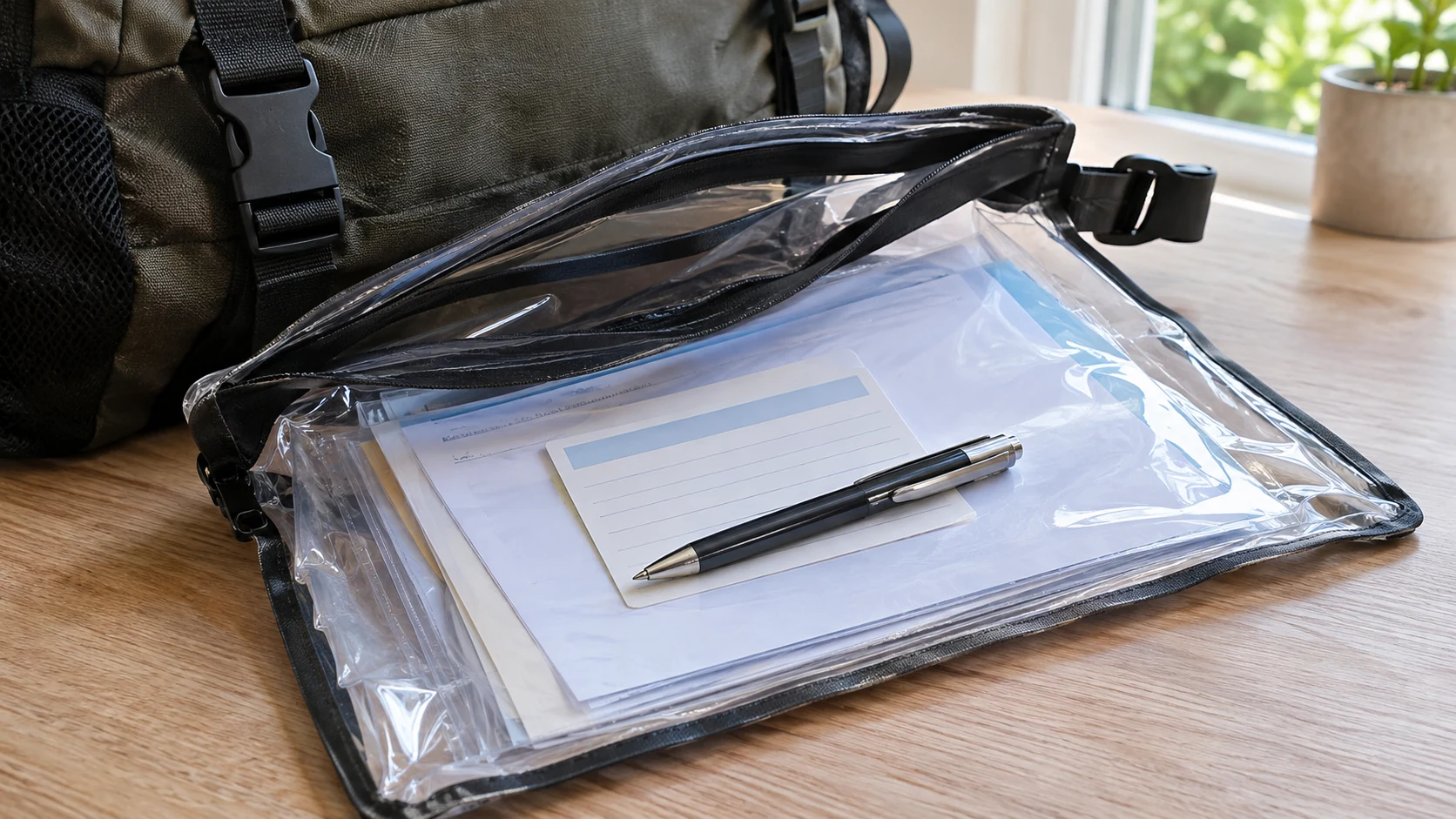
A closed pouch can facilitate the transport of copies. Check its format, its closure and what it really protects. A “watertight” or “fireproof” commercial statement is not a guarantee of survival in any fire or immersion.
The security of the storage is as important as the container. Avoid a known location of all or a broadcast of photos from the folder. Those who need to access it should know the procedure, without making the information freely available.
Keep a usable digital backup
Choose data-sensitive storage, protect accounts, and prepare access recovery. A physically robust USB stick is not necessarily encrypted. Cloud storage also requires account protection and access from another device.
Check the opening of the files and keep a copy out of the housing if this responds to the envisaged risk. Do not concentrate the only folder and its only backup in the same bag. The access of a trusted person must be provided without sharing the identifiers indiscriminately.
Review after a change
A move, a new insurance, a change of treatment or a change of contact must trigger an update. An annual review helps to identify forgetfulness, but does not replace these changes over the water.
Exercise of Day 3: ask an authorized person to find three useful information. Check access, remove an outdated copy and confirm the backup. To deepen the organization, also consult the Emergency binder.
Canada - Emergency Family Planning · Canadian Centre for Cyber Security – Multi-Factor Authentication
Put this reading into practice
Perform the action as you wish and then check the result. Your follow-up remains specific to this route.
31 days to better prepare; Day 3
Gather useful documents
Your action: Gather priority contacts and copies, then choose accessible storage at the start and a separate backup.
To check: Authorized persons know how to find them; sensitive data remains protected.
To do