
In this article
Understand how living conditions, services and local connections influence preparedness and recovery.
The risk is not experienced in the same way
Two nearby homes may have very different needs during a breakdown or evacuation. Income, housing, transportation, health, language and access to information can change the possibilities for action. These constraints are not limited to everyone’s motivation.
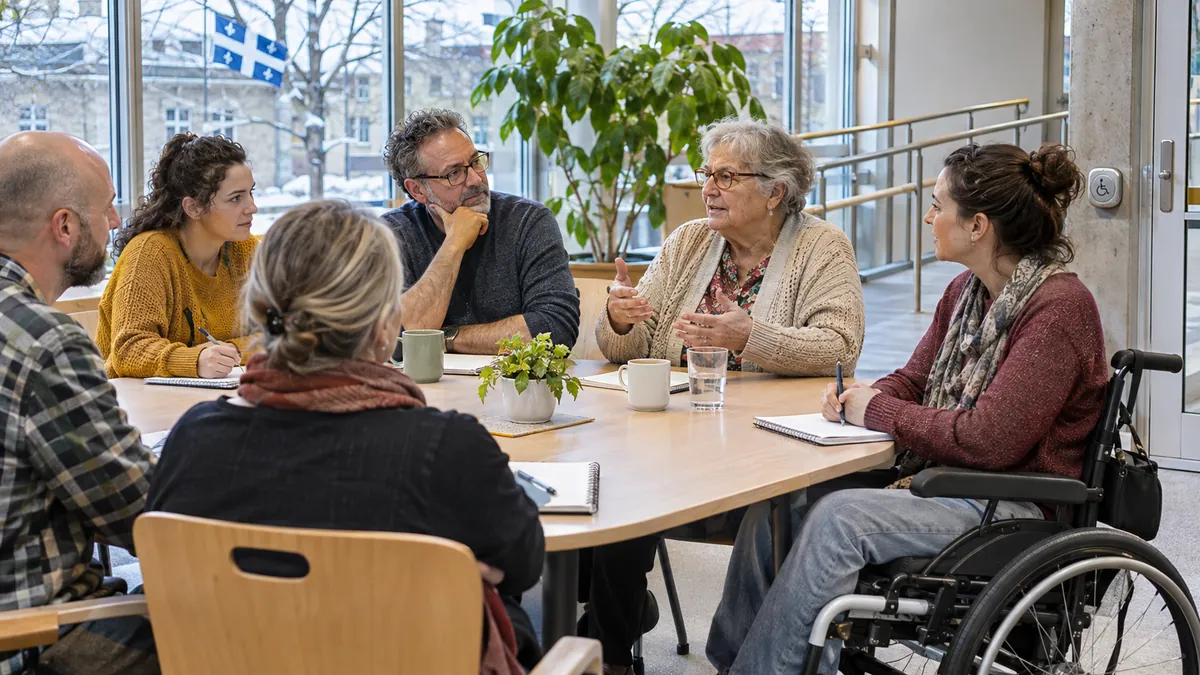
A collective approach should ask people what they need, without assuming that an age or origin automatically defines their vulnerability. Existing capabilities, knowledge and networks must also be recognized.
Developing a culture of risk
The culture of risk combines knowledge of the territory, memory of events and understanding of useful gestures. Local stories can help ask questions, but do not replace current maps, studies, or guidelines.
Useful information must be accessible and understandable. Translation, adapted formats, exchanges with new residents and announced exercises can facilitate participation. It is not enough to publish a document to assume that everyone has received and understood it.
Make a Local Portrait with the Right Limits
- Consult public information on the risks of the sector.
- Ask the municipality about alert channels and how to help those affected.
- Identify community resources and check their services and schedules.
- Discuss the need for assistance with the people involved and their agreement.
Public information in a plan does not necessarily provide access to all of its operational details. Do not create a public file of vulnerable people and do not confuse a neighborhood map with a professional risk assessment.
Prepare for recovery together
The return to a stable life also concerns income, education, care and social ties. Reconstruction can correct some vulnerabilities, but requires technical, financial and public decisions. Doing the same thing quickly is not always the only option.
Those affected must be able to express their needs and access resources. A home in need of help is not a burden to avoid: disaster services exist for this. Preparation and solidarity complement each other.
Realistic citizen contribution
Start by getting to know neighbors who want to exchange, share verified information and offer help that is compatible with your abilities. Take part in local consultations and approaches when you can.
After an event, make factual observations: difficult access, missing information, transport or unavailable service. Precisely described needs help more than a general conclusion about a supposedly ready or unprepared community.
Sources and Updates
Documentary verification: November 3, 2026.
Put this reading into practice
Perform the action as you wish and then check the result. Your follow-up remains specific to this route.
Understanding Resilience: Step 4
Understanding collective resilience
Your action: Identify the services and social connections that contribute to your preparation, and then a barrier to accessing help.
To check: A verified local resource is noted; public and citizen responsibilities are distinguished.
To do