
In this article
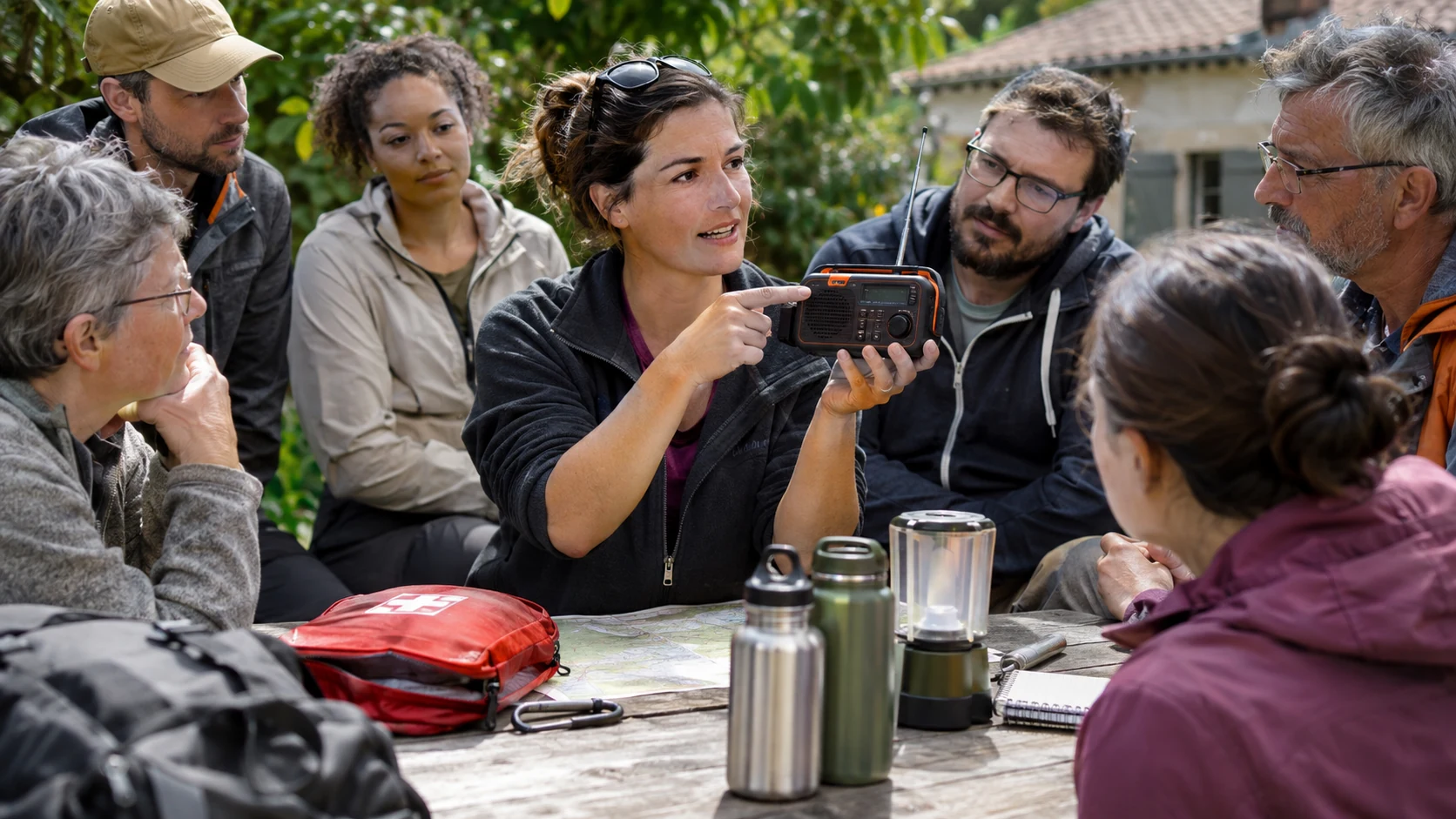
In the citizen preparedness community, women remain under-represented, and when they do get involved, their perspectives are still too often downplayed. This article does not seek to pit women against men. It asks a practical question: is a community that overlooks part of its members really preparing well?
In brief
In brief. Preparedness is often presented from an individualistic angle focused on physical strength. Yet real crises are mostly weathered through care, organizing daily life, group cohesion and communication, areas where women’s contribution is often underestimated. Demographic research also shows that women survive, on average, better than men during famines and epidemics. A plan reviewed by people with different perspectives is stronger.
A field still largely dominated by men
Citizen preparedness remains a field dominated by male voices. Forums, online groups and specialized websites show it: men are more numerous and more visible. This gap in representation influences how issues are defined, how priorities are set and which approaches are valued.
This imbalance is not trivial. It tends to impose a certain vision of survival, individualistic, aggressive, centred on physical strength and confrontation, as the only valid approach. Other perspectives then risk being seen as secondary, or even ignored.
This reflection does not aim to rank the sexes. It starts from a simple observation: a community that does not include diverse perspectives exposes itself to blind spots in its planning.
Two complementary views of preparedness
Many observers note that men and women often approach preparedness from different angles. These are general tendencies, shaped by culture and upbringing, not rules: every person has their own profile. But this difference is a resource, not a weakness.
| Priorities men often emphasize | Priorities women often emphasize |
|---|---|
| Physical security and protection | Care, health and hygiene |
| Individual self-reliance | Organizing daily life |
| Equipment and logistics | Group cohesion |
| Confrontation scenarios | Emotional management, children and older adults |
A plan that combines both dimensions, protection and keeping daily life going, security and care, is structurally stronger than one that values only one. During a prolonged outage or an evacuation, most practical problems concern hygiene, food, medication, sleep and morale far more often than defence.
What research suggests, with nuance
Beyond perceptions, several fields of research offer useful insights. They are worth knowing, not to reverse a hierarchy, but to correct prejudices that have real consequences for how groups function. These findings describe statistical averages, not individuals, and several remain debated.
Stress and decision-making
Studies in psychology and neuroscience have examined how women and men react to stress. Some find that under acute stress, men are more inclined to take risks while women tend to adopt more cautious strategies; other work qualifies these differences. Cortisol, the stress hormone, affects the quality of judgment in everyone. The takeaway for a group: diverse reactions to stress are an asset if important decisions are made together rather than by one person.
Brain differences: caution
Imaging studies have reported average differences in brain connectivity between men and women, sometimes presented as a sign of better integration of analysis and intuition. Many researchers dispute these interpretations, and differences between individuals are far larger than the average gaps between the sexes. It is best not to draw conclusions about any one person’s abilities from them.
Teamwork and cohesion
The “lone wolf” mindset is regularly criticized in serious approaches to preparedness for a simple reason: human societies survived thanks to their ability to cooperate. Studies in social psychology suggest that women, on average, place more value on cooperation and joint problem-solving. In a preparedness group, this relational skill has direct practical value: maintaining cohesion, reducing internal conflict and making communication easier in a crisis. See also our article on preparing with others.
Survival in extreme conditions: what the data show
A demographic study published in 2018 in the journal PNAS (Zarulli et al.) compared the life expectancy of women and men during extreme historical crises: famines, epidemics and slavery. In almost all the populations studied, women lived longer than men, even when mortality was very high. The authors attribute this advantage largely to biological factors, without ruling out social ones.
- Among people enslaved in Trinidad in the early 19th century, women had a higher life expectancy than men.
- During famines in Sweden (late 18th century) and Ireland (1845–1849), female life expectancy remained higher.
- Most of the female advantage came from infant survival: newborn girls were more resilient than boys.
These data do not mean that women “survive better” in every context. They simply show that biological robustness is not an exclusively male trait, contrary to what some prejudices suggest.
What about physical strength?
The average gap in physical strength between men and women is real, and denying it would be counterproductive. But it is just as inaccurate to make it the only factor in the ability to prepare or to get through a crisis. Work in archaeology and anthropology has challenged the image of a prehistory in which women stayed at camp while men hunted: burials of female hunters have been identified in South America, and bone analyses show that women often performed intense physical labour. In many parts of the world, women still carry out considerable physical work today, such as hauling water or farm labour.
The armed forces of several countries, including Canada, France and Israel, have gradually opened combat roles to women, recognizing their operational capabilities.
What reality TV hints at
Survival shows are not reliable references for assessing human abilities: they are scripted, edited and select their participants. Yet they reflect real cultural dynamics. In one season of the British show The Island hosted by Bear Grylls, groups of men and women were placed on two separate islands; the women’s group quickly organized itself, structured its camp and secured food, and much of the commentary focused on how some male participants downplayed these results. These anecdotes prove nothing on their own, but they illustrate how persistent prejudices are.
In Quebec, adventurers such as ultrarunner Caroline Côté, known for her expeditions in northern terrain, show that there is nothing surprising about a woman being at ease in the wilderness.
The real problem: a rigid idea of what “survival” means
The real difficulty is not whether women are present in the preparedness community. It is the rigidity of a certain idea of what preparedness should be. An approach that glorifies confrontation, individualism and brute force, and dismisses as naive any strategy based on cooperation, care or communication, does not describe survival: it describes fiction. In lasting crises, the communities that fare best are generally those that maintain strong social ties, effective collective organization and constant adaptability.
Diverse profiles in a preparedness group are not a social constraint: they are an operational advantage. A homogeneous group also shares its blind spots.
Excessive risk-taking is a well-documented aggravating factor in accidents: men, especially young men, are over-represented among victims of drowning, road crashes and outdoor accidents. This is not a value judgment but an observation that argues for group decisions made with several voices.
In practice: what this changes for your group
These reflections have practical implications, whether your group is a family or a community:
- Value care and organizational skills as much as technical or defensive skills. Both are needed in a prolonged situation.
- Encourage everyone to speak up about priorities: health, hygiene, children and older adults often fill real gaps in plans.
- Avoid the “lone wolf” culture, which isolates people needlessly and deprives the group of essential relational skills.
- Have your plan reviewed by people with different perspectives. A plan examined from several angles is more robust.
- Recognize everyone’s limits, including your own, without turning them into a hierarchy: effective preparedness means identifying who does what best.
Citizen preparedness benefits from recognizing the value of all the skills around it. Care, organization and cohesion are not secondary assets: they are at the heart of any serious resilience plan.
Frequently asked questions
Does this article claim that women prepare better than men?
No. It shows that skills often associated with women, such as care, organization and cohesion, are essential and too often underestimated. The differences mentioned are averages: each person has their own strengths, and a good group combines them.
How should roles be shared in a family group?
According to each person’s skills, interests and availability, rather than gender. Also plan backups for each key role in case someone is away or ill.