
In this article
- Places at risk and the importance of family ties in crisis situations
- Understanding the event beyond the facts
- Situation awareness: a key concept that is often misunderstood
- When the crisis erupts: the critical issue of the after
- The situation awareness is also to maintain the link
- PrépaCivile: a concrete tool in the face of uncertainty
- In real situations, the application allows in particular:
- Places that require appropriate vigilance
- Towards a culture of collective preparation
Places at risk and the importance of family ties in crisis situations
The recent tragic events in Sydney, during a public celebration of Hanukkah, recall an uncomfortable but unavoidable reality: even places perceived as safe can tip over in seconds. This attack, targeting a festive and family gathering, has caused many victims and plunged hundreds of people into confusion, fear and uncertainty.
Beyond the emotional shock, this type of event raises essential questions about the Civil Security, of Citizen Preparation and Ability to maintain the connection between people When everything is disorganized.
Understanding the event beyond the facts
Violent attacks at public gatherings are unfortunately no longer isolated anomalies. They are part of a global context marked by increased ideological, religious and social tensions. The Sydney event illustrates several constants observed during this type of crisis :
-
an open place, accessible to all;
-
a festive context, conducive to the relaxation of vigilance;
-
a high density of people;
-
a rapid, brutal attack, difficult to anticipate for the participants.
These characteristics make preventive intervention complex and reinforce the importance of Preparation in advanceOn the part of both the organisers and the citizens.
Situation awareness: a key concept that is often misunderstood
We often associate the situation awareness the ability to detect an imminent threat. In reality, this concept is broader. It is based on three pillars:
-
Perceive What is happening around you
-
Understand The situation and its implications
-
Anticipate Possible short-term consequences
In a public gathering, the awareness situation does not consist in being constantly on extreme alert, but in keeping a minimum reading of one’s environment: possible exits, abnormal movements, unusual behaviors, weak signals.
However, this situational awareness does not stop when the threat arises.
When the crisis erupts: the critical issue of the after
During an attack or panic attack, another phenomenon appears immediately: Disruption of communication.
The cellular networks are saturated, the calls fail, the messages remain unanswered. For relatives at a distance, the anxiety becomes total.
The questions then arise:
-
Where is he?
-
Is she hurt?
-
Did he manage to escape?
-
Do we have reliable information?
In many similar events around the world, this prolonged period of uncertainty constitutes a The Second CrisisOften underestimated.
The situation awareness is also to maintain the link
Being prepared doesn’t just mean knowing how to run away or get away.
It also means being able to Reassure your loved ones quickly and Providing clear information about his situation.
Modern preparedness must therefore include:
-
the ability to be localizable;
-
the ability to convey a simple and understandable status;
-
the ability to centralize information within the family unit.
It is in this logic that the digital tools dedicated to citizen resilience intervene.
PrépaCivile: a concrete tool in the face of uncertainty
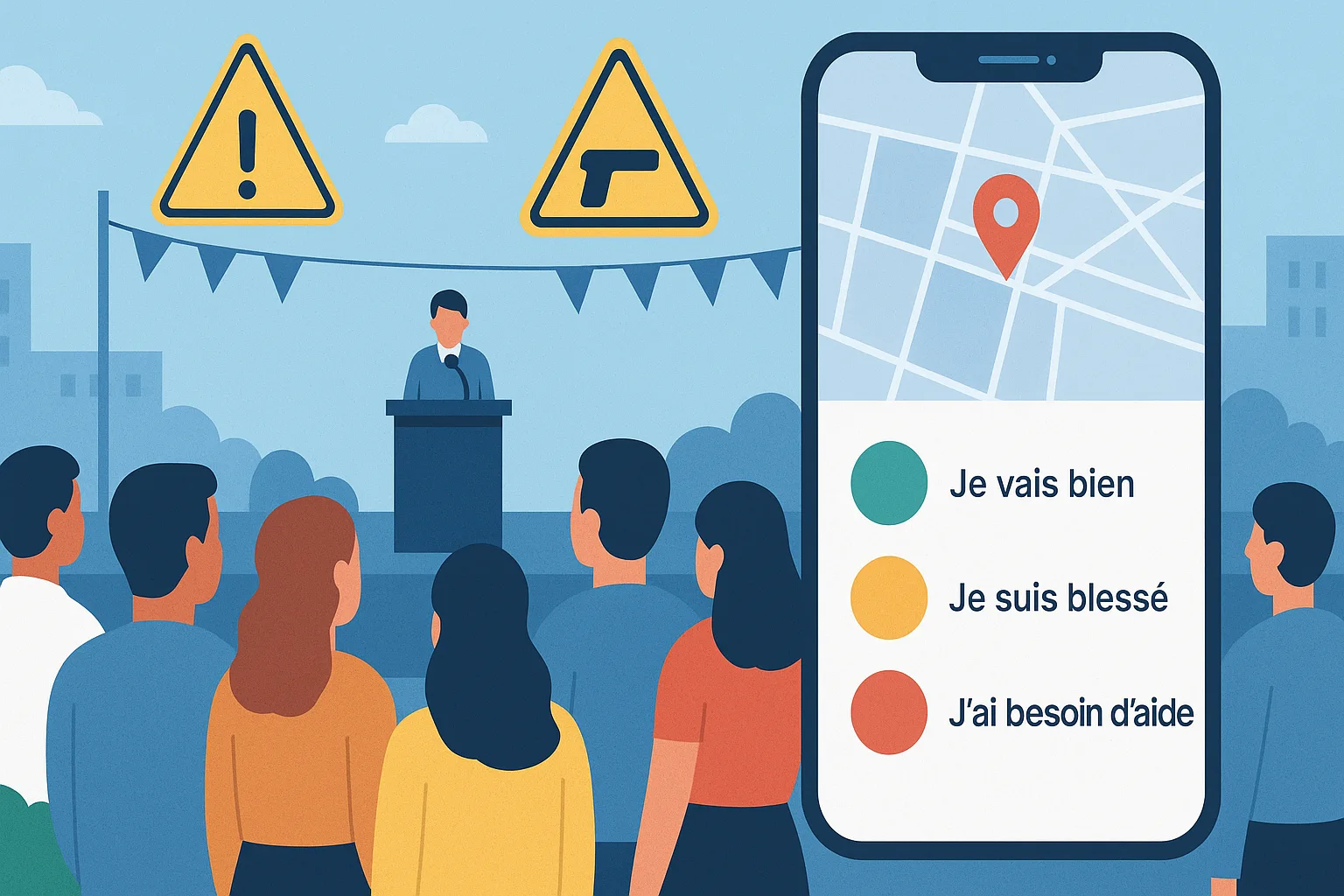
The application PrépaCivile has been developed to meet these specific needs, observed on the ground during real crises.
It does not pretend to prevent a violent event, but it allows Reduce human and emotional consequencesEspecially for families.
In real situations, the application allows in particular:
-
Share location in real time
Members of the same family unit can see where their loved ones are, without multiplying calls or messages. -
Immediate sending of a simplified status
In a few seconds, it is possible to indicate:-
I'm fine.
-
I'm hurt
-
I need help
This information is instantly visible to authorized members.
-
-
A centralized family unit
Essential information is grouped into a single space, limiting confusion and misinterpretation.
In a context like Sydney, where hundreds of people were simultaneously trying to reach their loved ones, this type of feature allows you to restore a minimum of control and clarity.
Places that require appropriate vigilance
The attack in Australia is a reminder that some environments should be considered as Places of increased vigilanceWithout falling into fear:
-
festive and cultural events;
-
religious gatherings;
-
festivals and concerts;
-
open public spaces (beaches, parks, squares);
-
Very busy tourist areas.
Citizen preparedness consists in recognizing these contexts, adapting one’s behaviours and having tools to react effectively if the situation deteriorates.
Towards a culture of collective preparation
Dramas like the one in Sydney should not only arouse emotion or indignation. They must also lead us to reflect on our collective ability to Anticipate, communicate and protect the human connection.
Citizen preparedness is not just about disaster scenarios. It is based on simple gestures, accessible reflexes and tools adapted to today’s reality.
PrépaCivile is part of this vision:
Not living in fear,
but be ready to inform, reassure and actWhen the unexpected happens.