
In this article
Spring is a useful time to review the outings, the garden, the resources of the home and the skills to maintain. Plant observation can be part of this learning. It must remain separate from a consumer decision or a health board.
Observe the changes in the season
A familiar trail can be muddy, flooded, closed or snowy. Temperatures vary and clothing needs change throughout the day. Before an outing, check the conditions, access rules and the route. Notify a loved one, adapt the duration to the group and plan a return solution.
The winter reserves and the first harvests of the garden do not necessarily follow one another without interruption. For the home, this invites to make an inventory and plan meals. It should not be assumed that wild picking will replace available foods or meet nutritional needs.
Learning a plant in context
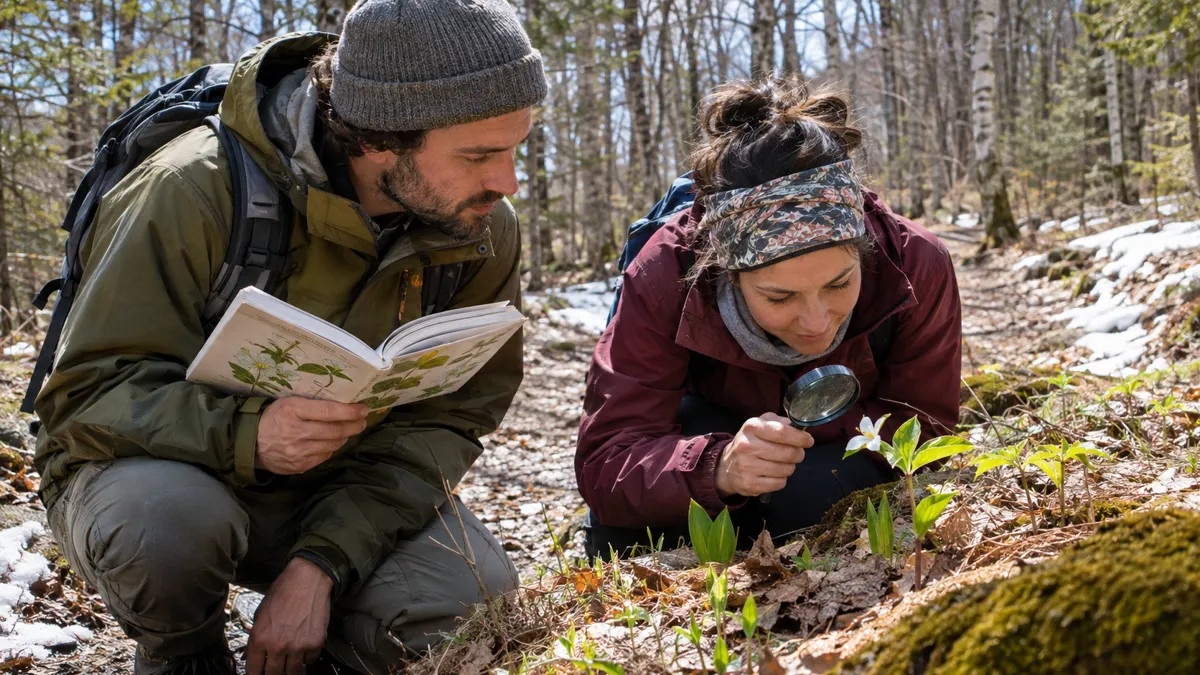
Photograph the different parts without damaging them, note the date, place and medium, then return to observe the plant at other stages. A rosette or young shoot may be more difficult to identify than a complete plant. Don’t conclude from an application’s smell, single leaf, or likeness.
A detailed regional guide and a framed output make it possible to compare the necessary characters. Check the scientific name and the species that can be confused. Common names do not always have the same meaning depending on the territory.
Nettle, plantain or alliary may be subjects of botanical study. Their presence on this list does not authorize their consumption and does not establish a medical benefit. Lullaby, hemlock and other plants require special caution: avoid unnecessary handling of an unknown plant and learn to recognize local risks.
Respect the places and limits of picking
A vacant lot, ditch or roadside is not automatically a clean or authorized harvesting location. Check permissions, possible treatments, and protected area rules. Prioritize notes or a geolocated photograph to the placement of marks or guardians on land that does not belong to you.
Never taste a plant to identify it. Preparing, rinsing or cooking does not correct a botanical error. If you cannot confirm a food use with a suitable reference and competent supervision, refrain.
Do a useful spring interview
Check accesses, exits, storage, lamps and seasonal supplies. Clear passages without moving a hazard to another space. Discard degraded products according to their disposal instructions. For fuels, chemicals or specialized work, apply the appropriate instructions and ask for qualified help.
In the garden, start with a surface and crops that are compatible with your time, soil and local rules. A small, documented essay is more useful than a promise of immediate self-sufficiency. Write down the purchases, water needs and results to prepare for the next season.
Taking care of your health without an improvised cure
Do not consume a plant for the purpose of following a “detox” or replacing a treatment. Tussilage is not offered here as a cough remedy and a plant does not replace a prescribed antihistamine. Seek advice from a healthcare professional for therapeutic use.
For fatigue, allergy or other symptoms, seek appropriate professional advice. Report any medications, supplements and plants used. Learning about citizen readiness also includes the ability to recognize what requires clinical competence.
An action this week
Choose a specific task: check an exit, redo the inventory of a storage, prepare a framed exit or start a botanical notebook. Define what you want to learn and how you will check the result. Share useful observations, distinguishing certain identification, hypothesis and open question.
To learn more about food safety, consult on the other hand.This page does not replace a botanical identification guide or a medical opinion.