
In this article
In a busy station, building or street, understanding what is happening around you helps to avoid danger and ask for help. This attention must remain proportionate: knowing an exit and noticing an obstacle is useful; considering each unknown as a threat maintains an exhausting vigilance and can lead to errors.
Observe the useful facts
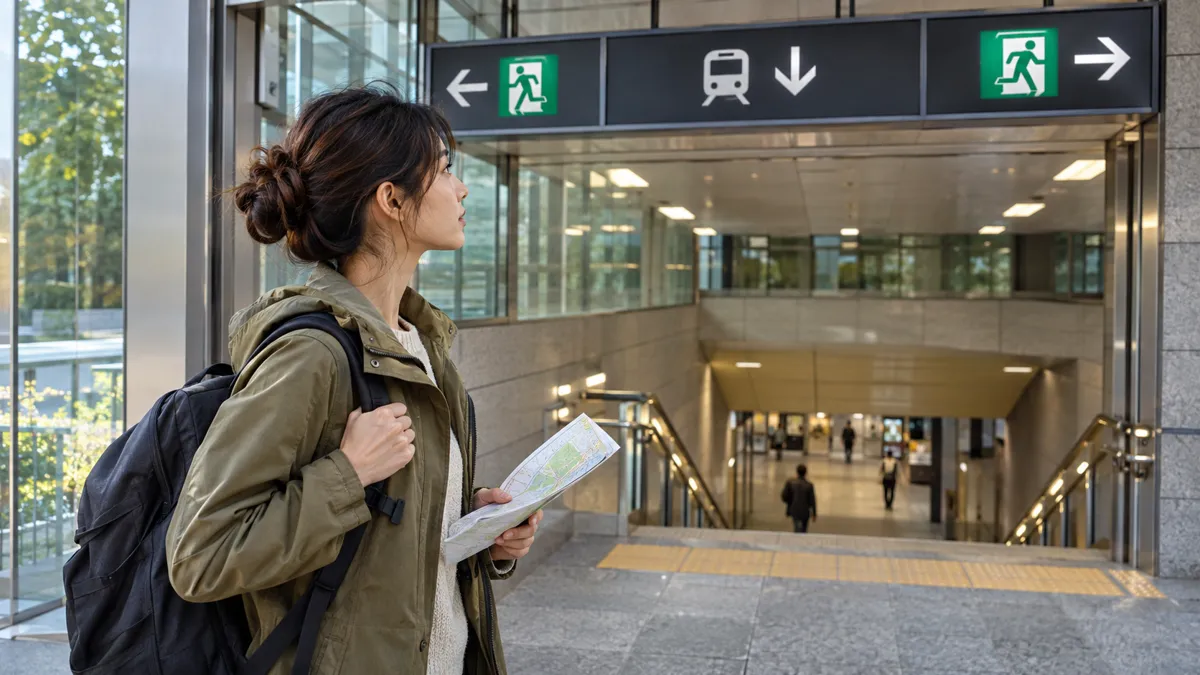
Upon arriving at a location, locate accessible exits, personnel, and assistance. Note what might interfere with a trip: a cluttered door, slippery floor, a build-up of people, smoke, or a vehicle that blocks a lane. Reduce distractions during a crossing or near a dock.
A fleeting glance, a garment, a supposed origin or nervousness do not prove a violent intention. Describe a concrete behavior: a verbal threat, a person who forces a door, an object abandoned in a worrying context. Appearance does not replace facts.
Understand without pretending to know everything
Ask yourself what has changed and what you can actually confirm. A quieter street can have many explanations; it does not necessarily announce an assault. On the other hand, an alarm, a smell of smoke or staff instructions justify immediately looking for the appropriate instructions.
Keep several assumptions when a situation is ambiguous. You can get away from discomfort without accusing someone or trying to investigate. In case of obvious danger, do not delay your protection to photograph or get absolute certainty.
Decide on a simple action
- Observe: Where is the danger and what roads remain accessible?
- Understand: What information is confirmed and what guidelines apply?
- Decide: choose a safe exit, shelter or request for help depending on the situation.
- Acting and re-evaluating: make this choice without confrontation and adjust it if conditions change.
This grid is used to organize reflection; it does not guarantee the detection of aggression or the control of an emergency. Some events require an immediate response as part of an evacuation plan.
When a danger appears
Keep a useful distance and head to a safe place if the ride allows it. Do not approach to film, do not pursue a person, and do not block the intervention of the rescue. Notify staff or emergency services from a protected location.
Indicate the exact location, the nature of what you’ve seen, and who needs help. Distinguish your observation from a deduction. In transport, the name of the station, the direction and the number of the vehicle can facilitate the location.
In the event of a violent attack, follow the official instructions of the territory and staff: escape if possible without exposing yourself, otherwise take shelter and alert as soon as possible. The French orders in the face of terrorist attack specify decisions according to the situation. Combat training is not a prerequisite for these protective measures.
Coordinating with your loved ones
Agree on a meeting point and a contact person if you are separated. With a child, find an identifiable staff person to ask for help. Provide assistance to a person with a limitation and report it to staff during an evacuation.
In the Montreal Metro, check out the means of assistance of the STM. A person on the track requires immediate notification of personnel and use of the indicated emergency devices; do not get off the track yourself.
A brief exercise without endangerment
On a next move, locate a main exit, another exit, and a support point. Ask yourself how you would join them with your group. Do this exercise calmly, without triggering an alarm or simulating an assault in a public place.
After an incident, write down what made your decision easier and what you missed. Useful attention also leaves room for rest. If fear prevents you from going out or living normally, talk to a health professional.