
In this article
- Preparedness is an ongoing process, not a final state
- The myth of the “perfect prepper”
- Why people may give up before starting
- The main practical constraints on preparedness
- What is the right way to prepare?
- Responsible preparation rather than paranoia
- Practical first steps
- Putting preparedness into practice
- Frequently asked questions
Images of self-sufficient bunkers, decades of supplies and cinematic scenarios feature prominently in some portrayals of preparedness. They do not represent every practice and may suggest that substantial resources are always required. Household preparedness can instead begin with everyday functions: drinking, eating, communicating, receiving care and knowing where to go if home is no longer suitable.
This article offers a framework for approaching preparedness realistically: what it involves in practice, common obstacles, and how to develop an approach consistent with your actual circumstances, whether you live in a city or the countryside, alone or with family, with limited or substantial resources.
Preparedness is an ongoing process, not a final state
One widespread misunderstanding is that preparedness has a threshold: a point at which someone becomes “ready once and for all.” That linear view does not reflect emergency situations, which change with each person's location, household, economic circumstances and climate.
The risks people face change over time: moving home, the birth of a child, an ageing relative, changes in the local economy, or more frequent extreme weather. A coherent approach to preparedness evolves with those realities rather than attempting to hold them still.
The aim is not to be ready for everything at all times. It is to reduce some vulnerabilities to relevant risks and have options when normal services are disrupted. Planning resources for the first few days is a starting point, rather than a guarantee of when services will return or a reason to treat emergency or professional assistance as optional.
The myth of the “perfect prepper”
Fortifications, enormous stockpiles, isolation and military equipment are a dramatic way of presenting the subject. There is no need to establish how many people identify with that model to recognize that it does not fit many households' circumstances. Serious preparedness can be compact, shared and closely connected to public and community services.
Comparison with an unattainable model may discourage a first step. This is offered as a point for discussion, not as a measured psychological effect established by this article. Ask instead which useful, accessible action you could take today. Verifying a contact, locating a flashlight or organizing meals can represent observable progress.
The media portrayal
A self-sufficient bunker, 30 years of supplies, geographical isolation, military equipment and an end-of-the-world scenario.
Everyday practice
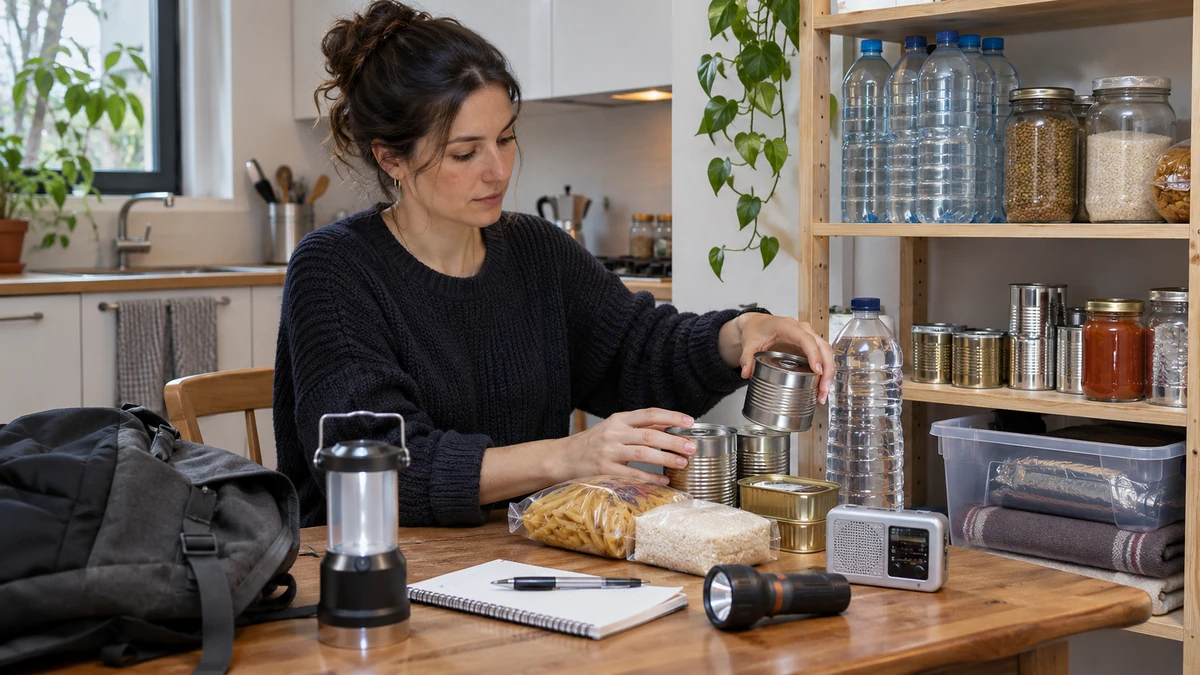
Supplies for the first few days, a household plan, contacts, first-aid equipment used within the limits of training, and health needs planned with professionals. Extending supplies to two weeks depends on household circumstances; it is not a compulsory qualification for participating in preparedness.
Household preparedness does not require a catastrophist worldview. It begins with a practical observation: supply, energy and communication systems work effectively under normal conditions but can be vulnerable to disruptions. Having a plan and some resources beforehand can reduce exposure to those vulnerabilities in concrete ways.
Why people may give up before starting
Lack of money, housing limitations, available time and an unreceptive family are real obstacles. They should not be minimized because someone else found a solution. The goal is to make constraints explicit, then distinguish what can be organized directly, what requires assistance and what cannot be resolved at household level.
Starting with the resources you have may help you move forward, but opportunities do not depend on attitude alone. Resources, access rights, health and surroundings also matter. A constructive approach does not blame someone for failing to purchase or carry out something that was materially beyond their reach.
A small improvement that can actually be used is often more valuable than a perfect project that is never implemented. It might be a short plan, a realistic reserve or a confirmed request for assistance. The point is not to celebrate effort at any cost, but to check that a need is better covered without jeopardizing essential spending.
The main practical constraints on preparedness
Location
Preparing in an apartment, suburb or rural setting involves different constraints. Moving off-grid should not be presented as a general solution. In cities, space, shared access and transportation matter; in rural areas, distance, service networks and access to assistance may call for different arrangements. In every case, consider the actual people and place rather than a lifestyle assumed to be superior.
Within Quebec, circumstances differ considerably between Montréal, the suburbs of Québec City, a mid-sized city such as Rimouski and a rural municipality in Abitibi. A thoughtful approach starts with the actual setting, rather than transplanting a rural ideal into an urban environment.
Legal requirements
Quebec and Canadian legal frameworks regulate the storage of certain products, construction, emergency communication equipment and means of defence. Understanding those rules is worthwhile, not to evade them, but to build a lawful approach that can be maintained and passed on to others.
Many everyday options are available for water, food, lighting, communication, first aid and somewhere else to stay. That does not make every piece of equipment suitable for every home. Generators, fuel, radios and construction work require their own checks. Consult the relevant authorities and qualified professionals about a project. Following the rules is part of keeping a plan workable, just as maintaining equipment is.
Family circumstances
Family considerations can be among the hardest to navigate. An unreceptive partner, young children, ageing parents or relatives with specific needs each create different planning requirements. Being the only person actively preparing within a family often involves anticipating others' needs without alarming them and building habits gradually instead of imposing a sudden lifestyle change.
A practical proposal may make a family discussion easier: check contact details together, cook a meal using stored food or learn the school's procedure. Ask what each person agrees to do and what concerns them. This approach does not guarantee support or justify bypassing joint decisions about spending, housing or personal information.
Budget
Money and skills complement each other. Some checks cost little, but training, accessible transportation, storage or suitable equipment may require both money and time. Begin by identifying the need to cover and the resources already available, then examine the options. A low price is not a reason to choose something unsuitable for health, food or the building.
Owning equipment without knowing how to use it may create false confidence; skills without appropriate equipment may also reach their limits. This article does not establish that one income group will consistently cope better than another during a crisis. Instead, check equipment, knowledge, conditions of use and the ability to request help together.
Time
Preparedness can fit into short activities: record a contact, rotate an item of food while shopping or test a flashlight. Other actions require an appointment, permission or longer training. A video may demonstrate a skill but does not necessarily replace recognized practical instruction. Share tasks and allow time for rest. No exercise requires deliberately cutting off an essential service.
Health and physical abilities
Mobility and the effort required affect how supplies are carried or maintained and how an evacuation is arranged. Plan around current abilities, rather than an assumed improvement in health. Local knowledge, coordination, cooking and contacts can also contribute. Nobody has to justify their place in a household by performing a useful role. Dignity and necessary assistance remain needs to respect.
What is the right way to prepare?
This question comes up frequently, and the answer remains the same: the right approach fits the actual situation of the person using it. A coherent plan for an apartment in Montréal will not have the same priorities as one for a country home in Estrie. Both can be equally serious.
An effective approach is not defined by the size of a stockpile or the sophistication of equipment. What matters is consistency between identified risks, available resources and the actions taken.
A coherent approach begins with identified risks and needs, remains open to revision and anticipates the limits of each solution. It considers housing, health, finances, rules and the people involved. Preparedness may offer reassurance, but cannot guarantee freedom from anxiety. If worry persistently interferes with everyday life, appropriate support may be needed alongside practical preparations.
Waiting until every condition is ideal can postpone a useful first step. However, some constraints require outside assistance or a decision by someone else; they should not be dismissed as procrastination. Choose an accessible task and a request to clarify, then arrange a follow-up check. Progress can be gradual without requiring a complete lifestyle change.
Responsible preparation rather than paranoia
Proportionate preparation does not require believing that a general collapse is imminent. Power outages, ice storms, floods and public-health disruptions illustrate different ways daily life may be interrupted. Their consequences depend on severity, the building, infrastructure, health and collective resources, not only personal preparedness. People affected must not be blamed for what they could not prevent.
Household preparation may support early decisions and reduce some avoidable demands while preserving access to necessary services. It should not be presented as an obligation to cope alone to free up responders. An emergency, someone in difficulty or a medical need calls for appropriate help even when equipment and plans are incomplete.
Planning for the first few days provides a starting reserve and an initial plan. An interruption may last longer, but no universal duration defines how long people will wait or when services will arrive. Consult municipal and government information about local instructions and resources. Also identify somewhere else to stay if remaining at home no longer meets essential needs.
Practical first steps
The first step is not buying equipment. It is assessing your circumstances: what are the actual risks in your area? Who lives in your household? What housing constraints apply? Which skills do you already have, and which are missing?
From that assessment, preparedness approaches commonly suggest three planning horizons:
Level 1 — 72 hours
Water, food, essential medicines, lighting and basic communications. A basic evacuation plan known to every household member.
Level 2 — Two weeks
Expanded supplies, alternative cooking options, a well-equipped first-aid kit, emergency documents and a network of nearby contacts.
Level 3 — Longer term
Partial energy self-reliance, more developed practical skills, supplementary food production and community resilience.
These horizons are neither compulsory boxes to tick in order nor a prediction of a crisis. They help compare short-term dependencies with longer-term projects. On PrépaCivile, the assessment, tools and topic articles help you choose next actions. Official instructions and individual medical needs always take precedence over an editorial pathway.
Putting preparedness into practice
Household preparedness need not be an extreme lifestyle or a response driven by fear. It is a gradual approach adapted to each setting, intended to reduce vulnerability to foreseeable disruptions. Starting does not necessarily require a large budget, ideal conditions or unanimous support from those around you. The key is to begin where you are, with what you have, and progress at your own pace.
The practical question is less “Is there one right way to be a prepper?” than “Which approach best fits my circumstances, and what concrete step can I take today?”
Frequently asked questions
Is preparedness only for people with substantial resources?
No. Household preparedness should not be reserved for people with a large budget. Some actions require no purchase: organizing contacts and documents, tidying supplies and checking instructions. Other needs require real resources and sometimes outside assistance. Training and equipment are not cost-free for everyone. Adapt priorities and do not sacrifice an essential expense to meet a standard checklist.
Can you prepare effectively while living in a city apartment?
Yes. An apartment offers opportunities to prepare several functions through compact storage, a household plan and contacts. It also involves dependencies on the building, elevators and shared access. Check housing rules and possible assistance with the building manager. PrépaCivile's urban-preparedness articles explore these issues without assuming that supplies can replace an exit, care or a suitable place to stay.
How can you discuss preparedness with an unreceptive partner or family?
Suggest an action and ask for agreement: verify a contact, discuss a route home or prepare a meal useful in everyday life. Listen to concerns, including spending, time and anxiety. A practical activity may open a discussion but does not guarantee support. A plan should remain understandable and respectful of those involved, rather than being imposed in the name of a future emergency.
Do weapons need to be part of preparedness in Quebec?
Weapons are not a required step in the PrépaCivile pathway. Home safety, exits, ways to raise the alarm, avoiding conflict and obtaining assistance are the first functions to examine. For any regulated item, check possession, transportation, storage and use rules for the country and circumstances concerned. Permission in one setting is not a general right to carry it everywhere or use it for self-defence.
How does preparing in Quebec differ from preparing in France or elsewhere in Europe?
Risk settings differ. Quebec experiences severe winters, ice storms, spring floods and lengthy outages in remote areas, while France and other European countries face heatwaves, rapid flooding or seismic hazards depending on the region. Legal frameworks and civil-protection structures also vary. The fundamental principles—short-term self-reliance, a household plan and basic skills—are widely applicable, but their practical implementation must reflect local conditions.