
In this article
- Start by describing the real problem.
- People are not limited to their ability to contribute.
- The applicable law is part of the decision-making framework
- Telling the truth without disclosing all personal data
- Evaluate an aid with its safety limits
- Write some useful principles before the crisis
- Talking with the family without imposing traumatic scenarios
- After a difficult decision: a balance sheet without automatic excuse
- Points for further reflection
Ethical preparation is about thinking about how to help, set a limit and respect people when resources are constrained. It complements the material aspects of the plan: decisions also involve responsibilities, private information and sometimes different needs.
This reflection does not pretend to predict the behavior of everyone under pressure. It offers concrete questions and safeguards, without psychological diagnosis, without ranking the value of lives and without permission to violate applicable law.
Start by describing the real problem.
A decision sometimes seems to oppose two extreme choices: share everything or refuse any help, leave alone or put everyone in danger. Before you remember this framing, look for missing information and other possibilities: a call, a relay, an appropriate transport or temporary help.
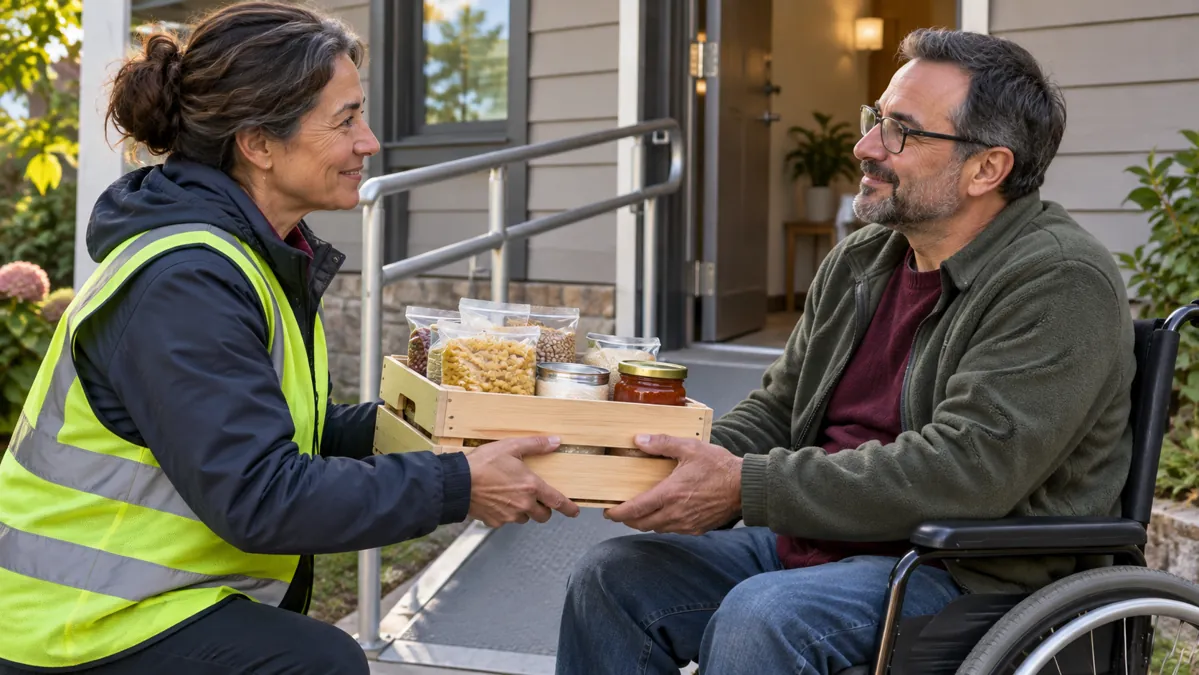
For example, a person asks for food during a breakdown. They may need food that can be used without cooking, transportation, or to join a service. Understanding the need does not require you to judge your level of foresight or ask for compensation for urgent help.
This scenario is fictitious. It does not imply that all neighbours behave the same during a crisis or that the resources of a household are sufficient to take charge of a neighbourhood.
People are not limited to their ability to contribute.
Age, disability, illness or income do not make it possible to conclude that a person deserves less help. On the other hand, they can modify the needs: accessibility, medicines, means of communication or support.
Task sharing can be useful when it is freely agreed and tailored to capabilities. A person who is unable to carry loads should not be excluded from life-saving assistance for this reason. Medical decisions and professional protocols are not replaced by an improvised vote within a group.
When the needs exceed the present means, make the difficulty visible to the services and look for a relay. Don’t turn the assessment of your own limits into a judgment on another person’s worth.
The applicable law is part of the decision-making framework
In Quebec, the Charter of Human Rights and Freedoms provides for the right to rescue when life is at risk and an obligation to assist, with the limits provided for in section 2. Getting help can be part of that assistance. This rule is not confused with a general obligation to distribute any personal stock.
A crisis should not be interpreted as personal permission to steal, threaten or use force to settle a disagreement. Self-defence includes legal conditions that are not limited to the protection of property. To learn more about the Canadian context, consult the Guidelines on Self-Defense and Its Limitations and the legal sources contained therein.
Obligations and procedures vary depending on the territory and circumstances. Ask for a qualified opinion if a legal decision is beyond you, rather than transposing a formula found in a survival story.
Telling the truth without disclosing all personal data
False information about a road, a reception place or a service can put someone at risk. Distinguish what you have confirmed from what you assume. If information is missing, say so and look for the useful source.
Confidentiality is compatible with honesty. You can explain a help limit without publishing the quantities of your reserves, a protected address or health information. Ask for consent before forwarding a person’s contact information or needs to a group.
With children, give appropriate explanations without promising them what you cannot master. Adults remain responsible for safety decisions; a child must not carry the weight of a rescue choice or care allowance.
Evaluate an aid with its safety limits
The willingness to help does not make intervention safe. A rescue, transfer of person or gesture of care may require specific skills and equipment. Alerting services and describing needs may be more appropriate than attempting an action alone that exposes multiple people.
Limits should not become an automatic pretext for inaction. Ask what can be done without adding danger, what instructions are available and what professional or service can intervene. In immediate danger, join the rescue by means adapted to the place.
For lasting help, a clear arrangement can specify the accepted tasks, access to information, and how to report a difficulty. An agreement does not remove the applicable obligations and does not allow the imposition of a contribution that has become dangerous.
Write some useful principles before the crisis
A short note can remind you of the priorities you want to keep an eye on: protecting people, checking information, respecting special needs and asking for help when a situation goes beyond your means.
- What contacts can provide competent information or support?
- What personal information should be kept confidential?
- How can we say that a task can no longer be assured without leaving the need invisible?
- How can I verify that a proposed solution is actually accessible?
- How to distinguish an urgent decision from a discussion that can wait?
This note is not a commitment guaranteeing a perfect reaction. It serves as a support to find landmarks and appeal to other people, with possibilities of correction.
Talking with the family without imposing traumatic scenarios
A conversation can be about sharing, contacts, the limits of a welcome or how to listen to a request. Choose ordinary situations and the appropriate participants. Children can discuss kindness and mutual aid without facing imaginary life or death choices.
Adults may have different priorities. Describing the precise decision, constraints and responsibilities helps to avoid a global judgment on the morality of a loved one. A situation of violence or control requires specialized assistance; it should not be reduced to a disagreement where everyone would have the same responsibility.
After a difficult decision: a balance sheet without automatic excuse
When the situation is stabilized, note the information available at the time of choice, the means actually accessible and the known consequences. A review can help correct a plan, explain a decision, or seek appropriate redress.
Taking into account the context does not mean to excuse any behavior. Conversely, an unfavorable outcome does not allow us to conclude that the person would necessarily have lacked will or moral value. Responsibilities are determined based on the facts and applicable frameworks.
If distress or issues related to the event take a difficult place, seek professional support. No diagnosis of “moral injury” or trauma can be made from this article, and no reconciliation should be imposed on people exposed to violence.