
In this article
Recognize a possible overdose, call for help and know how to use naloxone, while supporting loved ones without judgment.
Understand the risk and its consequences
An opioid overdose is a medical emergency. If a person does not react or breathes abnormally, call 911 immediately and give naloxone if you have any, following the instructions and instructions of the attendant. Stay with the person and follow the instructions for resuscitation received. Do not wait to be sure of the substance consumed.
The preparation involves accessible actions: knowing the signs of urgency, identifying resources, asking the pharmacist for a demonstration of the kit and discussing without stigma. Drowsiness or a change in behaviour alone do not make it possible to diagnose a disorder related to the use of substances.
Key lessons for households and communities
Lesson 1: Know the signs of addiction
Opioid use disorder is not diagnosed from appearance, hygiene or isolation. If a loved one worries you, describe what you are observing without charge, offer support and seek professional advice. Distinguish this approach from a respiratory emergency that requires immediate intervention.
Lesson 2: Naloxone saves lives
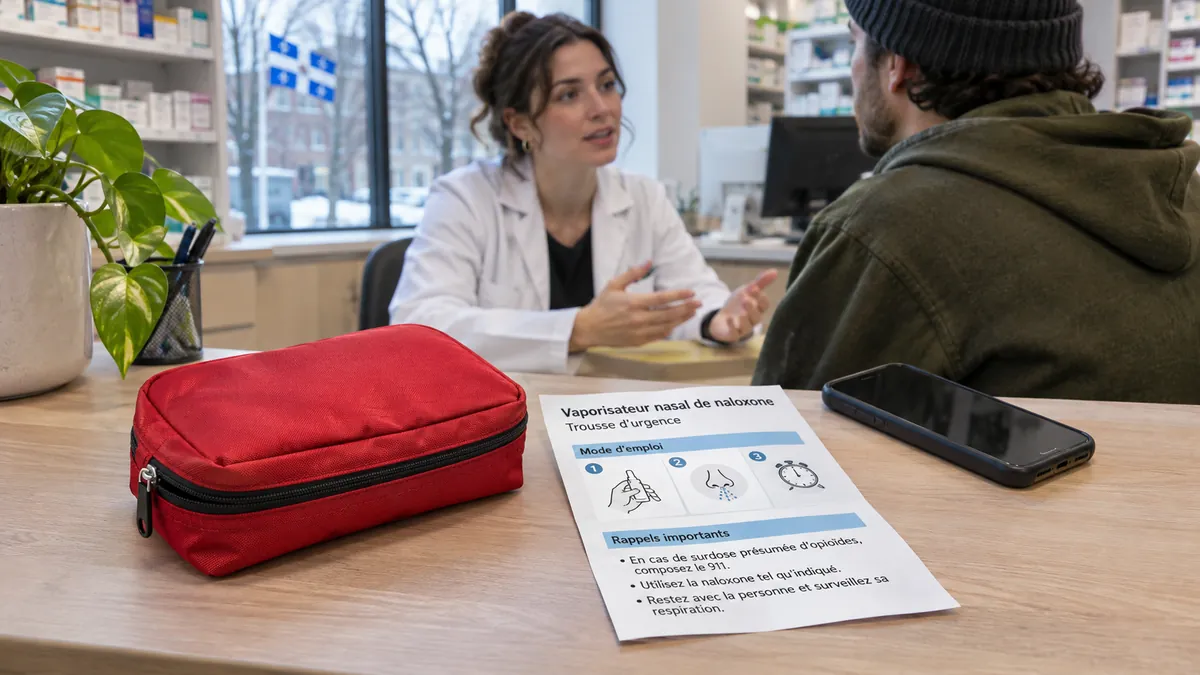
Naloxone may temporarily reverse an opioid overdose. It does not replace rescue and several doses may be necessary. Learn how to use the presentation that is actually available in your kit.
Lesson 3: Help Resources Exist
Quebec offers specialized help services, treatment programs and helplines. Learning about these resources and communicating them to those around them strengthens the collective capacity to support those affected.
Remember: call 911, administer the available naloxone as directed, and do not leave the person alone. An improvement does not eliminate the need for care: the effects of overdose may reappear.
Reflexes to adopt
- Acknowledge an overdose: Loss of consciousness, weak or absent breathing, pale or bluish skin, contracted pupils. Do not wait; call 911 immediately.
- Administering naloxone: follow the instructions of the kit (intramuscular or intranasal depending on the format). Always have a kit at hand if a loved one consumes.
- Speaking without judgment: Openly discussing addiction with loved ones creates trust and facilitates access to aid resources.
- Keep 911 for emergencies. For support related to substance use, Drogue : aide et référence can be reached at 514 527-2626 or 1 800 265-2626, 24 hours a day, using the service’s verified contact information.
- Training for First Aid: Some organizations, such as the Canadian Red Cross, offer training in cardiopulmonary resuscitation (CPR) and emergency management.
Prepare now
Concrete actions:
- Getting a naloxone kit: go to the local pharmacy or contact a community organization. Naloxone is free in Quebec; check with your usual pharmacy.
- Learn how to use it: Watch the official video tutorials or ask the pharmacist for a demonstration. Knowing how to act quickly can save a life.
- Creating a Family Action Plan: openly discuss with his family the risks, resources available and procedures to follow in the event of a crisis.
- Sensitize your surroundings: Share information on risk reduction, help resources and the importance of stigma-free support in your social and professional circle.
Frequently asked questions
Is naloxone really effective during an overdose?
Naloxone temporarily affects the effects of opioids. Do not use action times as a waiting period: call 911 immediately, follow the instructions and instructions of the attendant. An improvement can be followed by a recurrence.
Am I legally protected if I call 911 during an overdose?
The Good Samaritans for Overdose Victims Act provides limited protection, including for simple possession of substances and certain related conditions. It does not cover all crimes, trafficking or unexecuted warrants. This protection is intended to encourage the call for help; it is not a general immunity.
Where can I get help if a loved one is addicted to opioids?
Drugs: help and referral can refer a person or their loved ones to the relevant services: 514 527-2626 in Montreal and surroundings, or 1 800 265-2626 in Quebec. A pharmacist, a health professional or local services can also help. In case of suspected overdose, call 911.
How to prevent opioid dependence prescribed?
Use an opioid prescribed as directed and ask your questions to the prescriber or pharmacist. Do not change the dose or duration of your treatment on your own initiative. Store medications safely, without sharing with others.
The opioid crisis will not go away alone, but every informed and prepared person becomes an asset to their community. Knowing the signs, mastering naloxone and supporting without judgment are concrete acts of prevention that protect lives.
Sources and Updates
Document verification: November 3, 2026. The official instructions in force in your area take precedence in real situations.