
In this article
Compatible equipment is easier to maintain and use when supplies or communications are disrupted. Aligning batteries, cables and storage can reduce errors and unnecessary purchases. However, this approach must respect the specifications: two objects that look alike are not necessarily interchangeable.
Start with a simple inventory
List the useful equipment in the home, their food, their consumables and the corresponding instructions. Note what is already shared and what requires a particular accessory. Identify devices whose unavailability would have a significant consequence, such as medical help or a means of communication.
For each object, check its condition and who knows how to use it. Theoretical compatibility does not help if the cable is lost, the battery run out or the setting unknown. Maintenance and organization come before the replacement of functional equipment.
Simplify batteries and charging
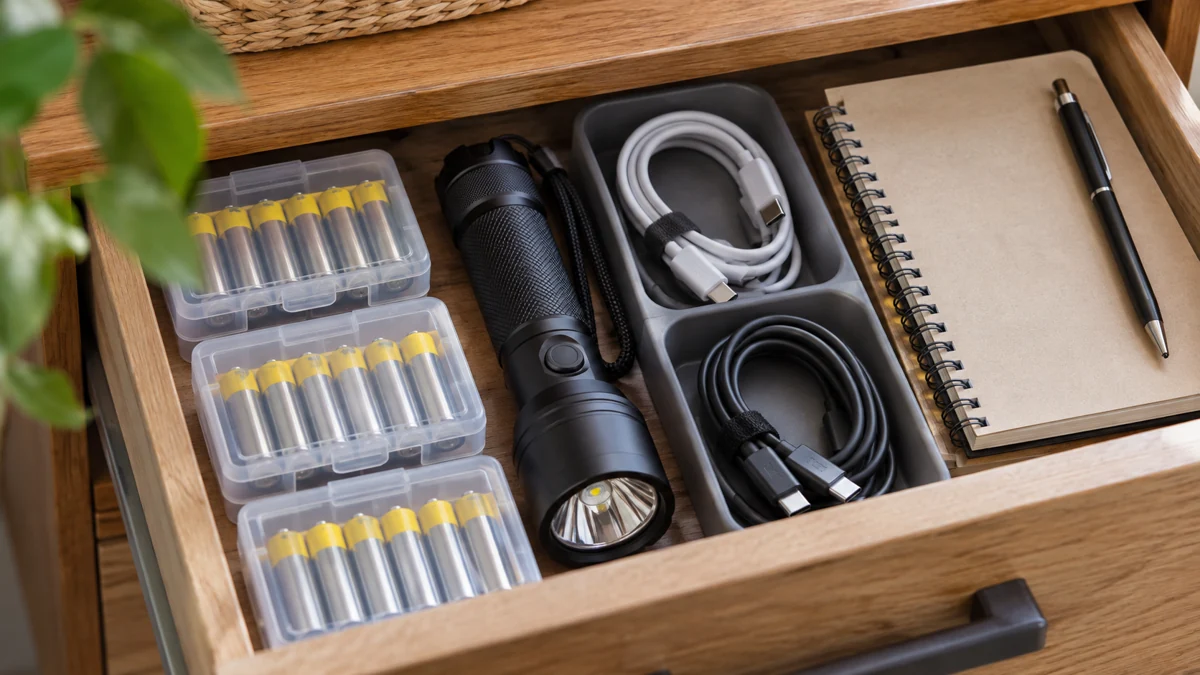
Gradually choosing a few battery formats can make storage easier. However, respect the type, voltage and recommendations of each manufacturer. A rechargeable battery and a non-rechargeable battery are not interchangeable in all uses; chargers must also be adapted.
USB-C connectors make some connections simpler, but the shape of the connector does not guarantee power, protocol or cable functions. Check what the device and charger are asking for. Label a particular cable when it is needed for priority equipment.
Do a load test with the devices concerned and under the planned conditions. Keep an alternative for important use. Dependence on a single charger can nullify some of the benefit of standardization.
Meet the requirements of engines and installations
The same fuel or the same oil viscosity is not enough to confirm compatibility. The specifications, approvals and conditions of use must correspond to the instructions for each equipment. Do not mix fluids or parts on a likeness basis.
For fuels, look at the quantities actually needed, the authorized containers and the rules of the place of storage. A large reserve adds fire, ventilation, handling and insurance constraints. Seek the advice of the fire safety department and relevant professionals before modifying a facility.
A generator must remain in the intended conditions of use, especially outside and away from openings according to the applicable instructions. The sharing of a device between neighbors does not justify an improvised connection to the network of a home.
Organize containers that are easy to move
Choose containers that users can lift and that are suitable for their content. The same format can make storage easier, but liquids, foods and chemicals require specific containers. They should not be confused or reused without verification.
Measure the available space and doorway before purchasing multiple bins. A filled container becomes heavier than the empty model tried in store. Split the loads and arrange for travel assistance if necessary.
Use legible labels with content, check date, and a start priority. Color can complete the information but should not be the only marker. People need to be able to understand storage without knowing complicated code.
Manage parts and maintenance
Store reasonably useful consumables, identified by reference. Keep the instructions and contact information of a repairman. Before buying an expensive part, consider the likelihood of need, storage conditions, and your ability to perform the replacement safely.
A maintenance table can indicate the date, operation, next check, and anomalies. This trace allows a succession and avoids depending only on the memory of a person.
Harmonize without creating a new dependency
In a group, agree on simple and voluntary standards for communications or consumables. Check for compatibility with an actual test, and then document the limits. The loan must have known conditions and not deprive the owner of essential equipment.
Also keep several possible suppliers. A very homogeneous organization can become fragile if everything depends on a brand or component that is difficult to obtain. The goal is to simplify the operation, not to replace everything immediately.
Your next action: Choose three priority devices, check their batteries or cables and do a test. Label the accessories and note the next check date.
Extensions
- PrépaCivile: 52-week program.
- PrépaCivile: tools to organize the needs of the home.
-
Keep the manufacturer’s instructions as references for compatibility, maintenance and use.
- Hydro-Québec: emergency power supply, installation and use.