
In this article
Lighting a campfire requires more than a flame. You have to choose an authorized place, control the fuel and be able to extinguish everything. Learning must be done in appropriate conditions, with monitoring and a source of water, without waiting for an emergency to discover the limits of the equipment.
Check whether a fire is permitted
See the SOPFEU’s restrictions, municipal rules and those of the owner or manager of the site. Permissions may differ depending on the type of home and conditions. An outdoor skill does not create an exemption. When a fire is not allowed or conditions are unfavorable, choose another activity or authorized equipment.
Also look at the wind, vegetation, branches and soil. A previously used location is not automatically safe today. Roots, organic matter and similar materials can maintain a fire or allow it to spread. Give preference to a landscaped site and respect the instructions of the site.
Prepare before lighting
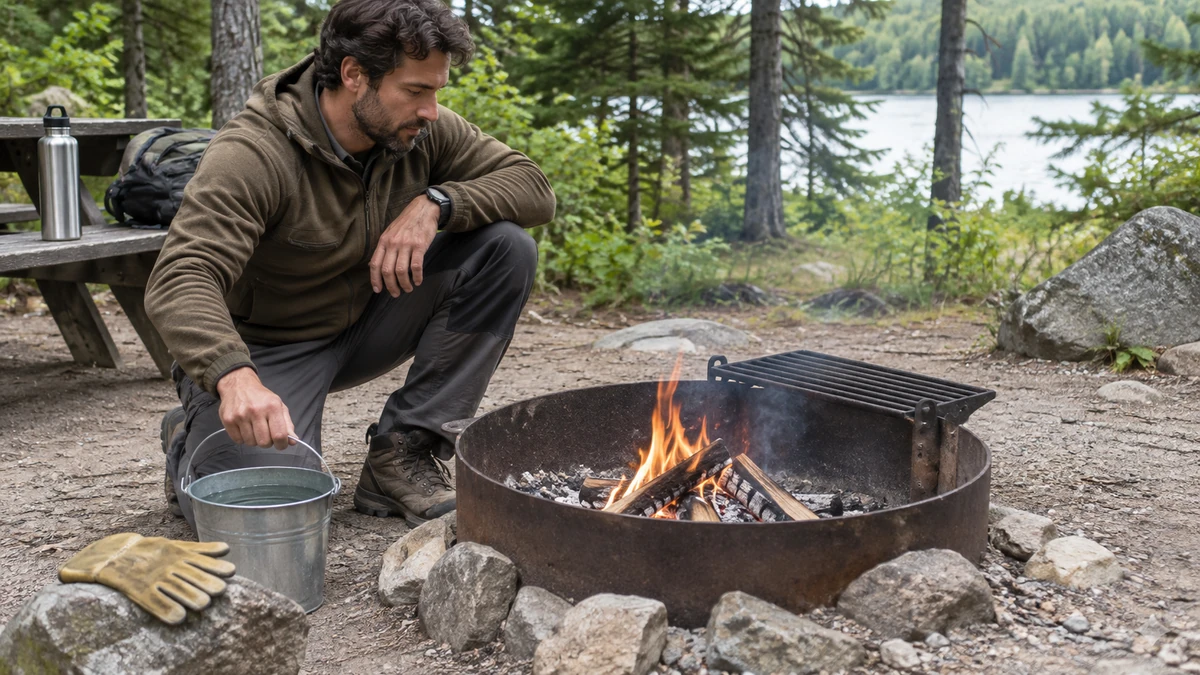
Gather small, dry fuels, firewood and larger parts suitable for the fireplace. Keep the reserve at an appropriate distance from the flames. Prepare the water and extinguishing tools before the first spark, as well as an obstacle-free circulation space.
The three basic needs are suitable fuel, heat and oxygen. A too tight construction can stifle the start; too many large pieces added at once can also prevent it from taking hold. The goal is a small controlled fire, not a large flame intended to compensate for poor preparation.
Choose a simple lighting method
A well-maintained lighter and matches protected from moisture are practical ways. Try them according to their instructions and keep them out of the reach of children. Redundancy does not exempt from checking their operation. A device that is difficult to use with cold hands deserves a try in a safe setting.
The source mentioned cotton balls impregnated with petroleum jelly. We prefer lighters designed for this purpose, accompanied by their instructions, rather than a recipe whose storage and behavior would be poorly controlled. Do not use gasoline, spilled alcohol, or other speeding to rekindle a fire.
Build and feed the fire gradually
Install a small amount of suitable amoud and fine wood by letting the air circulate. A simple structure made of tipi or small crossed pieces can be suitable if it remains stable and in the fireplace. Turn on without placing the face above the assembly and add the fuel in stages.
Keep the fire to a size consistent with usage and rules. Cooking does not necessarily require high flames. Do not burn waste, treated wood or unknown materials. Smoke and splashes can hinder others and create additional risks.
Account for moisture and weather
Protecting the fuel before exit is more reliable than trying to dry wood on an unstable fire. A dry reserve and equipment stored in appropriate packaging facilitate ignition. If conditions prevent sufficient control, give up the fire rather than multiply the attempts.
Never move a campfire into a tent, vehicle or enclosed space to protect yourself from the rain. The risk of carbon monoxide and fire remains even if an opening seems sufficient. The plan must provide weather protection that does not depend on improvised internal combustion.
Extinguish completely
Keep an eye on yourself and stay until you are completely extinct. Water and stir according to the instructions of the manager and SOPFEU, then check the absence of heat without touching embers with bare hands. A fire that no longer has a flame can still be active. Don’t just bury it under sand to leave.
The exercise is successful when the location is left safe, not just when the flame has taken hold. After the exit, dry, check and store the material. Note the difficulties in adjusting the equipment and the next practice.
Reference: SOPFEU , campfires.