
In this article
The Texas flood warning nearly saved more than 100 lives: at Camp Mystic, a late and scattered signal did not evacuate in time... The scene is played in the heart of the Texas night, on the National Day weekend. In a few hours, torrential rains turn the peaceful Guadalupe into a murderous torrent. The toll is terrifying: more than 100 dead, including 27 young girls and their monitors, while sleeping in the cabins of Camp Mystic, a summer camp on the banks of the river (Source : courrierfrance24.fr). The flash flood raises the water level by eight meters in less than an hour (Source: courrierfrance24.fr)In the early morning, Texas mourns its children and wonders: How could such a tragedy have happened almost without prior warning? This disaster is a stark reminder that a disaster does not only arise from the fury of the elements, but also from our failures to effectively prevent, alert and protect people.
Outage alert at Camp Mystic: chronicle of an announced drama
In Hunt, a small town in the Texas hills, Camp Mystic was home to more than 750 people when the nightmare began (Source: courrierfrance24.fr). At about 1 a.m., on July 4, a Notice of impending flood appears on the phone of the camp director. However, it is only after more than an hour of waiting that the order to evacuate is finally given - a fatal delay (Source : theguardian.com). During this time, a Wall of Water He went into the camp. The closest dormitories to the river, where the youngest residents slept (8-9 years old), were submerged in a few moments. The teenage monitors, left to fend for themselves in the dark, had to urgently make life-and-death decisions in an attempt to save the children, without any coordination or centralized information. It must be said that at Camp Mystic, mobile phones were prohibited for campers. and even confiscated for supervisors, thus depriving them of any automatic emergency alert (Source: theguardian.com)When the water came out, No siren sounded. to wake everyone up – just a few disparate alert messages sent by local authorities, sometimes “After an Inexplicable Delay”, that in any case no one saw in time in chaos (Source: theguardian.com).
This nightmare scenario has long been feared. Since 1987A flood had killed 10 children trying to flee a camp on the banks of the Guadalupe (Source: theguardian.com). Following this tragedy, a network of hydrological sensors and warning sirens had been installed, before breaking down in the 1990s without ever being replaced (Source : theguardian.com). In 2018, authorities in Kerr County – where Hunt is located – are seeking a grant to modernize the flood warning system, supported by the director of Camp Mystic himself, aware of the danger. But $1 million in funding is being turned down by the state of Texas; other priorities have relegated the project to the closet. : theguardian.com). Lack of resources, no new radar or gauge arrays has not been deployed along the river to detect the rising waters, No Siren had been installed to warn residents of an imminent torrent (Source: theguardian.com). « Not getting the funds was not very satisfactory, but we did what we could... We just didn’t have the resources. ", regrets Tom Moser, former member of the local council, pointing out that such a system aimed precisely at “Save lives in the future” (Source: theguardian.com)The absence of an early warning system, combined with human hesitation, has sealed the fate of the camp in 2025. If sirens had been in place, everyone would have known. Would it have saved everyone? Probably not, but it would have made a difference. ", says Moser, bitter (Source: theguardian.com).
The Camp Mystic drama thus reveals the tragic gearing of a failed alert. On the one hand, critical infrastructures (sensors, alarms, communications) neglected for lack of investment; on the other, a late and disorganized reaction at the critical moment. The deputy director of a local newspaper writes, in a poignant editorial, that if the funding had been released on time, “The disaster could have taken a whole new turn.”But all too often, she laments, small communities need to “waiting for permission, waiting for funds, waiting for the bureaucracy to catch up with reality” (Source: theguardian.com). This expectation, in this case, paid for itself in human lives.
From Valencia to Nova Scotia: Lessons from other tragedies
The story that was written in Texas painfully echoes other recent disasters where the warning link has given way. In Spain, At the end of October 2024, the region of Valencia was swept away by torrential rains of historical violence. In the space of a few hours, the floods caused the death of 95 people according to a provisional balance sheet – never seen since 1973 (Source: gross.media). Here again, the testimonies mention a Late warning and chaotic: “There was no warning.”The mayor of a town where 62 residents died suddenly (Source: bfmtv.com). While the roads were turning into torrents, local civil protection only triggered an emergency message on the phones. 20h12While many villages were already submerged (Source: bfmtv.com). In some of the hardest-hit localities, the Es-Alert It didn’t arrive until after 9 p.m. (Source: gross.media) – so to speak much too late. « They gave the alarm when the water was already there – no need to warn me that the flood is coming while I’m stuck up to my neck in the mud ", says an angry survivor (Source: theguardian.com).
Yet, The danger signs were not missing. The Spanish Meteorological Agency (AEMET) had issued a red alert as early as 7:30 that morning, calling for the "Greater Caution" in front of an “extreme danger” (Source: gross.media). At noon, the regional hydrological organization was already sounding the alarm on the rise of rivers (Source: bfmtv.com)But we had to wait until the end of the day – 17h – for the regional authorities to trigger their crisis centre (CECOPI) (Source: gross.media), then more than three hours to finally broadcast an order of containment to the populations (Source: bfmtv.com). This Delay of several hours proved tragic: in the meantime, thousands of people had stayed outdoors or set out unsuspectingly, becoming trapped on flooded roads at the height of the storm (Source: gross.media)Several victims were drowned in their vehicles, surprised by the sudden rise of the waters. Those lost hours were crucial. ", summarizes a report, because countless people found themselves in the wrong place at the wrong time, because they had not been alerted in time to stay shelter (Source: gross.media).
The Canada There are no such failures. Last summer in Nova Scotia, a record diluvian rain (more than 250 mm in one night) caused deadly flash floods. At 1:12 a.m. on July 22, 2023, volunteer firefighters call for an immediate emergency alert. “Shelter-in-place” to encourage the inhabitants to not to go out and take shelter (Source: delta-optimist.com). But the public alert broadcast via the system Alert Ready will only be issued to 3h06, near Two hours later (Source: delta-optimist.com). During this time, torrential rains caused the collapse of roads and washed away bridges in the Windsor, N.S. area. Two cars trying to escape were swept away at around 3:30 am by the waves, causing the death of four people. – Two children of 6 years old, a teenager and an adult (Source: delta-optimist.com). « Two hours is extremely long when every minute counts: during this time, people can put themselves in danger. Joanna Eyquem, climate adaptation specialist at the University of Waterloo (Source: delta-optimist.com). On the ground, the observation of failure is bitter for the speakers: “ We need to practice this process... the earlier the alert is activated, the better for the affected citizens » insists the local fire chief after the fact (Source: delta-optimist.com)Unfortunately, that night, the decision-making chain turned out to be too slow. The message not to hit the road arrived on the phones. Even when families were surprised by the car by the raging waters.
Even at Quebec, where spring floods are well known, communication gaps have been identified in emergency situations – although luckily recent disasters have resulted in fewer casualties. Historical floods in 2017 and 2019 in the St. Lawrence Valley, for example, forced the evacuation of thousands of people (Source : wikipedia.org) and highlighted the need to strengthen coordination of stakeholders and the dissemination of emergency information (Source: bibliotheque.assnat.qc.ca). These events have resulted in action plans to improve the Flood Vigilance and modernize flood monitoring tools (web platforms for vigilance in real time, automated call systems in some municipalities, etc.). Nevertheless, the Quebec system Quebec on alert – equivalent to theEs-Alert the Valencian orAlert Ready Canadian – is only used for flooding in the event of an immediate and unpredictable threat, for example the imminent rupture of a dam (Source: alert.gouv.qc.ca). In other words, if a sudden flood occurred in the middle of the night in a region with few sensors, would we be ready to warn the population in a few minutes ? The question is worth asking, because the risk of severe thunderstorms and extreme rains does exist in our latitudes – and will only grow in the future.
Systemic failures: when the emergency chain breaks
Whether it’s Texas, Spain or Canada, one thing is clear: failure of the alert is often the result of systemic failures at several levelsThe first weakness is the Forecasting and Detection of the hazard. In the Texan case, the lack of operational sensors on the river and the reduction of the weather workforce (some have pointed to federal budget cuts (Source : courrierfrance24.fr)) were able to weaken the ability to anticipate the flashing flood. In Spain, meteorologists had well anticipated the arrival of a gota fría (explosive Mediterranean depression) and launched the red alert in the morning (Source: gross.media)But this warning needs to reach Quickly the local authorities and the general public. This is the second link: the Decision-making and coordination. In Valencia, a delay of several hours to activate the crisis cell and trigger the telephone alarm was enough to make the rescue “Negligent and Exceeded”, from the very admission of politicians taken to task after the fact (Source: bfmtv.com). Similarly, in Nova Scotia, excessive protocols or a lack of training by officials to use the alert system led to an unacceptable delay in disseminating a vital message (Source : delta-optimist.com). Every minute of administrative flutter during an emergency is a minute too long. – all too often, emergency plans are not worked out, or responsibilities are fragmented between different bodies that struggle to communicate quickly.
The third link is the dissemination to the public and the ability to react. Today, alerting technologies exist: notifications on mobile phones accompanied by a shrill sound signal, municipal sirens, electronic panels, relay of media and social networks... Operated without hesitation and let the public know how to react to it. The “Portable Zero” Policy cut off the framers from all contact with the outside (Source: theguardian.com) – an understandable measure to enjoy nature, but which has become tragic in emergency situations. More broadly, if an alert message is sent but citizens don’t see it immediately (because they sleep, or the message doesn’t go on local radio), the impact is zero. And even when they get the message, they still have to have the means to act know what to do, have a safe place to take refuge, or on the contrary be able to evacuate quickly. People just don’t know what to deal with a flood, or how to respond to alerts ", notes an expert in climate resilience (Source: theguardian.com). This lack of individual and collective preparation aggravates the consequences. In panic, some even engage in risky behaviors – for example, taking to the road to get a loved one – when it would have been better to take a break. This is precisely what happened in Nova Scotia, where the victims Those who lost their lives were the ones who took their cars. in the middle of the night, thinking to do well, when they would have had more chances by staying on the floor (Source: delta-optimist.com).
Finally, an Psychological bias We tend to underestimate the risks as long as the worst has not happened. Decision-makers may delay triggering a large-scale alert for fear of improperly disturbing, or creating an unjustified panic. How many mayors are hesitating to sound the sirens or send a government alert message, for fear of wiping out critics if the event is ultimately less serious? This “False Warning” Syndrome often leads to waiting to have confirmations, hierarchical validations... at the expense of responsiveness. “We imagine that these rare events will not reach us, or not with catastrophic intensity ... We think that if this happens, we will rebuild and that it will not happen again for a century.”, explains Jeremy Porter, specialist in climate risk modelling (Source: theguardian.com). This fatalistic or wait-and-see attitude, although human, hinders the culture of prevention. In the case of Texas, it even led the operators of Camp Mystic to remove several buildings from the official flood zoning. Flood Zone), as if Ignoring the danger could make it disappear. – a decision now called into question, because many dormitories excluded from the risk map were precisely those located in flood-prone areas and swept by flooding (Source: theguardian.com). In other words, Lack of proactive vigilance and the minimization of threats set the stage for disaster long before the first raindrops fell.
Towards a culture of resilience: solutions within our reach
In the face of these alarming findings, the real challenge is toAct now so that history does not repeat itself.. Risk management and civil security professionals are unanimous: we already have many concrete solutions, accessible and effective, which it would be enough to deploy on a large scale. Among these courses of action, we can mention:
-
Modernizing and densifying early warning systems : install hydrometeorological sensors (pluviometers, flash flood detectors) in at-risk basins, interconnected with software platforms capable of automatically triggering alerts as soon as a critical threshold is crossed. For example, a network of gauges along the Guadalupe could have detected the meteoric rise of the waters and activated sirens downstream. in a few minutesinstead of relying on a late manual call (Source: theguardian.com)These technical investments, relatively modest in the face of the costs of damage, save lives by giving precious minutes in advance to the inhabitants to take shelter.
-
Simplify and accelerate emergency alert protocols : it is crucial toeliminate bureaucratic burdens that delay the dissemination of vital messages. Each jurisdiction should clearly establish which can trigger an alert, According to what criteria, and ensure that this decision can be made in a few moments 24 hours a day. Regular exercises must be conducted with local authorities to ensure that when the time comes, The warning reflex is immediate.. Nova Scotia has undertaken a review of its procedures after the 2023 floods, to prevent a request for an alert from getting lost again in the administrative meanders for two hours (Source : delta-optimist.com).
-
Multiply broadcast channels and redundancies : relying on a single alert mode is risky. Ideally, a combination of external sirens, telephone messages (SMS or cellular notifications), radio/TV program interruptions, and relays via local social networks allows you to Reach as many people as possible Quickly. In remote or tourist areas (campings, holiday camps), special devices such as emergency speakers or strobe alarms could be installed. The keyword is the Redundancy : if one method fails (phone in silent mode, siren not heard because of the wind), another can compensate.
-
Educating the public and strengthening the risk culture : The best warning in the world is useless if it is not understood or taken seriously by the population. We need to invest in public awareness. before The catastrophe. Concretely, this involves information campaigns on good behaviour in the event of an alert (do not engage in a car on a flooded road, take refuge at height, prepare an emergency kit, etc.), evacuation exercises in schools and companies, and the dissemination of a The True Culture of Resilience. “People should not die in announced weather disasters in countries with resources to do better.”, says Liz Stephens, Professor of Climate Risk (Source: theguardian.com). This implies that everyone, from the decision-maker to the citizen, Take Alerts Seriously and know how to react without delay. A well-trained population will evacuate faster or be safer on D-Day, thereby reducing the balance sheet.
Finally, it is necessary to Treating resilience as a priority, not a luxury. Investing in prevention, alerting, and preparedness may seem expensive or untimely in quiet times. But every dollar not spent upstream is paid a hundredfold in human and economic losses after the fact. The catastrophes of 2024-2025 are a call to end Postponing measures that can prevent the worst. It is striking that in each of the cases mentioned, voices warned of the danger in advance – but these signals were not heard or taken seriously in time.
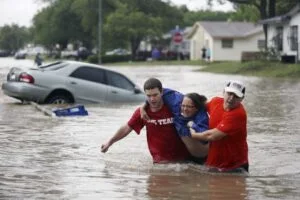
Floods in Texas
In the age of extremes, anticipation is the key word
The climate is changing and exposing us to increasingly frequent and intense extreme events. Flash floods, mega-fires, violent storms: these once rare events are gradually becoming Our new normal. Our infrastructure and organizations must adapt to it without delay. “People should not be swept away by floods in their cars in Europe, especially when meteorologists had forecast extreme rainfall and issued warnings.”Indignant the hydrologist Hannah Cloke (Source: gross.media). If even developed countries are surprised, it is because our warning and preparedness systems are not up to the task of current issues. “For people to die like this in their cars, it’s entirely preventable if you can keep them away from areas of risk.”, adds the researcher, concluding that “The system to alert people ... has failed, with deadly consequences.” during the tragedy in Valencia (Source: gross.media)His words echo sadly with the motto that could be deduced from these tragedies: alerting is not just a push of a button, it is a duty of precaution that engages the whole society.
Now is the time for a general mobilization to build a real The Culture of Preventive Warning. This involves sustained investment, technological innovation, but also political will and a change of mindset. Rather than considering resilience as an unnecessary expense or a simple checkbox in an emergency plan, it should be seen as an emergency. vital investment and a collective responsibility. The cost of inaction is measured in broken lives and devastated communities. Texas, Spain, Canada – and many others – have paid a heavy price for the flaws in our warning system. It is up to us to learn the lessons so that, the next time the sky falls on our heads, we are ready to act before disaster strikes, and not once it’s too late. (Source: theguardian.com / gross.media).
📱 Discover PrépaCivile+
The mobile app that guides you step by step to **prevent**, **act** and **restore** your family preparation in case of crisis.
• Interactive and shared family plan
• Local alerts and offline mapping
• Real-time monitoring of your circle members