
In this article
A standard kit does not cover every personal need. Menstruation, contraception, pregnancy and some care needs can change the arrangements for an outage or evacuation. These needs vary among women and may also concern other people. Start with the products and arrangements the person actually uses and wants to plan for.
Pack familiar products
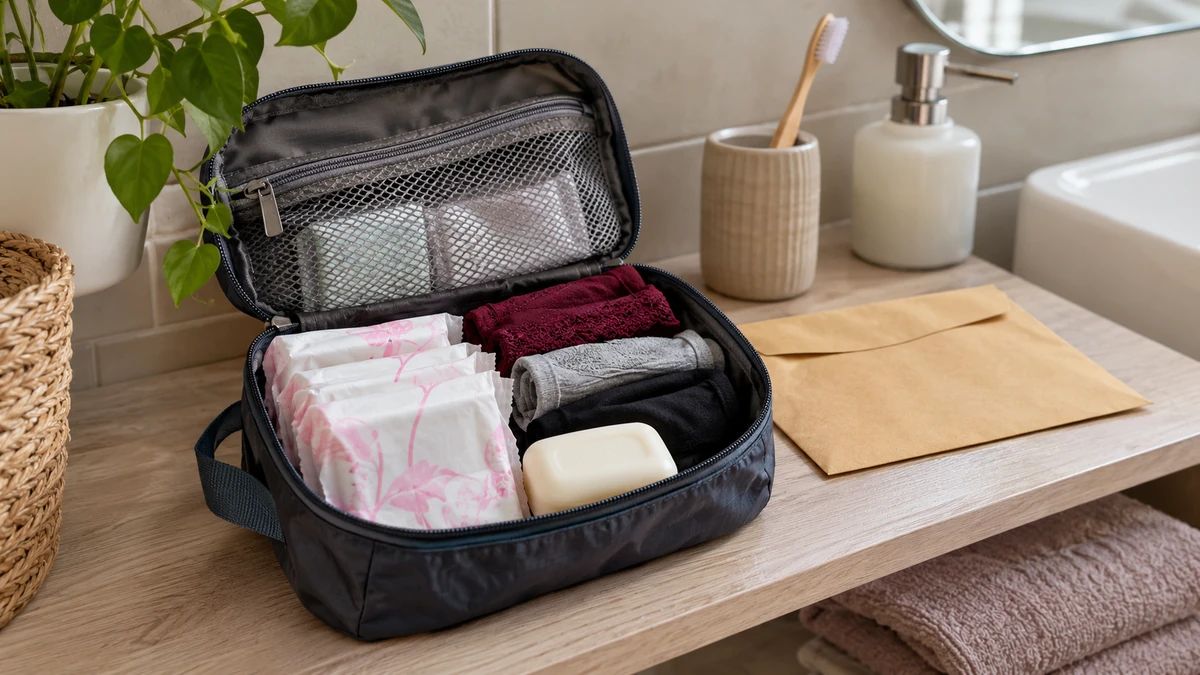
Gather a small supply of menstrual protection or other known products, with underwear and bags suitable for waste. A reusable product requires water, cleaning and sometimes sterilization according to its instructions. It is not automatically more convenient during a water-supply interruption. Do not wait for the emergency to try a product whose use is unknown to you.
Plan for privacy and accessibility
An emergency reception centre, a shared bathroom or an extended journey do not offer the same possibilities as at home. Prepare a pouch that is easy to carry and open, with the really necessary products. Agree in a discreet way to ask for help. Everyone must be able to keep their personal information; an effective family organization does not ask to make public the details of their health.
Discuss treatments with professionals
Discuss contraception and other treatments with the pharmacy, including refills, storage and procedures while travelling. Do not change a prescribed regimen on the basis of general advice. During pregnancy, discuss continuity and warning signs with the care team. Keep their contact details and relevant documents in the evacuation bag.
Arrange safe accommodation
Choose trusted contacts and places where you can seek help. Safety arrangements should respect the person’s autonomy rather than impose monitoring. If facing threats or violence, seek specialist support and contact emergency services in immediate danger. Preparedness does not make a victim responsible for violence against them.
Review supplies without overstocking
A short list allows you to check dates, sizes and changes in needs. Exchange with the person concerned rather than choosing their products in their place. Also foresee the constraints of a disability, a recent intervention or reduced mobility. The next action may be to prepare a pouch for a day out of the home, and then identify what is missing for several days. The goal is to maintain dignity, comfort and continuity of care, without inventing a universal solution.