
In this article
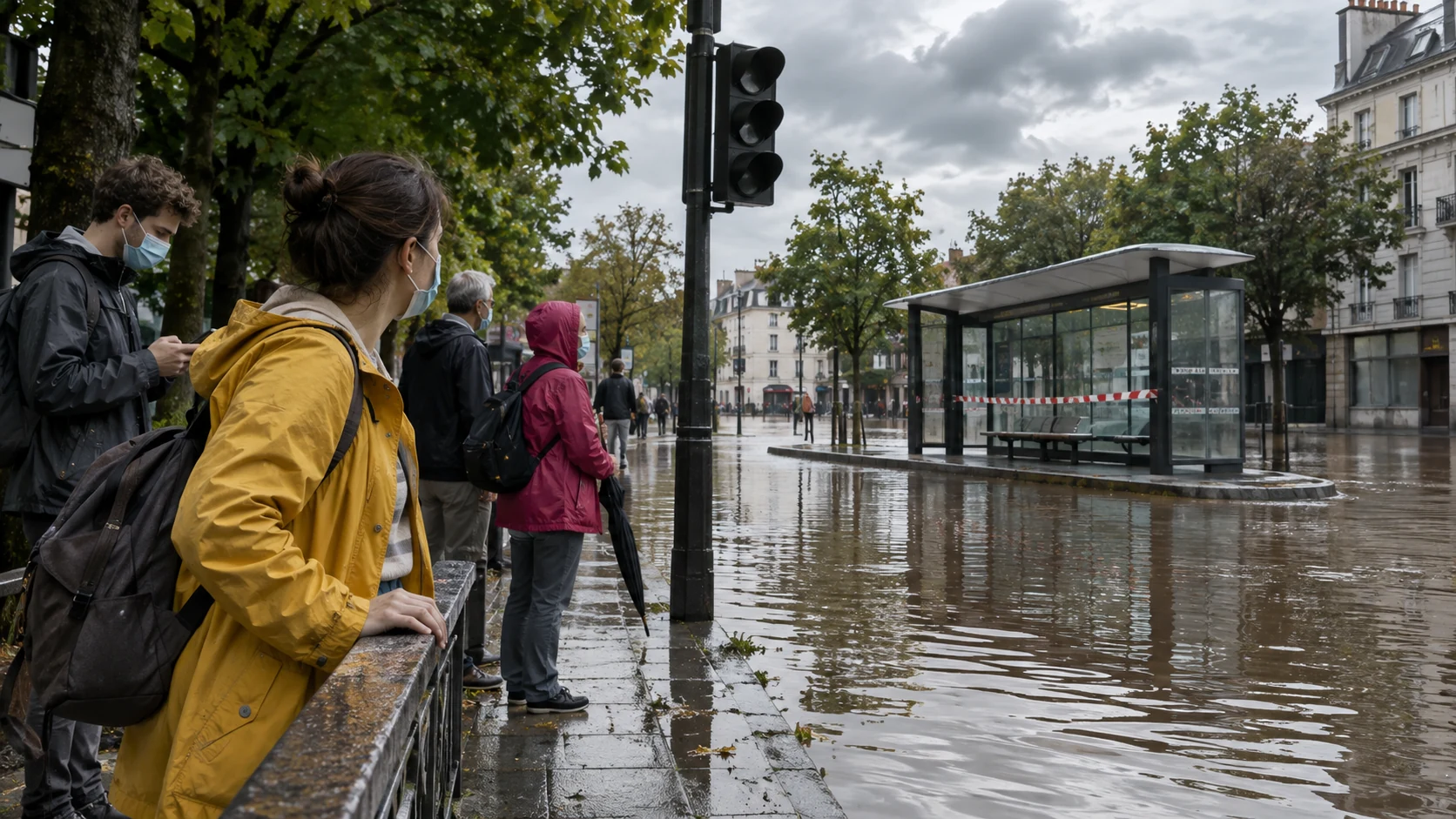
Public emergency management services are organized to handle crises, but their resources are usually sized to deal with one major event at a time. What happens when several events occur at once, or when one disaster triggers another? A flood during a pandemic, a power outage that cuts off drinking water, a wildfire that forces thousands of people into shelters in the middle of an epidemic: these cascading effects are not science fiction.
This guide explains how disasters can chain together, why help may then be slower, what a state of emergency involves and, above all, how to prepare your household for several likely crises converging, without giving in to fear.
In brief
In brief. Crises often chain together: a storm cuts the power, which cuts the water, which creates a health problem. When several events overlap, emergency services are stretched and delays grow longer. To prepare, rank the likely risks in your region, imagine how they could combine, and build a common foundation: water, food, medication, heat, information, a shelter-in-place plan and an evacuation plan, for at least a few days and ideally several weeks.
The limits of any emergency response
This is not about criticizing any particular government or administration. Authorities and responders do their best in the face of often unpredictable events, but they are human, with limited resources. Recent history shows several difficult responses to floods, fires or earthquakes, in Canada and elsewhere. Most of the time, thanks to emergency management, responders and mutual aid, people get through; but the margin can be thin.
Knowledge also evolves during a crisis. Early in the COVID-19 pandemic, for example, recommendations on masks for the general public changed as evidence accumulated. That is not a scandal, it is the reality of a new crisis. But it is a reminder that guidance may be incomplete at first, and that a household able to manage on its own for a few days is less vulnerable to these uncertainties.
Responders themselves are affected by disasters: their homes, their families, their roads. Research shows that the vast majority still report for duty, but when several crises overlap, resources are spread across many priorities. That is why authorities ask every household to be able to meet its own needs for at least 72 hours.
How one disaster can lead to another
Several mechanisms can turn an ordinary event into a more serious crisis:
- A major flood can contaminate drinking water with sewage, chemicals or stagnant water, and increase the risk of gastrointestinal illness.
- A prolonged power outage can stop water pumping and treatment, heating, communications and the cold chain for food and medicine.
- A mass evacuation during an epidemic can encourage transmission in shelters.
- An earthquake can cause fires, gas leaks and water outages that make firefighting harder.
- A cyberattack on infrastructure could interrupt water, power or the internet when they are most needed.
- Supply disruptions revealed by the pandemic, such as the temporary closure of meat-processing plants, show how fragile food chains are.
Imagine a major earthquake in Charlevoix, one of eastern Canada’s active seismic zones, forcing thousands of people to seek refuge in neighbouring towns during a winter epidemic: reception, care and shelter would become much more complex. This kind of thinking is not alarmist; it is exactly what emergency planners do.
Understanding interdependencies
Disasters chain together so easily because our essential services depend on one another. Understanding these links helps you anticipate what may run short after a first event.
- Electricity powers water pumps and treatment plants, gas stations, payment terminals, cell towers, refrigerators and often heating.
- Water is needed for hygiene, hospitals and firefighting; losing it can cause health problems within days.
- Communications let you receive alerts, reach emergency services and coordinate help; they depend on electricity and on cell-tower batteries.
- Transportation keeps grocery stores and pharmacies supplied, often day to day; a single closed road can cause local shortages.
For a household, the conclusion is practical: plan at least one backup for each of these services. Stored water and a way to treat it, lighting and heat that do not depend on the grid, a battery-powered radio, some cash, and food and medication supplies. These few items cover most possible chain reactions.
How one hazard triggers others, and what households can prepare.
- Freezing rain
- Collapsed transmission towers
- Weeks-long winter outage
- Water supply difficulties in some cities
- Lesson for householdsSafe heating, water, neighbourhood mutual aid, shelters
Source: examples presented in this article.
Real examples of cascading crises
| Event | Chain of events | Lesson for households |
|---|---|---|
| British Columbia, 2021 | Heat dome and wildfires in summer, then an atmospheric river in November: floods, cut roads and rail lines, supply disruptions, during the pandemic | Crises can follow one another in the same year; plan supplies for several weeks |
| Texas, February 2021 | Extreme cold, collapse of the power grid, then water outages and boil-water advisories | Power, water and heating are linked; plan heat and water without the grid |
| Fort McMurray, 2016 | Wildfire, evacuation of an entire city, congested roads and fuel shortages | Leave early, full tank, ready bag, known fallback location |
| Ice storm, 1998 | Freezing rain, collapsed transmission towers, weeks-long winter outage, water supply difficulties in some cities | Safe heating, water, neighbourhood mutual aid, shelters |
In each of these cases, families with supplies, a plan and a mutual aid network got through better, and were able to help their neighbours.
States of emergency: understanding what they involve
During a major disaster, authorities may declare a local, provincial or national state of emergency. In Quebec, civil protection legislation allows authorities, among other things, to order evacuations, control access to certain areas, requisition necessary goods or services and impose protective measures. At the federal level, the Emergencies Act governs exceptional powers; in France, the state of emergency and ORSEC plans play comparable roles.
These measures aim to protect the public: curfews, travel restrictions, road closures, mandatory evacuations. They remain governed by law, limited in time and subject to review by the courts and charters of rights. It is legitimate to stay informed, to debate and, if necessary, to challenge a measure through the proper channels. But during a crisis, respecting them is part of everyone’s safety.
For a household, the practical issue is simple: an evacuation order, a travel restriction or a lockdown can come quickly. Being ready to stay home for several days, or to leave within minutes, lets you follow these instructions without being caught off guard.
Being able to rely on yourself for a while
Being temporarily without help is not a far-fetched idea: when crises overlap, it is a likely reality for a few hours or a few days. That is why we encourage preparedness. It is not about fearing what might happen, but about preparing for what probably will. Many people have become very dependent on services, the corner store and electricity, and every crisis is a reminder of the limits of that dependence.
Thinking about this possibility may feel unsettling. Rather than avoiding it, preparing for it, taking precautions and learning skills gives you the inner resources and confidence to cope. It is better to look back and think some supplies were not needed than to discover, at the critical moment, that the essentials are missing.
In survival films and novels, the hero gets through thanks to skills they did not know they had, or thanks to a lot of luck. You rarely see a perfectly prepared character go through a disaster without drama: the prepared person simply experiences less conflict than the one caught off guard. They already know what to do to keep the situation from spiralling. We always hope the right services and the right people will arrive when needed; the prudent person plans as if they might have to manage on their own for a while, while counting on the mutual aid of those around them.
Preparing for “when,” not “if”
The recent pandemic, an event of a scale that happens roughly once a century, showed it: the question is not whether a scenario will occur, but when. It makes no sense to prepare for a comet strike or a supervolcano eruption; it would, however, be unwise not to prepare for an earthquake, a tornado, a flood or a long outage, depending on your region. Probability-based preparedness is more targeted and more effective, and it should account for the fact that disasters can worsen one another.
A four-step method
- Make two lists: national disasters of low to medium probability, and regional disasters of high probability.
- Rank them by likelihood in your region. If you live in Ontario, tsunamis will not top the list, but tornadoes and floods will; in Quebec, think of freezing rain, spring floods, wildfires and earthquakes in certain regions.
- Imagine the combinations: which events, natural or human-caused, could add to each risk and worsen its effects? Group together disasters that can trigger others.
- Plan at the intersection: where several likely problems meet is where your preparedness should focus first.
| Main risk | Risk that may add to it | Needs to cover |
|---|---|---|
| Winter storm | Prolonged power outage | Safe heating, lighting, water, no-cook food |
| Flood | Water contamination, evacuation | Bottled water, water treatment, go bag, documents |
| Epidemic | Evacuation to a shelter | Masks, hygiene, medication, fallback location with relatives |
| Earthquake | Gas leak, fire, water outage | Gas shut-off, extinguisher, water, first aid kit |
| Heat wave | Power outage, drought | Water, a cool place, checking on vulnerable people |
A common foundation for every crisis
Building a month’s worth of food, water and medical supplies all at once can seem daunting. The good news is that basic needs are the same in almost every disaster: water, food, shelter and heat, medication, information, safety. They form the basis of your planning.
Then add items specific to your scenarios, starting with the most likely. If you live in an earthquake-prone area, for example, have an automatic gas shut-off valve installed or keep a shut-off wrench near the gas line, before buying an inflatable boat or emergency fishing gear. That is a deliberate exaggeration, but the idea holds: rank your purchases according to your scenarios and make a little progress every payday or every month. Before long you will be ready, or at least much better equipped to cope.
Testing your plan against a double crisis
A simple exercise is to combine two scenarios in a family discussion: for example, “an ice storm cuts the power for five days, and two family members have the flu.” Where will everyone sleep warm? How do we isolate the sick? Who will pick up medication? Do we have enough water if the treatment plant stops? Questions like these quickly reveal gaps and help set priorities for your next purchases.
Summary
Thinking in terms of a domino effect helps you focus on the likely disasters that would affect you most directly. This approach gives you a roadmap to build on gradually. Recent years have convinced many people of the value of preparedness. You are neither crazy nor strange for wanting to protect your family from the threats on the horizon: you are doing what the authorities themselves recommend. And a prepared household is also one that can help its neighbours when crises overlap.
Frequently asked questions
How long should you be able to manage on your own?
Authorities recommend at least 72 hours. When several crises overlap, help may take longer: aiming for two weeks of water and food, then more as your means allow, is a reasonable goal.
What should you do if a state of emergency is declared?
Follow official instructions, stay informed through official channels, and be ready to stay home or evacuate as directed. Keep your documents, medication and go bag within reach.
How can you avoid anxiety when thinking about all these combinations?
Focus on concrete actions rather than scenarios. A ranked list and a few purchases each month turn worry into visible progress. See our article on fear and preparedness.