
In this article
- A fictitious case, with no guaranteed timeline
- Identify what depends on the current
- Lighting accessible without flame
- Communicating and preserving useful charging
- Plan for foods that do not require improvised cooking
- Fridge and freezer: use the right markers
- Cold, heat and people with special needs
- Generator and electrical installations: respect the limits
- A test on the table rather than a real cut
- Official sources
A two-day outage is a useful scenario for considering a home’s needs. This is not a time period during which housing, food or medical devices would automatically be safe. The season, the building, the health and the accessible resources change the decisions to be made.
Combustion devices require special attention. A barbecue, camping stove or generator must not be used inside or in a garage. An open window and a carbon monoxide detector do not make this use safe. Follow the official and manufacturer’s instructions for installation and outdoor use.
A fictitious case, with no guaranteed timeline
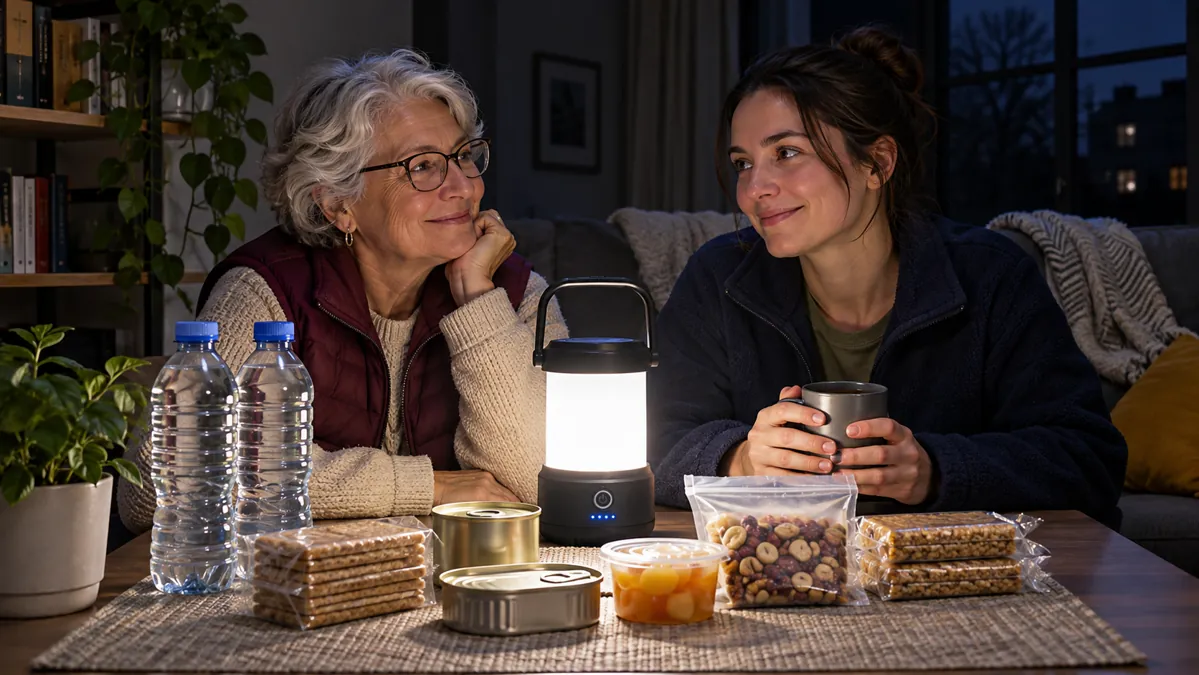
A house loses power at the end of the day. It has some food, but lighting, charging and access to information are poorly organized. The case serves as an educational support; it does not reproduce a specific event and does not allow to predict the temperature of the dwelling hour by hour.
The first checks focus on the safety of people and electricity-dependent needs. A person using essential medical equipment may need a solution long before ordinary lighting is a problem.
Identify what depends on the current
| Need | Verification to prepare |
|---|---|
| Care | Device autonomy and plan agreed with the provider or healthcare team. |
| Lighting | Accessible LED lamps, compatible charging or batteries and verified operation. |
| Communication | Contacts on paper, reload available and official sources of information. |
| Food | Suitable foods, ready to eat and known storage conditions. |
| Temperature | Needs of people and accessible reception if housing becomes dangerous. |
| Access | Lift, doors, mobility aids and ways to get assistance. |
Lighting accessible without flame
A lamp stored in a known location is more useful than a collection of devices whose batteries no one can find. Check access, stairs and travel needs. Avoid creating a risk of falling with cables or objects placed in the passages.
Prefer LED lamps to candles for common lighting. A rechargeable lamp must have been charged and tested; its duration of use depends on the model, setting and condition of the battery. An advertised duration is not a guarantee for all uses.
Communicating and preserving useful charging
Keep the necessary contacts and instructions in a readable format without the Internet. A phone and an external battery can help, as long as they are compatible and usable. Check the operation rather than deducting a fixed number of recharges from a commercial capacity.
Reserve the energy for communications and functions useful to your situation. Energy-saving modes can change some functions; do not turn off health or safety monitoring without knowing the consequences.
Check the electricity provider’s information and local instructions when you can. A recovery schedule is information that can change. Family members need to know how to report a need if communications are intermittent.
Plan for foods that do not require improvised cooking
Adapted and ready-to-eat foods avoid having to use a camping device in a dwelling. Consider allergies, health needs, eating habits, and ways to open containers. The necessary water and utensils are part of the reflection.
If outdoor cooking is considered, it depends on a safe place, the applicable rules, the weather and the manufacturer’s instructions. A balcony or a space near the openings is not automatically an acceptable location. Don’t take a risk of fire or poisoning to maintain a regular meal.
Fridge and freezer: use the right markers
Open the doors only when necessary. The shelf life depends on the filling, the condition of the appliances and the ambient temperature. Use the thermometers and sorting instructions of the health authorities rather than a universal delay or the smell of a food.
Health Canada's recommendations give orders of magnitude for devices that remain closed; MAPAQ provides a food-sorting list. The refrigerator temperature should normally be between 0 degrees C and 4 degrees C. These indications should be applied with the conditions that accompany them, not as a promise that a food will remain safe until a specific time.
Do not turn the winter exterior into an improvised freezer: temperature variations, sun and contamination can compromise food. For medicines kept fresh, ask the pharmacist what steps to take; do not decide on your own to use them or modify a treatment.
Cold, heat and people with special needs
The interior temperature does not change identically in all dwellings. Children, the elderly or the sick may have different needs. Don’t wait for a pre-set duration if conditions become a concern or if essential equipment can no longer work.
Provide a place of reception and transport that is truly accessible, with the people or services concerned. A community centre should not be assumed to be open without confirmation. Follow local guidelines and ask for appropriate help when the means of the home are no longer sufficient.
An auxiliary heater should be used only under the conditions for which it is designed and authorized. Appliances intended for outdoor use do not become suitable for indoor use because it is cold. If a carbon monoxide alarm sounds or poisoning is suspected, go out to a safe place and call for help according to official instructions.
Generator and electrical installations: respect the limits
A generator requires an appropriate outdoor location, away from openings according to the applicable instructions, and use in accordance with the manufacturer. It must not be used in a building, garage or enclosed space. Do not make an improvised connection to the installation of the housing; the necessary equipment and work require the appropriate skills and authorizations.
When returning power, follow the supplier's instructions for the devices. Care needs should be treated according to the established medical plan. A general advice on home appliances does not replace this plan.
A test on the table rather than a real cut
Ask yourself where the lamps are, what foods can be used, who to reach, and what need imposes a start or a relay. Test a lamp and cable in ordinary conditions. Note the missing equipment, without actually cutting off the current from the housing.
Do not interrupt a medical device, alarm, essential refrigeration or security system to simulate a breakdown. An announced and limited exercise can reveal the same organizational problems without creating an emergency.