
In this article
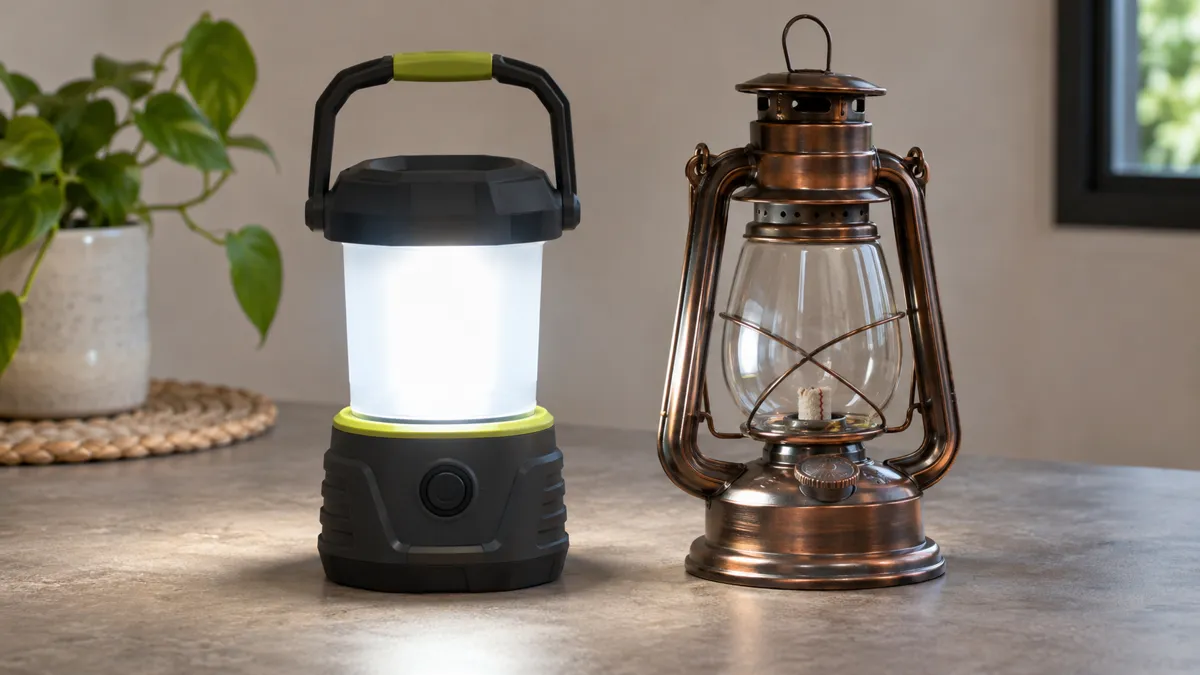
An oil lamp produces light by means of a fuse and liquid fuel. It also introduces a flame, a reservoir and a risk of overturning. To prepare for a power outage, a flashlight or battery-powered lantern is the first choice offered here. The preparation is to have usable lighting, without creating another emergency.
Understand the operation
In a lamp designed for this purpose, the fuse brings the fuel to the combustion zone. The geometry of the tank, the wick support, the materials, the protections and the fuel form a whole. The fact that a food oil can burn does not demonstrate that an improvised assembly is safe to light a home.
An artisanal assembly with a food jar, a wick and a pierced lid is not a validated domestic emergency equipment. The container may not withstand the stresses of a lamp. A recovered fruit bark, yaw or container is not a proven safety solution.
Prepare lighting without flame first
Place an accessible lamp near the places used at night and provide a lantern to illuminate a room. Check the advertised range in the mode actually used and keep the batteries or the appropriate means of charging. Try the equipment before the breakdown. A headlamp can release the hands during movement or checking, without replacing the evacuation instructions.
A rechargeable source depends on an available means of recharging. A battery source requires compatible batteries, in good condition and stored without risk of short circuit. Adjust the order and weight to the people who will use it. The relevant maps are placed near this recommendation.
If you have an oil lamp
Use a device intended for this purpose, with its protections and the manufacturer's instructions. Respect the restrictions of indoor or outdoor use. Check the tank, closure, parts, stability and prescribed fuel. Do not turn on a device that is damaged, incomplete or whose operation is unknown.
Health Canada recalls the risks of fire, burning and poisoning associated with oil lamps. The organization advises against decorative lamps with liquid fuel in a home where children under five live. The labelling and, depending on the fuel, child-resistant closure requirements must also be taken into account.
Vegetable oil, paraffin and kerosene: not to be confused
Trade names are not enough to establish compatibility. A lamp oil, paraffinic product and K-1 grade kerosene are not automatically interchangeable. K-1 is not a universal name for paraffin oil. Use only the fuel provided for in the package leaflet, under the conditions indicated.
Used frying oil may contain water and residues; domestic filtering does not validate its fuel quality. A rancid oil, butter or ghee are not offered as a lighting reserve for the house. The claims “burn clean” or “safe indoors” cannot be inferred from the mere food or naturalness of an oil.
Installation, monitoring and storage
Place the device on a stable non-combustible surface, away from passages and away from flammable materials. Keep it out of the reach of children and animals. Never leave it on unattended, during sleep or when leaving the room. Do not use a flame lamp in a tent or as an improvised heater.
Follow the instructions for ignition, setting, extinguishing and cooling. Do not add fuel to a hot or lit appliance. Do not carry a working lamp. If she smokes, stop using it and look for the cause according to the leaflet; opening a window does not turn an inadequate device into a safe device.
Keep the fuel in its identified container, closed and stored away from food, heat and children. Do not transfer fuel into a beverage bottle. Smoke and carbon monoxide alarms do not exempt you from complying with the conditions of use.
In the event of an incident
If a fire breaks out, give the alert and leave the place according to the plan of the household. Do not expose yourself to save the lamp. An extinguishing intervention is only considered if you are trained, equipped and can keep a safe exit. Do not pour water over an oil fire.
If fuel is ingested or reaches the airways, contact the poison control centre or emergency services immediately, depending on the severity. Do not cause vomiting. Keep the label available for professionals.
Practical issues
Does a food oil make assembly safe?
No. The fuel is only part of the device; tank, fuse, stability, temperature and conditions of use also count.
What to prepare before the next breakdown?
Tested flameless lighting, compatible power resources and a known location. Then check the heating, communication and health needs separately.
Can candles be replaced with any oil lamp?
No. Another open flame keeps risks. Instead, compare battery-operated or rechargeable solutions before planning a combustion device.